Chronicle of Marian Apparitions, Part 5: Hope in Wartime and Silence in the Rain
Chronicle of Marian Apparitions, Part 5
Hope in Wartime and Silence in the Rain: Our Lady of Pontmain to Our Lady of Fatima (1871–1917)
War, national suffering, and the eve of a global catastrophe form the backdrop to the four apparitions examined in this fifth installment. From a French village threatened by Prussian invasion, to a Polish community forbidden to speak its own language, to a silent vision witnessed by an entire Irish village in the rain, and finally to the most famous Marian apparition of the modern era in Portugal, Our Lady’s appearances in this period consistently combine consolation for the present with a summons to prayer for what was still to come.
What Happened at Our Lady of Pontmain in France (1871)?
Pontmain, Mayenne, France — 17 January, 1871 — Witnesses: Eugène and Joseph Barbedette, Françoise Richer, and Jeanne-Marie Lebossé
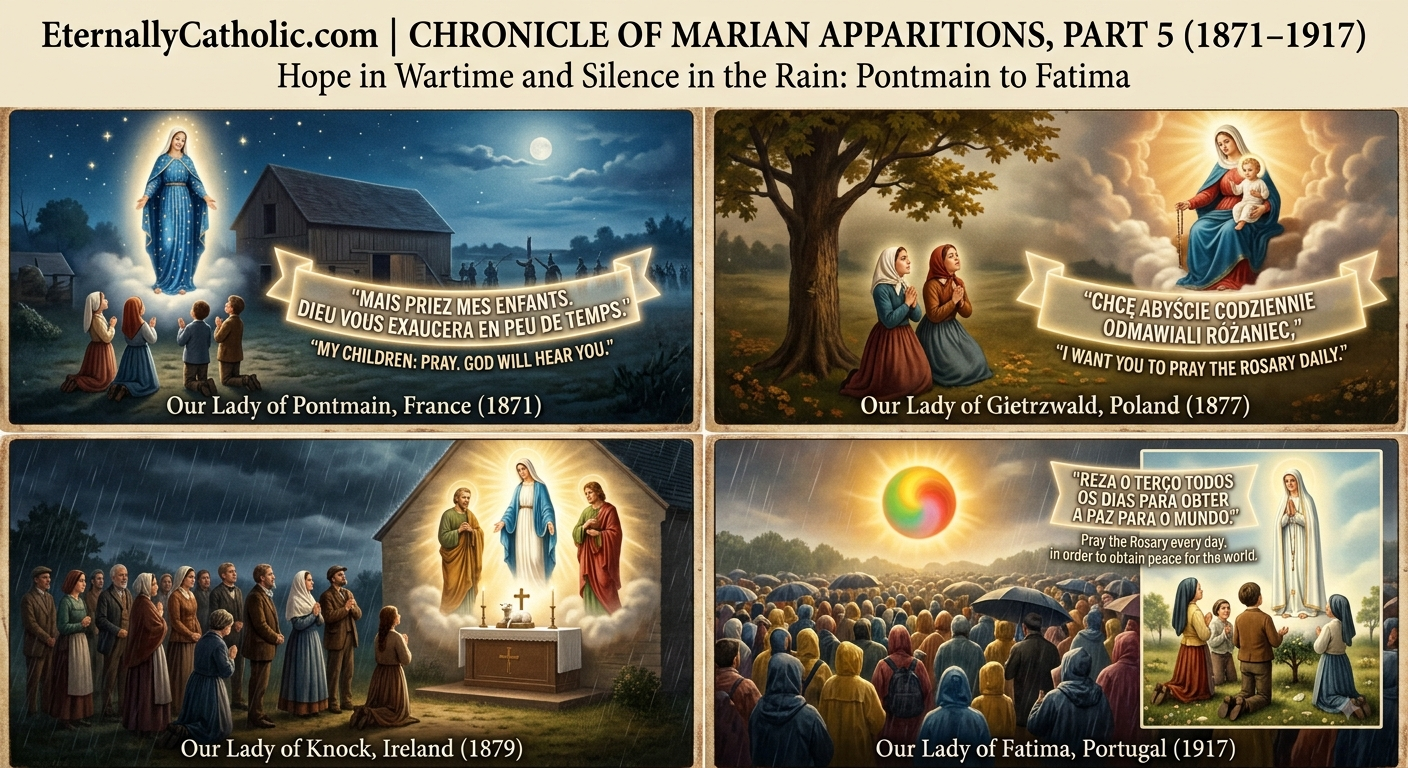
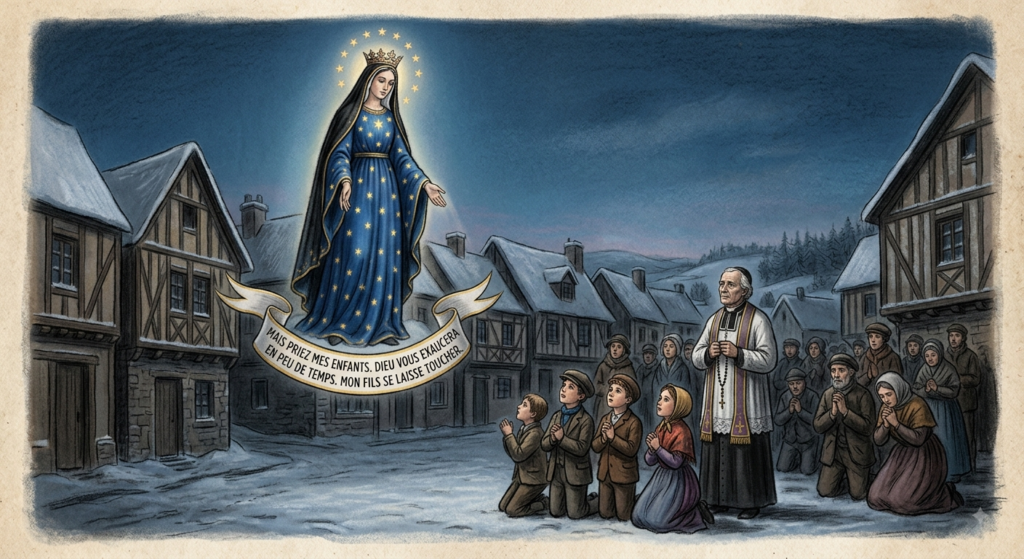
In January 1871, as the Franco-Prussian War raged and Prussian forces advanced toward the city of Laval, the small village of Pontmain waited anxiously for news of thirty-eight of its young men who had been called to fight. On the evening of 17 January, twelve-year-old Eugène Barbedette stepped out of his family’s barn and saw a tall, silent woman in a starry blue gown standing in the sky above a neighboring house; his younger brother Joseph soon saw her too, followed by two other village children, Françoise Richer and Jeanne-Marie Lebossé (Grokipedia, 2026). Only the four children could see the vision, though the assembled villagers, led by their parish priest, began praying the rosary beneath it. As the prayers continued, a banner unrolled beneath Mary’s feet spelling out a message of assurance that God would soon answer their prayers. That same night, for reasons Prussian commanders themselves could not explain, the advancing army unexpectedly halted and withdrew from the region; an armistice was signed within days, and all thirty-eight village men returned home safely.
What Was Our Lady’s Message at Pontmain?
“My children: Pray. God, in short time, will hear you. Your prayer touches my Son.”
Pontmain’s message is one of hope answered in a moment of collective national danger: Mary’s silent, luminous presence and the banner’s written promise assured the villagers that their prayers had already moved heaven, even before the crisis had visibly passed. The apparition, formally approved by the Bishop of Laval in 1872, is remembered as Our Lady of Hope, and Prussian soldiers were later reported to have described an unseen barrier blocking their advance that night.
What Happened at Our Lady of Gietrzwald in Poland (1877)?
Gietrzwald, Warmia, Poland — 27 June to 16 September, 1877 — Witnesses: Justyna Szafrynska and Barbara Samulowska
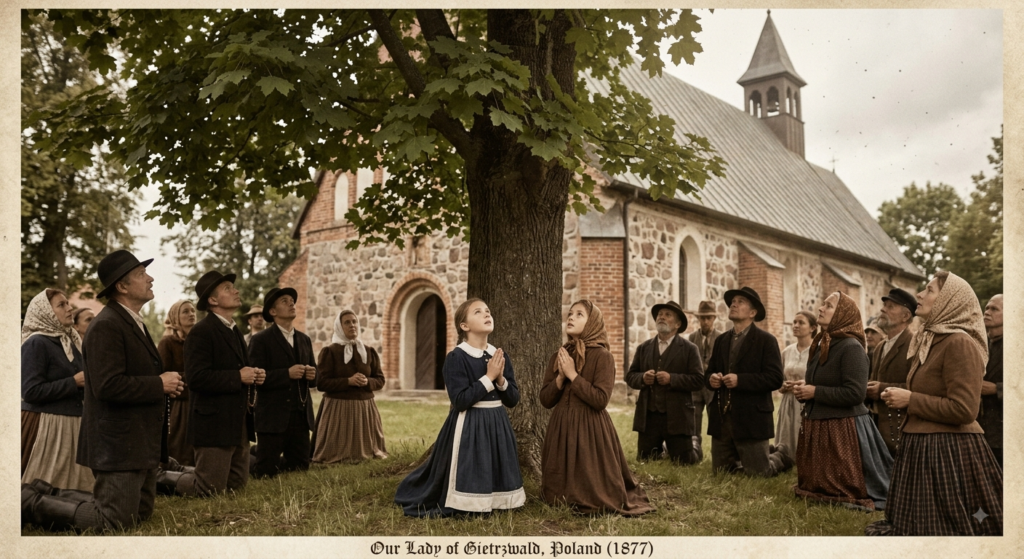
In the summer of 1877, in the Prussian-controlled region of Warmia where the Polish language had recently been banned in schools as part of the German government’s Kulturkampf, a thirteen-year-old girl named Justyna Szafrynska was walking home after her First Communion examination when she heard a sound from a maple tree beside the parish church and saw a lady seated in its branches surrounded by light. She returned the next day with a younger friend, Barbara Samulowska, and both girls saw the same figure, now seated on a throne with the Christ Child and attended by angels (MaryPages, n.d.). Asked her identity, the lady answered, in the local Polish dialect, that she was the Blessed Virgin Mary, Immaculately Conceived; asked what she wished, she asked simply that the rosary be prayed every day. The apparitions continued nearly every evening for almost three months, and the crowds they drew, at their peak some fifty thousand pilgrims for the September feast, made Gietrzwałd a rallying point for Polish Catholic identity under foreign occupation. The Church formally approved the apparitions in 1977, the only Marian apparition in Poland to receive Vatican recognition.
What Was Our Lady’s Message at Gietrzwald?
“I want you to pray the Rosary daily.”
Gietrzwałd’s central and repeated message was devotion to the daily rosary, paired with reassurance that fervent prayer would in time free the Church in Poland from persecution and restore priests to parishes left vacant by the Kulturkampf. That Mary chose to speak Polish at a moment when the language itself was suppressed carried deep significance for a people whose nation did not then exist on the map of Europe, and the apparition is credited with strengthening Polish national and religious identity through decades of partition.
What Happened at Our Lady of Knock in Ireland (1879)?
Knock, County Mayo, Ireland — 21 August, 1879 — Witnesses: approximately fifteen villagers
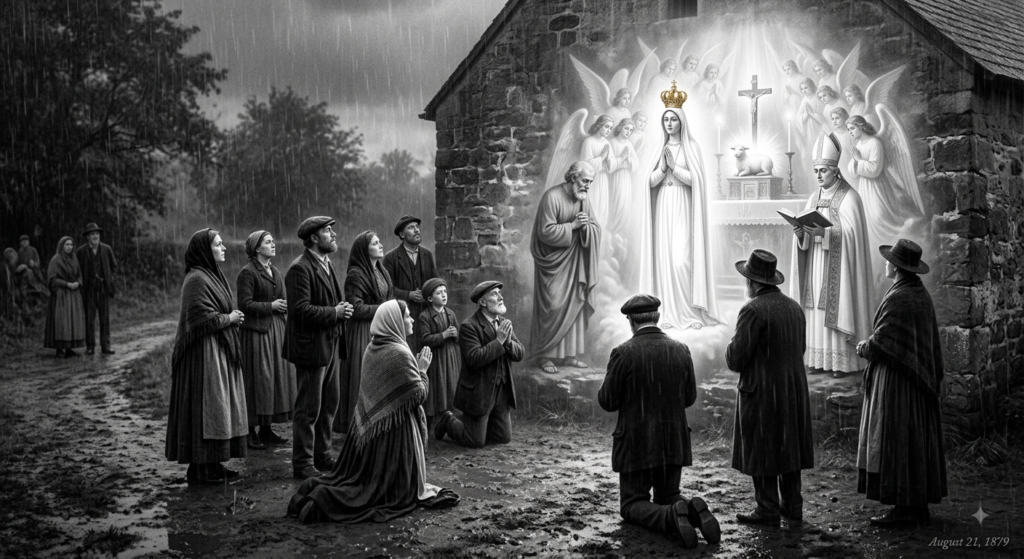
On the rainy evening of 21 August 1879, roughly fifteen villagers of Knock, County Mayo, of varying ages, witnessed a silent apparition against the south gable wall of their parish church. The figures of the Virgin Mary, Saint Joseph, and Saint John the Evangelist appeared in brilliant light, with an altar behind them bearing a lamb and a cross, surrounded by adoring angels. Mary was dressed in white with a golden crown, her eyes and hands raised as if in prayer, while Joseph inclined his head toward her and John, dressed as a bishop, appeared to be preaching from an open book (Bigthink, 2022). The apparition lasted approximately two hours in continuing rain, though witnesses reported that the ground immediately before the gable remained dry. No words were spoken by any of the figures. Two Church commissions of inquiry, in 1879 and again in 1936, found the testimony of the witnesses to be trustworthy, and Pope Saint John Paul II visited the shrine in 1979 for its centenary.
What Was Our Lady’s Message at Knock?
Knock is distinctive among approved apparitions for its complete silence: no message was spoken, and its meaning has instead been read through the assembled imagery itself, understood by generations of pilgrims as a vision of the Mass and the heavenly liturgy, with Mary in the posture of intercessory prayer alongside Joseph and John, the beloved disciple entrusted with her care at the foot of the Cross. The shrine became, and remains, Ireland’s principal national place of Marian pilgrimage, particularly cherished during a century of famine’s aftermath, emigration, and hardship.
What Happened at Our Lady of Fatima in Portugal (1917)?
Cova da Iria, Fatima, Portugal — 13 May to 13 October, 1917 — Witnesses: Lucia dos Santos, Francisco Marto, and Jacinta Marto
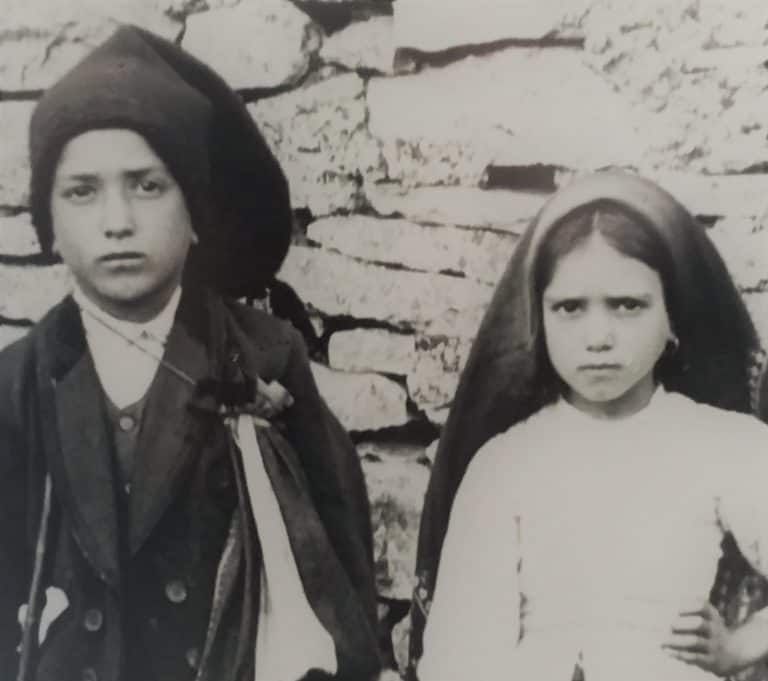
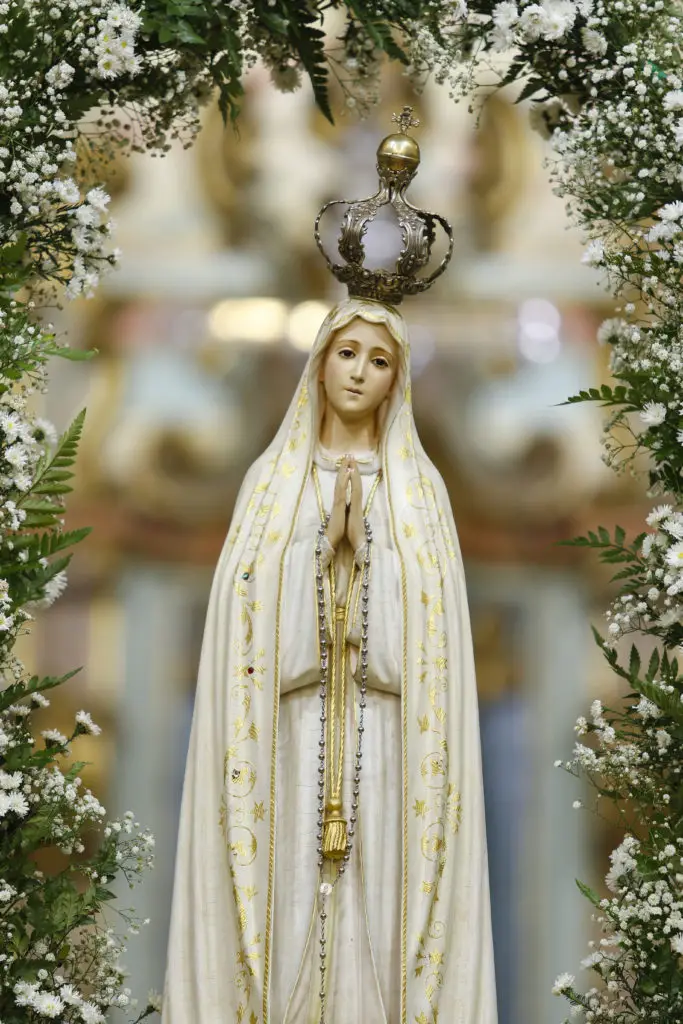
Beginning on 13 May 1917, in the midst of the First World War, the Virgin Mary appeared six times to three shepherd children, ten-year-old Lucia dos Santos and her younger cousins Francisco and Jacinta Marto, in a field called the Cova da Iria near the Portuguese village of Fatima. Identifying herself in the final apparition as Our Lady of the Rosary, she asked the children to pray the rosary daily for peace and an end to the war, to make sacrifices for the conversion of sinners, and to return each month on the thirteenth. She entrusted the children with three secrets, portions of which were not published until decades later, including a vision of hell and a prophecy of a second world war and of a further period of suffering tied to the errors of Russia, unless that nation was consecrated to her Immaculate Heart. On 13 October 1917, before a crowd estimated at seventy thousand people gathered in pouring rain, witnesses of every disposition, including secular journalists, reported the sun appearing to spin, change colors, and plunge toward the earth before returning to its place, an event widely known as the Miracle of the Sun. The Bishop of Leiria approved the apparitions in 1930, and Francisco and Jacinta, who died young in the 1918–1920 influenza pandemic, were canonized by Pope Francis in 2017.
Read our article on Our Lady of Fatima here. For additional articles of Our Lady of Fatima, the secrets, little known facts and more visit our page Approved Apparitions.
What Was Our Lady’s Message at Fatima?
“Pray the Rosary every day, in order to obtain peace for the world.”
Fatima’s message centers on the daily rosary, penance and sacrifice for the conversion of sinners, and devotion to Mary’s Immaculate Heart as a source of peace amid the century’s approaching wars and upheavals. Its warnings proved strikingly prescient of the twentieth century’s totalitarian ideologies and global conflicts, and Fatima remains, alongside Guadalupe and Lourdes, among the most influential and widely visited Marian apparitions in the history of the Church.
References
Bigthink. (2022, April 19). A world map of Virgin Mary apparitions. https://bigthink.com/strange-maps/world-map-marian-apparitions/
Grokipedia. (2026, January 17). Our Lady of Pontmain. https://grokipedia.com/page/Our_Lady_of_Pontmain
MaryPages. (n.d.). Gietrzwald (Poland) 1877. https://www.marypages.com/giertzwald-(poland)-en.html
Wikipedia. (n.d.-a). Our Lady of Pontmain. In Wikipedia. Retrieved August 8, 2026, from https://en.wikipedia.org/wiki/Our_Lady_of_Pontmain
Wikipedia. (n.d.-b). Our Lady of Knock. In Wikipedia. Retrieved August 8, 2026, from https://en.wikipedia.org/wiki/Our_Lady_of_Knock
Wikipedia. (n.d.-c). Our Lady of Fatima. In Wikipedia. Retrieved August 8, 2026, from https://en.wikipedia.org/wiki/Our_Lady_of_F%C3%A1tima