The Modern Church – From Vatican I to Today
Part Five
How Has the Church Survived Two Millennia?
Over four parts, (click Catholic Church History) we’ve journeyed through two thousand years of Catholic Church history. We began with Christ’s establishment of the Church through Peter, witnessed the persecution and doctrinal councils that defined orthodoxy, explored the medieval synthesis that shaped Western civilization, and examined the Reformation crisis and Catholic renewal. Now we arrive at the modern era—a period of unprecedented challenges and remarkable adaptation.
The last three centuries have tested the Church in ways the Fathers could never have imagined. Enlightenment rationalism questioned revealed religion itself. The French Revolution’s anticlericalism turned violent against clergy and religious. Italian unification stripped away the Papal States. Secularization eroded traditional Catholic culture. Yet through all these trials, the Church has maintained its essential character while engaging modernity on new terms.
In this final part, we examine how the Church responded to revolution and secularization, how Vatican I defined papal infallibility, how Leo XIII inaugurated modern Catholic social teaching, how Vatican II sought aggiornamento (updating), and where the Church stands today. We’ll explore these developments from a traditional Catholic perspective, emphasizing continuity with the past while acknowledging necessary adaptations to changing circumstances.
What Did Revolution Mean for the Church?
Enlightenment and Revolution
The Enlightenment’s rationalism and the French Revolution’s anticlericalism posed existential challenges to Catholic authority and traditional social order (Latreille, 1970). Philosophes attacked revealed religion, promoted deism or atheism, and advocated reason alone as knowledge’s foundation. Voltaire’s ‘Écrasez l’infâme!’ (‘Crush the infamous thing!’) epitomized hostility toward institutional Christianity.
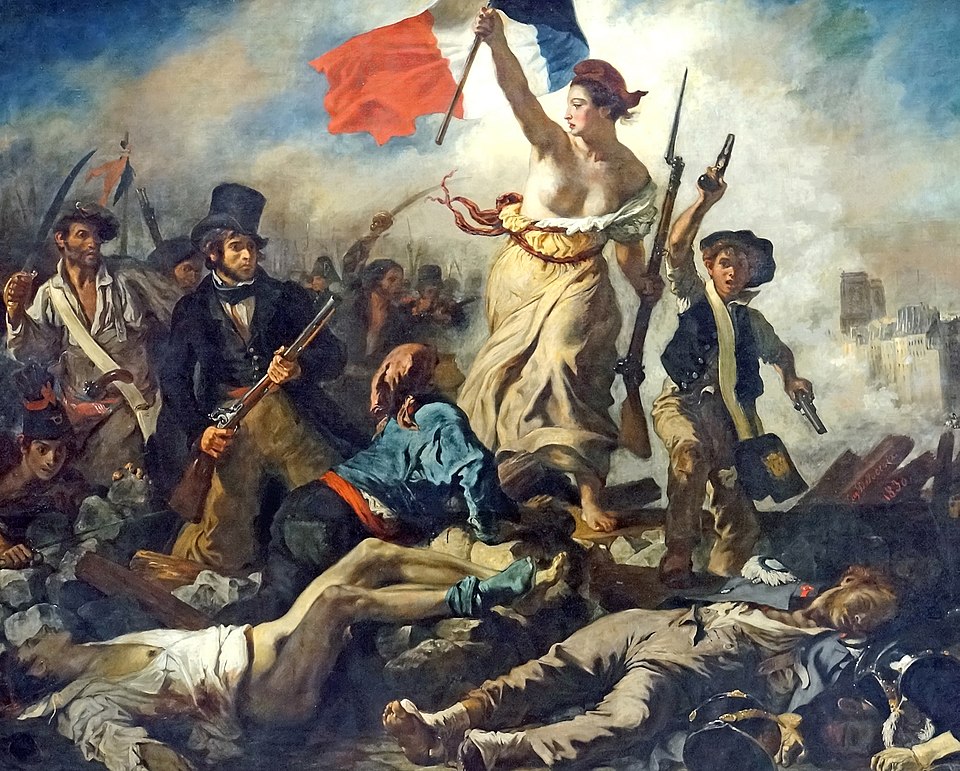
The French Revolution’s Civil Constitution of the Clergy (1790) attempted to subordinate Church to state, requiring clergy to swear loyalty oaths and subjecting bishops to popular election. Pope Pius VI condemned the Constitution, and the subsequent Terror targeted clergy and religious, destroying churches and instituting the Cult of Reason. Napoleon’s Concordat of 1801 restored the Church’s legal status but maintained state control over episcopal appointments (Hales, 1960).
Across Europe, liberal revolutions challenged the Church’s traditional alliance with monarchy and aristocracy. Italian unification threatened the Papal States, culminating in their seizure in 1870 and the Pope’s self-imposed imprisonment in the Vatican until the Lateran Treaty (1929) resolved the ‘Roman Question’ (Coppa, 1990).
Is the Pope Really Infallible?
Vatican I (1869-1870) and Papal Infallibility
The First Vatican Council, convened by Pope Pius IX, addressed modernity’s challenges through doctrinal clarification. The Dogmatic Constitution Dei Filius defended natural theology against rationalism and fideism, affirming that reason can know God’s existence through creation while revelation remains necessary for salvific knowledge (Butler, 1962).
The council’s most controversial act was defining papal infallibility in Pastor Aeternus. When the Pope speaks ex cathedra (from the chair of Peter) on faith or morals, intending to bind the universal Church, he possesses the infallibility promised to the Church by Christ. This charism doesn’t create new revelation but protects authoritative interpretation of deposit of faith. Conditions for infallible statements are strict, making such pronouncements rare (Tierney, 1988).
Critics accused Vatican I of papal absolutism and departure from collegiality. Defenders argued it merely made explicit what had been implicit in Catholic ecclesiology since ancient times—Rome’s supreme teaching authority. The dogma’s formulation carefully balances papal prerogative with the Church’s corporate nature, noting infallibility belongs to the Pope specifically as head of the episcopal college in union with the universal Church (Thils, 1969).
Vatican I concluded prematurely when Italian troops occupied Rome. Its unfinished agenda—particularly regarding episcopal collegiality and the laity’s role—awaited Vatican II’s completion nearly a century later (Schatz, 1996).
What Does the Church Teach About Economics?
Leo XIII and Catholic Social Teaching
Pope Leo XIII (1878-1903) inaugurated modern Catholic social teaching with the encyclical Rerum Novarum (1891), addressing industrial capitalism’s social consequences. Leo defended workers’ rights to just wages, reasonable hours, and unionization, while rejecting both laissez-faire capitalism’s excesses and socialism’s materialism. The encyclical articulated principles of subsidiarity, solidarity, and the preferential option for the poor that would guide subsequent social teaching (Curran, 2002).
Subsequent popes developed Catholic social teaching further: Pius XI’s Quadragesimo Anno (1931) on economic reconstruction, John XXIII’s Pacem in Terris (1963) on peace and human rights, Paul VI’s Populorum Progressio (1967) on development, and John Paul II’s Centesimus Annus (1991) on capitalism and socialism after communism’s collapse. This tradition provides comprehensive Catholic response to modern political economy (Aubert, 1990).
What Changed at Vatican II?
Why Did Pope John XXIII Call a Council?
Pope John XXIII shocked the Catholic world by announcing the Second Vatican Council in 1959, seeking aggiornamento (updating) to help the Church engage modern culture more effectively. Unlike previous councils responding to specific heresies or crises, Vatican II (1962-1965) aimed at pastoral renewal, ecumenical outreach, and dialogue with the modern world (O’Malley, 2008).
Over 2,600 bishops from worldwide attended, representing unprecedented geographical diversity compared to earlier councils’ European dominance. The council’s proceedings reflected tension between ressourcement (return to sources—Scripture, Church Fathers) and aggiornamento, between maintaining continuity with tradition and expressing it in contemporary forms (Alberigo & Komonchak, 1995).
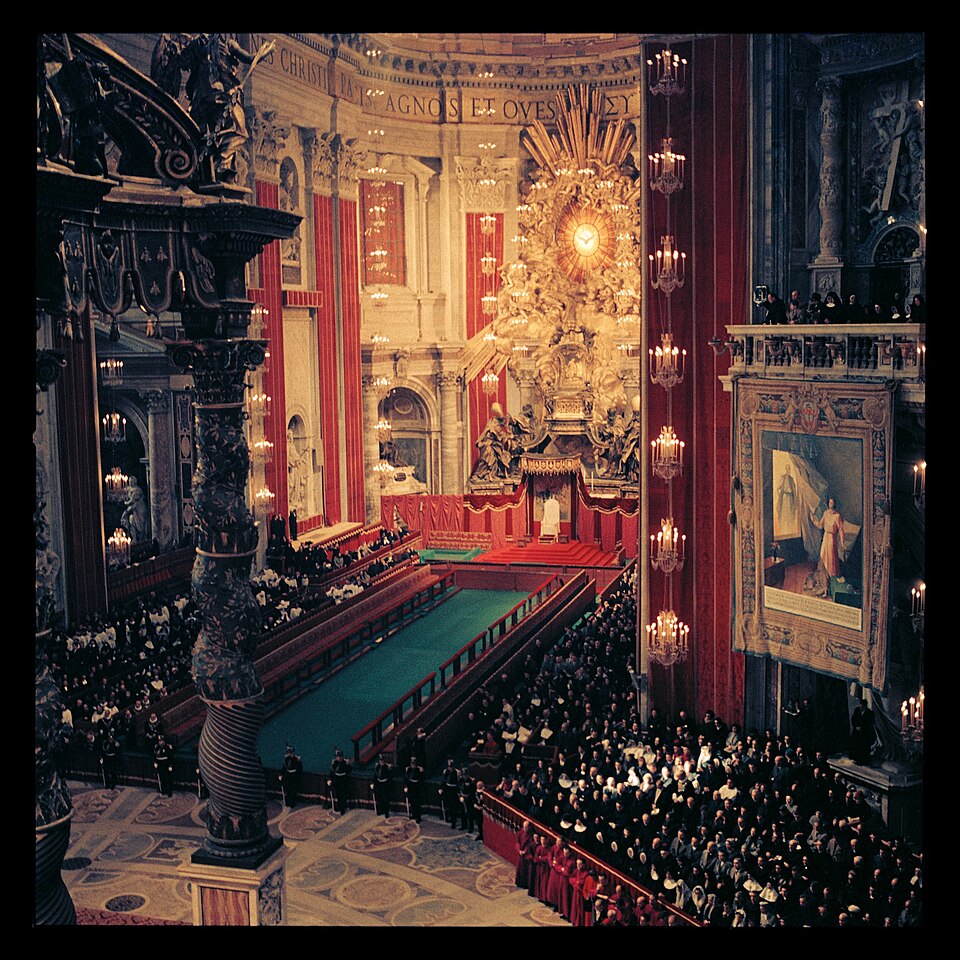
Traditional Catholics, while accepting Vatican II as a legitimate ecumenical council whose teachings require religious assent, critique certain ambiguities in documents and problematic implementations. They emphasize the council’s pastoral rather than dogmatic character, argue it must be interpreted through the ‘hermeneutic of continuity’ with previous teaching rather than rupture, and lament post-conciliar losses in liturgical reverence, catechetical clarity, and missionary fervor (Dulles, 1988).
What Did Vatican II Actually Teach?
Sacrosanctum Concilium, the Constitution on the Sacred Liturgy, initiated liturgical reform including vernacular languages, increased scriptural readings, and simplified rites. Traditional Catholics note the document itself envisioned modest changes—maintaining Latin’s pride of place, preserving Gregorian chant, and continuing ad orientem worship—while subsequent implementation exceeded these parameters (Reid, 2005).
Lumen Gentium, the Dogmatic Constitution on the Church, presented a comprehensive ecclesiology emphasizing the Church as ‘People of God,’ developing collegiality of bishops with the Pope, and recognizing elements of truth in other Christian communities. While affirming Catholic Church alone possesses the fullness of means of salvation, it acknowledged that the Church of Christ ‘subsists in’ the Catholic Church rather than is exclusively identical with it—opening space for ecumenical engagement (Sullivan, 1988).
Gaudium et Spes, the Pastoral Constitution on the Church in the Modern World, articulated Catholic engagement with contemporary culture, addressing human dignity, family life, economic justice, peace, and international development with optimistic tone about human progress (Lamb & Levering, 2008).
How Should We Interpret Vatican II Today?
Vatican II’s implementation proved controversial. Pope Paul VI faced dissent on both sides: progressives wanting faster change, traditionalists fearing doctrinal corruption. His encyclical Humanae Vitae (1968), reaffirming Church teaching against artificial contraception, sparked widespread dissent demonstrating authority’s contested nature in the post-conciliar Church (McClory, 1995).
The liturgical reform’s implementation varied widely, from cautious adaptation to radical experimentation. Pope Benedict XVI later promoted the ‘reform of the reform,’ encouraging greater continuity with preconciliar liturgy and granting wider permission for the Tridentine Mass (Ratzinger, 2000). Traditional Catholics argue that recovering Vatican II’s actual teaching requires distinguishing authentic documents from problematic applications.
The council’s long-term effects remain debated. Supporters cite renewed biblical engagement, ecumenical progress, and cultural adaptation. Critics note vocations’ decline, liturgical banality, and theological confusion. Pope John Paul II and Benedict XVI emphasized ‘hermeneutic of continuity’—reading Vatican II through tradition’s lens rather than as rupture. This approach seeks to preserve the council’s genuine achievements while correcting distortions (Rowland, 2008).
Where Is the Catholic Church Today?
The Catholic Church’s two-thousand-year history demonstrates remarkable continuity amid enormous change. From its origins in apostolic Jerusalem through persecution, doctrinal controversy, medieval Christendom, reformation crisis, enlightenment challenge, and contemporary pluralism, the Church has maintained its essential character: apostolic succession, papal primacy, sacramental worship, and authoritative teaching (Dulles, 2002).
Traditional Catholic interpretation sees this continuity as supernatural rather than merely sociological—the fulfillment of Christ’s promise that the gates of hell would not prevail against His Church (Matthew 16:18). The Church’s survival through empires’ collapse, heresies’ challenges, and internal corruption testifies to divine assistance. While individual members sin, the institution’s essential holiness derives from Christ and the Holy Spirit’s indwelling.
The development of doctrine, from Nicaea’s homoousios to Vatican I’s papal infallibility to Vatican II’s religious liberty, represents organic unfolding rather than innovation. As John Henry Newman argued, true development maintains identity while explicating implications, as an oak grows from an acorn without ceasing to be the same organism (Newman, 1845/1989). The magisterium guards this development against corruption, ensuring that explicit teaching never contradicts implicit apostolic deposit.
Contemporary challenges—secularization in the West, persecution in the East, internal divisions over doctrine and discipline—echo perennial struggles. Yet the Church’s mission remains constant: proclaiming the Gospel, celebrating the sacraments, and forming disciples. As Vatican II taught, the Church is ‘in Christ like a sacrament or as a sign and instrument both of a very closely knit union with God and of the unity of the whole human race’ (Lumen Gentium, 1964, para. 1).
The Church approaches the future with both confidence and humility—confidence in Christ’s promises and divine assistance, humility about human weakness and need for ongoing reform. The summons to holiness extends to all members, from Pope to newest convert. As the Church has proclaimed for two thousand years: extra ecclesiam nulla salus (outside the Church there is no salvation), yet this truth coexists with hope for God’s mercy toward those who through no fault of their own do not know Christ’s Church.
The Catholic Church’s history, viewed from a traditional perspective, reveals not merely human institution but divine mystery—the continuing Incarnation of Christ in time, His mystical body animated by the Holy Spirit, leading humanity toward the Father. This vision sustains Catholic faith amid trials, provides interpretive framework for understanding developments, and generates hope that the Church will continue its mission until Christ returns in glory.
References
Alberigo, G., & Komonchak, J. A. (Eds.). (1995). History of Vatican II (Vols. 1-5). Orbis Books.
Aubert, R. (1990). The Church in a secularized society. Paulist Press.
Butler, C. (1962). The Vatican Council: The story told from inside in Bishop Ullathorne’s letters (Vols. 1-2). Longmans.
Coppa, F. J. (1990). Pope Pius IX: Crusader in a secular age. Twayne Publishers.
Curran, C. E. (2002). Catholic social teaching, 1891-present: A historical, theological, and ethical analysis. Georgetown University Press.
Dulles, A. (1988). The reshaping of Catholicism: Current challenges in the theology of Church. Harper & Row.
Dulles, A. (2002). A history of apologetics (2nd ed.). Ignatius Press.
Hales, E. E. Y. (1960). Revolution and papacy, 1769-1846. Hanover House.
Lamb, M. L., & Levering, M. (Eds.). (2008). Vatican II: Renewal within tradition. Oxford University Press.
Latreille, A. (1970). Napoleon and the Church. In G. Bruun (Ed.), The new Cambridge modern history (Vol. 9, pp. 522-544). Cambridge University Press.
Lumen Gentium. (1964). In A. Flannery (Ed.), Vatican Council II: The conciliar and post conciliar documents. Costello Publishing.
McClory, R. (1995). Turning point: The inside story of the papal birth control commission. Crossroad.
Newman, J. H. (1989). An essay on the development of Christian doctrine. University of Notre Dame Press. (Original work published 1845)
O’Malley, J. W. (2008). What happened at Vatican II. Belknap Press of Harvard University Press.
Ratzinger, J. (2000). The spirit of the liturgy. Ignatius Press.
Reid, A. (2005). The organic development of the liturgy. Ignatius Press.
Rowland, T. (2008). Ratzinger’s faith: The theology of Pope Benedict XVI. Oxford University Press.
Schatz, K. (1996). Papal primacy: From its origins to the present. Liturgical Press.
Sullivan, F. A. (1988). The Church we believe in: One, holy, catholic and apostolic. Paulist Press.
Thils, G. (1969). Papal infallibility reconsidered. Sheed and Ward.
Tierney, B. (1988). Origins of papal infallibility, 1150-1350: A study on the concepts of infallibility, sovereignty and tradition in the Middle Ages (New ed.). Brill.