Reformation and Renewal – Crisis and Catholic Response
Part Four
What Happened on October 31, 1517?
Through the first three parts of this series, (Click History of the Catholic Church), we’ve traced the Catholic Church from its biblical origins through apostolic growth, persecution and doctrinal definition, and medieval cultural dominance. We’ve seen how the Church preserved civilization, built universities, and created the intellectual framework for Western culture. By 1500, Christendom appeared secure—a unified Catholic Europe under papal spiritual leadership.
Then came October 31, 1517. Martin Luther, an Augustinian monk, posted his Ninety-Five Theses challenging indulgences and, ultimately, the entire structure of Catholic authority. Within decades, much of Northern Europe had embraced Protestant theology. Western Christendom split into Catholic and Protestant camps, a division that persists five centuries later.
In this fourth part, we examine the Protestant Reformation from a traditional Catholic perspective: What went wrong? What were Luther’s theological errors? How did the Church respond through the Council of Trent? What role did new religious orders play in Catholic renewal? And what does this mean for Catholics today? These questions remain vital because the Reformation’s fundamental issues—authority, Scripture, salvation—still divide Christians.
Why Did Luther Break with the Catholic Church?
The Protestant Challenge
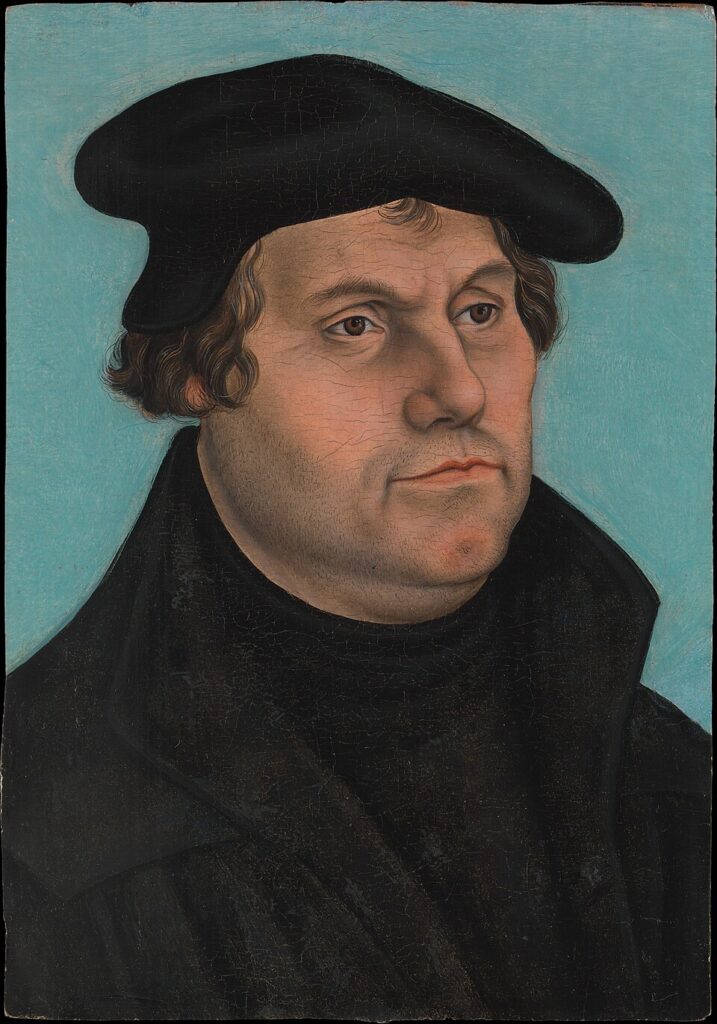
Martin Luther’s posting of Ninety-Five Theses on October 31, 1517, sparked the Protestant Reformation, fracturing Western Christendom and fundamentally challenging Catholic ecclesiology. Luther’s theology—sola fide (justification by faith alone), sola scriptura (Scripture alone as authority), priesthood of all believers—contradicted Catholic teaching on justification through faith and works, Sacred Tradition alongside Scripture, and hierarchical priesthood (Bainton, 1950).
The Reformation’s rapid spread reflected multiple factors: legitimate grievances about clerical corruption and excessive indulgences, Renaissance humanism’s emphasis on ad fontes (‘to the sources’) and vernacular Scripture, printing press enabling mass distribution of reformist literature, and princely opportunism regarding ecclesiastical wealth and papal authority. By 1555’s Peace of Augsburg, much of Germany, Scandinavia, England, Scotland, and Switzerland had embraced Protestant theology (Cameron, 1991).
From the traditional Catholic perspective, the Reformation represented tragic schism driven by theological error and prideful rejection of legitimate authority. Luther’s denial of free will, rejection of five sacraments, and claim that justification occurred through imputed rather than infused righteousness contradicted Scripture, Tradition, and Church Fathers’ unanimous testimony. The principle of private interpretation, replacing magisterial authority with individual conscience, led inexorably to doctrinal fragmentation—as the subsequent proliferation of Protestant denominations demonstrated (Tavard, 1959).
How Did the Council of Trent Respond?
The Council of Trent (1545-1563)
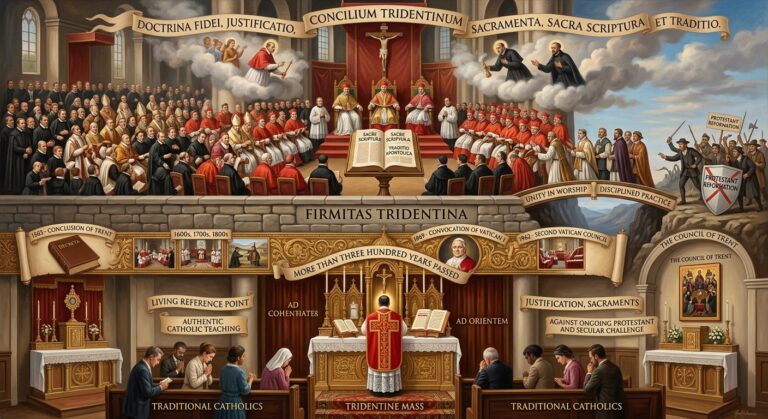
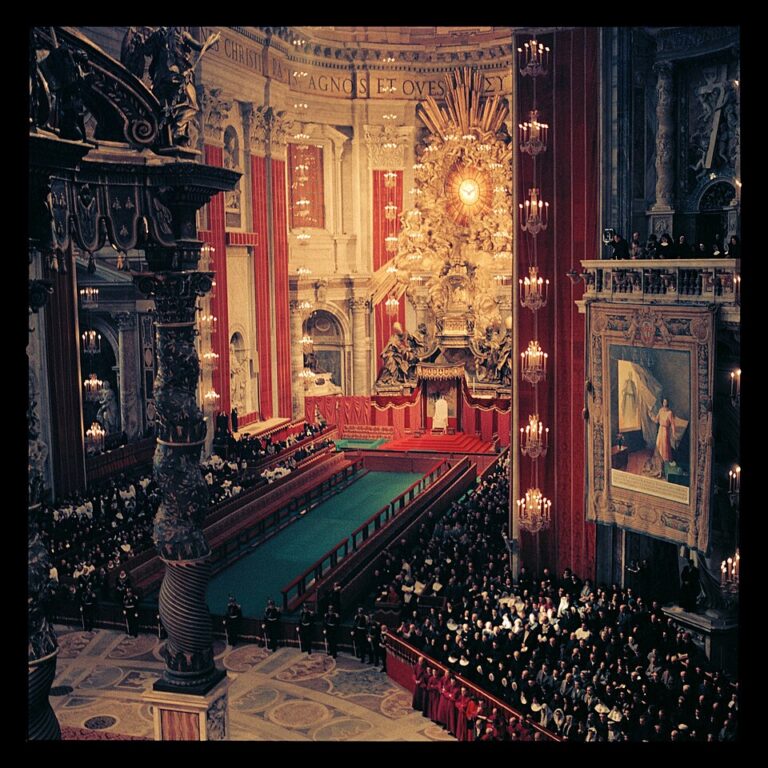
The Council of Trent represents the Catholic Reformation’s doctrinal foundation, systematically refuting Protestant errors while reforming genuine abuses (O’Malley, 2000). Convened by Pope Paul III and meeting intermittently over eighteen years, Trent clarified Catholic doctrine on justification, sacraments, Scripture and Tradition, and Church authority.
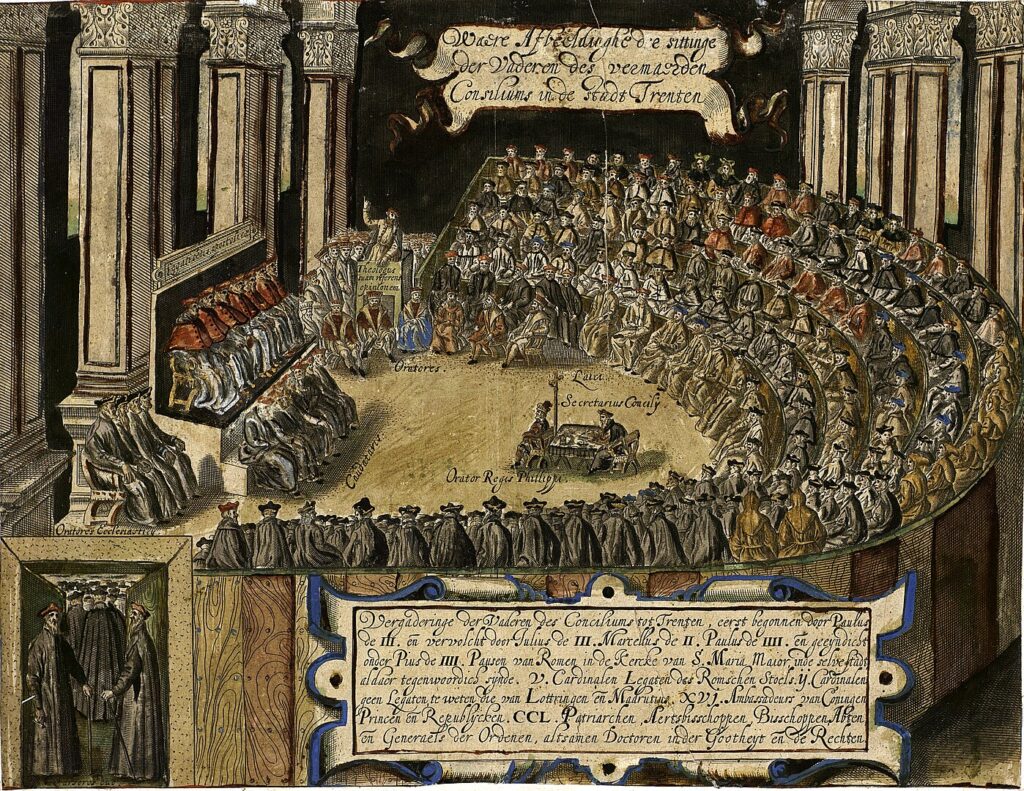
On justification, Trent taught that humans cooperate with grace through faith and works, rejecting both Pelagian self-salvation and Lutheran faith-alone. Justification involves infused rather than merely imputed righteousness—God truly makes the justified person righteous through sanctifying grace, not merely declares them legally righteous while they remain sinful. This process begins with baptism and continues through the sacraments, particularly penance for post-baptismal sin (Jedin, 1957-1961).
Trent affirmed all seven sacraments as instituted by Christ and conferring grace ex opere operato (by the work worked)—objectively, not dependent on minister’s or recipient’s subjective state beyond proper disposition. The Eucharist received special attention: transubstantiation definitively describes Christ’s Real Presence, the Mass constitutes a true propitiatory sacrifice (not mere memorial), and communion under one species suffices for laity (Duggan, 2009).
Is the Bible Enough Without Church Tradition?
On Scripture and Tradition, Trent rejected sola scriptura, teaching that divine revelation comes through both Sacred Scripture and Sacred Tradition, both transmitted by apostolic succession. The Vulgate received official approval as the Latin Bible, and the canon of Scripture (including deuterocanonical books rejected by Protestants) was definitively established. Interpretation belongs to the magisterium, not private judgment (Lane, 2006).
Trent’s disciplinary reforms addressed abuses fueling Protestant criticism: establishing seminaries for proper priestly formation, requiring bishops’ residency in their dioceses, regulating indulgences, and prohibiting simony. These reforms, implemented through following decades, revitalized Catholic life and prepared the Church for missionary expansion and cultural engagement (Mullett, 1999).
Who Were the Reformers of Catholic Renewal?
What Did the Jesuits Accomplish?
The Catholic Reformation (or Counter-Reformation) extended beyond Trent’s doctrinal clarifications to encompass spiritual renewal, new religious orders, and missionary expansion. Ignatius of Loyola founded the Society of Jesus (Jesuits) in 1540, combining rigorous intellectual formation, spiritual discipline through the Spiritual Exercises, and missionary zeal. Jesuits became the Church’s shock troops in education, theological defense, and global evangelization (O’Malley, 1993).
Teresa of Avila and John of the Cross reformed the Carmelite order, emphasizing contemplative prayer, mystical theology, and spiritual direction. Their writings—The Interior Castle, The Ascent of Mount Carmel—became classics of Catholic spirituality. Philip Neri founded the Oratory, combining priestly community life with popular evangelization through music and accessible preaching. Angela Merici established the Ursulines for women’s education (Wright, 2005).
Missionary expansion accompanied reform. Francis Xavier evangelized India, Japan, and Southeast Asia. Matteo Ricci developed inculturation methodology in China. Spanish and Portuguese missions established the Church throughout the Americas, though with controversial aspects regarding treatment of indigenous peoples. The Jesuit reductions in Paraguay represented an attempt at Christian community formation respecting indigenous culture (Clendinnen, 1991).
The baroque aesthetic emerged as Catholicism’s cultural expression—ornate churches, dramatic religious art (Caravaggio, Bernini, Rubens), and elaborate liturgy appealing to the senses. This contrasted with Protestant aesthetic austerity, reflecting differing theologies of incarnation, sacrament, and grace’s mediation through material reality (Bailey, 2003).
What Are the Reformation’s Lasting Effects?
The Protestant Reformation and Catholic response permanently changed Christianity. Europe divided along religious lines, often violently. The Thirty Years’ War devastated Germany. England persecuted Catholics under Elizabeth I. France saw religious wars between Catholics and Huguenots. Christian unity, maintained for fifteen centuries despite the East-West Schism, was shattered in the West.
But the Catholic Church emerged stronger in important ways. Trent’s clarity on doctrine gave Catholics intellectual confidence. Reformed seminaries improved clergy quality. New religious orders revitalized spirituality. And global evangelization made Catholicism truly worldwide—no longer merely European. The Church had faced its greatest crisis since the barbarian invasions and survived with renewed vigor.
For traditional Catholics today, Trent remains normative. Its doctrinal definitions on justification, sacraments, and Scripture-Tradition bind Catholic conscience. Many see Vatican II not as replacing but completing Trent’s work. The question Trent raised remains urgent: Who has authority to interpret Scripture and define doctrine? Catholics answer: the magisterium. Protestants answer: individual conscience. This fundamental difference persists five hundred years later.
In our final part, we’ll explore how the Church navigated modernity—from the French Revolution’s anticlericalism through Vatican I’s definition of papal infallibility to Vatican II’s aggiornamento. We’ll bring the story to today and consider where the Church is heading. The modern period presents new challenges but also demonstrates the Church’s remarkable adaptability while maintaining doctrinal continuity.
References
Bainton, R. H. (1950). Here I stand: A life of Martin Luther. Abingdon-Cokesbury Press.
Bailey, G. A. (2003). Art of colonial Latin America. Phaidon Press.
Cameron, E. (1991). The European Reformation. Clarendon Press.
Clendinnen, I. (1991). Aztecs: An interpretation. Cambridge University Press.
Duggan, M. T. (2009). The Mass at the frontiers of space and time: The Eucharist in the thought of Joseph Ratzinger. Sapientia Press.
Jedin, H. (1957-1961). A history of the Council of Trent (Vols. 1-2). Thomas Nelson & Sons.
Lane, A. N. S. (2006). A reader’s guide to the Council of Trent. Baker Academic.
Mullett, M. A. (1999). The Catholic Reformation. Routledge.
O’Malley, J. W. (1993). The first Jesuits. Harvard University Press.
O’Malley, J. W. (2000). Trent and all that: Renaming Catholicism in the early modern era. Harvard University Press.
Tavard, G. H. (1959). Holy writ or holy Church: The crisis of the Protestant Reformation. Harper.
Wright, W. J. (2005). Saints and their cults. Paulist Press.