The Infant of Prague: History, Devotion, and Spiritual Practice
The Infant Jesus of Prague stands as one of Catholicism’s most beloved devotions, linking 16th-century Spanish mysticism with a universal spirituality of trust and childlike surrender to God. This small wax-coated wooden statue—just 19 inches tall—has inspired centuries of documented miracles, papal recognitions, and a worldwide devotional movement centered on the promise spoken to Father Cyril of the Mother of God in 1637: “The more you honor Me, the more I will bless you” (EWTN, n.d.-a). What began in the aristocratic households of Habsburg Europe has become a cornerstone of Catholic piety, embodying the profound theological truth that the infinite God chose to enter human history as a vulnerable child.
What Are the Origins of the Statue and How Did It Journey to Bohemia?
The Infant of Prague’s origins remain partially shrouded in pious legend. The statue is believed to have been crafted in Spain during the second half of the 16th century, possibly in the region between Córdoba and Seville (Carmelite Sisters of the Most Sacred Heart, 2017). According to tradition, a monk received a vision of the Christ Child and fashioned the image based on what he beheld. Some accounts suggest an earlier provenance, dating the sculpture’s origins to approximately 1340 at a Cistercian monastery (EWTN, n.d.-a).
The statue’s documented history begins with the Spanish noblewoman María Maximiliana Manriquez de Lara y Mendoza (1538–1608). In 1556, upon her marriage to Czech nobleman Vratislav II of Pernštejn, Chancellor of the Czech Kingdom, María brought the statue from Spain to Bohemia as a treasured wedding gift from her mother, Doña Isabella Manrique (PragJesu, n.d.). Within the Lobkowicz family, a persistent tradition holds that the statue once belonged to St. Teresa of Ávila (1515–1582), the great Carmelite reformer who profoundly venerated Jesus’s childhood and spread this devotion throughout Spain (Carmelite Sisters of the Most Sacred Heart, 2017).
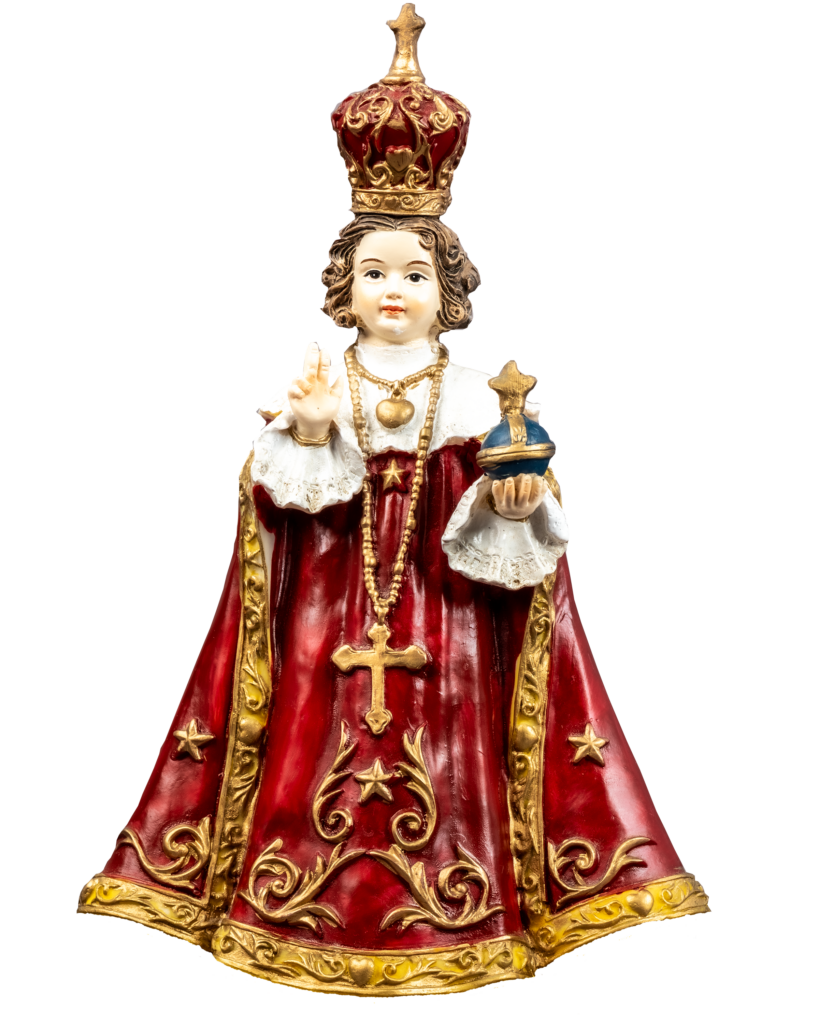
The statue passed to María’s daughter, Polyxena of Pernštejn (1566–1642), as a wedding gift in 1587 when Polyxena married William of Rosenberg, High Treasurer and High Burgrave of Bohemia (Wikipedia, n.d.-a). After William’s death, Polyxena married Zdeněk Vojtěch Popel z Lobkovic, becoming the 1st Princess Lobkowicz. As leaders of the Catholic faction at the Habsburg court, the Lobkowicz family wielded considerable political and spiritual influence during the Counter-Reformation struggles that shook Central Europe.
In 1628, Princess Polyxena made the decision to donate the statue to the Discalced Carmelites of Prague (EWTN, n.d.-a). Her words at the presentation became prophetic: “I give you what I prize most highly in the world; honor and respect the Child Jesus and you shall never be in want” (PragJesu, n.d.). The Carmelites placed the image in their novitiate chapel, where young monks could learn the virtues of spiritual childhood. Special devotions were offered twice daily, and Emperor Ferdinand II himself supported the monastery with generous financial contributions.
How Was the Statue Damaged During War and Miraculously Restored?
The Thirty Years’ War (1618–1648) brought devastation to Prague and nearly destroyed the devotion before it could flourish. When Saxon forces seized the city in 1631, the Carmelites fled. The invading Protestant armies desecrated the monastery; the statue was thrown onto a rubbish heap behind the altar, its delicate wax hands broken off (EWTN, n.d.-a). For seven years, the image lay forgotten among debris.
The restoration of the devotion came through Father Cyril of the Mother of God, a Carmelite priest originally from Luxembourg who had been a novice in Prague when the statue first arrived (PragJesu, n.d.). Returning to the city in 1637, Father Cyril searched for the image he remembered from his youth. When he discovered the damaged statue, he knelt before it in prayer. What followed became the foundation of the entire devotion. Father Cyril reported hearing the Infant Jesus speak:
“Have mercy on Me, and I will have mercy on you. Give Me My hands, and I will give you peace. The more you honor Me, the more I will bless you” (EWTN, n.d.-a).
Father Cyril faced considerable obstacles in raising funds for the statue’s repair. At one point, the prior used donated money to purchase a new statue instead, which was shattered by a falling candlestick on its first day—interpreted as a divine sign that the original must be restored (PragJesu, n.d.). Eventually, a mysterious noblewoman provided the necessary funds. The statue’s hands were repaired, and devotion to the Infant Jesus began spreading throughout Catholic Europe.
By 1641, the restored statue was moved to a chapel for public veneration (EWTN, n.d.-a). On January 3, 1644, a new chapel dedicated specifically to the Infant Jesus was blessed on the Feast of the Most Holy Name of Jesus. The devotion continued growing despite—and perhaps because of—continued wartime threats. Prague’s survival during the Swedish siege of 1639 was attributed to prayers offered before the Infant Jesus (PragJesu, n.d.).
How Did the Devotion Achieve Canonical Recognition and Spread Worldwide?
The Church’s official recognition came quickly. In 1648, the Archbishop of Prague consecrated the chapel and permitted Mass at the Infant’s altar—the first formal ecclesiastical approval (EWTN, n.d.-a). On April 4, 1655, the statue received its solemn coronation by Archbishop Josef Corta, acting on behalf of Cardinal Ernst Adalbert von Harrach III (PragJesu, n.d.). This date is still commemorated annually on the first Sunday of May. Bernard Ignatius of the Lords of Martinic presented the first gold crown set with precious stones in 1651.
The devotion achieved an exceptional canonical distinction on September 24, 1824, when Pope Leo XII granted a decree of pontifical coronation—making the Infant of Prague the first Christological image in history to receive this prestigious honor (Wikipedia, n.d.-b). Subsequent papal recognitions followed: Pope Leo XIII confirmed the Sodality of the Infant of Prague and granted numerous indulgences in 1896; St Pope Pius X authorized the establishment of the Confraternity of the Infant Jesus of Prague in 1913; and Pope Pius XI reiterated these privileges in 1923 (PragJesu, n.d.).
The modern era brought continued papal attention. On September 26, 2009, Pope Benedict XVI visited the Church of Our Lady Victorious, declaring it the first station on the Apostolic Road in the Czech Republic (Catholic Culture, n.d.). He donated a new golden crown adorned with eight shells, pearls, and garnet gemstones, and spoke of how the Infant Jesus “with his childlike tenderness, makes God’s closeness and love present.”
The devotion spread initially through the Carmelite order, with copies sent to nearly every monastery (Carmelite Sisters of the Most Sacred Heart, 2017). By the mid-18th century, it had reached all countries of the former Austro-Hungarian Empire. The 1879 restoration of the altar sparked a revival, with reports of miracles flooding in from across the empire (EWTN, n.d.-a). Spanish and Portuguese missionaries carried the devotion to South America, the Caribbean, and Asia. Today, the Infant of Prague is venerated worldwide—in India, China, the Philippines, South Africa, Australia, Thailand, Sri Lanka, and throughout North and South America (Infantjesus.org, n.d.). The devotion remains especially popular in Spanish-speaking countries.
What Is the Symbolism of the Statue and Its Vestments?
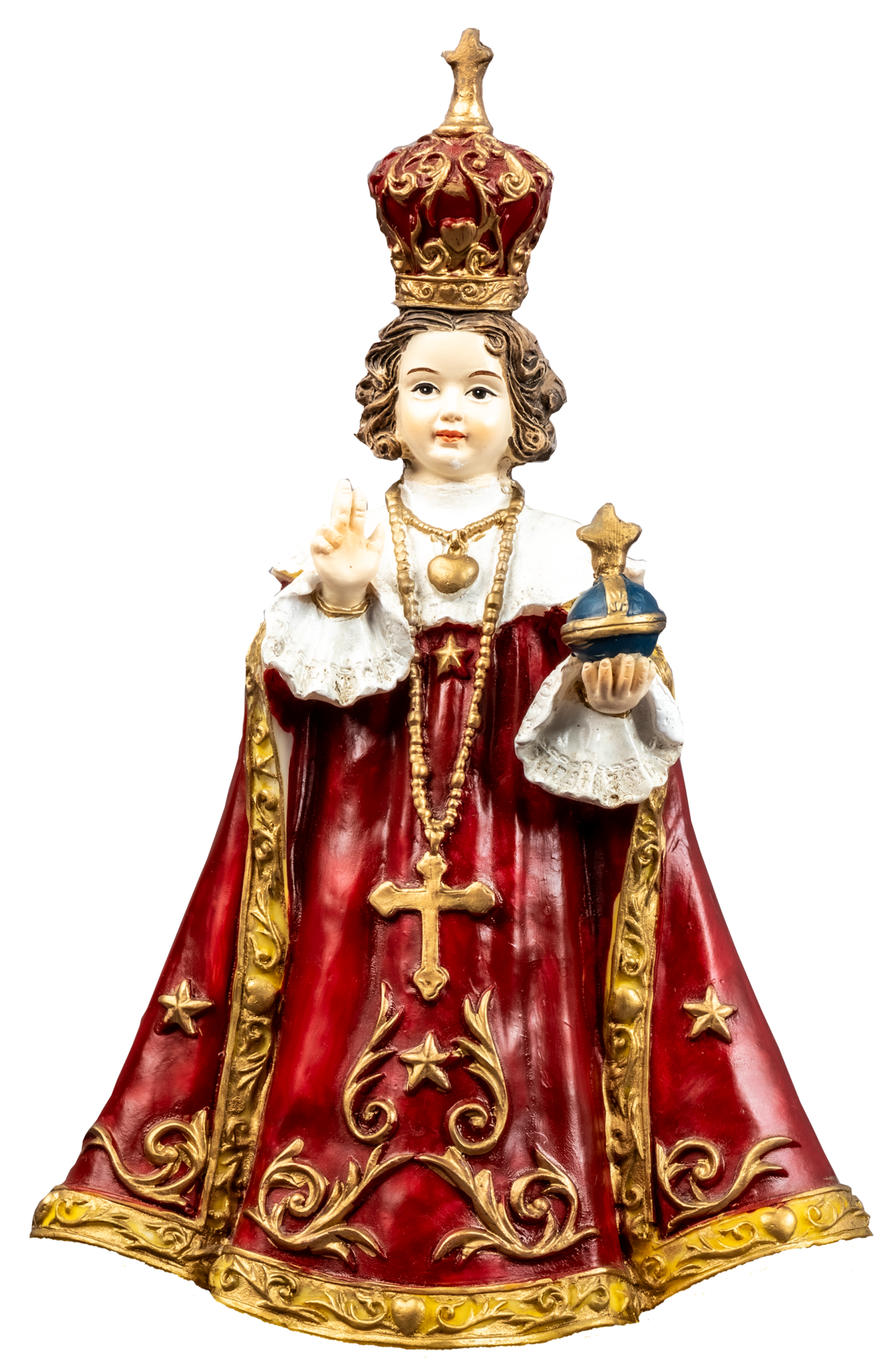
The Infant of Prague’s iconography carries profound theological meaning. The globus cruciger (orb surmounted by a cross) held in the left hand signifies Christ’s universal kingship and dominion over all creation (Catholic Share, n.d.). The right hand is extended in the gesture of pontifical blessing: two fingers raised represent Christ’s two natures (divine and human), while the thumb touching the last two fingers symbolizes the unity of the Trinity.
The statue wears vestments resembling liturgical garments, changed approximately ten times per year according to the liturgical calendar—a practice begun after the great cholera epidemic of 1713 (PragJesu, n.d.). The colors carry traditional significance:
- White for Christmas and Easter, symbolizing glory and purity.
- Red for Holy Week, Pentecost, and feasts of the Holy Cross, representing Christ’s blood and the fire of the Spirit.
- Purple for Lent and Advent, signifying penance and preparation.
- Green for Ordinary Time, representing hope and spiritual growth.
- Rose for Gaudete Sunday (Third Sunday of Advent) and Laetare Sunday (Fourth Sunday of Lent), signifying joy amid penitential seasons.
The statue’s wardrobe comprises approximately 100 robes, many donated by grateful devotees over the centuries (Prague Now, n.d.). Notable vestments include sets given by Empress Maria Theresa, who reportedly embroidered a robe herself in thanksgiving for French troops retreating during the 1742 Siege of Prague. Modern donations have come from countries worldwide, including South Korea, Poland, and the Philippines. The Carmelite Sisters of the Child Jesus maintain responsibility for dressing the statue (Catholic Culture, n.d.).
What Is the Theological Significance of Devotion to the Holy Childhood?
Devotion to the Infant Jesus is fundamentally a celebration of the mystery of the Incarnation—the central truth that the Son of God assumed human nature to accomplish salvation. As the Catechism of the Catholic Church teaches: “Belief in the true Incarnation of the Son of God is the distinctive sign of Christian faith” (§463) (United States Conference of Catholic Bishops, n.d.). The Council of Chalcedon (451 AD) declared that Jesus was “perfect in deity and in humanity”—the theological foundation for venerating Christ at every stage of his earthly life, including childhood.
Scripture provides the devotion’s doctrinal foundation. The Gospel of John proclaims that “the Word became flesh and dwelt among us” (John 1:14). St. Paul writes that Christ “emptied himself, taking the form of a servant, being born in the likeness of men” (Philippians 2:7). Isaiah prophesied: “For to us a child is born, to us a son is given” (Isaiah 9:6). These texts establish that the infant Jesus was no less divine for being small and vulnerable—indeed, his very weakness reveals the radical nature of God’s love (Britannica, n.d.).
Jesus himself taught the necessity of spiritual childhood: “Truly I tell you, unless you change and become like little children you will never enter the kingdom of Heaven” (Matthew 18:3). The devotion invites the faithful to cultivate the virtues of childhood—trust, simplicity, wonder, and total dependence on the Father’s providence. True wisdom means admitting that compared to an all-powerful God, any belief that we can handle life on our own is simply an illusion.
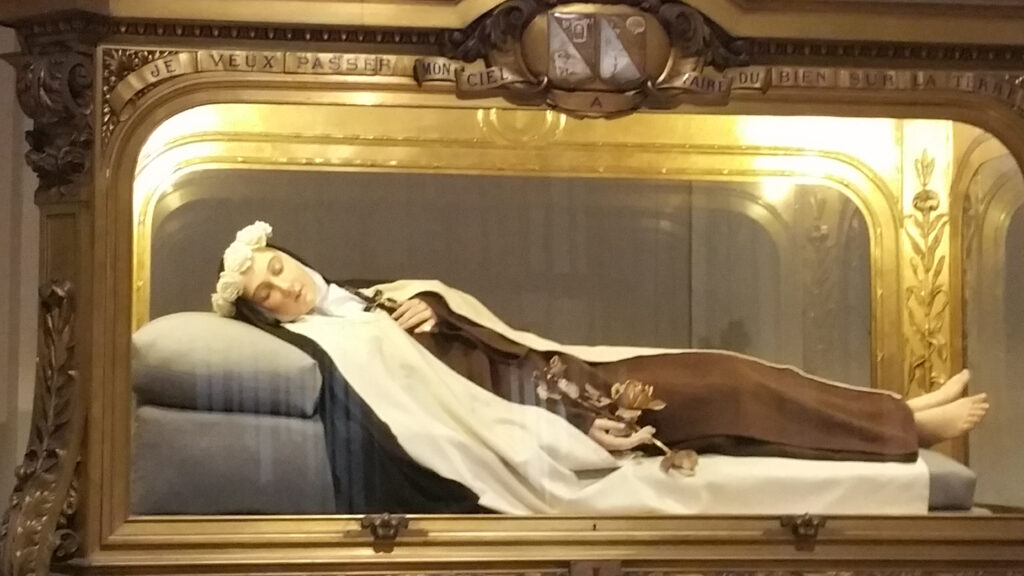
The Infant of Prague devotion is deeply rooted in Carmelite spirituality. St. Teresa of Ávila’s alleged connection to the original statue reflects her profound veneration of Jesus’s childhood (Carmelite Sisters of the Most Sacred Heart, 2017). This spirituality reached its fullest expression in St. Thérèse of Lisieux (1873–1897), whose religious name was “Sister Thérèse of the Child Jesus and the Holy Face” (Wikipedia, n.d.-c). Thérèse developed the famous “Little Way of Spiritual Childhood”—a path of trust and absolute surrender (Britannica, n.d.-b). As novice mistress at the Carmel of Lisieux, she placed a copy of the Prague statue in the novitiate “because she knew the many blessings the Divine Child brought to the Carmelite novices in Prague” (Catholic Review, 2014). Pope John Paul II declared Thérèse a Doctor of the Church in 1997, recognizing spiritual childhood as a universal path to holiness.
What Is the Nine Day Novena to the Infant of Prague?
The traditional Nine Day Novena developed gradually through the centuries, with various versions receiving ecclesiastical approval (EWTN, n.d.-b). The novena may be prayed at any time of year, though it is especially appropriate during Advent (December 16–24), before the Feast of the Infant of Prague (January 14), or during the Christmas season.
Opening Prayer (By Venerable Father Cyril)
Jesus, unto Thee I flee,
Through Thy mother praying Thee
In my need to succor me.
Truly, I believe of Thee
God Thou art with strength to shield me;
Full of trust, I hope of Thee
Thou Thy grace wilt give to me.
All my heart I give to Thee,
Therefore, do my sins repent me;
From them breaking, I beseech Thee,
Jesus, from their bonds to free me.
Firm my purpose is to mend me;
Never more will I offend Thee.
Wholly unto Thee I give me,
Patiently to suffer for Thee,
Thee to serve eternally.
And my neighbor like to me
I will love for love of Thee.
Little Jesus, I beseech Thee,
In my need to succor me,
That with Joseph and Mary
And the Angels, I may Thee
Once enjoy eternally. Amen. (EWTN, n.d.-b)
The Principal Novena Prayers (Recited Each Day)
First Petition:
O Jesus, Who has said, “Ask and you shall receive, seek and you shall find, knock and it shall be opened,” through the intercession of Mary, Your Most Holy Mother, I knock, I seek, I ask that my prayer be granted. (State your intention)
Second Petition:
O Jesus, Who has said, “All that you ask of the Father in My Name, He will grant you,” through the intercession of Mary, Your Most Holy Mother, I humbly and urgently ask Your Father in Your Name that my prayer be granted. (State your intention)
Third Petition:
O Jesus, Who has said, “Heaven and earth shall pass away, but My word shall not pass away,” through the intercession of Mary, Your Most Holy Mother, I feel confident that my prayer will be granted. (State your intention)
Prayer of Thanksgiving:
Divine Infant Jesus, I know You love me and would never leave me. I thank You for Your close presence in my life. Miraculous Infant, I believe in Your promise of peace, blessings, and freedom from want. I place every need and care in Your hands. Lord Jesus, may I always trust in Your generous mercy and love. I want to honor and praise You, now and forever. Amen. (Pray More Novenas, n.d.)
Daily Meditations Based on the Beatitudes
Day 1 — Blessed Are the Poor in Spirit:
Infant Jesus, King of Heaven and Earth, You chose to be born into poverty, accepting human flesh as Your own with not even a crib to lay down Your head. Teach us to be poor in spirit that the kingdom of heaven may be ours. Amen.
Day 2 — Blessed Are Those Who Mourn:
Infant Jesus, King of Heaven and Earth, Your birth was surrounded with sorrow as Your generation was slaughtered at the hands of King Herod. Be with us when we mourn, that we may be comforted. Amen.
Day 3 — Blessed Are the Meek:
Infant Jesus, King of Heaven and Earth, You chose to be born in the most meek form possible, a human infant. Teach us to be meek, that we may inherit the earth. Amen.
Day 4 — Blessed Are Those Who Hunger and Thirst for Righteousness:
Infant Jesus, King of Heaven and Earth, when You hungered and thirsted, Your mother nursed You. Teach us to hunger and thirst for righteousness, that we may be satisfied. Amen.
Day 5 — Blessed Are the Merciful:
Infant Jesus, King of Heaven and Earth, You were born as an infant in poverty, identifying Yourself with those in need of merciful care. Teach us to be merciful, that we may obtain mercy. Amen.
Day 6 — Blessed Are the Pure in Heart:
Infant Jesus, King of Heaven and Earth, You gave Mary the great gift of being able to see God when she held her infant boy. Purify our hearts like Mary’s, that we too may see God. Amen.
Day 7 — Blessed Are the Peacemakers:
Infant Jesus, King of Heaven and Earth, Your birth brought together the wealthy and poor, the learned and the ignorant, Gentiles and Jews. Teach us to be peacemakers, that we may be called children of God. Amen.
Day 8 — Blessed Are Those Persecuted for Righteousness:
Infant Jesus, King of Heaven and Earth, You were pursued by those who wanted to end Your life from the time of Your birth. Help us persevere during times when we are persecuted for the sake of righteousness, that the kingdom of heaven may be ours. Amen.
Day 9 — The Mystery of the Incarnation:
Infant Jesus, King of Heaven and Earth, may we not take Your humanity, the Incarnation of God, for granted. Help us to have a deeper and more profound understanding of what You did for us by becoming one of us. Amen. (Pray More Novenas, n.d.)
Spiritual Practices During the Novena
Traditional recommendations include attending Daily Mass when possible, receiving Holy Communion with proper disposition, making a good Confession during the novena period, practicing acts of charity and almsgiving, and meditating on the mysteries of Christ’s Holy Infancy: His birth, the flight into Egypt, and His hidden life at Nazareth (The Catholic Crusade, n.d.). Approaching prayer with childlike simplicity is especially encouraged, as is veneration of an image or statue of the Infant of Prague.
What Is the Nine Hour Novena to the Infant of Prague?
The Nine Hour Novena—also called the Emergency Novena, Storm Novena, or Flying Novena—concentrates the traditional nine-day devotion into a single day for urgent needs (Aleteia, 2018). Historical evidence suggests this form of the novena became widely circulated among the wives of soldiers during World War II, when families faced emergencies that could not wait nine days.
Structure and Method
The same prayer is repeated once every hour for nine consecutive hours in a single day. The prayer should be offered at the same minute each hour—for example, if beginning at 9:15 AM, subsequent prayers would be at 10:15 AM, 11:15 AM, and so forth until 5:15 PM for the ninth and final hour. Each recitation takes approximately five minutes. Many practitioners set phone alarms to ensure regularity.
The Nine Hour Novena Prayer
Begin with the Sign of the Cross
O Jesus, Who has said, “Ask and you shall receive, seek and you shall find, knock and it shall be opened,” through the intercession of Mary, Your Most Holy Mother, I knock, I seek, I ask that my prayer be granted. (State your intention)
O Jesus, Who has said, “All that you ask of the Father in My Name, He will grant you,” through the intercession of Mary, Your Most Holy Mother, I humbly and urgently ask Your Father in Your Name that my prayer be granted. (State your intention)
O Jesus, Who has said, “Heaven and earth shall pass away, but My word shall not pass away,” through the intercession of Mary, Your Most Holy Mother, I feel confident that my prayer will be granted. (State your intention)
Prayer of Thanksgiving:
I prostrate myself before Your Holy Image, O most gracious Infant Jesus, to offer You my most fervent thanks for the blessings You have bestowed upon me. I shall incessantly praise Your ineffable mercy and confess that You alone are my God, my Helper, and my Protector. Henceforth, my entire confidence shall be placed in You! Everywhere, I shall proclaim aloud Your mercy and generosity, so that Your great love and the great deeds which You perform through this Miraculous Image may be acknowledged by all. May devotion to Your Most Holy Infancy increase more and more in the hearts of all Christians; and may all who experience Your Divine assistance persevere with me in showing unceasing gratitude to Your Most Holy Infancy, to which be praise and glory forever. Amen. (Traditional Catholic Prayers, 2019)
End with the Sign of the Cross
Differences from the Nine Day Novena
| Aspect | Nine Hour Novena | Nine Day Novena |
|---|---|---|
| Duration | Nine consecutive hours in one day | Nine consecutive days |
| Timing | Same minute each hour | Once daily for nine days |
| Purpose | Urgent needs and emergencies | Longer-term intentions |
| Structure | Same prayer repeated nine times | Often includes varied daily meditations |
| Intensity | Concentrated, fervent prayer | Sustained devotion over time |
The nine-hour version is chosen for medical emergencies, financial crises, urgent family situations, and time-sensitive decisions (Aleteia, 2018). The traditional nine-day novena allows for deeper meditation with different daily reflections, while the nine-hour version concentrates fervent prayer into one day of intense supplication.
What Is the Litany of the Miraculous Infant of Prague?
For Private Devotion
Lord, have mercy on us. Christ, have mercy on us.
Lord, have mercy on us. Christ, hear us. Christ, graciously hear us.
God the Father of Heaven, have mercy on us.
God the Son, Redeemer of the world, have mercy on us.
God the Holy Spirit, have mercy on us.
Holy Trinity, One God, have mercy on us.
O merciful Infant Jesus, have mercy on us.
O Infant Jesus, true God, have mercy on us.
O Infant Jesus, Whose omnipotence is shown in miracles, have mercy on us.
O Infant Jesus, Whose wisdom searches our hearts and minds, have mercy on us.
O Infant Jesus, Whose kindness is ever ready to send us aid, have mercy on us.
O Infant Jesus, Whose providence leads us to our final end, have mercy on us.
O Infant Jesus, Whose truth enlightens the darkness of our hearts, have mercy on us.
O Infant Jesus, Whose generosity enriches the poor, have mercy on us.
O Infant Jesus, Whose friendship is comfort to the sad of heart, have mercy on us.
O Infant Jesus, Whose mercy forgives the sins of men, have mercy on us.
O Infant Jesus, Whose strength invigorates us, have mercy on us.
O Infant Jesus, Whose power protects us from harm, have mercy on us.
O Infant Jesus, Whose power conquers Hell, have mercy on us.
O Infant Jesus, Whose lovely image draws our hearts and minds, have mercy on us.
O Infant Jesus, Whose magnificence embraces the entire world with Thy hand, have mercy on us.
O Infant Jesus, Whose heart inflamed with love enkindles our cold hearts, have mercy on us.
O Infant Jesus, Whose sweetest and most holy Name rejoices the hearts of the faithful, have mercy on us.
O Infant Jesus, Whose glory fills all the world, have mercy on us.
Be merciful, spare us, O Infant Jesus.
Be merciful, graciously hear us, O Infant Jesus.
From all evil, deliver us, O Infant Jesus.
From all sin, deliver us, O Infant Jesus.
From all distrust of Thine infinite goodness, deliver us, O Infant Jesus.
From all doubts about Thy miraculous power, deliver us, O Infant Jesus.
From all lukewarmness in worshipping Thee, deliver us, O Infant Jesus.
From all want and need, deliver us, O Infant Jesus.
By all the mysteries of Thy Holy Childhood, deliver us, O Infant Jesus.
Lamb of God, Who takest away the sins of the world, spare us, O Infant Jesus.
Lamb of God, Who takest away the sins of the world, graciously hear us, O Infant Jesus.
Lamb of God, Who takest away the sins of the world, have mercy on us, O Infant Jesus.
V. Infant Jesus, hear us.
R. Infant Jesus, graciously hear us.
Let us pray. O Miraculous Infant Jesus, prostrate before Thy sacred image, we beseech Thee to look mercifully upon our troubled hearts. Let Thy tender heart, so inclined to pity, be softened at our prayers, and grant us that grace for which we ardently implore Thee. Take from us all affliction and despair, all trials and misfortunes with which we are laden. For Thy sacred Infancy’s sake, hear our prayers and send us consolation and aid, that we may praise Thee, with the Father and the Holy Spirit, forever and ever. Amen. (Shrine of the Infant Jesus, n.d.)
What Is the Chaplet of the Infant Jesus?
The Chaplet of the Infant Jesus was composed by Venerable Sister Marguerite of the Blessed Sacrament (1619–1648), a Carmelite nun who received guidance from the Divine Infant (Discount Rosaries, n.d.). Jesus promised her that the faithful who recite it in memory of His birth, His flight into Egypt, and His hidden life at Nazareth would be granted special graces of purity of heart and innocence, and would be unfailingly assisted in all their spiritual and temporal wants. Pope Pius IX granted a 100-day indulgence for each recitation on August 9, 1855.
How to Pray the Chaplet
While meditating on the goodness of the Infant Jesus:
“Divine Infant Jesus, I adore Thy Cross and I accept all the crosses Thou will be pleased to send me. Adorable Trinity, I offer Thee for the glory of the Holy Name of God, all the adoration of the Sacred Heart of the Holy Infant Jesus.”
Three times, in honor of the Holy Family:
“And the Word was made flesh and dwelt amongst us.”
Our Father…
Twelve times, in memory of the twelve years of Jesus’s Sacred Infancy:
“And the Word was made flesh and dwelt amongst us.”
Hail Mary…
In conclusion:
“Holy Infant Jesus, bless and protect us.” (Discount Rosaries, n.d.)
What Are the Spiritual Fruits and Traditional Promises of This Devotion?
The Infant of Prague devotion is associated with specific promises and spiritual fruits that have drawn millions to its practice over four centuries (EWTN, n.d.-a).
The Central Promise
The cornerstone of the devotion remains the words spoken to Father Cyril in 1637:
“Have mercy on Me, and I will have mercy on you. Give Me My hands, and I will give you peace. The more you honor Me, the more I will bless you” (EWTN, n.d.-a).
This promise establishes a theology of divine reciprocity rooted in Christ’s own Gospel teachings about seeking, knocking, and finding.
Associated Graces
Traditional devotional literature attributes several graces to faithful practice of this devotion:
- Interior peace — fulfilling Christ’s promise to “give you peace”
- Freedom from want — echoing Princess Polyxena’s words that those who honor the Child Jesus “shall never be in want”
- Divine assistance in both spiritual and temporal necessities
- Purity of heart and innocence — specifically promised for those who pray the Chaplet
- God’s abundant blessings in proportion to the honor given (Catholic Share, n.d.)
Historical Testimonies
The shrine at Prague has accumulated centuries of ex-votos (thanksgiving offerings) and documented testimonies (EWTN, n.d.-a). These include miraculous healings from physical illness, protection during wars and epidemics, financial provisions in desperate circumstances, family reconciliations, and spiritual conversions. The protection of Prague during the 1639 Swedish siege was attributed to prayers before the Infant Jesus and documented in contemporary accounts (PragJesu, n.d.). P. Emerich a St. Stephano published collections of miracles in German (1736) and Czech (1749).
Notable modern witnesses include Archbishop Beran, who after being liberated from a Nazi concentration camp in 1945, went directly to the Church of Our Lady Victorious to celebrate his first Mass in freedom before the Infant Jesus (EWTN, n.d.-a).
Spiritual Virtues Cultivated
The devotion cultivates specific virtues essential to Christian life:
- Childlike trust — total dependence on divine providence
- Humility — contemplating God’s willingness to become small and vulnerable
- Simplicity — approaching God without pretension or self-reliance
- Mercy — responding to Christ’s call: “Have mercy on Me and I will have mercy on you”
- Generosity — giving one’s “hands” (work, service, time) to God
- Gratitude — for the unfathomable mystery of the Incarnation (Carmelite Sisters of the Most Sacred Heart, 2017)
Why Does the Devotion Endure?
The Infant of Prague devotion represents far more than sentimental piety toward a charming statue. It embodies a profound theological meditation on the Incarnation—the mystery that the infinite God chose to enter creation as a helpless infant dependent on human care. This radical divine self-emptying (kenosis) reveals both the depth of God’s love and the dignity he confers upon human nature by assuming it entirely, from conception through childhood to adulthood and death (United States Conference of Catholic Bishops, n.d.).
The devotion’s remarkable spread—from a Spanish monastery through Habsburg aristocracy to working-class families worldwide—testifies to its capacity to meet universal human needs for trust, hope, and divine assistance (Infantjesus.org, n.d.). The wartime origins of the Nine Hour Novena particularly reveal how believers have turned to the Infant Jesus in moments of desperate urgency, finding in his promise a source of confidence when human resources fail (Aleteia, 2018).
For contemporary practitioners, the Infant of Prague offers an antidote to the anxious self-reliance that characterizes modern spirituality. St. Thérèse of Lisieux’s “Little Way”—which drew directly from this devotion—demonstrates that spiritual greatness lies not in extraordinary achievements but in ordinary acts performed with extraordinary love and trust (Catholic Review, 2014). As Jesus taught, “unless you change and become like little children, you will never enter the kingdom of Heaven.” The Infant of Prague, crowned as a king yet small enough to be held in human arms, embodies this paradox at the heart of Christian faith: that God’s power is made perfect in weakness, and that those who honor the Divine Child will find themselves blessed beyond measure.
References
Aleteia. (2018, January 22). A brief history of the legendary statue of the Infant of Prague. https://aleteia.org/2018/01/22/a-brief-history-of-the-legendary-statue-of-the-infant-of-prague/
Britannica. (n.d.-a). Incarnation. https://www.britannica.com/topic/Incarnation-Jesus-Christ
Britannica. (n.d.-b). St. Therese of Lisieux. https://www.britannica.com/biography/Saint-Therese-of-Lisieux
Carmelite Sisters of the Most Sacred Heart. (2017). The origin of the Infant of Prague. https://carmelitesistersocd.com/2017/the-origin-of-the-infant-of-prague/
Catholic Culture. (n.d.). The Infant Jesus of Prague. https://www.catholicculture.org/culture/library/view.cfm?id=5834
Catholic Review. (2014). Jesus, Lord at—and before—thy birth. https://catholicreview.org/jesus-lord-at-and-before-thy-birth/
Catholic Share. (n.d.). What is the enigma and grace of the Infant Jesus of Prague? https://www.catholicshare.com/the-enigma-and-grace-of-the-infant-jesus-of-prague-a-journey-into-the-heart-of-czech-catholicism/
Discount Rosaries. (n.d.). Chaplet of the miraculous Infant of Prague. https://discountrosaries.com/products/chaplet-of-the-miraculous-infant-of-prague-ch21-b
EWTN. (n.d.-a). History of the Infant Jesus of Prague. https://www.ewtn.com/catholicism/library/history-of-the-infant-jesus-of-prague-1329
EWTN. (n.d.-b). Infant of Prague Novena (Infant Jesus Prayer). https://www.ewtn.com/catholicism/library/novena-to-the-infant-jesus-of-prague-11875
Infantjesus.org. (n.d.). About the Infant Jesus. https://www.infantjesus.org/our-parish/about-the-infant-jesus
PragJesu. (n.d.). The history and veneration of the Prague Infant Jesus. https://www.pragjesu.cz/en/the-history-and-veneration-of-the-prague-infant-jesus/
Prague Now. (n.d.). Museum of the Infant Jesus of Prague. https://prague-now.com/museums/museum-of-the-infant-jesus-of-prague/
Pray More Novenas. (n.d.). The Infant of Prague Novena. https://www.praymorenovenas.com/the-infant-jesus-novena
Shrine of the Infant Jesus. (n.d.). Prayers to Infant Jesus of Prague. https://www.shrineofinfantjesus.com/about-us/prayers-infant-jesus-prague
The Catholic Crusade. (n.d.). Novena to the Infant of Prague. https://thecatholiccrusade.com/infant-of-prague-novena-prayer/
Traditional Catholic Prayers. (2019, August 22). Infant Jesus of Prague Novenas, Chaplet & Devotions. https://traditionalcatholicprayers.com/2019/08/22/infant-jesus-of-prague-novenas-chaplet-devotions/
United States Conference of Catholic Bishops. (n.d.). Catechism of the Catholic Church: Part One, Section Two, Chapter Two, Article Three. https://www.usccb.org/catechism/pt1sect2chpt2art3
Wikipedia. (n.d.-a). Lobkowicz family. https://en.wikipedia.org/wiki/Lobkowicz_family
Wikipedia. (n.d.-b). Infant Jesus of Prague. https://en.wikipedia.org/wiki/Infant_Jesus_of_Prague
Wikipedia. (n.d.-c). Thérèse of Lisieux. https://en.wikipedia.org/wiki/Thérèse_of_Lisieux