The Catholic Church Builds Christendom – The Medieval Period
Part Three
What Happened When Rome Fell?
In the first two parts of this series, (see link to the Catholic Church History), we traced the Catholic Church from its biblical foundations through the apostolic age, survived three centuries of Roman persecution, and witnessed the great ecumenical councils define orthodox doctrine on the Trinity and Christology. By 451 AD, Christianity had transformed from a persecuted sect into the Roman Empire’s official religion, with precisely articulated theological positions.
But a new challenge was emerging. The Western Roman Empire was collapsing under barbarian invasions. When Rome fell in 476 AD, the question became: Who would preserve civilization? The answer: the Catholic Church. In this third part, we explore the thousand-year medieval period, often misunderstood as ‘dark ages.’ In reality, this era saw the Church preserve classical learning, build universities, develop the hospital system, and create some of history’s greatest intellectual achievements.
We’ll examine how papal authority developed as popes assumed both spiritual and temporal leadership, how monasteries saved Western civilization through the preservation of texts and agricultural innovation, how scholastic theology reached its summit in Thomas Aquinas, and how political and theological tensions led to the tragic East-West Schism of 1054. The medieval Church’s legacy profoundly shaped Western culture and continues influencing the modern world.
How Did the Pope Become a Prince?
Why Did Popes Start Governing Cities?
The medieval period witnessed the full flowering of papal authority and the Church’s cultural dominance in Western Europe. The collapse of Roman imperial power in the West left the Church as civilization’s primary institutional continuity (Dawson, 1950). Popes increasingly assumed temporal governance alongside spiritual authority, administering justice, negotiating with barbarian kingdoms, and preserving learning through scriptoria and episcopal schools.
Pope Gregory I ‘the Great’ (590-604) exemplified this transition. He defended Rome against Lombard invasion, reformed liturgy (Gregorian chant bears his name), sent Augustine to evangelize England, and wrote pastoral works including the Regula Pastoralis that shaped medieval episcopacy. Gregory’s theology of papal authority, while acknowledging Constantinople’s patriarchal dignity, insisted on Rome’s supreme teaching and jurisdictional authority based on Petrine succession (Markus, 1997).
The Donation of Constantine, a forged eighth-century document claiming Constantine granted temporal sovereignty over the Western Empire to Pope Sylvester I, provided theoretical justification for papal temporal claims. Though later proven spurious by Lorenzo Valla in the fifteenth century, the Donation reflected genuine medieval understanding of papal authority’s dual nature—spiritual and temporal (Ullmann, 1970).
How Did Monks Save Western Civilization?
What Did Monasteries Do Besides Pray?
Monasticism provided the institutional framework for preserving classical learning and developing new intellectual traditions. Benedict of Nursia’s Rule (circa 530) established Western monasticism’s standard, balancing prayer (opus Dei), work (including manuscript copying and agriculture), and study. Benedictine monasteries became centers of literacy, preservation of ancient texts, agricultural innovation, and hospitality (Lawrence, 2001).
The Carolingian Renaissance under Charlemagne (768-814) demonstrated the Church’s educational mission. Charlemagne recruited Alcuin of York to establish palace schools and promote literacy among clergy. The standardization of Latin through Carolingian minuscule script facilitated textual transmission. Cathedral schools evolved into universities—Bologna (law, 1088), Paris (theology, circa 1150), Oxford (liberal arts, 1167)—which became Europe’s intellectual powerhouses (Haskins, 1927).
Scholasticism synthesized Christian theology with Aristotelian philosophy, reaching its summit in Thomas Aquinas’s Summa Theologica (1265-1274). Aquinas demonstrated faith and reason’s compatibility, natural law’s foundation in divine wisdom, and philosophy’s role as ‘handmaid of theology.’ His synthesis achieved magisterial status, declared a Doctor of the Church by Pope Pius V in 1567 (Weisheipl, 1974).
Why Did Christianity Split East and West?
What Caused the Great Schism of 1054?
The East-West Schism culminated in 1054 when Patriarch Michael Cerularius and Pope Leo IX’s legates excommunicated each other, though underlying tensions had accumulated for centuries. Theological disputes (the Filioque clause—whether the Holy Spirit proceeds from Father ‘and Son’), liturgical differences (leavened versus unleavened bread, clerical celibacy), and jurisdictional conflicts (papal authority over Eastern churches) combined with cultural and linguistic alienation (Pelikan, 1974).
From the Catholic perspective, the schism resulted from Eastern rejection of legitimate papal authority. Constantinople’s elevation to ‘ecumenical patriarchate’ and its claims to equal authority with Rome contradicted apostolic tradition establishing Petrine primacy. The addition of Filioque to the Creed by the Western Church, though doctrinally sound according to Catholic teaching, occurred without Eastern consultation—a procedural irregularity exacerbating tensions (Suttner, 2008).
The Fourth Crusade’s sack of Constantinople (1204) poisoned relations further. Subsequent reunion attempts—Council of Lyon II (1274), Council of Florence (1439)—achieved temporary but ultimately unsuccessful rapprochement. The schism persists to the present, though twentieth-century ecumenical progress (including the 1965 mutual lifting of excommunications by Pope Paul VI and Patriarch Athenagoras I) has warmed relations (Tillard, 1987).
What Were the Middle Ages Really Like?
Were the Middle Ages Really ‘Dark’?
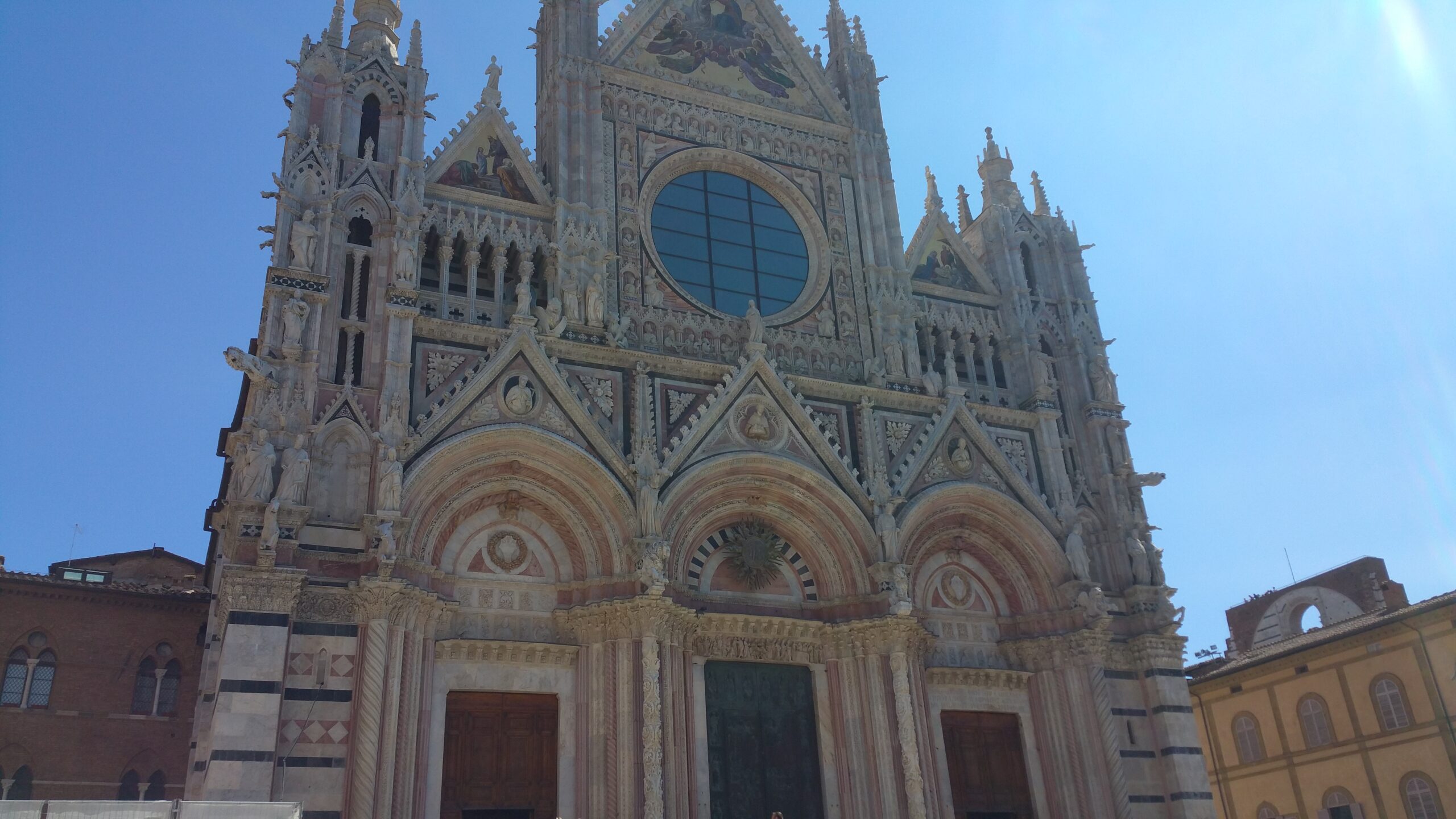
The High Middle Ages saw extraordinary achievements. Gothic cathedrals like Notre-Dame and Chartres reached toward heaven with soaring architecture and magnificent stained glass. These weren’t just buildings—they were theology in stone, teaching illiterate peasants biblical stories through art.
The Church developed canon law, creating the legal foundations for Western jurisprudence. It established the hospital system—the first hospitals were run by religious orders. It created social welfare through monasteries and parishes. The very concept of charity as we know it comes from Christian theology.
But the Middle Ages also saw problems. The Crusades, launched in 1095 to reclaim the Holy Land, were a mixed legacy—genuine piety and political intrigue, heroic sacrifice and terrible violence. The Inquisition, designed to combat heresy, sometimes used methods we find abhorrent today. Corrupt clergy and political popes undermined the Church’s credibility.
Yet saints arose in every generation. Francis of Assisi embraced radical poverty and preached to birds. Dominic Guzman founded an order devoted to truth and learning. Catherine of Siena confronted popes and kings with prophetic boldness. These figures remind us that the Church is always both human institution and divine mystery—sinful members yet holy in essence (Wright, 2005).
By 1500, the medieval synthesis was at its peak—and about to face its greatest crisis. Western Christendom was united under Rome’s leadership, universities flourished, and Catholic culture permeated every aspect of life. But corruption and theological confusion were creating conditions for explosion.
What Legacy Did Medieval Christianity Leave?
The medieval period represents the Catholic Church’s most complete cultural penetration. From theology to architecture, from law to art, from education to social services, the Church shaped every aspect of European life. This wasn’t theocracy in the modern sense but rather organic integration of faith and culture. The medieval synthesis demonstrated what’s possible when Christian principles inform social organization.
Yet this achievement contained seeds of future crisis. Excessive papal involvement in temporal affairs sometimes obscured spiritual mission. Scholastic theology’s intellectual sophistication could become arid speculation divorced from pastoral needs. The Church’s wealth and power created opportunities for corruption. These problems, combined with legitimate grievances about clerical abuses, would fuel the Protestant Reformation.
In Part 4, we’ll examine Christianity’s greatest schism since 1054—the Protestant Reformation and Catholic Counter-Reformation. We’ll explore Martin Luther’s challenge to Catholic authority, the Council of Trent’s doctrinal clarifications and disciplinary reforms, new religious orders like the Jesuits that revitalized Catholic life, and the Church’s global missionary expansion. The sixteenth century permanently altered Christianity’s landscape, creating divisions that persist five centuries later.
References
Clendinnen, I. (1991). Aztecs: An interpretation. Cambridge University Press.
Dawson, C. (1950). Religion and the rise of Western culture. Sheed & Ward.
Haskins, C. H. (1927). The renaissance of the twelfth century. Harvard University Press.
Lawrence, C. H. (2001). Medieval monasticism (3rd ed.). Longman.
Markus, R. A. (1997). Gregory the Great and his world. Cambridge University Press.
Pelikan, J. (1974). The Christian tradition: A history of the development of doctrine, Vol. 2: The spirit of Eastern Christendom (600-1700). University of Chicago Press.
Suttner, E. C. (2008). Church unity. St. Vladimir’s Seminary Press.
Tillard, J. M. R. (1987). Church of churches: The ecclesiology of communion. Liturgical Press.
Ullmann, W. (1970). A short history of the papacy in the Middle Ages. Methuen.
Weisheipl, J. A. (1974). Friar Thomas D’Aquino: His life, thought, and works. Doubleday.
Wright, W. J. (2005). Saints and their cults. Paulist Press.