History of the Catholic Church: Persecution and the Great Councils
Part Two
How Did the Church Survive Three Centuries of Persecution?
In Part 1 of this series, (go to Article here) we examined the biblical foundations of the Catholic Church and the apostolic age. We saw how Christ established His Church through Peter, how the Holy Spirit descended at Pentecost, and how the apostles spread the Gospel throughout the Roman Empire. The Church possessed its essential structure by the end of the first century: episcopal hierarchy under papal primacy, sacramental worship, and authoritative teaching tradition.
But the Church’s greatest test was just beginning. For nearly three centuries, Christianity faced intermittent but savage persecution from Roman authorities. Yet paradoxically, persecution strengthened rather than destroyed the Church. As Tertullian famously observed, ‘the blood of the martyrs is the seed of the Church’ (Tertullian, 197/1885).
In this second part, we explore how Christianity not only survived persecution but emerged triumphant as the Roman Empire’s official religion. We then examine how the great ecumenical councils of the fourth and fifth centuries defined Christian doctrine with stunning philosophical precision, particularly regarding the Trinity and the Incarnation. These councils established theological frameworks that guide the Church to this day.
What Did Early Christians Suffer Under Roman Rule?
Why Did the Romans Persecute Christians?
The early Church faced intermittent but severe persecution from Roman authorities from Nero (64 AD) through Diocletian (303-313 AD). These trials tested and refined Catholic identity, generated martyrological theology, and paradoxically fueled growth. Persecution patterns varied by emperor and region but shared common elements: refusal to sacrifice to Roman gods constituted treason, while Christian claims of exclusive truth offended Roman religious pluralism (Frend, 1965).
Nero’s persecution (64-68 AD) followed the great fire of Rome, which he blamed on Christians. Peter and Paul’s martyrdom occurred during this period, establishing Rome’s special status as the see sanctified by apostolic blood. Subsequent emperors periodically targeted Christians: Domitian (81-96), Trajan (98-117), Marcus Aurelius (161-180), Septimius Severus (193-211), and Decius (249-251) each launched persecutory campaigns of varying intensity (Chadwick, 1993).
The Decian persecution (250 AD) proved particularly severe, requiring all citizens to obtain certificates (libelli) proving they had sacrificed to the gods. Many Christians apostasized under pressure, creating the subsequent controversy over whether the lapsed could be readmitted to communion—a dispute resolved through papal authority in favor of pastoral mercy balanced with penitential discipline (Cyprian, 251/1868).
How Did Constantine Change Everything for Christians?
Diocletian’s Great Persecution (303-313) represented the final and most systematic attempt to eradicate Christianity. Four successive edicts ordered destruction of churches and scriptures, removal of Christians from public office, arrest of clergy, and universal sacrifice to the gods on pain of death. The persecution claimed thousands of martyrs, particularly in the East, but failed to break the Church (Barnes, 1981).
Constantine’s conversion and the Edict of Milan (313) dramatically reversed Christian fortunes. Constantine’s vision before the Battle of Milvian Bridge—’In this sign conquer’—led to his embrace of Christianity and imperial patronage of the Church. The edict granted religious toleration, restored confiscated property, and elevated Christianity to favored status (Eusebius, 325/1890). While debate continues about Constantine’s personal piety and political motivations, Catholic tradition views his conversion as providential—God’s instrument for evangelizing the empire from within (Baynes, 1972).
The Constantinian settlement raised new challenges: church-state relations, proper use of temporal power in ecclesiastical affairs, and maintaining evangelical fervor amid respectability and wealth. These tensions would shape medieval Christendom’s character and generate ongoing debate about the proper relationship between altar and throne (Markus, 1990).
How Did the Church Define What Christians Believe?
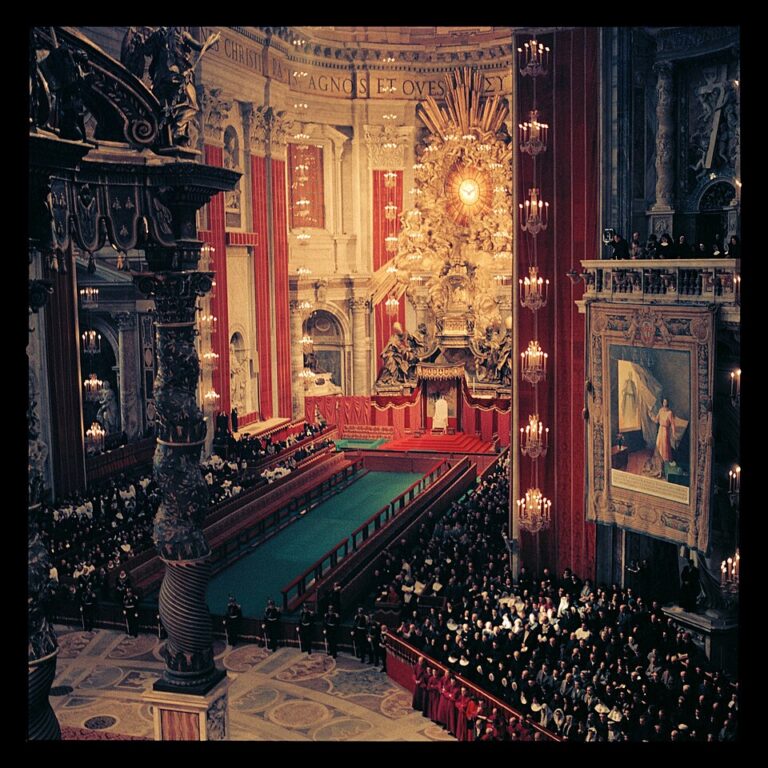
The Council of Nicaea (325)
What Was Decided at the Council of Nicaea?
The First Council of Nicaea marked a watershed in Catholic history, being the first ecumenical council convened to address a universal doctrinal crisis (Kelly, 1978). The Arian controversy, sparked by Alexandrian presbyter Arius, denied Christ’s full divinity, claiming the Son was a created being rather than consubstantial with the Father. This threatened Christianity’s central claim that salvation required God Himself to bridge the infinite gap between Creator and creation.
Constantine summoned 318 bishops to Nicaea in 325, providing imperial transportation and accommodations while allowing the bishops to freely deliberate. The council condemned Arianism and formulated the Nicene Creed, declaring the Son ‘consubstantial (homoousios) with the Father’—the same substance or essence. This technical philosophical term, borrowed from Greek metaphysics, became essential to orthodox Christology (Hanson, 1988).
Pope Sylvester I, though unable to attend due to age, sent legates who presided over proceedings alongside Hosius of Cordoba. The council’s decrees required papal confirmation, establishing precedent for Rome’s role in ecumenical councils. Athanasius, then a deacon attending with Bishop Alexander of Alexandria, emerged as Nicaea’s great defender, enduring five exiles to preserve Nicene orthodoxy against Arian resurgence (Barnes, 1993).
Nicaea’s significance extends beyond its immediate doctrinal resolution. It established the pattern for future councils: episcopal collegiality resolving disputes, philosophical precision in theological formulation, imperial support for implementation, and papal authority confirming decisions. The council also addressed practical matters including the Easter date calculation and canons regulating episcopal elections and territorial jurisdiction (Tanner, 1990).
Why Did the Church Need Another Council After Nicaea?
Constantinople I (381) and the Nicene-Constantinopolitan Creed
Despite Nicaea’s definitive teaching, Arianism persisted and even dominated for decades after 325, supported by several emperors. The Council of Constantinople I (381) convened under Theodosius I to reaffirm Nicene faith and address new christological and pneumatological heresies (Kelly, 1978). Apollinarius of Laodicea denied Christ possessed a human rational soul, while Macedonius questioned the Holy Spirit’s full divinity.
The council expanded the Nicene Creed to its current form, explicitly affirming the Holy Spirit’s divinity: ‘the Lord, the giver of life, who proceeds from the Father, who with the Father and the Son is adored and glorified.’ This Nicene-Constantinopolitan Creed became the standard expression of Trinitarian orthodoxy, recited at every Mass to the present day (Davis, 1983).
Constantinople I elevated the capital’s bishop to second rank after Rome, recognizing political reality while maintaining papal primacy. Pope Damasus I’s acceptance of the council’s christological definitions but reservation about its disciplinary canons exemplifies the balance between papal prerogative and conciliar authority (Ratzinger, 1987).
Is Mary Really the Mother of God?
Ephesus (431) and the Theotokos
The Council of Ephesus addressed the Nestorian controversy over Mary’s title Theotokos (‘God-bearer’ or ‘Mother of God’). Nestorius, patriarch of Constantinople, rejected the term, preferring Christotokos (‘Christ-bearer’), fearing confusion between Christ’s divine and human natures. This seemingly terminological dispute concealed a fundamental christological question: was the unity of Christ’s person sufficient to attribute divine titles to His human nature? (McGuckin, 2004). See the following article on the ‘Mother of God’.
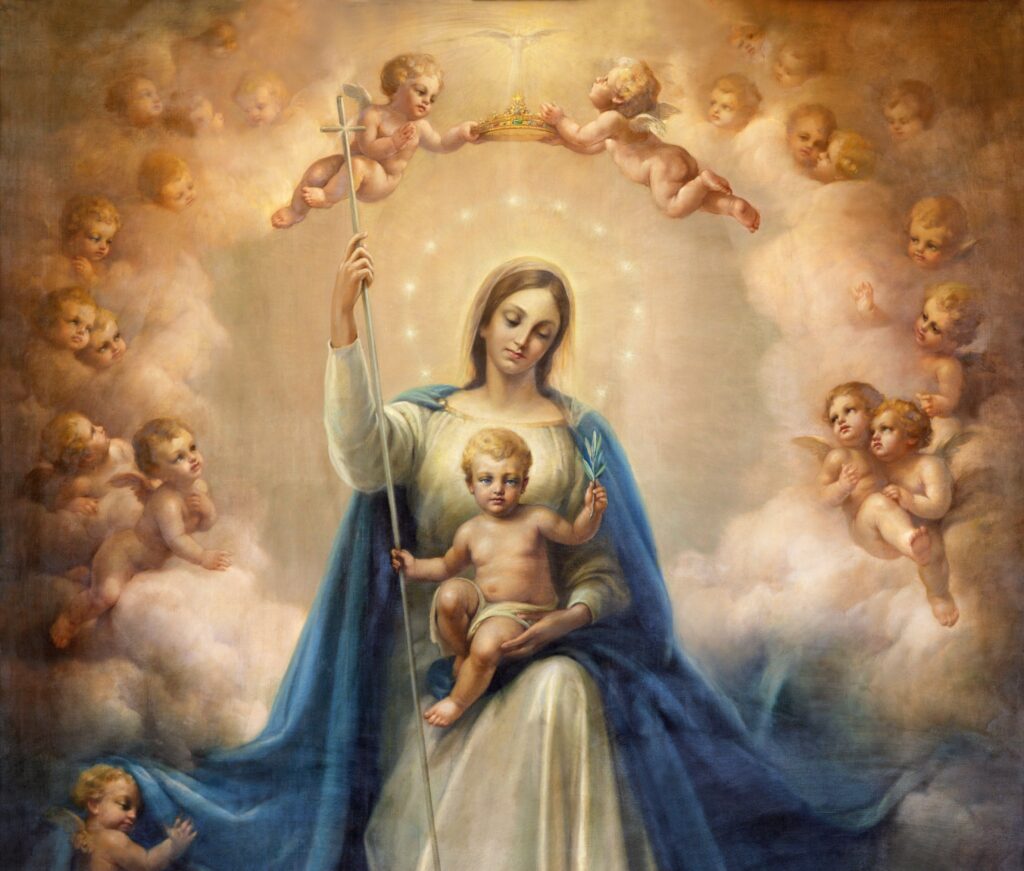
Cyril of Alexandria championed Theotokos, arguing that Mary’s title protected the Incarnation’s integrity—the Word truly became flesh, and the human Jesus was identically the divine Son. Pope Celestine I delegated authority to Cyril to convene the council and preside over proceedings. The council condemned Nestorianism and affirmed Theotokos as orthodox, establishing Marian devotion’s theological foundation in the hypostatic union (Pelikan, 1971).
Ephesus marked the first council explicitly defending Marian doctrine, beginning the Church’s progressive articulation of Mary’s unique role in salvation history. Popular devotion to Mary had existed from Christianity’s earliest days, but Ephesus provided dogmatic justification for theological reflection on her privileges and prerogatives (Gambero, 1999).
How Can Jesus Be Both God and Man?
Chalcedon (451) and the Two Natures
The Council of Chalcedon represents the zenith of patristic christological definition, resolving the tension between Alexandrian emphasis on Christ’s unity and Antiochene emphasis on His distinction of natures (Davis, 1990). Eutyches, reacting against Nestorianism, proposed that Christ had only one nature after the Incarnation—divine nature absorbing humanity. This monophysitism (one nature) threatened salvation’s efficacy, since Christ must be fully human to redeem humanity.
Pope Leo I’s Tome to Flavian articulated the orthodox position: Christ is one person in two natures, divine and human, united ‘without confusion, without change, without division, without separation.’ Each nature retains its properties while operating in communion with the other. This precise formulation became Chalcedon’s official teaching, with the bishops acclaiming, ‘Peter has spoken through Leo!’ (Frend, 1972).
The Chalcedonian Definition established Christology’s classical framework, maintained by Catholic, Eastern Orthodox, and most Protestant traditions. Its negative formulations (‘without confusion, without change, without division, without separation’) preserve the mystery while excluding heretical extremes. The four prepositions balance unity and distinction, continuity and difference (Grillmeier, 1975).
Chalcedon’s rejection by Egyptian, Syrian, and Armenian churches created lasting schism. These Oriental Orthodox churches maintained monophysite terminology while often holding orthodox intent, demonstrating how theological controversy intertwines with cultural, linguistic, and political factors. Modern ecumenical dialogue has achieved substantial agreement, recognizing much dispute involved terminology rather than substance (Brock, 2005).
What Did These Councils Accomplish for the Church?
By the mid-fifth century, the Catholic Church had weathered persecution’s fires and emerged with precisely defined doctrine. The great councils from Nicaea to Chalcedon established orthodox teaching on the Trinity and Christology using philosophical precision to safeguard biblical truth. These doctrinal definitions weren’t academic exercises but battles for Christianity’s soul—get the Trinity or Incarnation wrong, and the Gospel itself is lost.
The Church also demonstrated remarkable institutional resilience. From Constantine’s unexpected conversion to the systematic theological work of the councils, the fourth and fifth centuries saw Christianity transform from persecuted minority to imperial religion while maintaining doctrinal integrity. The pattern established at these councils—episcopal collegiality under papal authority, philosophical rigor in theological formulation—would guide the Church through future controversies.
In Part 3, we will explore how the medieval Church built Western civilization. We’ll see how monasteries preserved learning after Rome’s fall, how scholastic theology reached its summit in Thomas Aquinas, and how political tensions between popes and kings shaped Christendom. We’ll also examine the tragic East-West Schism of 1054 that still divides Christianity today. The medieval period is often misunderstood as ‘dark ages,’ but it was actually a time of extraordinary Catholic cultural achievement.
References
Augustine of Hippo. (2009). The city of God. (M. Dods, Trans.). Hendrickson Publishers. (Original work published 401)
Barnes, T. D. (1981). Constantine and Eusebius. Harvard University Press.
Barnes, T. D. (1993). Athanasius and Constantius: Theology and politics in the Constantinian Empire. Harvard University Press.
Baynes, N. H. (1972). Constantine the Great and the Christian Church (2nd ed.). Oxford University Press.
Bokenkotter, T. (2004). A concise history of the Catholic Church (Revised ed.). Doubleday.
Brock, S. P. (2005). The hidden pearl: The Syrian Orthodox Church and its ancient Aramaic heritage (Vols. 1-3). TransWorld Film Italia.
Brown, R. E., & Meier, J. P. (1983). Antioch and Rome: New Testament cradles of Catholic Christianity. Paulist Press.
Chadwick, H. (1993). The early Church (Revised ed.). Penguin Books.
Cyprian of Carthage. (1868). The epistles of Cyprian. In A. Roberts & J. Donaldson (Eds.), Ante-Nicene Fathers (Vol. 5). Christian Literature Publishing Co. (Original work published 251)
Davis, L. D. (1983). The first seven ecumenical councils (325-787): Their history and theology. Liturgical Press.
Davis, L. D. (1990). The first seven ecumenical councils (325-787) (2nd ed.). Michael Glazier.
Dulles, A. (2002). A history of apologetics (2nd ed.). Ignatius Press.
Eusebius of Caesarea. (1890). Church history, life of Constantine, oration in praise of Constantine. (A. C. McGiffert, Trans.). Christian Literature Publishing Co. (Original work published 325)
Frend, W. H. C. (1965). Martyrdom and persecution in the early Church. Basil Blackwell.
Frend, W. H. C. (1972). The rise of the monophysite movement. Cambridge University Press.
Gambero, L. (1999). Mary and the Fathers of the Church: The Blessed Virgin Mary in patristic thought. Ignatius Press.
Grillmeier, A. (1975). Christ in Christian tradition: From the apostolic age to Chalcedon (451) (2nd ed.). John Knox Press.
Hanson, R. P. C. (1988). The search for the Christian doctrine of God: The Arian controversy, 318-381. T&T Clark.
Kelly, J. N. D. (1978). Early Christian doctrines (5th ed.). Harper & Row.
Markus, R. A. (1990). The end of ancient Christianity. Cambridge University Press.
McGuckin, J. A. (2004). Saint Cyril of Alexandria and the Christological controversy. St. Vladimir’s Seminary Press.
O’Connor, D. W. (1969). Peter in Rome: The literary, liturgical, and archaeological evidence. Columbia University Press.
Pelikan, J. (1971). The Christian tradition: A history of the development of doctrine, Vol. 1: The emergence of the Catholic tradition (100-600). University of Chicago Press.
Ratzinger, J. (1987). Principles of Catholic theology: Building stones for a fundamental theology. Ignatius Press.
Sullivan, F. A. (1983). Magisterium: Teaching authority in the Catholic Church. Paulist Press.
Tanner, N. P. (Ed.). (1990). Decrees of the ecumenical councils (Vols. 1-2). Sheed & Ward. Tertullian. (1885). Apologeticum. In A. Roberts & J. Donaldson (Eds.), Ante-Nicene Fathers (Vol. 3). Christian Literature Publishing Co. (Original wor