Why Thomas Aquinas’s Virtues Still Matter: A Modern Guide to Moral Excellence

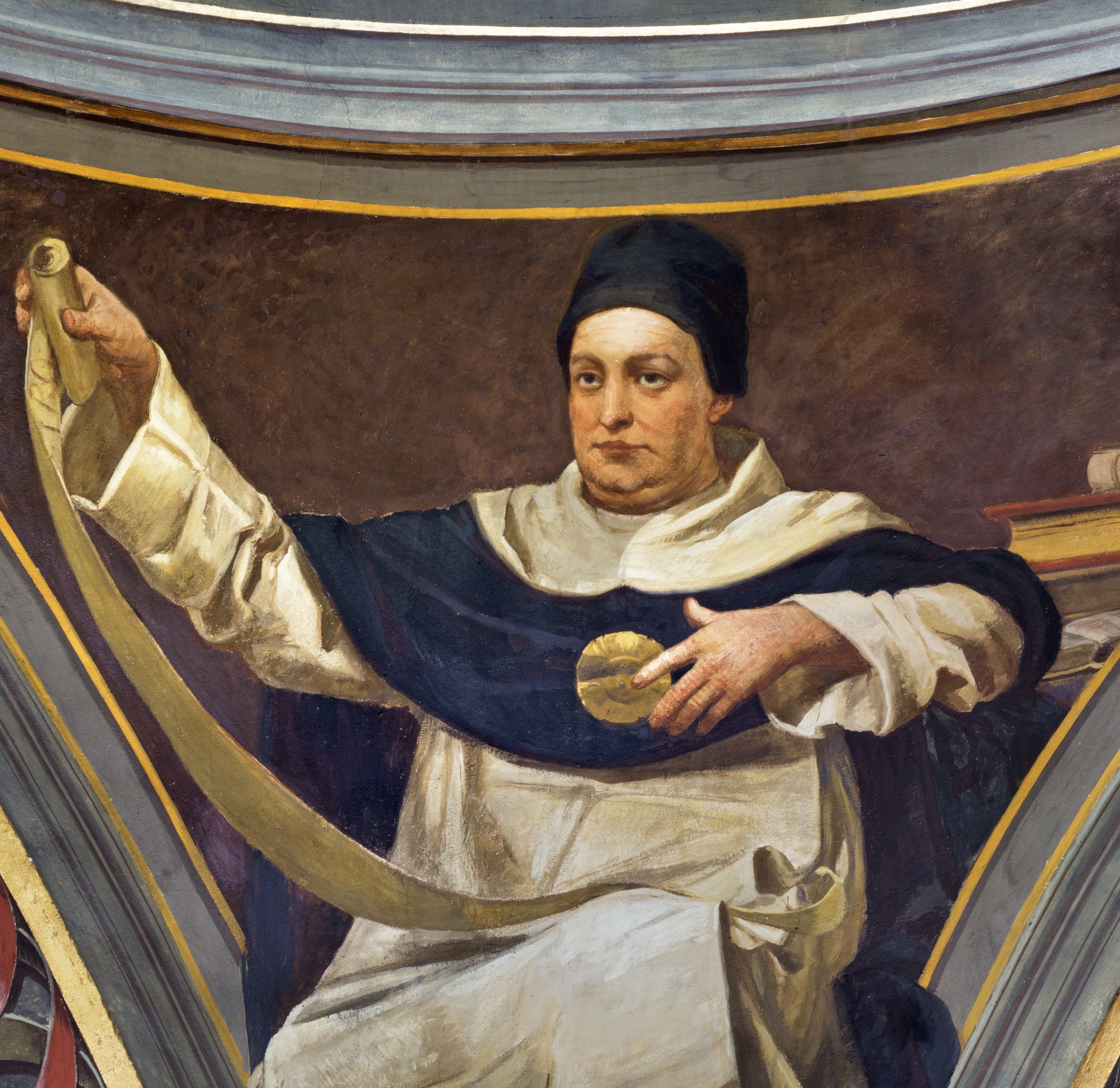
What occupied the mind of the Angelic Doctor more than any other subject? St. Thomas Aquinas dedicated 303 of the 512 questions in his masterpiece Summa Theologica to the study of ethics and moral philosophy. This remarkable proportion reveals how central the virtues were to his theological and philosophical project.
The genius of St. Thomas lies in his ability to unite the wisdom of Aristotle with the revealed truths of the Catholic faith. Where Aristotle spoke of human flourishing through virtue, Aquinas elevated this understanding to show that our true happiness—what he called beatitude—comes through union with God Himself. Yet this beatitude is not achieved through wishful thinking or good intentions alone, but through the careful cultivation of both intellectual and moral virtues.
What are the Four Foundations of Catholic Moral Theology?
At the foundation of Catholic moral theology stand the four cardinal virtues: prudence, justice, temperance, and fortitude. These virtues, as St. Thomas teaches, are not merely philosophical concepts but practical guides for Christian living. His understanding of natural law demonstrates that moral principles are written into the very fabric of human nature, discoverable through right reason, and accessible to all peoples.
What makes the moral teaching of St. Thomas particularly valuable for our times?
His approach considers not merely the external act, but the object, intention, and circumstances surrounding our moral choices. This nuanced understanding provides Catholics—and indeed all seekers of truth—with a mature and balanced approach to ethical living.
The seven virtues that St. Thomas presents—the four cardinal virtues joined with the three theological virtues of faith, hope, and charity—offer us a complete vision of Christian moral life. These are not abstract ideals but practical dispositions that can be cultivated through God’s grace and our cooperation.
How does the the Return of Virtue Ethics play a role in Our Modern Age?
The philosophical landscape of the twentieth century witnessed a remarkable development. Virtue ethics, which had nearly disappeared from Anglo-American philosophy during the nineteenth century, experienced a dramatic revival beginning in the late 1950s. This resurgence came primarily through G.E.M. Anscombe’s influential 1958 article “Modern Moral Philosophy,” which expressed growing dissatisfaction with prevailing ethical frameworks [3]. Today, virtue ethics stands as one of three major approaches in normative ethics [3].
I) The Movement from Rules to Character
Anscombe’s critique targeted the dominant ethical traditions of Kantianism and utilitarianism, arguing that these systems mistakenly grounded morality in legalistic concepts like duty and obligation [3]. Such rule-based approaches focus primarily on determining which actions are right or wrong according to universal principles.
The teaching of St. Thomas offers a profound alternative to this rule-oriented thinking. Rather than asking “What rules should I follow?” or “What consequences should I produce?”, the Thomistic approach poses fundamentally different questions:
- What kind of person should I become?
- How should I live to achieve my true end?
- What qualities of character lead to human flourishing?
According to St. Thomas, virtue is “a habit that disposes an agent to perform its proper operation or movement” [3]. The virtues are not merely external rules to follow but interior dispositions that enable us to reason well and live excellently. This understanding aligns perfectly with the Catholic vision of human nature and destiny.
Moral development, therefore, becomes less about memorizing principles and more about cultivating character through grace and practice. The cardinal virtues—prudence, justice, temperance, and fortitude—provide a framework for excellence that goes beyond mere rule-following [3]. Through these virtues, we develop what the Angelic Doctor calls “right reason with respect to action” [3].
Furthermore, virtue ethics acknowledges what many modern ethical theories neglect: the integral role of emotions, motives, and moral character in ethical life [2]. The Thomistic framework recognizes that developing good character involves both cognitive and affective elements—not merely knowing what is right but having appropriate emotional responses to moral situations.
II) The Crisis of Moral Formation in Contemporary Society
Our contemporary world faces unprecedented challenges to moral identity. Many people feel disoriented about where they stand and who they are [4]. This crisis stems partly from what philosophers term “expressive individualism”—the belief that personal choice is the highest good, a view that 91% of Americans and 76% of Christians endorse according to recent surveys [4].
This cult of individuality has led to a dangerous softening of moral standards, with principles drifting into mere attitudes or preferences [5]. Unlike principles, which often require uncomfortable adjustment to our desires, preferences are simply statements of what we “want” to do at any given moment. The teaching of St. Thomas rejects such relativism, insisting that moral truths are objective and discoverable through right reason.
The rapid pace of demographic and social change has further strained the fabric of society. As fundamental pillars of human identity—family, religious faith, workplace, and traditional relationships—continue to erode, many retreat into narrow self-interest [6]. The seven virtues taught by St. Thomas offer a remedy to this isolation, emphasizing our social nature and our obligation to seek the common good.
For the Angelic Doctor, moral character cannot be compartmentalized. We cannot maintain one character as professionals and another in private life [7]. Character formation involves developing steady dispositions to do what is right, having morally appropriate desires and goals, and responding emotionally in ways that align with reason [7]. These habits, actions, and emotional responses must be unified and directed toward the moral good.
This is precisely why virtue ethics matters today. Our world desperately needs what virtue ethics provides: a coherent framework for moral development that addresses our crisis of formation. Those who have lost traditional sources of identity often find themselves having to “cling to something” [6]. The virtues taught by St. Thomas provide a solid foundation for moral development, offering what our fragmented culture desperately needs: a path toward moral excellence that integrates reason, emotion, and action into a unified vision of human flourishing under God.
What is the Catholic Understanding of Human Nature: Body and Soul United?
The genius of St. Thomas Aquinas appears most clearly in his understanding of what the human person truly is. Drawing from the wisdom of Aristotle yet elevating it with Christian revelation, the Angelic Doctor presents a vision of human nature that avoids the errors of both ancient dualism and modern materialism.
A) The Hylomorphic Theory and the Passions
According to St. Thomas, the human person is neither a soul imprisoned in a body nor merely a sophisticated animal. Rather, we are composite beings—unities of soul (form) and body (matter) constituting a single substance. The soul, as Aquinas defines it, is “the first principle of life in those things which live,” serving as the organizing principle that gives the body its distinctly human nature.
This understanding of human nature as a psychosomatic unity fundamentally shapes Catholic moral theology. Where Plato viewed the body as the soul’s prison, St. Thomas recognized our embodied nature as essential to human flourishing. Our physical nature is not something to escape but rather to integrate and order properly through the practice of virtue.
The passions—what we call emotions—play a crucial role in this integrated vision. St. Thomas identified eleven basic passions organized into two categories:
The Concupiscible Passions (directed toward sensible good):
- Love and hatred
- Desire and aversion
- Joy and sadness
The Irascible Passions (directed toward difficult good):
- Hope and despair
- Fear and daring
- Anger
This classification reveals the sophistication of Thomistic psychology. Unlike the Stoic philosophers, who viewed emotions as disturbances to be eliminated, St. Thomas considered the passions natural and potentially good when properly ordered by reason. The cardinal virtues of temperance and fortitude specifically govern these passions—temperance moderating our response to pleasure, and fortitude strengthening us against fear and ordering our response to danger.
B) The Three Levels of Soul Powers
The Catholic understanding of the soul, as presented by St. Thomas, recognizes a hierarchical arrangement of powers that explains both human capabilities and moral responsibility. This comprehensive anthropology distinguishes three integrated levels:
i) The vegetative powers include nutrition, growth, and reproduction—functions we share with plants. These powers operate below conscious control yet form the biological foundation for moral life. Even these basic functions have ethical dimensions, as they must be properly ordered through virtues such as temperance.
ii) The sensitive powers encompass both exterior senses (sight, hearing, touch, taste, smell) and interior senses (memory, imagination, estimation). These powers, which we share with animals, allow us to perceive and respond to our environment. The sensitive appetite—the source of the passions—belongs to this level and plays a critical role in moral formation.
iii) The rational powers of intellect and will distinguish humans from all other material creatures. The intellect grasps universal truths while the will seeks the good as presented by the intellect. These powers enable specifically human acts—voluntary actions proceeding from deliberation and choice.
This reveals why the seven virtues correspond to these different powers of the soul:
- Prudence perfects practical reason (intellect),
- Justice orders the will toward giving each his due,
- Temperance moderates the concupiscible appetite, and
- Fortitude directs the irascible appetite.
- The Theological Virtues of faith, hope, and charity elevate these natural capacities toward their supernatural end.
What makes St. Thomas’s anthropology particularly valuable is its integrated character. The rational soul does not simply suppress or override the lower powers but incorporates and elevates them toward their proper ends. This hierarchical yet unified understanding provides the philosophical foundation for understanding why virtue is both possible and necessary for authentic human flourishing.
The Psychology of Virtue: Understanding the Soul’s Appetites
St. Thomas Aquinas possessed remarkable insights into human psychology centuries before modern cognitive science emerged. His understanding of how different powers within the soul interact provides the foundation for Catholic moral theology and explains why virtue formation requires both time and effort.
The Sensitive and Rational Appetites
The Catholic understanding of human nature recognizes two distinct appetitive powers that influence our moral choices. The sensitive appetite responds immediately to what our senses perceive as good or pleasurable, while the rational appetite—what we call the will—follows the judgment of the intellect concerning what is truly good for us.
As St. Thomas explains, “The sensitive appetite is naturally moved by the particular good apprehended by sense,” whereas the rational appetite “follows the universal good apprehended by intellect.” This creates the internal conflict that every Christian experiences—knowing intellectually what is right while feeling emotionally drawn toward something else.
This distinction illuminates why St. Thomas rejected the Socratic notion that all sin stems from ignorance. The Angelic Doctor recognized that we can intellectually understand the correct course of action yet fail to follow it due to powerful emotions or desires. The sensitive appetite, connected to our bodily nature, responds to immediate pleasures and pains, while the rational appetite considers our ultimate end and universal moral principles.
Catholic teaching affirms that both appetites are natural and potentially good. The sensitive appetite becomes problematic only when it operates independently of reason’s guidance. The emotions provide vital energy for moral action when properly directed toward their true objects.
The Gradual Formation of Virtue
The relationship between reason and emotion in Catholic moral theology is not one of suppression but of gradual education. St. Thomas envisioned this as a process whereby reason shapes emotional responses over time through habituation and the assistance of grace.
Initially, our emotions may resist reason’s guidance. A person might intellectually recognize the need for moderation in eating yet feel strong cravings for excessive food. Someone might know they should stand firm in the face of danger yet experience overwhelming fear.
Through repeated acts aligned with reason, the sensitive appetite gradually becomes more receptive to rational direction. The cardinal virtues—particularly temperance and fortitude—develop precisely through this process, as reason shapes emotional responses to pleasure and danger respectively.
This developmental process explains why virtue requires both practice and perseverance. As St. Thomas states, “Virtue is a habit that disposes an agent to perform its proper operation or movement.” Through repetition and grace, rational judgments about the good become embodied in emotional dispositions, so that our feelings increasingly align with reason’s assessments.
Political Rule Within the Soul
St. Thomas offers a compelling political metaphor to describe how reason governs the passions. He distinguishes between despotic rule—complete control where the subordinate has no resistance—and political rule—governance that respects the partial autonomy of the governed.
The rational powers exercise despotic rule over bodily movements. We can simply command our hand to move and it obeys immediately. However, reason exercises only political rule over the passions, which maintain a degree of autonomy. As the Angelic Doctor explains, “The irascible and concupiscible powers do not obey reason’s command despotically but politically, for they have their own proper movements by which they sometimes resist reason’s command.”
This insight acknowledges the persistence of emotional resistance even in virtuous people. The difference is that virtuous individuals have trained their emotions through grace and practice to follow reason more readily, thus minimizing conflict between rational judgment and emotional response.
The practical wisdom of St. Thomas’s moral psychology lies in its realism. Rather than setting impossible standards of emotional elimination or perfect rational control, he recognizes the ongoing tension between different aspects of human nature while offering a realistic path toward integration through virtue development and divine grace.
This understanding remains remarkably relevant today, offering Catholics nuanced insights into moral psychology that help explain both our struggles with sin and our capacity for growth in holiness.
The Formation of Virtue: How Character is Shaped Through Grace and Practice?
“Virtue is a good habit by which man lives rightly, and which he can never put to a bad use. Man is made to achieve true happiness by the pursuit of moral good.” — Thomas Aquinas, Medieval philosopher, theologian, and Doctor of the Church
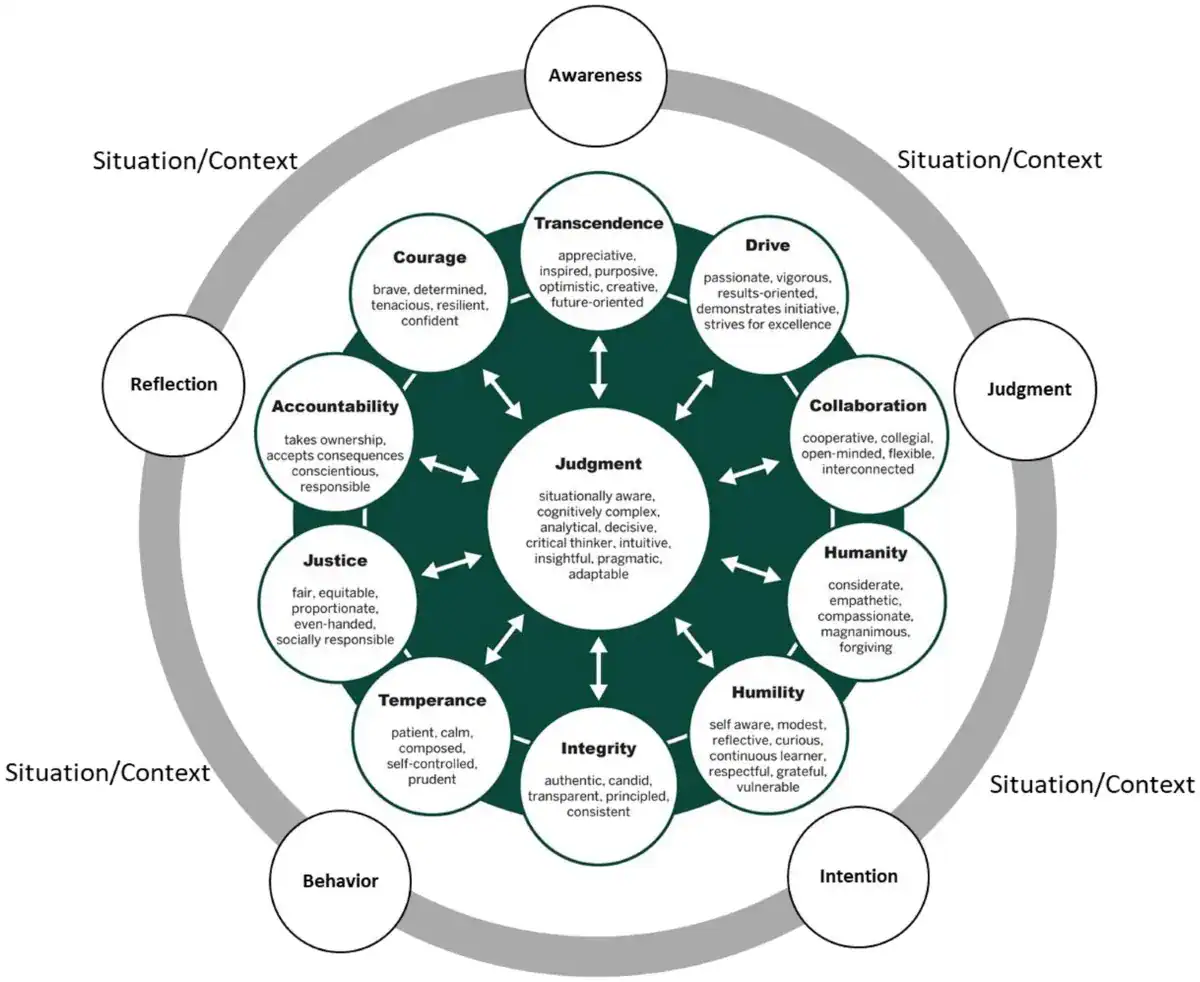
Image Source: link.springer.com
How does one become virtuous? This question strikes at the heart of Christian living. As Aristotle observed, and as St. Thomas embraced, “The virtues come neither by nature nor against nature, but nature gives the capacity for acquiring them, and this is developed by training.” Virtue is not inherited like eye color, nor is it acquired through mere wishful thinking. It must be cultivated through consistent practice, much like a master craftsman develops his skill.
Habitus: The Shaping of the Soul
The Angelic Doctor’s understanding of habitus reveals the profound depth of Catholic moral theology. This is not simply about forming “habits” as we commonly understand them—the routine of brushing one’s teeth or taking a morning walk. Rather, habitus represents what St. Thomas calls “a steady disposition of one’s soul.”
Consider how a musician’s fingers become accustomed to the keys, or how a priest’s heart becomes attuned to the movements of grace. This is the nature of habitus—a fundamental shaping of our powers toward their proper end. The blacksmith who has worked iron for decades doesn’t merely know how to forge; his very hands, eyes, and intuition have been formed by his craft.
St. Thomas teaches that habitus perfects our natural powers rather than constraining them. Temperance doesn’t destroy our capacity for pleasure but orders it toward its proper object. Fortitude doesn’t eliminate fear but directs our response to danger according to right reason.
The Patient Work of Repetition
“We become just by doing just acts,” St. Thomas reminds us, echoing the wisdom of Aristotle. This truth applies to all the virtues:
- Each act of virtue makes the next easier and more pleasant
- Rational judgments gradually become embodied in our emotional responses
- Our very desires begin to align with what reason recognizes as good
Much is mysterious about this process. How does the external act of giving alms gradually shape the heart toward generosity? How does the practice of custody of the eyes slowly purify the imagination? The saints understood this mystery and embraced the long work of formation.
Yet we must avoid the error of thinking that mere external repetition suffices. As any spiritual director knows, going through the motions without genuine intention bears little fruit. True virtue formation requires the cooperation of grace, right intention, and consistent practice.
The path of virtue is indeed the mean between extremes—neither too much nor too little, but the proper measure in each circumstance. This requires not only practice but the development of prudence, which St. Thomas calls the charioteer of the virtues.
The Long Road to Sanctity
“A habit of virtue cannot be caused by one act, but only by many,” St. Thomas observes with characteristic clarity. This truth should both humble and encourage us.
As fire cannot instantly consume what it would burn but must work gradually, so reason cannot immediately master our passions but must shape them over time. The saints knew this well—even St. Paul spoke of his ongoing struggle, and St. Augustine’s Confessions reveals the long journey from vice to virtue.
This extended timeframe is not a deficiency in God’s design but a necessary aspect of our nature. Our appetites have their own inclinations, our emotions their own movements. Reason exercises what St. Thomas calls “political rule” over the passions—not the absolute control of a tyrant, but the patient guidance of a wise governor.
Even the most advanced in virtue experience this ongoing tension. The difference lies not in the absence of struggle but in the gradual alignment of all our powers toward their proper end.
For those seeking growth in virtue, this understanding offers both realism and hope. The work is long, but it is sure. Through God’s grace and our faithful cooperation, we are gradually transformed into the image of Christ—which is, after all, the true goal of all Christian virtue.
I highly recommend patience with yourself in this process, while maintaining firm resolve in the practice of virtue. The saints are our guides and companions on this ancient path.
The Seven Virtues According to St. Thomas Aquinas
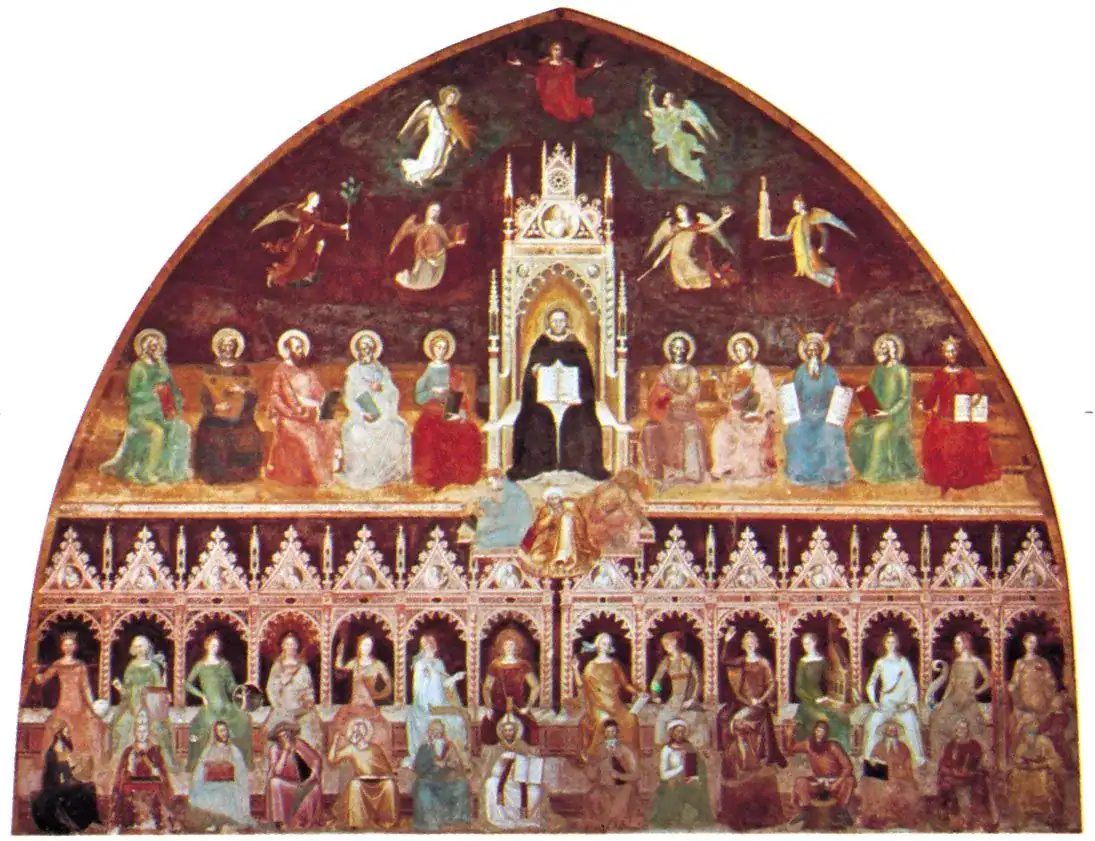
Image Source: Britannica
The Catholic Church, following the teaching of St. Thomas Aquinas, recognizes seven principal virtues that guide the faithful toward moral excellence and union with God. The Angelic Doctor organized these virtues into two distinct categories: the four cardinal virtues, which perfect our natural human capacities, and the three theological virtues, which are infused directly by God and orient us toward our supernatural end.
A) The Four Cardinal Virtues
The term “cardinal” derives from the Latin word “cardo,” meaning “hinge” [8]. These virtues are called cardinal because all other moral virtues depend on them and “hinge upon them” [8]. As St. Ambrose explained, “We know there are four cardinal virtues: temperance, justice, prudence, and fortitude” [9].
1) Prudence stands as the intellectual foundation of moral life. St. Thomas defines prudence as “wisdom concerning human affairs” and “right reason with respect to action” [3]. This virtue perfects practical reason through three essential acts:
- Counsel (inquiring about available means)
- Judgment (determining proper means)
- Command (applying that judgment) [3]
2) Justice governs our relationships with others, representing “a sustained or constant willingness to extend to each person what he or she deserves” [3]. Operating primarily in the will, justice perfects our interactions with fellow human beings and ensures we give everyone their due [10].
3) Temperance moderates physical pleasures, particularly those related to eating, drinking, and sexuality [3]. This virtue does not eliminate desires but refines them, creating “a proper sense of moderation with respect to what is pleasurable” [3]. Temperance resides in the concupiscible appetite, which concerns our desires for pleasurable things [10].
4) Fortitude strengthens us against fear, especially when facing mortal danger [3]. More than simply controlling fear, fortitude moderates both fear and daring, preventing both cowardice and recklessness [3]. This virtue operates in the irascible appetite, which deals with difficult goods and challenging situations [10].
B) The Three Theological Virtues
According to the Catholic Church’s teaching, the theological virtues are called such “because they have God for their object, both in so far as by them we are properly directed to Him, and because they are infused into our souls by God alone” [11]. These virtues cannot be acquired through human effort but are gifts of divine grace.
1) Faith represents intellectual assent to divine revelation, defined as “the infused virtue, by which the intellect, by a movement of the will, assents to the supernatural truths of Revelation” [11]. Unlike natural knowledge acquired through reason, faith accepts truths on “the sole ground of the infallible authority of God revealing” [11].
2) Hope functions as “a Divinely infused virtue, which acts upon the will, by which one trusts, with confidence grounded on the Divine assistance, to attain life everlasting” [11]. This virtue avoids both presumption (excessive hope) and despair (deficient hope) [12].
3) Charity, which St. Thomas considers the greatest virtue [13], is “a Divinely infused virtue, inclining the human will to cherish God for his own sake above all things, and man for the sake of God” [11]. Charity surpasses both faith and hope because it “attains God Himself that it may rest in Him, but not that something may accrue to us from Him” [13].
These seven virtues form an integrated system directing the faithful toward their ultimate end. The cardinal virtues perfect our natural capacities, while the theological virtues elevate us to our supernatural destiny—the Beatific Vision.
Grace and the Infused Virtues: The Supernatural Elevation of Moral Life
“God Himself is the rule and mode of virtue. Our faith is measured by divine truth, our hope by the greatness of His power and faithful affection, our charity by His goodness.” — Thomas Aquinas, Medieval philosopher, theologian, and Doctor of the Church
The Catholic Church teaches that grace stands at the very heart of moral theology, elevating human virtue beyond its natural limitations. St. Thomas Aquinas understood that while the cardinal virtues represent the perfection of human nature, they cannot, by themselves, achieve our ultimate end—the Beatific Vision.
The Limitations of Natural Virtue
The Angelic Doctor makes a crucial distinction between acquired virtues (developed through human effort and repetition) and infused virtues (bestowed directly by God through grace). This distinction reveals a fundamental truth about human nature and our supernatural destiny.
Natural virtues, however perfectly developed, remain oriented toward goods proportioned to human reason. Yet our ultimate calling extends far beyond what human nature can achieve on its own. As St. Thomas explains, virtue directed merely to the good defined by human reason cannot achieve our supernatural end—union with God.
Consider this: even if one possessed perfect temperance, fortitude, prudence, and justice in their natural state, these virtues would still lack the supernatural orientation necessary for eternal beatitude. According to Catholic doctrine, “virtue which directs man to good as defined by the Divine Law, and not by human reason, cannot be caused by human acts” [14].
What transforms natural virtue into supernatural merit?
St. Thomas teaches that charity functions as “the form of the virtues”—not as their essential form, but as their directing principle toward our ultimate end. He describes charity as “the form, mover, mother, and root of all the virtues” [15].
This supernatural virtue does not replace the other virtues but rather elevates them. As St. Thomas explains, “In morals the form of an act is taken chiefly from the end,” and “it is charity which directs the acts of all other virtues to the last end” [13].
The relationship between charity and the other virtues resembles that of a mother to her children—charity “conceives the acts of the other virtues, by the desire of the last end” [13]. An act of temperance performed out of love for God remains essentially an act of temperance, yet it gains supernatural merit and eternal significance through charity’s influence.
How is the he Holy Spirit the Principal Mover of Moral Life?
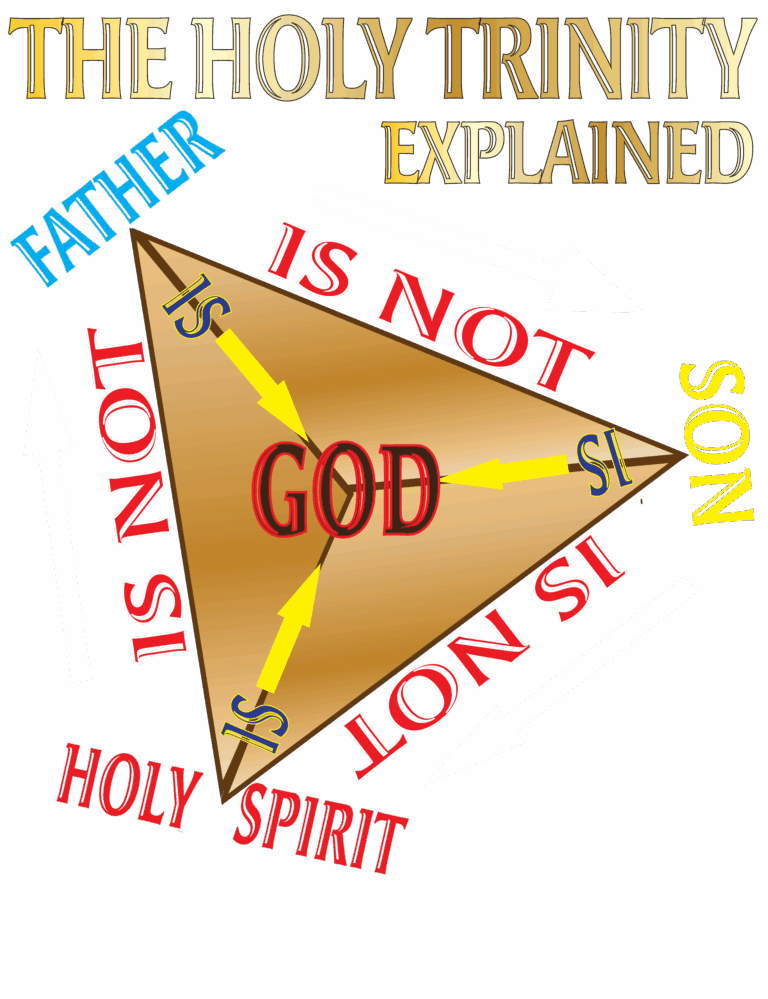
The Third Person of the Holy Trinity operates as the primary agent in our moral development, functioning as “a motive force” [16] that enables us to act according to our supernatural calling. Through sanctifying grace, the Holy Spirit empowers us to perform actions worthy of eternal life.
This divine assistance respects human freedom rather than overriding it. As St. Thomas affirms, “The sons of God are led by the Holy Spirit according to their own mode, viz., preserving free choice” [17]. The Spirit’s guidance operates through our natural faculties while elevating them to supernatural operation.
The gift of counsel represents one crucial way the Holy Spirit perfects our moral reasoning. This gift provides supernatural insight that surpasses natural prudence, enabling us to discern actions aligned with divine wisdom. The seven gifts of the Holy Spirit work together with the infused virtues, making us “receptive to the Holy Spirit’s motion” [1].
Through this supernatural elevation, Catholic moral life becomes not merely ethical behavior but participation in the divine life itself.
How can the Wisdom of St Thomas Be Applied for Our Times?
The moral teaching of St. Thomas Aquinas speaks to the challenges of our contemporary world with remarkable clarity. What the Angelic Doctor understood about human nature and virtue formation provides Catholics—and indeed all people of good will—with practical guidance for the moral complexities we face today.
A) Catholic Education and Formation
Catholic schools and parishes have much to gain from returning to the virtue-based approach of St. Thomas. His understanding that character formation requires both intellectual development and moral practice aligns perfectly with authentic Catholic education. Rather than focusing solely on rules and regulations, we can cultivate the virtues through consistent practice and good example.
The cardinal virtues offer a particularly strong foundation for leadership formation within the Church. Prudence—the virtue of practical wisdom—enables pastors and lay leaders to make sound judgments in complex pastoral situations. Justice ensures that we treat all people with the dignity they deserve as children of God. Temperance and fortitude help leaders maintain proper balance and courage in their service to the Church.
B) Spiritual Direction and Pastoral Care
The integration of reason and emotion that St. Thomas taught offers valuable insights for spiritual direction and pastoral counseling. His understanding that emotions should be educated rather than suppressed provides a balanced approach to spiritual growth that avoids both excessive rationalism and sentimental emotionalism.
This approach proves particularly helpful for Catholics struggling with:
- Emotional difficulties that affect spiritual life
- Moral decision-making in complex circumstances
- The development of consistent prayer habits
- Integration of faith with daily responsibilities
The theological virtues of faith, hope, and charity provide the supernatural foundation needed for authentic spiritual progress, while the cardinal virtues offer practical guidance for everyday Christian living.
C) Moral Theology for Contemporary Issues
The natural law approach of St. Thomas provides Catholics with a firm foundation for addressing contemporary moral questions. His method of considering the object, intention, and circumstances of moral acts equips us to evaluate new ethical challenges with wisdom and prudence.
This framework proves especially valuable for Catholic professionals working in fields such as medicine, business, education, and public service. The virtue-based approach offers guidance that goes beyond mere rule-following to address the formation of Christian character in professional life.
As Catholics, we must remember that the moral teaching of the Church, grounded in the wisdom of St. Thomas, provides reliable guidance for navigating the moral confusion of our times. The seven virtues remain as relevant today as they were in the thirteenth century, offering us a path toward authentic human flourishing rooted in friendship with God.
What are some Practical Applications for Personal and Social Ethics?
The teachings of St. Thomas Aquinas on virtue are not merely academic exercises but practical guides for Christian living. As Catholics, we are called to embody these virtues in our daily lives, and the Angelic Doctor provides us with a clear roadmap for moral excellence in both personal and social spheres.
A) Cultivating Virtue Through Daily Practice
The formation of Christian character requires consistent, deliberate practice. St. Thomas teaches us that virtue is acquired through repetition of good acts, performed with right intention and proper understanding. This process transforms not only our external actions but our internal dispositions.
For those seeking to grow in virtue, I recommend these fundamental practices:
- Morning intention setting – Begin each day by choosing a specific virtue to practice
- Evening examination – Reflect on moments when virtue was practiced or neglected
- Frequent reception of the Sacraments – Grace strengthens our natural efforts
- Study of Sacred Scripture – God’s Word illuminates the path of virtue
- Association with virtuous companions – We become like those with whom we spend time
The Catholic Church teaches that virtue formation is both a natural and supernatural endeavor. While we must cooperate through our efforts, it is ultimately God’s grace that perfects our character and enables us to live according to His divine plan.
B) Justice and Temperance in Our Digital Age
How should Catholics approach the moral challenges presented by modern technology? The cardinal virtues of justice and temperance offer essential guidance for navigating digital spaces with integrity.
Justice demands that we give each person their due dignity, even in online interactions. This means:
- Engaging in charitable dialogue rather than hostile argumentation
- Protecting the reputation of others through careful speech
- Seeking truth rather than winning debates
- Treating all persons as made in the image and likeness of God
Temperance governs our use of digital platforms, helping us avoid the excesses that these technologies can promote. The temperate person uses social media as a tool for good rather than becoming enslaved to it.
C) Hope and Fortitude During Trials
The theological virtue of hope and the cardinal virtue of fortitude provide particular strength during times of crisis and uncertainty. Hope anchors our souls in the promise of eternal life with God, while fortitude gives us the courage to persevere through difficulties.
These virtues remind us that our ultimate destiny lies not in this world but in the Beatific Vision. Therefore, even in the midst of temporal suffering, the Catholic maintains a supernatural perspective that transcends immediate circumstances.
As St. Thomas teaches, hope avoids both presumption and despair. We trust in God’s mercy while acknowledging our need for His grace. Fortitude enables us to face challenges with courage while avoiding both cowardice and recklessness.
This is a practical wisdom deeply needed in our age of anxiety and uncertainty. The Catholic who cultivates these virtues finds peace even amid the storms of life, knowing that God’s providence governs all things according to His perfect wisdom and love.
Why the Psychology of St Thomas is the Answer for our Modern World?
As we have seen throughout this exploration, the moral theology of St. Thomas Aquinas provides not merely academic knowledge but practical wisdom for Christian living. The seven virtues he so carefully articulated—prudence, justice, temperance, fortitude, faith, hope, and charity—remain as relevant today as they were in the thirteenth century.
What makes the teaching of St. Thomas particularly valuable for Catholics? His integration of reason and revelation offers us a complete vision of moral life that addresses both our natural capacities and our supernatural calling. The cardinal virtues perfect our human nature, while the theological virtues elevate us to participate in the divine life itself.
The formation of virtue through habit, as St. Thomas teaches, reminds us that holiness is not achieved through occasional acts of piety but through the patient cultivation of good dispositions over time. This understanding proves especially important in our age, when many seek quick solutions to complex spiritual challenges.
For those seeking to deepen their understanding of Catholic moral theology, I highly recommend a careful study of the Summa Theologica, particularly the Second Part where St. Thomas treats extensively of the virtues. The Thomistic understanding of human nature as a unity of body and soul provides the foundation for a truly Catholic approach to moral formation.
There is much more that could be written about the wisdom of the Angelic Doctor, and I would not do it justice in a single treatment. The richness of his synthesis of philosophical reason and Catholic faith continues to nourish the Church’s understanding of moral life. His teaching on the virtues offers us not abstract principles but practical guidance for growing in holiness and serving the common good.
The continuing relevance of St. Thomas Aquinas in our times shows that authentic Catholic teaching transcends the circumstances of any particular age. The virtues he describes address the fundamental aspects of human nature that remain constant across cultures and centuries.
May the wisdom of the Angelic Doctor guide us all toward that perfect happiness which comes from union with God—the ultimate goal of all virtue and the fulfillment of our deepest longings.
God be with you.
FAQs
Q1. What are the main virtues according to Thomas Aquinas? Thomas Aquinas identified seven main virtues: four cardinal virtues (prudence, justice, temperance, and fortitude) and three theological virtues (faith, hope, and charity). These virtues form the foundation of his ethical framework for moral excellence.
Q2. How does Aquinas’s view of virtue differ from modern ethical theories? Aquinas’s virtue ethics focuses on character development rather than just following rules or considering consequences. It emphasizes cultivating good habits and dispositions over time, integrating reason, emotion, and action into a unified approach to moral living.
Q3. Why is habit formation important in Aquinas’s virtue ethics? Aquinas believed virtues are developed through consistent practice and repetition. By repeatedly performing virtuous actions with the right intentions, we gradually shape our character and emotional responses, making virtuous behavior more natural and spontaneous over time.
Q4. How can Aquinas’s virtues be applied in today’s digital world? Aquinas’s virtues like justice and temperance can guide ethical behavior in digital spaces. For example, justice can inform fair moderation practices, while temperance can help users moderate impulses in emotionally charged online environments.
Q5. What role does theology play in Aquinas’s virtue ethics? While Aquinas’s cardinal virtues have a philosophical basis, he also emphasized theological virtues (faith, hope, and charity) as essential for complete human flourishing. These virtues, infused by God’s grace, orient moral development towards its ultimate end – union with God.
References
[1] – https://plato.stanford.edu/entries/moral-character/
[2] – https://plato.stanford.edu/entries/ethics-virtue/
[3] – https://iep.utm.edu/thomasaquinas-moral-philosophy/
[4] – https://www.liberty.edu/ace/articles/our-modern-identity-crisis/
[5] – https://www.psychologytoday.com/us/blog/the-pathways-of-experience/202406/the-crisis-of-modern-culture-its-not-what-you-think
[6] – https://www.gmfus.org/news/americas-identity-crisis
[7] – https://pmc.ncbi.nlm.nih.gov/articles/PMC4434789/
[8] – https://en.wikipedia.org/wiki/Cardinal_virtues
[9] – https://www.newadvent.org/summa/2061.htm
[10] – https://isidore.co/aquinas/english/QDdeVirtutibus5.htm
[11] – https://en.wikipedia.org/wiki/Theological_virtues
[12] – https://theconversation.com/what-13th-century-christian-theologian-thomas-aquinas-can-teach-us-about-hope-in-times-of-despair-174954
[13] – https://www.newadvent.org/summa/3023.htm
[14] – https://www.newadvent.org/summa/2063.htm
[15] – https://www.catholicdigest.com/from-the-magazine/quiet-moment/st-thomas-aquinas-charity-is-the-form/
[16] – https://brill.com/display/book/9789004529205/BP000008.xml?language=en&srsltid=AfmBOops7iWE0Q3YEA0SRbvMj8SOWAFFpfBarwF9Mn_cRXWX04gEJKc0
[17] – https://catholicmoraltheology.com/thomas-aquinas-on-grace-the-holy-spirit-and-moral-deliberation/
[18] – https://www.thomasaquinas.edu/news/aquinass-theory-infused-moral-virtue