Where is Jesus foreshadowed in the Old Testament?
What does it mean when we speak of Christ appearing throughout the Old Testament? The answer lies in understanding what theologians call “typology” – the sacred patterns and foreshadowings that Almighty God wove throughout Scripture to point toward His Son.
The Greek word “tupos” gives us our term, meaning a pattern, copy, or image that prefigures a greater reality. When the Apostle Paul identifies Adam as “a type of Him who was to come” in Romans 5:14, he reveals how God deliberately established patterns from the very beginning that would find their fulfillment in Jesus Christ.
Throughout my study of Sacred Scripture, these connections continue to illuminate the magnificent design of God’s redemptive plan. Moses leading the chosen people from physical bondage in Egypt prefigures Our Lord’s deliverance from the spiritual slavery of sin. The blood of the Passover lamb protecting the Israelites from death foreshadows Christ as the true “Lamb of God who takes away the sin of the world” (John 1:29). Even Jonah’s three days in the belly of the great fish points toward the death and resurrection of Jesus – a connection Our Lord Himself made explicit in Matthew 12:39-41.
The extent of these fore-shadowings is remarkable. Scholars have identified hundreds of verses containing direct messianic prophecies, yet this represents merely the surface of how extensively Christ appears through Old Testament symbols, events, and persons.
This exploration will examine some of the most significant types and shadows of Jesus Christ found in the Hebrew Scriptures. Each reveals another facet of God’s eternal plan of salvation, demonstrating how the Old Testament serves not merely as historical record but as divine preparation for the Incarnation. Through understanding these connections, we gain deeper appreciation for the unity of Scripture and the centrality of Christ in God’s redemptive work throughout all ages.
Let us now consider these sacred patterns that have illuminated the minds of the faithful for centuries, beginning with the first man himself.
1) Adam
The first man, Adam, establishes the foundational pattern of typology that runs throughout the Sacred Scriptures. The Apostle Paul explicitly declares him “a type of the one who was to come” in Romans 5:14, revealing how God designed from the very beginning a divine correspondence between the first and last representatives of humanity [7].
i) Adam in the Old Testament
As we read in the Book of Genesis, Adam holds a unique position among all created beings. Unlike every other human who would follow, Adam had no earthly father but was formed directly by the hand of the Almighty—making God his Creator and Father [7]. The Scriptures record that for a time, Adam existed in perfect innocence and sinlessness before the fall into disobedience [7]. God bestowed upon him dominion over all creation, declaring: “Let them have dominion over the fish of the sea, and over the fowl of the air, and over the cattle, and over all the earth” [7]. This made Adam the heir of the world and, most significantly, the federal head of the entire human race—representing all mankind in his actions.
ii) Jesus as the Last Adam
The same Apostle Paul deliberately identifies Christ as “the last Adam” and “the second man” in 1 Corinthians 15:45-47 [11]. While the first Adam was formed from the dust of the earth, the Last Adam descended from Heaven itself [11]. Adam stood as the first of the human race; Christ stands as the first of those raised to eternal life [11]. Both served as representatives of all who would be connected to them, yet with outcomes as different as darkness and light. The first Adam succumbed to temptation in the Garden of Eden, while the Last Adam conquered temptation in the Garden of Gethsemane [12].
The Adam typology reveals that humanity’s condition is not merely a matter of individual transgressions but stems from our fundamental connection to Adam’s fall [4]. Therefore, Christ provides not simply a remedy for Jewish ceremonial law but the universal solution to the divine judgment that hangs over every soul born of Adam [4]. Those who are found in Christ receive far more than a restoration of what was lost in Paradise—they are raised from natural life to spiritual, from earthly inheritance to heavenly glory [11].
This is the first and greatest of all types, showing us that God’s plan of salvation through His Son was established before the foundation of the world.
2) Abel
The second son of Adam presents us with one of Scripture’s earliest and most profound foreshadowings of Christ. Abel’s account in Genesis establishes the fundamental pattern of righteous sacrifice that finds its ultimate fulfillment in Our Lord Jesus Christ.
i) Abel’s righteous sacrifice
As we read in Genesis 4, two offerings were presented before the Almighty: Abel brought “the firstborn of his flock and of their fat,” while his brother Cain offered merely “the fruit of the ground.” The distinction between these sacrifices was neither arbitrary nor based on the materials themselves, but upon the faith demonstrated in their presentation.
The Sacred Scriptures tell us in Hebrews 11:4 that “by faith Abel offered unto God a more excellent sacrifice than Cain.” This excellence lay not in the external offering but in Abel’s recognition of several crucial truths:
The necessity of blood sacrifice for the remission of sin
His own sinful condition requiring atonement
God’s rightful claim to the firstfruits and best portions
Faith in the promised Redeemer who would come
Abel understood what his brother rejected – that approach to the Holy God requires acknowledgment of sin and the shedding of blood. Cain’s offering of field produce, though representing his labor, demonstrated a self-righteous attempt to earn divine favor through works rather than faith.
ii) Jesus’ better blood
The Epistle to the Hebrews draws a striking comparison in chapter 12, verse 24, speaking of “Jesus the mediator of the new covenant, and to the blood of sprinkling, that speaketh better things than that of Abel.” Here lies the profound typological connection.
Abel’s innocent blood, shed by his murderous brother, cried out from the ground for vengeance and justice. As God Himself declared to Cain, “the voice of thy brother’s blood crieth unto me from the ground” (Genesis 4:10). This blood spoke of judgment, demanding retribution for the crime committed.
Christ’s precious blood, however, speaks far better things. Where Abel’s blood cried for judgment, Our Lord’s blood pleads for mercy. Where Abel’s blood concerned one murderer, Christ’s blood speaks for countless multitudes. Where Abel’s blood cried from the earth, the Blood of Jesus speaks eternally from the heavenly sanctuary where He has entered as our Great High Priest.
As the Church Fathers have long recognized, Abel represents the first martyr, pointing toward Him who would become the perfect Martyr for the sins of the world. Through this ancient pattern, God prepared His people to understand that righteousness comes not through works but through faith in the promised Redeemer.
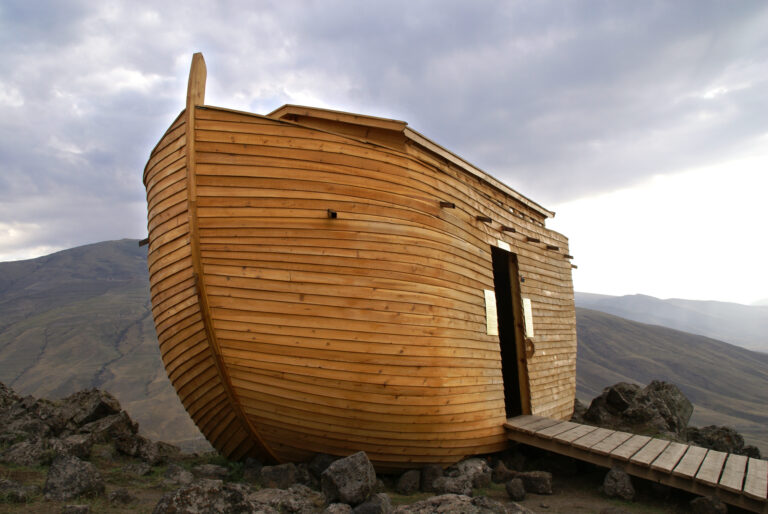
3) Noah’s Ark
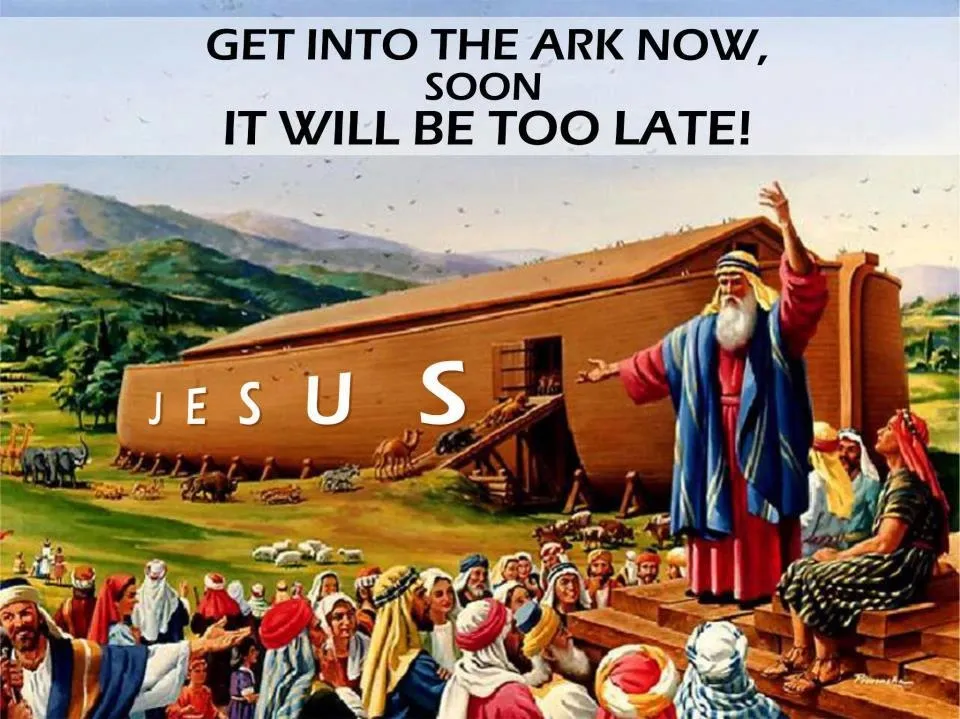
Image Source: Biblical Spirituality Press
The account of Noah’s Ark stands among the most vivid pre-figurations of Our Lord Jesus Christ found in Sacred Scripture. This divinely designed vessel provides us with a comprehensive picture of salvation through divine judgment, revealing patterns that would find their ultimate fulfillment in Christ’s redemptive work.
i) Noah’s Ark in Genesis
As we read in the book of Genesis, the corruption of mankind had reached such depths that “every intent of the thoughts of man’s heart was only evil continually” (Genesis 6:5). Rather than destroying humanity entirely, the Almighty in His mercy provided a means of deliverance. Noah, who “found grace in the eyes of the Lord,” received detailed instructions for constructing an ark according to divine specifications.
Scripture tells us that Noah served as “a preacher of righteousness” (2 Peter 2:5), likely proclaiming God’s coming judgment whilst building this enormous vessel. The construction itself would have served as a visible testimony to the approaching deluge. Yet despite this warning, the world continued in its usual pursuits until the flood waters came and “took them all away” (Matthew 24:39).
ii) Jesus as our Ark of salvation
The parallels between Noah’s ark and Christ are remarkable to consider:
One Door: God commanded that the ark have but one door (Genesis 6:16), prefiguring Our Lord’s declaration: “I am the door: by me if any man enter in, he shall be saved” (John 10:9).
Divine Invitation: The Lord said to Noah, “Come thou and all thy house into the ark” (Genesis 7:1), mirroring Christ’s gracious invitation: “Come unto me, all ye that labour and are heavy laden” (Matthew 11:28).
Divine Security: Once Noah entered, “the Lord shut him in” (Genesis 7:16), demonstrating the eternal security believers possess in Christ.
Protection from Judgment: The ark shielded its occupants from the waters of divine wrath, just as Christ shields the faithful from God’s judgment against sin.
This ancient pattern demonstrates that God has maintained one consistent plan of redemption throughout the ages—salvation by grace through faith. The ark that preserved Noah’s family foreshadows the greater salvation found in Christ, who preserves His people for eternity.
4) Melchizedek
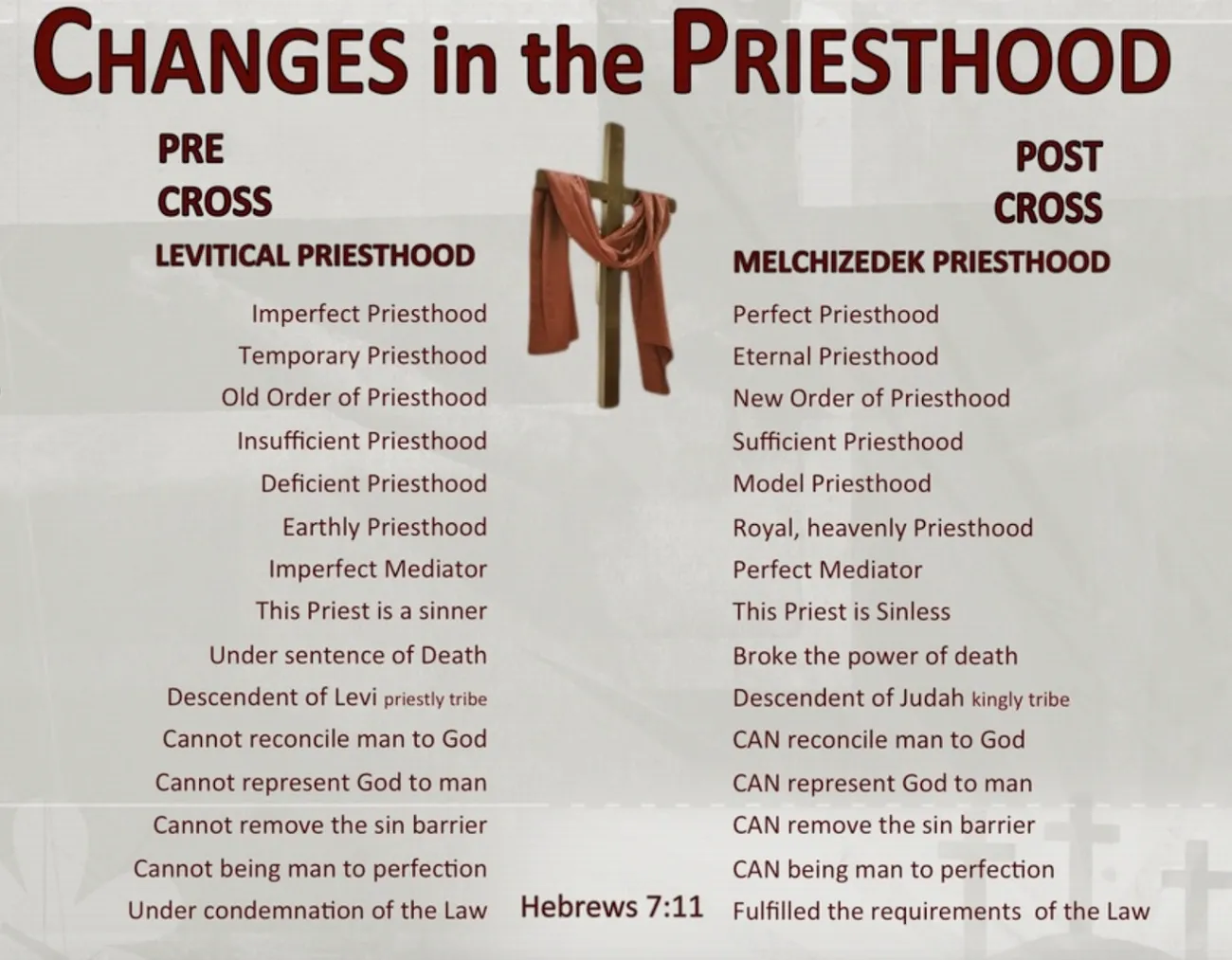
Image Source: Matthew Dowling
Among the mysterious figures of Sacred Scripture, Melchizedek emerges as a singular type of Christ whose brief appearances carry extraordinary theological significance. This enigmatic priest-king, mentioned only twice in the Old Testament, prefigures Our Lord’s eternal priesthood in ways that illuminate the very nature of Christ’s mediatorial work.
i) The Priesthood of Melchizedek
As we read in Genesis 14:18-20, Melchizedek appears suddenly in the narrative as both “king of Salem” (which would become Jerusalem) and “priest of the Most High God” – a remarkable dual office unknown elsewhere in biblical history. His very name reveals divine purpose: “Melchizedek” signifies “king of righteousness,” while his title “king of Salem” identifies him as “king of peace.”
The encounter with Abraham following the patriarch’s victory in battle demonstrates Melchizedek’s superior status. He blessed Abraham, and Abraham responded by offering him tithes – a tenth of all the spoils. What is most striking about this figure is what Scripture does not record concerning him. No genealogy is given, no mention of his birth or death appears – an intentional omission that highlights his typological significance.
The Psalmist David, writing under divine inspiration nearly a millennium later, prophetically declared in Psalm 110:4 that the coming Messiah would be “a priest forever after the order of Melchizedek.”
ii) Jesus Christ as Eternal High Priest
The Letter to the Hebrews develops this connection extensively, proclaiming Jesus “a high priest forever after the order of Melchizedek” (Hebrews 6:20). This reveals a profound truth about Christ’s priesthood. Since Our Lord came from the tribe of Judah rather than Levi, He could not qualify as a priest under the Mosaic Law. Yet the Almighty established through Melchizedek a superior priesthood that both predated and transcended the entire Levitical system.
Jesus Christ, like Melchizedek, serves in the dual capacity of both King and Priest – offices that were strictly separated under Israelite law. His priesthood rests not upon ancestral lineage but upon “the power of an indestructible life” (Hebrews 7:16). Whereas the Levitical priests died and required replacement, Jesus “continues forever” and “holds His priesthood permanently” (Hebrews 7:24).
Most importantly, this ancient figure reveals that God’s redemptive plan has always pointed toward Christ, who perfectly fulfills both royal and priestly offices for all eternity. The priesthood of Melchizedek stands as a divine foreshadowing of the perfect Priest-King who would come to offer the ultimate sacrifice and reign forever.
5) Jacob’s Ladder

Image Source: Christianity.com
What profound mystery did Jacob encounter during his flight from Esau’s wrath? The vision granted to this patriarch reveals one of Scripture’s most striking pre-figurations of Christ as the bridge between heaven and earth.
i) Jacob’s Vision at Bethel
As we read in Genesis 28, Jacob—fleeing his brother’s anger—stopped to rest using a stone for his pillow. The dream that followed would echo through the ages: “a ladder set up on the earth, with its top reaching to heaven. And behold, the angels of God were ascending and descending on it” (Genesis 28:12). Above this heavenly stairway stood the Lord Himself, renewing the covenant promises given to Abraham and Isaac.
Upon awakening, Jacob exclaimed in wonder: “Surely the Lord is in this place, and I did not know it… This is none other than the house of God, and this is the gate of heaven” (Genesis 28:16-17). He named the place Bethel—”House of God”—and erected a memorial stone to commemorate this divine encounter.
ii) Jesus as the True Ladder
The full meaning of Jacob’s vision remained veiled until Our Lord Himself revealed its significance. Speaking to Nathanael, Jesus declared: “Truly, truly, I say to you, you will see heaven opened, and the angels of God ascending and descending on the Son of Man” (John 1:51). Through these words, Christ identified Himself as the true ladder—the eternal connection between the divine and human realms.
This is consistent with the Church’s understanding throughout the ages. What Jacob witnessed in symbol, Jesus fulfills in reality. Christ has:
Destroyed the barrier separating heaven and earth through His sacrifice
Established direct access to the Father’s presence for all believers
Become the sole mediator between God and mankind
This vision reveals God’s mercy in providing access to Himself through the person and work of Jesus Christ. What appeared to Jacob as a temporary theophany has become, through the Incarnation, an eternal reality for all who approach God through His Son.
6) Isaac
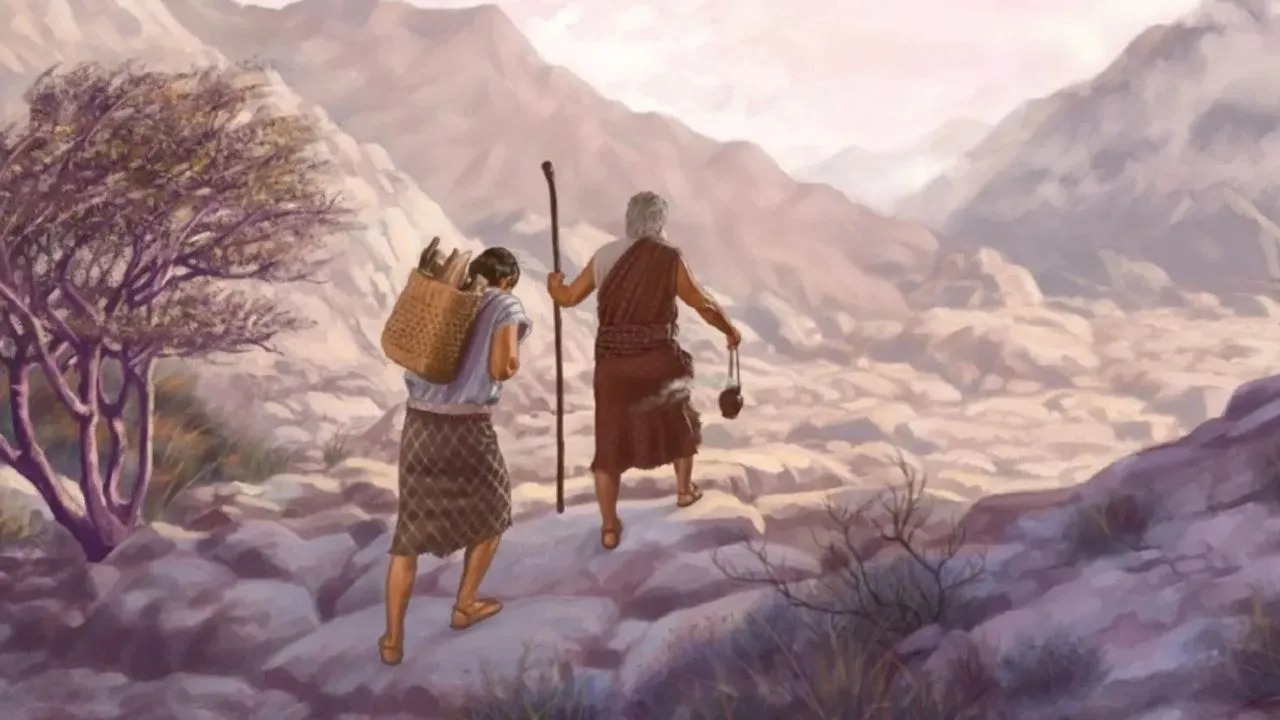
Image Source: Scott LaPierre
Among the most profound fore-shadowings of Christ’s sacrifice stands the account of Abraham and Isaac on Mount Moriah. This remarkable narrative in Genesis 22 reveals God’s eternal plan of redemption through substitutionary sacrifice with such clarity that it illuminates the very heart of the Gospel.
i) Isaac’s near-sacrifice
The testing of Abraham begins with God’s command: “Take your son, your only son Isaac, whom you love, and go to the land of Moriah, and offer him there as a burnt offering” (Genesis 22:2). Notice how the Almighty emphasizes “only son” throughout this account, despite Ishmael’s existence. The Hebrew word yachiyd signifies “unique” or “special,” pointing to Isaac’s role as the covenant heir through whom all nations would be blessed.
Abraham’s three-day journey to Moriah carries particular significance—this same region where Solomon would later construct the Temple, and where Our Lord would be crucified centuries later. As they approached the place of sacrifice, Isaac carried the wood for his own offering, just as Jesus would bear His cross to Calvary. Throughout this trial, Abraham demonstrated unwavering faith, telling his servants “we will return,” believing that God could raise Isaac from the dead if necessary (Hebrews 11:19).
ii) Jesus as the true sacrificial Son
The parallels between Isaac and Christ are striking and deliberate:
Both births were prophesied and miraculous in nature
Both are described as beloved sons whom their fathers willingly offered
Both submitted obediently to their fathers’ will
Both carried the wood for their sacrifice
Both journeyed to the same geographical region
Yet where Isaac was spared, Jesus became the actual sacrifice. The ram caught in the thicket that died in Isaac’s place merely foreshadowed Christ dying in our place. Abraham’s prophetic words, “God will provide for Himself the lamb” (Genesis 22:8), find their ultimate fulfillment in Jesus as the Lamb of God.
This typology shows that God’s plan of salvation through sacrifice was established from the beginning. The offering of Isaac reveals that redemption would always come through the sacrifice of God’s beloved Son, not through human works or merit. As we read in the Scriptures, this pattern of faith, obedience, and redemption through substitution points us toward the perfect sacrifice that was to come.
7) Joseph
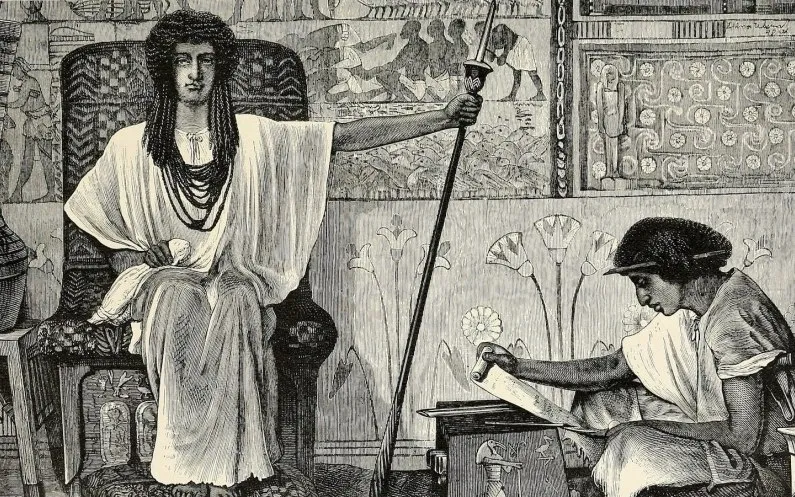
Image Source: BJU Seminary
Among the patriarchs recorded in Genesis, Joseph’s narrative occupies the most extensive treatment—thirteen chapters devoted to his remarkable life. This detailed account serves a divine purpose, as Joseph’s experiences provide one of the most complete foreshadowings of Christ’s redemptive work found in the Old Testament.
i) Joseph’s betrayal and exaltation
As we read in the Scriptures, Joseph was the beloved son of Jacob, favored above his brothers and recipient of prophetic dreams revealing his future authority. His brothers, consumed with envy, conspired against him saying, “Come now, let’s kill him and throw him into one of these cisterns” (Genesis 37:19-20). Instead, they sold their brother for twenty pieces of silver to Ishmaelite merchants.
Joseph’s sufferings continued in Egypt. Though he faithfully served in Potiphar’s household and rejected the advances of his master’s wife, he was falsely accused and cast into prison—what he himself called “the pit” (Genesis 40:15). Yet the Lord was with Joseph, and through divine providence, he was elevated from the dungeon to become second ruler of Egypt. When famine struck the known world, “all the earth came to Egypt to Joseph to buy grain” (Genesis 41:57).
ii) Jesus’ suffering and glory
The parallels between Joseph and Our Lord Jesus Christ are striking and numerous:
Both were beloved sons of their fathers
Both were betrayed by their own brethren
Both were sold for pieces of silver
Both were falsely accused and unjustly condemned
Both descended to the lowest place before their exaltation
Both forgave those who wronged them
Both became saviors of their people and the world
As Joseph left his father’s house to eventually save his family, Christ left His heavenly dwelling to become our Redeemer. Joseph took “the form of a servant” in Potiphar’s house, just as Christ “took upon him the form of a servant” (Philippians 2:7).
This typology demonstrates that God’s plan of redemption through suffering has remained constant from the beginning. Joseph becomes a savior through his sufferings, pointing forward to the greater Joseph who would save not merely from physical famine but from spiritual death.
8) Moses
The great lawgiver Moses stands as one of the most comprehensive foreshadowings of Christ found in the Hebrew Scriptures. From his birth to his ministry, the parallels between Moses and Our Lord reveal the consistent pattern of God’s redemptive plan.
i) Moses as Deliverer of Israel
God commissioned Moses with these words: “I have surely seen the affliction of my people which are in Egypt, and have heard their cry by reason of their taskmasters; for I know their sorrows: And I am come down to deliver them out of the hand of the Egyptians” (Exodus 3:7-8).
As Israel’s deliverer, Moses confronted Pharaoh through divine authority, performed miraculous signs, and led the chosen people through the Red Sea toward the Promised Land. The account reveals Moses’ profound love for his people, particularly when he interceded after the golden calf incident, offering his own life for Israel’s sin: “Yet now, if thou wilt forgive their sin—; and if not, blot me, I pray thee, out of thy book which thou hast written” (Exodus 32:32).
Throughout forty years in the wilderness, Moses served as:
Israel’s mediator between God and the people
Their teacher of divine law
Their shepherd through the desert wanderings
Their intercessor in times of rebellion
ii) Jesus as the Greater Moses
The Epistle to the Hebrews declares explicitly that Jesus Christ “was counted worthy of more glory than Moses, inasmuch as he who hath built the house hath more honour than the house” (Hebrews 3:3). This superiority manifests in several ways.
Both Moses and Jesus experienced death threats as infants, both found protection in Egypt, and both fasted forty days before their great ministries. Both controlled natural elements and provided food miraculously for multitudes. Both were initially rejected by their own people.
Yet Christ transcends Moses in every aspect. Moses reflected God’s glory temporarily when his face shone after meeting with the Almighty (Exodus 34:29-35), but Jesus is “the brightness of his glory, and the express image of his person” (Hebrews 1:3). Moses spoke with God “face to face, as a man speaketh unto his friend” (Exodus 33:11), yet Jesus is God incarnate—the Word made flesh.
Moses established the pattern of prophet, priest, and mediator that Christ would perfectly fulfill. Where Moses delivered Israel from physical bondage in Egypt, Jesus delivers from the spiritual slavery of sin. As the Gospel of John states: “For the law was given by Moses, but grace and truth came by Jesus Christ” (John 1:17).
This demonstrates how the Old Covenant served as preparation for the New, with Moses pointing forward to the One who would accomplish what the Law could only foreshadow—perfect righteousness and eternal salvation.
9) Passover Lamb
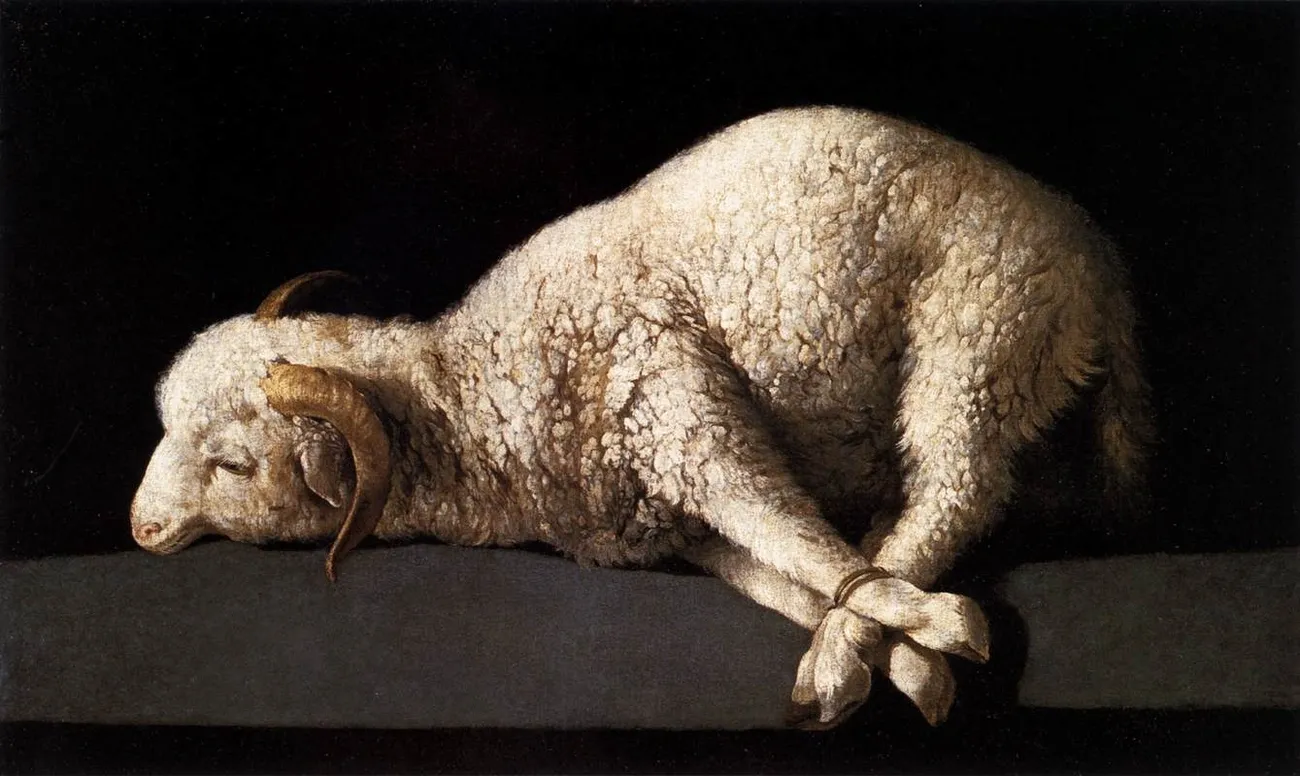
Image Source: Stephen Sizer
Among the sacred ceremonies instituted by the Almighty in the Old Testament, none provides a more vivid foreshadowing of Christ’s redemptive sacrifice than the Passover. This ancient observance stands as a profound testimony to God’s plan of salvation through the shedding of innocent blood.
i) The first Passover in Exodus
As we read in Exodus 12, God established the Passover as His final judgment upon the land of Egypt. The Lord commanded each household of Israel to select an unblemished male lamb on the tenth day of Nisan, examine it carefully for four days, then sacrifice it on the fourteenth [5]. The blood of this spotless victim, applied to the doorposts and lintels, served as a divine sign of protection: “When I see the blood, I will pass over you” (Exodus 12:13). This blood-marked threshold shielded the firstborn sons of Israel from the angel of death, not through any inherent righteousness on Israel’s part, but solely through the substitutionary sacrifice [6]. God’s precise instructions required that the lamb be perfect, roasted whole, consumed in haste, and significantly, none of its bones could be broken [7].
ii) Jesus as the Lamb of God
Saint John the Baptist, filled with prophetic insight, immediately recognized this connection when he proclaimed Jesus as “the Lamb of God who takes away the sin of the world” (John 1:29) [8]. The timing of our Lord’s passion reveals God’s meticulous design—Jesus entered Jerusalem on the tenth day of Nisan (precisely when Passover lambs were selected), endured examination by religious authorities for four days, and was crucified at the very hour when Passover lambs were being slaughtered in the Temple [9]. Even Pontius Pilate’s declaration, “I find no fault in Him,” confirmed Jesus as the spotless sacrifice [9]. Most remarkably, Scripture records that “not one of His bones was broken” (John 19:36), directly fulfilling the ancient Passover requirement [10].
This typology reveals the consistent pattern of God’s redemptive work—salvation through substitution, with the innocent dying for the guilty [6]. Just as the lamb’s blood protected Israel from divine judgment, so Christ’s precious blood shields believers from the wrath of God against sin [10]. The Passover marked Israel’s deliverance from physical bondage in Egypt, yet Jesus accomplishes the greater exodus from spiritual slavery to sin [10]. The Apostle Paul affirms this fulfillment explicitly: “Christ, our Passover lamb, has been sacrificed” (1 Corinthians 5:7) [7].
10) Manna
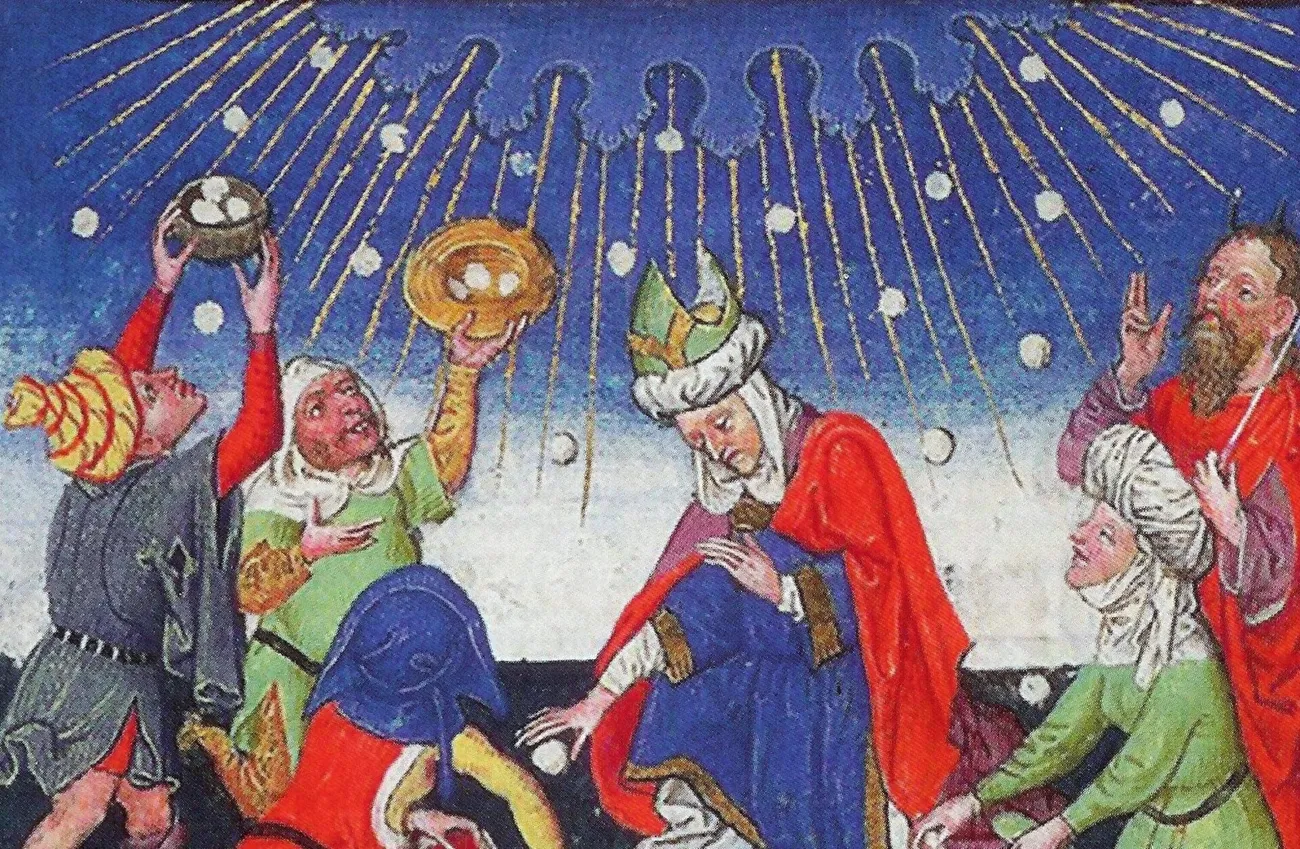
Image Source: Adoremus
The daily provision of manna stands as one of the most beautiful fore-shadowings of Our Lord Jesus Christ in the Hebrew Scriptures. As we read in the Book of Exodus, this heavenly bread sustained the chosen people throughout their wilderness journey, yet it points to a far greater spiritual reality.
i) The Bread from Heaven in the Wilderness
Thirty days following the Exodus from Egypt, the Almighty began providing manna in the wilderness of Sin—a name associated with “thorn-bush” and symbolic of the curse [11]. Each morning, this mysterious sustenance appeared as “a small round thing, as small as the hoar frost on the ground” (Exodus 16:14), described as “like coriander seed, white; and the taste of it was like wafers made with honey” (Exodus 16:31) [12].
The magnitude of this miracle is staggering. Conservative estimates suggest God provided approximately 4,500 tons of manna daily—over one million tons annually—for forty years [1]. The Lord established precise gathering instructions that taught profound spiritual lessons:
Collect only what was needed for each day
Gather double portions before the Sabbath
Trust that none would fall on the Sabbath itself
Remarkably, this heavenly bread never touched the desert sand but appeared pure upon the morning dew, maintaining perfect cleanliness [11]. Those who attempted to hoard it beyond God’s provision found it corrupted with worms, teaching complete dependence upon divine providence.
ii) Jesus as the True Bread from Heaven
Following the miraculous feeding of the five thousand, Our Lord explicitly revealed Himself as the fulfillment of this ancient type: “My Father giveth you the true bread from heaven” (John 6:32) [11]. His declaration “I am the bread of life” (John 6:35) represents both a divine claim through the sacred “I AM” formula and His role as spiritual nourishment [13].
The contrast between the two breads is striking. As Jesus explained to His listeners, “Your fathers did eat manna in the wilderness, and are dead. This is the bread which cometh down from heaven, that a man may eat thereof, and not die” (John 6:49-50) [12]. The manna sustained physical life temporarily; Christ offers eternal spiritual life.
I highly recommend reflecting on how this foreshadowing finds its ultimate fulfillment in the Most Blessed Sacrament. Just as Israel gathered manna daily for physical sustenance, Catholics receive the true Bread from Heaven in the Holy Eucharist.
The early Church Fathers saw in manna a clear prefiguration of the Eucharist. This connection illuminates how God’s plan of salvation has remained consistent throughout salvation history—always providing the bread of life for His people, first in shadow, then in glorious reality through His Son.
11) Bronze Serpent
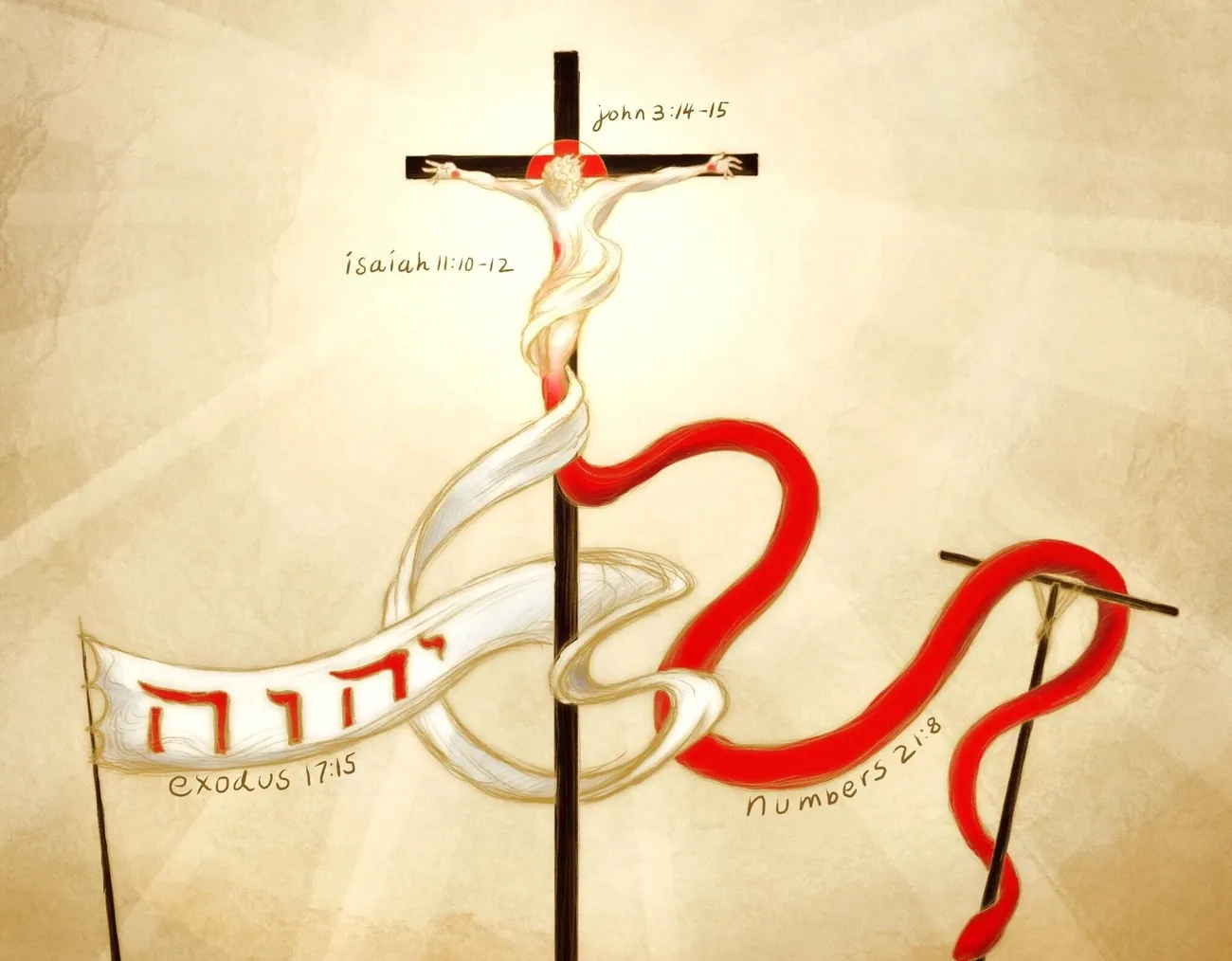
Image Source: Christ Over All
What could be more paradoxical than the very symbol of death becoming the instrument of healing? The bronze serpent erected by Moses presents one of Scripture’s most extraordinary types of Christ, where divine wisdom appears as foolishness to human understanding.
i) The fiery serpents in the wilderness
During Israel’s wilderness wanderings, the people once again murmured against the Almighty and against Moses, saying: “Why have you brought us up out of Egypt to die in the wilderness? For there is no food and no water, and we loathe this worthless food” [14]. Such ingratitude toward God’s provision provoked divine judgment. The Lord sent among them venomous serpents—the Hebrew word seraphim meaning “burning ones” [15]—whose deadly bite brought swift death to many Israelites.
When the people recognized their sin and pleaded with Moses to intercede, God provided a most unusual remedy. He commanded Moses: “make a fiery serpent and set it on a pole” [16], promising that whoever looked upon it would live. Moses fashioned a serpent of bronze, raised it upon a standard, and all who gazed upon this unlikely cure were healed from the serpent’s venom.
ii) Our Lord’s interpretation of this sign
The full meaning of this ancient event remained hidden until Christ Himself revealed its significance. Speaking to Nicodemus under cover of darkness, Jesus declared: “And as Moses lifted up the serpent in the wilderness, even so must the Son of Man be lifted up” (John 3:14) [17]. Through this divine interpretation, we understand that the bronze serpent prefigured Christ’s crucifixion.
Just as the serpent was lifted high for all to see, so would the Son of Man be raised upon the cross. The method of healing required simple faith—looking upon what appeared to be the very cause of death. Similarly, salvation comes through looking in faith upon Christ crucified, though such wisdom appears as foolishness to the natural man [18].
Here we behold God’s magnificent plan—transforming the instrument of judgment into the means of salvation through the lifted-up Christ.
12) Sabbath
Among the earliest divine ordinances established by Almighty God stands the Sabbath, a sacred pattern woven into creation itself that finds its ultimate fulfillment in Christ’s redemptive work.
i) Sabbath rest in the Old Testament
According to Scripture, God established the Sabbath principle at the very foundation of creation: “And on the seventh day God ended His work which He had made; and He rested on the seventh day from all His work which He had made” (Genesis 2:2-3). This divine rest was not born of weariness—for the Creator does not grow tired—but served as a pattern for humanity’s spiritual benefit.
When the Lord delivered Israel from Egyptian bondage, He formalized this principle in the fourth commandment: “Remember the sabbath day, to keep it holy” (Exodus 20:8-11). This weekly observance served a dual purpose:
Physical restoration for God’s people
Spiritual remembrance of divine deliverance
The Sabbath reminded Israel that the Lord had brought them out of Egyptian slavery (Deuteronomy 5:15), creating a regular occasion to recall His covenant faithfulness and provision.
ii) Jesus as our spiritual rest
Our Lord transformed understanding of the Sabbath by declaring Himself its true Lord: “The sabbath was made for man, and not man for the sabbath: Therefore the Son of man is Lord also of the sabbath” (Mark 2:27-28). Throughout His earthly ministry, Jesus challenged the legalistic interpretations that had obscured the Sabbath’s deeper spiritual meaning.
The Savior’s invitation reveals the Sabbath’s ultimate purpose: “Come unto me, all ye that labour and are heavy laden, and I will give you rest” (Matthew 11:28-30). This rest transcends mere physical relaxation—it involves the surrender of our burdens and the discovery of peace through complete trust in Christ’s finished work upon the cross.
The Epistle to the Hebrews develops this typology most completely: “There remaineth therefore a rest to the people of God” (Hebrews 4:9). This passage reveals that the physical observance of Sabbath merely foreshadowed the spiritual rest available through faith in Jesus Christ.
The weekly pattern of ceasing from labor pointed toward Christ, who offers permanent rest from the futile attempt to achieve salvation through works. As the Apostle Paul writes in Colossians 2:16-17, these ceremonial observances were “a shadow of things to come; but the body is of Christ.”
This sacred pattern demonstrates God’s consistent design throughout Scripture—the temporal pointing toward the eternal, the physical preparing for the spiritual. Jesus fulfills the Sabbath by becoming our eternal rest, the perfect realization of what the seventh day always symbolized. Through Him, believers enter into the true Sabbath rest that no earthly observance could provide.
Summary of the Sacred Types
Having examined these various foreshadowings of Our Lord throughout the Hebrew Scriptures, it would be beneficial to present a comprehensive overview of their primary connections to Christ. Each type reveals specific aspects of the Messiah’s person and work, demonstrating the remarkable consistency of God’s redemptive plan across the centuries.
The following table provides a structured summary of these sacred patterns:
Type/Shadow | Biblical Reference | Primary Symbolism | Key Connection to Christ | Theological Significance |
Adam | Romans 5:14 | First created man, federal head of humanity | Called “the last Adam” (1 Cor 15:45-47) | Through Adam came sin/death; through Christ came righteousness/life |
Abel | Genesis 4 | First righteous sacrifice | Blood that speaks better things (Heb 12:24) | Demonstrates faith over works in approaching God |
Noah’s Ark | Genesis 6-8 | Sole means of salvation from judgment | Single door of salvation (John 10:9) | Salvation through judgment, grace through faith |
Melchizedek | Genesis 14:18-20 | King-priest of Salem | Eternal priest after Melchizedek’s order (Heb 6:20) | Superior priesthood that transcends Levitical system |
Jacob’s Ladder | Genesis 28:12 | Connection between heaven and earth | True bridge between God and man (John 1:51) | Christ as exclusive path to God |
Isaac | Genesis 22 | Beloved son offered for sacrifice | God’s beloved Son willingly sacrificed | Pattern of substitutionary atonement |
Joseph | Genesis 37-50 | Rejected brother who became savior | Betrayed but exalted to save His people | God uses suffering to accomplish salvation |
Moses | Exodus 3-40 | Deliverer and lawgiver | Greater prophet/deliverer (Acts 3:22) | Delivers from spiritual bondage |
Passover Lamb | Exodus 12 | Sacrificial lamb whose blood saved | “Lamb of God” (John 1:29) | Salvation through substitutionary sacrifice |
Manna | Exodus 16 | Bread from heaven | “True Bread from Heaven” (John 6:32) | Christ as spiritual sustenance |
Bronze Serpent | Numbers 21 | Lifted up for healing | Lifted up on cross for salvation (John 3:14) | Healing through looking to Christ in faith |
Sabbath | Genesis 2:2-3 | Divine rest | Lord of the Sabbath giving true rest (Matt 11:28) | Spiritual rest in Christ’s finished work |
What emerges from this systematic examination is the remarkable coherence of God’s plan throughout Scripture. From the very beginning with Adam, through the patriarchs, and continuing through the Mosaic dispensation, each type points toward the same glorious reality – Jesus Christ as the fulfillment of every divine promise and pattern.
These sacred fore-shadowings serve multiple purposes in God’s economy. They prepared the faithful to recognize the Messiah when He appeared, they demonstrate the unity of Scripture across both Testaments, and they reveal the depth of divine wisdom in orchestrating redemptive history. Most importantly, they show us that Christ is not merely the subject of New Testament revelation, but the central figure toward whom all Scripture points from its very first pages.
Conclusion
What emerges from this examination of Old Testament types and shadows is the magnificent tapestry of divine revelation that God has woven throughout Sacred Scripture. These sacred patterns demonstrate beyond question that the Almighty has orchestrated His redemptive plan across centuries, preparing His chosen people to recognize the Messiah when He appeared among them.
The profound connections we have explored reveal the unity of Scripture in a most remarkable way. Adam as the federal head whose disobedience brought death finds its perfect contrast in Christ, the Last Adam whose obedience brings eternal life. The righteous sacrifice of Abel points unmistakably toward the ultimate sacrifice of Calvary. Noah’s ark, preserving the faithful through divine judgment, foreshadows how Christ shelters believers from the wrath to come.
Each of these types builds upon the others, creating what we might call a progressive revelation of God’s plan of salvation. The Passover lamb’s blood marking the doorposts of Israel vividly illustrates how the Blood of Jesus shields the faithful from eternal condemnation. Jacob’s ladder connecting heaven and earth perfectly prefigures Our Lord’s declaration that He is “the way, the truth, and the life” (John 14:6).
These patterns serve not merely as fascinating parallels but as divine instruction. As we read in the Scriptures, “All scripture is given by inspiration of God, and is profitable for doctrine, for reproof, for correction, for instruction in righteousness” (2 Timothy 3:16). The bronze serpent lifted up by Moses provided healing for all who looked upon it in faith – a direct foreshadowing that Jesus Himself referenced when speaking of His crucifixion to Nicodemus.
The theological significance of these types cannot be overstated. They demonstrate that no human author could have orchestrated such intricate patterns across different writers, cultures, and centuries. This serves as compelling evidence for the divine authorship of Scripture and confirms that Jesus Christ is indeed the promised Messiah who fulfills every prophetic picture established in the Old Testament.
Furthermore, these connections reveal the consistency of God’s redemptive plan throughout all ages. When we approach the Old Testament with this understanding, the Scriptures come alive with new meaning and depth. Joseph’s betrayal by his brothers, his unjust suffering, and his eventual exaltation perfectly pattern the journey of Christ. The daily provision of manna in the wilderness points to Jesus as the true Bread from Heaven who satisfies our spiritual hunger eternally.
These typologies or fore-shadowing are but a taste of many patterns that point to Jesus Christ. I highly recommend continued study of these sacred patterns. The connections between Old Testament types and their fulfillment in Christ provide profound insights into God’s character and His plan of redemption. As Our Lord Himself declared to the religious leaders of His day, “Search the scriptures; for in them ye think ye have eternal life: and they are they which testify of me” (John 5:39).
Once you begin to see these divine patterns, you will discover them throughout Scripture – evidence of God’s magnificent design pointing to His beloved Son from Genesis to Revelation. This understanding enriches our appreciation of both the Old and New Testaments, showing how they work together to reveal the complete picture of God’s redemptive work in Christ Jesus.
God be with you in your continued study of His Holy Word.
References
[1] – https://idahobaptist.com/adam-type-christ-romans-512-19/
[2] – https://www.gotquestions.org/Jesus-second-Adam.html
[3] – https://www.patheos.com/blogs/troublerofisrael/2016/07/adam-and-christ-the-parallels/
[4] – https://pastoral-theology.com/2012/08/23/contrasting-the-first-adam-and-the-last-adam/
[5] – https://www.desiringgod.org/messages/adam-christ-and-justification-part-1
[6] – https://www.desiringgod.org/messages/adam-christ-and-justification-part-2
[7] – https://www.scottlapierre.org/christ-our-passover-lamb/
[8] – https://www.thegospelcoalition.org/article/how-jesus-fulfills-passover/
[9] – https://learn.ligonier.org/articles/how-was-the-passover-a-sign-of-the-covenant
[10] – https://www.gotquestions.org/Jesus-Lamb-of-God.html
[11] – https://livebeyond.org/the-significance-of-passover-how-jesus-is-the-fulfillment-of-the-passover-lamb/
[12] – https://www.gotquestions.org/Passover-Lamb.html
[13] – https://truthandtidings.com/2019/06/foreshadows-of-christ-and-calvary-a-typical-provision-exodus-16/
[14] – https://www.gotquestions.org/what-was-manna.html
[15] – https://plymouthbrethren.org/article/11690
[16] – https://www.gotquestions.org/bread-of-life.html
[17] – https://www.gotquestions.org/bronze-serpent.html
[18] – https://scripturecentral.org/knowhy/why-did-jesus-compare-himself-to-the-brazen-serpent
[19] – https://biblehub.com/john/3-14.htm
[20] – https://www.biblegateway.com/passage/?search=John 3%3A14-21&version=KJV
[21] – https://www.placefortruth.org/blog/the-serpent-on-the-pole-and-the-cross-of-christ
[22] – https://www.desiringgod.org/messages/the-son-of-man-must-be-lifted-up-like-the-serpent
[23] – https://truthfaithandreason.com/a-case-for-the-old-testament-does-the-role-of-high-priest-foreshadow-jesus/
[24] – https://evidenceunseen.com/old-testament/genesis/difficulties/does-melchizedek-foreshadow-the-work-of-christ-as-high-priest-cf-heb-51-6-71-28
[25] – https://biblecentral.info/library/chapter/priests-and-high-priests-foreshadowing-jesus-christ/
[26] – https://www.gotquestions.org/Jesus-High-Priest.html