The Third Commandment – Remember to Keep Holy the Lord’s Day
What Does the Third Commandment Require of Believers?
The Third Commandment requires believers to set aside one day each week for rest, worship, and spiritual renewal. The Catechism teaches that the sabbath brings everyday work to a halt and provides respite from servitude to work and worship of money (CCC, 2172). For Catholics, Sunday replaced the Jewish Sabbath because Christ rose from the dead on Sunday, making it the first day of the new creation (CCC, 2174).

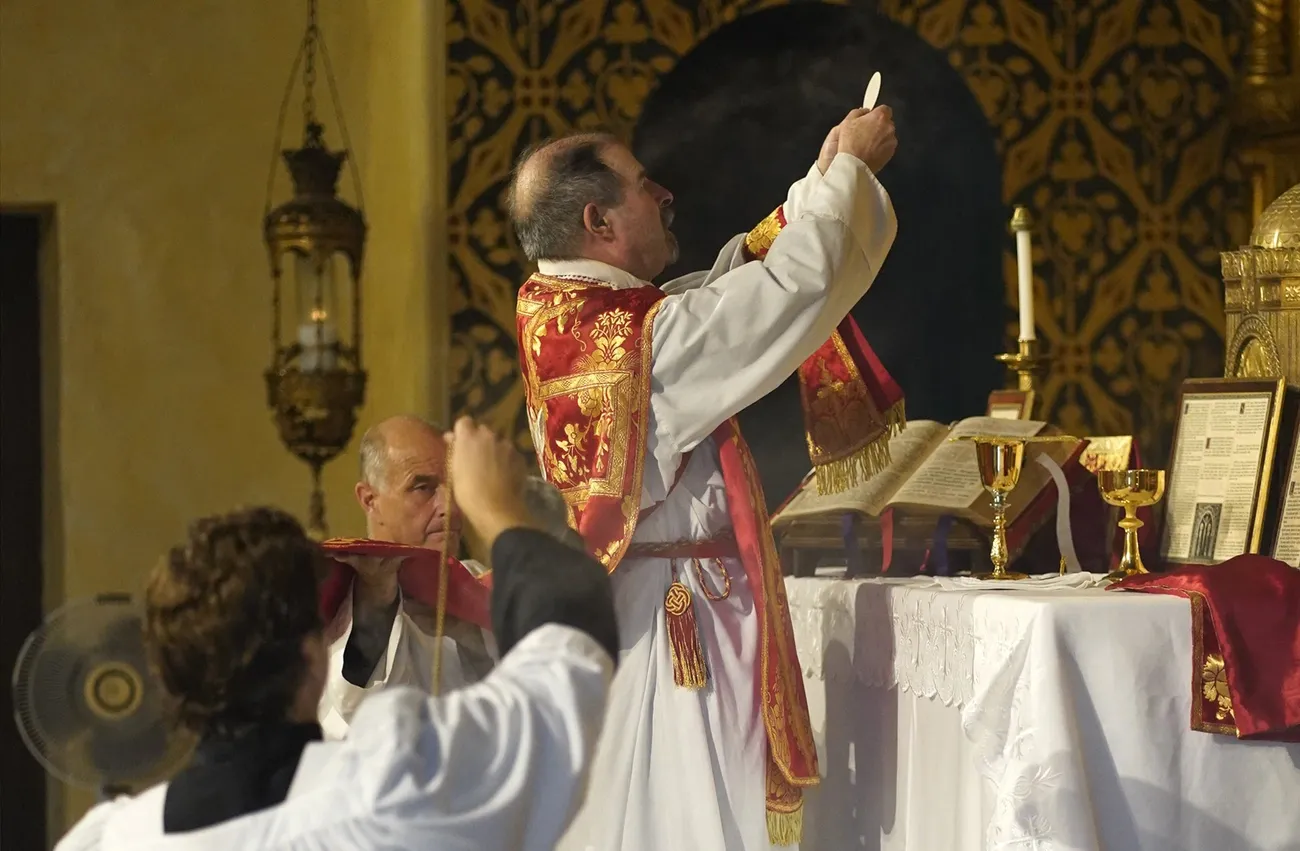
This commandment has both negative and positive dimensions. Negatively, it forbids unnecessary servile work that impedes worship and rest. Positively, it requires participation in Sunday Mass, adequate rest from labor, and cultivation of family and community relationships. Sunday Mass attendance constitutes a grave obligation for all Catholics. The Catechism states: Those who deliberately fail in this obligation commit a grave sin (CCC, 2181). This requirement reflects the Mass’s centrality to Catholic life as the primary means of encountering Christ and receiving grace through the Eucharist.
How Did Sunday Become the Christian Sabbath?
Early Christians transitioned from Saturday Sabbath to Sunday worship within the first generation after Christ’s resurrection. Acts 20:7 records Christians gathering on the first day of the week to break bread, and St. Paul instructed Corinthian Christians to set aside offerings on the first day of every week (1 Corinthians 16:2). The Didache, a first-century Christian document (c. 70-120 AD), instructs: On the Lord’s Day, gather together, break bread, and give thanks (Didache, 14:1). St. Ignatius of Antioch, writing around 110 AD, confirmed that Christians no longer observe the Sabbath, but live in the observance of the Lord’s Day (Letter to the Magnesians, 9).
St. Justin Martyr provided the earliest detailed description of Sunday worship in his First Apology (c. 155 AD), describing Scripture reading, instruction, prayer, and Eucharist. This second-century worship closely resembled the Mass structure Catholics maintain today. Emperor Constantine officially recognized Sunday as a day of rest in 321 AD, though Christian Sunday observance preceded this legal recognition by nearly three centuries.
What Constitutes Legitimate Excuses from Sunday Mass Obligation?
The Church recognizes certain circumstances that excuse Catholics from Sunday Mass obligation without sin. Valid excuses include:
- serious illness preventing attendance,
- care for the seriously ill when one is the sole caregiver,
- significant difficulty attending due to lack of accessible parish, and
- legitimate work obligations that genuinely cannot be avoided. Medical professionals, emergency responders, and essential service workers often face unavoidable Sunday work. The Catechism recognizes that legitimate defense of the common good requires some Sunday work (CCC, 2185). However, these individuals should attend Mass at alternative times—Saturday vigil, Sunday evening, or weekday Mass.
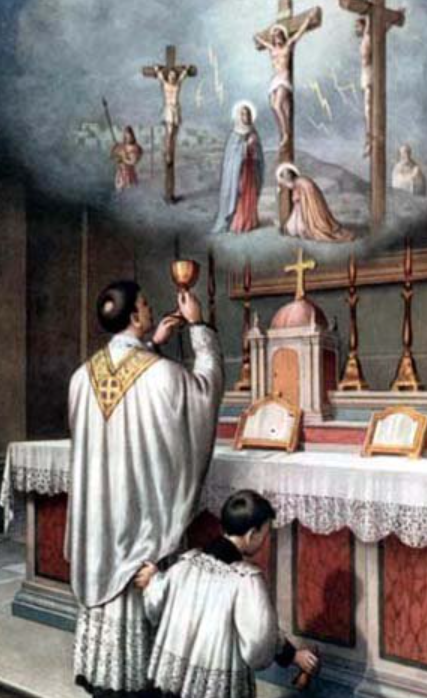
Many commonly claimed excuses do not legitimately exempt the obligation. Such unacceptable excuses include:
- Feeling tired, having housework,
- attending children’s sports activities, or
- entertaining guests do not constitute serious reasons. A 2018 Pew Research Center study found that among Catholics who miss Mass regularly, only 37% cite legitimate reasons like illness, while 35% simply state they don’t feel obligated and 28% cite inconvenience (Pew Research Center, 2018). The principle of proportionate reason applies: true necessity involves situations where significant harm would result from refusing Sunday work, not mere inconvenience.
How Does Modern Culture Systematically Violate Sunday Rest?
Contemporary society systematically violates Third Commandment principles through 24/7 consumer culture, competitive youth sports scheduling, and relentless work demands. Sunday has become virtually indistinguishable from other days, with shopping malls and businesses operating normally. The cultural transformation from widespread Sunday closing laws in the 1950s to today’s complete commercialization represents deliberate rejection of Sabbath rest principles.
The 1961 Supreme Court decision McGowan v. Maryland upheld Sunday closing laws as providing uniform rest for workers. However, subsequent decades saw wholesale abandonment of such protections as states repealed Sunday closing laws under retailer pressure. Retail work exemplifies systematic Third Commandment violation, forcing millions of workers to choose between employment and worship. The economic pressure on low-wage workers particularly violates justice, as retail workers averaging $11.24 per hour cannot risk termination by refusing Sunday shifts (Economic Policy Institute, 2017).
Youth sports present particular challenges for Catholic families. Traveling competitive leagues routinely schedule Sunday morning games, forcing parents to choose between children’s athletic development and Mass attendance. A 2015 Aspen Institute study found that 70% of children quit organized sports by age 13, partly due to excessive time commitments that crowd out family, academics, and faith (Aspen Institute, 2015).
Why Has Catholic Mass Attendance Declined So Dramatically?
Catholic Mass attendance has declined catastrophically in recent decades. In 1955, 75% of U.S. Catholics attended weekly Mass; by 2018, only 24% attended weekly (Center for Applied Research in the Apostolate, 2018). Multiple factors contributed:
- increased secularization making religious practice seem optional;
- consumer culture promoting Sunday shopping as normal;
- inadequate catechesis following Vatican II that failed to explain the Mass’s objective sacrificial nature; and
- the clergy sexual abuse crisis that damaged institutional trust.
Generational differences prove striking. Catholics born before 1945 maintained 43% weekly attendance as of 2018. Baby Boomers attend at 30% weekly, Generation X at 17% weekly, and Millennials at only 11% weekly (Gray & Bendyna, 2019). This generational collapse indicates many Catholics never internalized the Sunday obligation’s seriousness and failed to transmit it to their children. The COVID-19 pandemic dramatically accelerated decline. When dioceses lifted Mass dispensations in mid-2021, many Catholics never returned. A 2022 Pew Research study found that only 60% of pre-pandemic regular attenders had resumed consistent in-person attendance (Pew Research Center, 2022).
How Can Families Restore Sunday as the Lord’s Day?
Families must intentionally reclaim Sunday through rhythms of worship, rest, and togetherness. Begin by making Sunday Mass attendance absolutely non-negotiable. Families should arrive early, sit together, and participate actively. When children observe parents treating Mass as bothersome duty, they internalize that worship lacks importance.
After Mass, maintain Sunday’s sacred character through special meals, recreation that builds relationships, and genuine rest. Traditional practices include preparing special Sunday dinners, taking family walks, playing board games, visiting elderly relatives, and reading Scripture together. Limit technology that isolates individuals in private digital worlds.
Resist activities contradicting Sunday’s sacred character. Avoid shopping unless truly necessary, as consumer culture normalizes Sunday commerce and prevents workers from worshiping. Decline children’s sports commitments requiring Sunday morning games. Minimize homework and household projects that could reasonably occur on other days. These choices require courage to differ from surrounding culture but demonstrate that Sunday belongs to God first.
Parishes bear responsibility for helping Catholics fulfill Sunday obligations through adequate Mass times, compelling liturgy, and supportive community. Liturgy quality significantly affects attendance. When Mass feels rushed or carelessly celebrated, parishioners receive implicit message that Eucharist matters little. Robust catechesis about Sunday obligation constitutes essential pastoral responsibility. Many Catholics never learned that missing Mass without serious reason is mortal sin requiring confession before receiving Communion again.
Conclusion
The Third Commandment invites believers to receive God’s gift of time set apart for worship and renewal. In culture treating every day as opportunity for productivity and consumption, Sunday observance becomes countercultural witness that humans need not constantly produce to have worth. Pope Francis teaches that rest opens our eyes to the larger picture and gives renewed sensitivity to others’ rights (Laudato Si’, 2015, para. 237).
Restoring Sunday’s sacred character requires intentional resistance to cultural pressures normalizing constant work and endless entertainment. It demands prioritizing Mass attendance despite schedule conflicts and establishing family rhythms of rest despite cultural expectations. These choices witness to priorities transcending immediate comfort and material success.
The dramatic decline in Mass attendance represents catastrophic spiritual crisis requiring urgent response. Reversing this decline requires clergy preaching clearly about Sunday obligation’s gravity; parents modeling faithful weekly attendance; parishes offering compelling liturgy; employers respecting workers’ religious needs; and individual Catholics choosing to prioritize worship regardless of inconvenience.
Ultimately, Sunday observance trains Catholics in fundamental trust. Setting aside work one day weekly requires faith that God provides what we need without constant striving. This Sabbath rest becomes rehearsal for eternal rest in God’s presence. When Catholics reclaim Sunday as the Lord’s Day, they remember they are human beings created for communion with God, not merely human doings valued only for productivity.
References
Aspen Institute. (2015). Project Play: Sport for all, play for life. https://www.aspeninstitute.org/
Catechism of the Catholic Church. (2nd ed.). (2000). Libreria Editrice Vaticana.
Center for Applied Research in the Apostolate. (2018). Frequently requested Church statistics. Georgetown University.
Economic Policy Institute. (2017). The state of American wages 2016. https://www.epi.org/
Francis. (2015). Laudato si’ [Encyclical letter on care for our common home]. Vatican.
Gray, M. M., & Bendyna, M. E. (2019). Generational differences in Catholic attitudes. CARA Reports.
John Paul II. (1998). Dies Domini [Apostolic letter on keeping the Lord’s Day holy]. Vatican.
Pew Research Center. (2018). Why Americans go and don’t go to religious services. https://www.pewresearch.org/
Pew Research Center. (2022). Religious attendance post-COVID-19. https://www.pewresearch.org/
Supreme Court of the United States. (1961). McGowan v. Maryland, 366 U.S. 420.