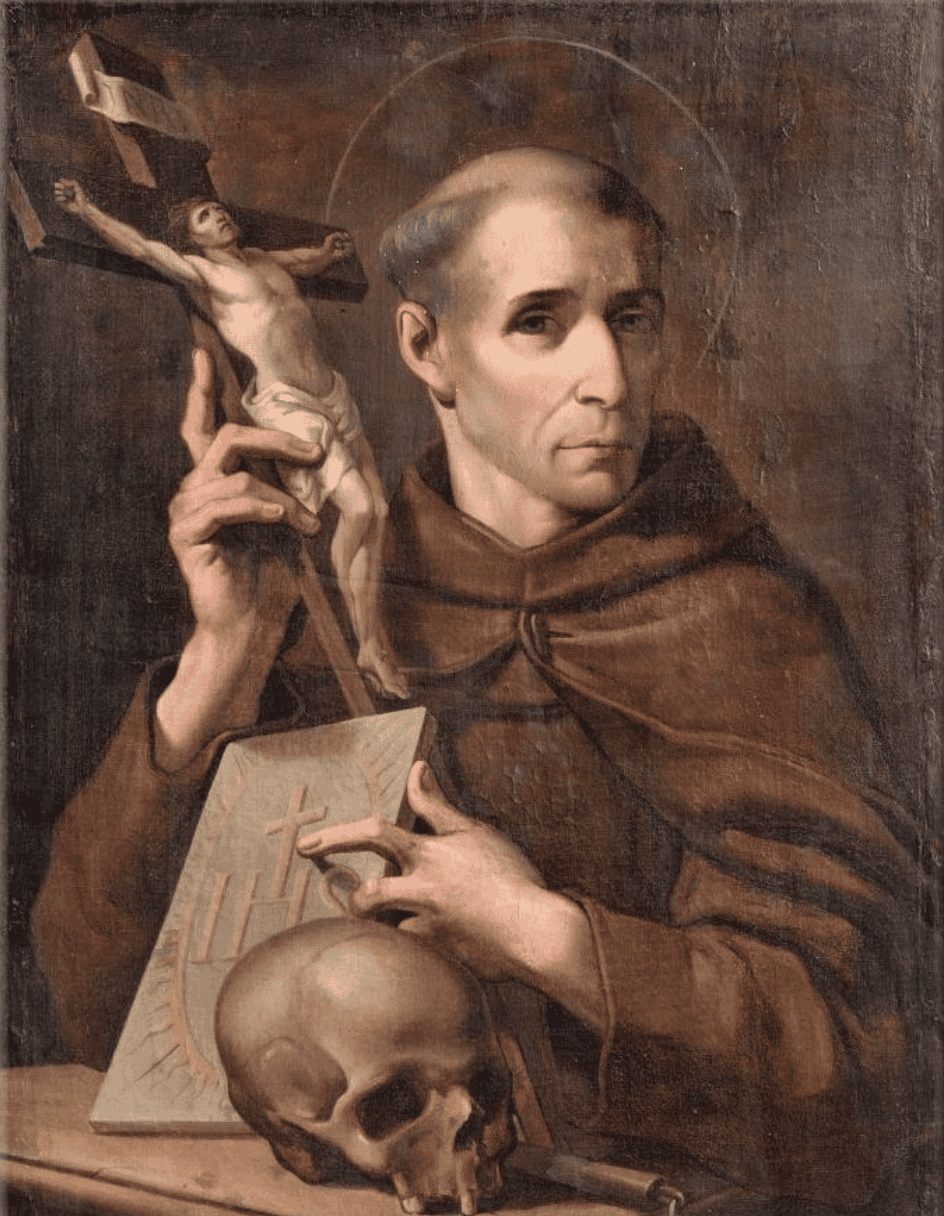
The Shocking Truth About Salvation: St. Leonard’s Warning on the Fewness of Those Who Are Saved
The sermon of St. Leonard of Port Maurice on the fewness of those who are saved stands among the most sobering teachings in Catholic tradition. This holy Franciscan friar presented a truth that has caused, as he himself noted, “even the pillars of the Church to tremble” and “filled the greatest Saints with terror.” The question he addresses strikes at the heart of our spiritual life: how many souls actually reach Heaven?
According to the unanimous testimony of the Church Fathers, the answer proves more troubling than many wish to acknowledge. St. Jerome, that great Doctor of the Church, declared with startling clarity: “Out of one hundred thousand people whose lives have always been bad, you will find barely one who is worthy of indulgence” [8]. This assessment comes not from a harsh judge, but from a saint renowned for his profound knowledge of Sacred Scripture and his own struggles toward holiness.
The biblical evidence supports this sobering reality. As we read in the Scriptures, during the Great Flood only eight souls were saved in Noah’s Ark from the entire human race [8]. Similarly, of the approximately six hundred thousand plus Hebrews who departed Egypt under Moses, merely two entered the Promised Land. These accounts provide more than historical curiosities—they offer prophetic glimpses into the spiritual condition of mankind.
St. Augustine, the great Bishop of Hippo, stated without ambiguity: “Therefore, few are saved in comparison to those who are damned” [4]. St. Gregory the Great echoed this understanding: “Many attain to faith, but few to the heavenly kingdom” [4]. Such consensus among the greatest theological minds of the Church cannot be dismissed as mere pessimism.
I find this teaching particularly urgent for our times, when many assume salvation requires little more than good intentions. The revelations granted to holy souls paint an even more startling picture. One such account records: “At the very hour I passed away, thirty-three thousand people also died. Out of this number, Bernard and myself went up to heaven without delay, three went to purgatory, and all the others fell into Hell” [8].
This is a Doctrine that demands our attention—not to drive us to despair, but to awaken us from spiritual complacency. Understanding the narrow path to salvation becomes essential for anyone serious about their eternal destiny.
What Truth did St Leonard of Port Maurice Preach that Shakes Even Saints?
St. Leonard of Port Maurice delivered what many consider among the most powerful sermons in Catholic history: “The Little Number of Those Who Are Saved.” This extraordinary discourse has echoed through the centuries, awakening countless souls from spiritual complacency. The saint himself understood the gravity of this subject, opening with these sobering words: “The subject I will be treating today is a very grave one; it has caused even the pillars of the Church to tremble, filled the greatest Saints with terror and populated the deserts with anchorites” [8].
What makes this sermon particularly compelling for our times?
The answer lies in its direct confrontation with modern presumption about salvation. St. Leonard recognized how his teaching would “wonderfully contain the indolence of libertines, who are always talking about the mercy of God and about how easy it is to convert, who live plunged in all sorts of sins and are soundly sleeping on the road to hell” [8]. Such words strike with particular force today, when many treat God’s mercy as license for spiritual negligence.
The Church teaches that “God does not condemn those who are innocently ignorant of the truth about his offer of salvation” [9]. Yet the Catechism makes clear that “once a person comes to know the truth, he must embrace it or he will be culpable of rejecting it” [9]. St. Leonard’s message cuts through comfortable half-measures, demanding we face the full reality of our spiritual condition.
How St. Leonard Approached This Difficult Question?
When confronted with the question “Lord, will only a few people be saved?” – the same inquiry that troubled souls throughout Church history – St. Leonard did not rely on sentiment or speculation. Instead, he employed a methodical approach that would satisfy the most rigorous theological investigation.
“To resolve this doubt,” St. Leonard declared, “let us put the Fathers of the Church, both Greek and Latin, on one side; on the other, the most learned theologians and erudite historians; and let us put the Bible in the middle for all to see” [8]. This systematic examination revealed a remarkable consensus among the greatest minds of Christianity.
Saint Robert Bellarmine, after “consulting all the theologians and making a diligent study of the matter,” concluded that “the most common sentiment which is held is that, among Christians, there are more damned souls than predestined souls” [8]. Such agreement among theological authorities cannot be dismissed as medieval pessimism or outdated thinking.
The historical evidence proves equally striking. Baronius records that “it was a common opinion among the Greek Fathers that this truth was expressly revealed to Saint Simeon Stylites and that after this revelation, it was to secure his salvation that he decided to live standing on top of a pillar for forty years” [8]. When saints receive such revelations, they respond with extraordinary measures – not from fear, but from love and spiritual wisdom.
This teaching serves not to discourage but to awaken. As one theologian explains, “The mystery of iniquity is that some will actually choose to turn from God for eternity” [10]. Understanding this reality helps us appreciate both the seriousness of our choices and the magnificent gift of salvation offered to all.
Our Lord’s own response to this question remains both challenging and hope-filled: “Strive to enter by the narrow gate; for many, I tell you, will seek to enter and will not be able” [9]. The path exists, clearly marked by Christ Himself, yet it demands our sincere effort and cooperation with divine grace.
What does the The Testimony of the Church Fathers say about the Number Who Are Saved?
Throughout the centuries, the greatest theological minds of Christianity have wrestled with the question of salvation’s scope. The Church Fathers—those holy men whose writings helped shape Catholic doctrine—spoke with remarkable unanimity on this difficult topic. Their collective witness provides powerful support for St. Leonard’s sobering teaching.
1) The Authority of St. Augustine
St. Augustine, the great Bishop of Hippo, stands as one of the most influential theologians in Christian history. His pronouncements on salvation carry tremendous weight, particularly his stark declaration that “few are saved in comparison to those who are damned” [8]. This assessment reflects his profound understanding of both human nature and divine justice.
The holy Doctor made critical distinctions that remain foundational to Catholic teaching. He emphasized that while faith can exist without charity, such faith “can be of no avail” [8]. Furthermore, he recognized the delicate balance between human effort and divine grace, noting that “We do the works, but God works in us the doing of the works” [8].
For St. Augustine, salvation required genuine interior conversion manifested through a holy life. His teachings directly countered the Pelagian heresy, which claimed humans could achieve righteousness through free will alone, without special divine assistance [11]. This battle against false optimism about human nature informed his sober assessment of salvation’s difficulty.
2) St. Jerome’s Sobering Calculation
Among all the Church Fathers, perhaps no statement proves more chilling than St. Jerome’s final assessment. This Doctor of the Church declared: “Out of one hundred thousand people whose lives have always been bad, you will find barely one who is worthy of indulgence” [8]. Such words from Jerome—recognized as a saint by Catholics, Orthodox, Lutherans, and Anglicans alike [1]—cannot be dismissed lightly.
St. Jerome’s authority stems from both his profound scholarship and personal holiness. As the translator responsible for the Latin Vulgate Bible [1], he possessed exceptional knowledge of Sacred Scripture. The Council of Trent in 1546 declared his translation authoritative “in public lectures, disputations, sermons, and expositions” [1].
Beyond his scholarly achievements, St. Jerome lived an ascetic life devoted to prayer and penance. During his time in the desert, he battled severe temptations, writing:
“I threw myself in spirit at the feet of Jesus, watering them with my tears, and I tamed my flesh by fasting whole weeks” [1]. This personal struggle with sin informed his understanding of salvation’s true difficulty.
3) The Unanimous Consensus
What proves most striking is the remarkable agreement among the Church Fathers across different centuries and theological traditions. St. Gregory the Great declared: “Many attain to faith, but few to the heavenly kingdom” [8]. St. Anselm likewise affirmed: “There are few who are saved” [8].
This consensus extended throughout both Eastern and Western Christianity. As St. Leonard himself observed: “Add the authority of the Greek and Latin Fathers to that of the theologians, and you will find that almost all of them say the same thing. This is the sentiment of Saint Theodore, Saint Basil, Saint Ephrem, and Saint John Chrysostom” [8].
The early theologians agreed that mere membership in the visible Church proved insufficient for salvation. St. Augustine clarified that “heretics violate the faith itself by a false opinion about God; schismatics, however, withdraw from fraternal love by hostile separations” [1]. Both groups, he concluded, place themselves outside salvation through their own choices.
The Fathers affirmed the possibility of salvation for those living before Christ and outside Israel. However, they maintained that those who “knowingly and deliberately commit the sins of heresy or schism” could not be saved without repentance and return to Catholic unity [1].
This broad consensus stretches across the centuries. St. Thomas Aquinas declared: “Those who are saved are in the minority” [8]. St. Alphonsus Maria de Liguori stated plainly: “Everyone deserves to be saved, but the greater part is lost” [8].
The warnings from these holy Fathers were not meant to induce despair but to inspire vigilance and faithful adherence to Christ’s teachings. Their unified voice reminds us that salvation, though freely offered to all, demands our sincere and persevering response.
The Scriptural Witness to Salvation’s Narrow Path
“Many are called, but few are chosen.” — Jesus Christ, Central figure of Christianity, as recorded in the Gospel of Matthew 22:14
Throughout the Scriptures, we find compelling evidence for the fewness of those who attain eternal life. These biblical accounts provide more than historical records—they offer prophetic insights into the spiritual condition of humanity across the ages.
What does the account of Noah teach us about salvation?
The Great Flood presents perhaps the most dramatic illustration of salvation’s rarity. From the entire human population of the earth, only eight souls entered the Ark and survived God’s judgment. As Scripture records, Noah, his wife, their three sons, and their wives alone escaped the deluge that destroyed the world.
Noah’s Ark itself serves as a figure of Christ and His salvation. Just as the Ark provided one door through which Noah’s family could enter and be saved, Our Lord declared:
“I am the door; if anyone enters by Me, he will be saved”. The symbolism proves unmistakable—salvation comes through one narrow entrance alone.
For approximately seventy years to one hundred years, Noah built the Ark as a witness to his generation. Despite this extended opportunity for repentance, none outside his immediate family responded to the call. This pattern mirrors our own age, where many hear the Gospel yet few genuinely respond with conversion of heart.
Once Noah entered the Ark, God Himself “shut him in”, demonstrating the security of those truly saved. Our Lord confirmed the historical reality of this event: “As the days of Noah were, so also will the coming of the Son of Man be”. The fewness of those saved in Noah’s day establishes a pattern for salvation throughout human history.
The Exodus and the two faithful souls
Another powerful illustration emerges from Israel’s journey from Egypt to the Promised Land. Of the approximately six hundred thousand plus Hebrews who departed Egypt under Moses, only two adults from that generation—Joshua and Caleb—actually entered the land of promise. The remainder perished in the wilderness due to unbelief and disobedience.
This extraordinary ratio presents an even more sobering picture than Noah’s account. The parallel to spiritual salvation becomes clear: many may begin the journey of faith, yet exceedingly few persevere to the final goal. Those who started with confidence, witnessed God’s miraculous interventions, and received His covenant nevertheless failed to enter their rest.
The Exodus demonstrates that merely beginning the journey of faith offers no guarantee of final salvation. Israel’s wilderness generation possessed remarkable spiritual privileges—they witnessed miraculous deliverance, received divine revelation, and experienced God’s daily provision—yet most ultimately perished before reaching their destination.
Our Lord’s own words: “Many are called, but few are chosen”
The teaching of Jesus Himself confirms this pattern with stark clarity: “For many are called, but few are chosen” (Matthew 22:14). This declaration appears in the Parable of the Wedding Feast, where a king invites guests to his son’s wedding celebration.
The parable reveals two types of divine calling:
The external call extends God’s invitation of salvation universally through the Gospel message.
The internal call represents “the effective, saving work of the Spirit of Christ” that powerfully converts sinners to Jesus.
Only the elect experience this second, efficacious call.
Our Lord teaches that those who refuse His invitation bear responsibility for their rejection. Even more sobering, some who superficially accept the call—like the man without a wedding garment—will ultimately face exclusion. The wedding garment symbolizes “the gift of salvation freely offered in the gospel”.
This teaching directly contradicts the modern presumption that salvation requires little effort. Jesus clearly states that not everyone who hears the Gospel receives it—only the “few” who possess spiritual ears to hear. As the parable teaches, “many are called/invited to the kingdom, but only those who have been ‘chosen’ and have received Christ will come”.
The biblical evidence overwhelmingly supports the teaching on the fewness of the saved. From Noah’s tiny remnant to Israel’s wilderness generation to Our Lord’s own parables, Scripture consistently reveals that salvation belongs to a minority. This sobering reality should prompt us toward greater spiritual vigilance and sincere repentance.
The Condition of Souls Across All States of Life
What of those in different walks of life? Do some states offer greater security for salvation than others? St. Leonard’s teaching compels us to examine the spiritual condition of souls across every vocation, revealing that even those closest to sacred things face grave spiritual dangers.
The Priestly State and Its Spiritual Perils
The ordained priesthood, though instituted by Our Lord Himself, provides no automatic guarantee of salvation. The Church acknowledges that “the power of the Holy Spirit does not guarantee all acts of ministers in the same way” [13]. Sacred Orders do not shield a priest from “human weaknesses, the spirit of domination, error, even sin” [13].
Consider the remarkable example of St. John Vianney, the Curé of Ars. He stands as “the only priest out of thousands whom the Church has formally declared a saint (canonized) who was just a parish priest” [2]. The devil himself recognized the extraordinary nature of this holy priest’s work, lamenting through a possessed soul: “If there were three like you on earth, my kingdom would be destroyed. You have taken more than eighty thousand souls from me” [2].
This rarity speaks volumes. Most parish priests, sadly, “have the same hobbies, pastimes, and frequently the same sins as other professional men in a parish, which isn’t a recipe for sainthood” [2]. The faithful themselves often contribute to this mediocrity when “people want their priests to inspire them without taking Christ too seriously” [2].
The Laity and the Illusion of Lesser Responsibility
Among the laity, a dangerous presumption often prevails—that their ordinary state renders them less accountable than the clergy. This represents a grave error. Vatican II teaches clearly that “the apostolate of the laity derives from their Christian vocation and the Church can never be without it” [3]. Moreover, “on all Christians therefore is laid the preeminent responsibility of working to make the divine message of salvation known and accepted by all men throughout the world” [3].
The path to Heaven for laypeople demands active cooperation with grace, not passive membership. As the Church teaches, “true, saving faith is one lived and exhibited daily: It is ‘faith working through love'” [14]. Furthermore, “good works are required by God because he requires obedience to his commands and promises to reward us with eternal life if we obey” [14].
How many Catholics mistakenly view salvation as automatic! Yet “repentance shows our willingness to turn from things that keep us from God” [14]. Without genuine conversion, religious identity alone offers no security whatsoever.
Revelations Granted to Holy Souls
The mystical revelations granted to saints provide perhaps the most startling evidence of souls’ spiritual condition. At Fatima, Our Lady revealed to three innocent children a sight of hell—described by Sister Lucia as a “great sea of fire” where demons and souls were “floating about in the conflagration… amid shrieks and groans of pain and despair” [15]. Though lasting only “an instant,” this sight of Hell so affected little Jacinta that she frequently cried: “Oh, Hell! Hell! How sorry I am for the souls who go to hell!” [15]
The great mystic St. Teresa of Avila experienced firsthand “that interior fire and that despair, coming in addition to such extreme torments and pains” [16]. She later confessed this vision filled her with “very deep distress which I experience because of the great number of souls who are bringing damnation upon themselves” [16].
These revelations serve not to terrorize but to awaken us from complacency. As one spiritual writer notes, “Hell is the final guarantee that what we do here and now really matters” [17]. If all paths led to the same destination, then “it ultimately makes no difference which road we take” [17]. The saints’ visions reveal the opposite truth—our choices possess eternal consequences.
Much is revealed through these mystical experiences about the true state of souls in every condition of life. None can presume safety based merely on their station or calling.
Why Souls Perish Despite God’s Mercy?
What causes so many souls to fall into Hell despite the infinite mercy of God? St. Leonard’s sermon reveals the troubling answer: countless souls choose their own damnation through spiritual negligence and presumption. The path to salvation remains narrow not because God restricts it, but because few souls genuinely seek it with the necessary dispositions.
1) The Loss of Baptismal Innocence
Baptismal innocence—that pristine state of the soul washed clean by the waters of Baptism—proves remarkably fragile in our fallen world. As the Church teaches, this innocence quickly succumbs to the attacks of the world, the flesh, and the devil.
Our constant exposure to extended periods of isolation from God creates tremendous spiritual stress. As research shows, “as the negative effects of a situation become more extreme, escape motives become central to behavior” [18]. This drives many to seek immediate gratification over eternal rewards, sacrificing innocence for temporary pleasure.
2) The Neglect of the Sacrament of Penance
Penance represents what St. Jerome called “a second plank” for those who experience “the shipwreck of baptismal innocence” [19]. Without clinging to this saving practice, one has “doubtless lost all hope of salvation” [19]. The Council of Trent expressly declared that “penance was at all times necessary for the remission of grievous sin” [6].
This is a supernatural moral virtue whereby the sinner is disposed to hatred of his sin as an offense against God and to a firm purpose of amendment and satisfaction [6]. Yet countless Christians neglect this essential practice, mistakenly believing God’s mercy operates without their cooperation. As St. Augustine teaches, “He Who created thee without thee, will not justify thee without thee” [20].
3) Presumption and the Deathbed Delusion
Perhaps no spiritual error proves more fatal than the presumption of deathbed conversion. Many place dangerous confidence in last-minute confessions, presuming God’s automatic forgiveness regardless of their lifelong rejection of grace. This represents grievous spiritual presumption.
The Church teaches clearly: “Without sincere sorrow and purpose of amendment, confession avails nothing, the pronouncement of absolution is of no effect, and the guilt of the sinner is greater than before” [6]. The Catechism explains, “A disease is sometimes called incurable, because the patient is so disposed as to loathe the medicines that could afford him relief. In the same way certain sins are not remitted or pardoned because the sinner rejects the grace of God” [19].
Those who persistently refuse divine medicine throughout life rarely find genuine contrition in their final moments. This shows the extent to which presumption can harden the heart against God’s grace.
God’s Mercy and Justice in Perfect Harmony
The doctrine of the fewness of the saved might seem to contradict God’s infinite mercy, yet this apparent tension reveals the profound mystery of divine love operating in perfect harmony with divine justice. The Catholic Church teaches that both truths exist simultaneously—God’s boundless mercy and the sobering reality that many souls choose eternal separation from Him.
1) The Universal Call to Salvation
Sacred Scripture affirms without question: “God our Savior… desires all men to be saved and to come to the knowledge of the truth” (1 Timothy 2:3-4). This fundamental teaching of the Church reminds us that damnation never represents God’s primary will for any soul. As St. Thomas Aquinas explained, the Almighty genuinely wills salvation for all people, yet this desire must be understood within the context of human freedom.
God offers His grace abundantly to every person. No soul comes into existence predestined for hell; even the most hardened sinner receives sufficient grace for conversion throughout life. This grace respects our freedom precisely because authentic love cannot be coerced. As the Church teaches, forced love would cease to be love altogether.
2) The Tragic Rejection of Divine Grace
Though grace flows abundantly from the Sacred Heart of Jesus, countless souls tragically refuse this divine gift. Pride often stands as the primary obstacle—the unwillingness to acknowledge one’s need for salvation and dependence upon God. Others become so attached to sin that they develop a spiritual blindness preventing them from recognizing divine love.
Many souls fall into the dangerous trap of spiritual procrastination, assuming opportunities for conversion will always present themselves. This presumption proves exceptionally perilous. As St. Augustine wisely observed, “God has promised forgiveness to your repentance, but He has not promised tomorrow to your procrastination.”
Grace requires our cooperation. The Almighty never overrides human freedom; even the most powerful graces can be refused by a stubborn will that clings to its independence from God.
3) The Mystery of Human Freedom
Until the final moment of earthly life, God’s mercy remains accessible to every person. This mercy operates alongside—never in opposition to—our free choices. As Pope Benedict XVI explained, “The images of hell that Sacred Scripture presents to us must be correctly interpreted… they express the complete frustration and emptiness of life without God.”
Those who are ultimately lost choose their eternal fate. Through persistent rejection of grace, they gradually form an interior disposition so resistant to divine love that, at the moment of death, they cannot bear God’s radiant presence. Heaven itself would become unbearable torment to souls that have permanently oriented themselves away from Truth and Goodness.
This sobering reality should inspire vigilance without despair. God’s mercy remains infinitely greater than our sins—provided we genuinely seek Him with contrite and humble hearts.
Praise God for His Mercy and Justice.
What is The Catholic Teaching on Free Will and Salvation?
What determines our eternal destiny? This question strikes at the very heart of Catholic teaching on salvation. The Church has always maintained that our free will plays a crucial role in determining whether we join the few who are saved or the many who are lost.
A) The Doctrine of Free Choice
The Catholic Church teaches that God predestines no one to Hell. As the Council of Trent declared, “the free will of man, moved and excited by God, can by its consent cooperate with God” [22]. This represents a fundamental truth of our faith—damnation results from personal choice, not divine decree.
Consider this reality: if we were merely programmed robots, our spiritual journey would lose all meaning. As one theologian notes, “If I am a robot, even a divinely programmed robot, my life no longer has the drama of real choice and turns into a formula, the unrolling of a pre-written script” [23]. Our freedom to choose gives weight to our decisions and makes salvation a genuine achievement rather than an automatic outcome.
The Catechism clarifies that “For this there has to be a free turning-away from God as one’s final choice by persisting in mortal sin to the end of one’s life” [21]. This teaches us that Hell becomes a reality only when someone deliberately and persistently rejects God’s grace throughout their life.
B) The Spiritual Significance of Divine Encounters
Even ordinary spiritual experiences carry profound meaning for our salvation. The spiritual meaning of seeing a nun often symbolizes “spiritual growth” and indicates “you are on the right spiritual path” [24]. Such encounters represent divine invitations “to seek divine intervention in your life” and achieve “a sense of unity” [24] with God.
This symbolism aligns perfectly with St. Leonard’s message about the narrow path to salvation. The vision serves as a call to “live a simple life not driven by materialistic desires” [24] and instead focus on eternal realities.
“Thy Damnation Comes from Thee”
St. Leonard’s powerful declaration, “Thy damnation comes from thee; thy help is only in Me,” encapsulates the Catholic understanding of personal responsibility [4]. This statement reveals a profound truth: whoever is damned “is damned by his own malice and because he wants to be damned” [4].
This is not to suggest that God withholds His grace. On the contrary, “He gives them to us with a sincere will, with the intention that they may obtain their effect” [4]. The Almighty continuously offers salvation to every soul, yet He respects our freedom to accept or reject His love.
St. Augustine explained this mystery beautifully: “If, therefore, someone turns aside from justice, he is carried by his free will, led by his concupiscence, deceived by his own persuasion” [4]. The saint understood that our choices, guided by our own desires and decisions, ultimately determine our fate.
This teaching magnifies rather than diminishes God’s love. Authentic love cannot be forced—it must be freely given and freely received. The Almighty’s respect for our freedom demonstrates the depths of His love for us, even when we choose to reject Him.
Through our free will, we participate in our own salvation or damnation. This sobering reality should inspire us to choose wisely, knowing that our eternal destiny rests in our own hands.
How to Be Counted Among the Few Who Are Saved?
Having examined the sobering evidence of salvation’s narrow path, we must now consider the practical means by which souls may hope to reach Heaven. St. Leonard’s sermon, rather than leaving us in despair, points toward the tried and tested methods that saints throughout the ages have employed to secure their eternal destiny.
I) Living an Authentic Catholic Life
The foundation of salvation rests upon genuine conversion, not merely nominal Christianity. As the saints have consistently taught, salvation demands more than external observance—it requires interior transformation. The serious Catholic must develop a concrete spiritual plan that includes daily prayer with Sacred Scripture for at least fifteen minutes, attendance at Holy Mass, spiritual reading, the Most Holy Rosary, daily examination of conscience, and the sincere practice of Christian virtues [7].
St. Josemaría Escrivá reminds us that “everyday life is the true setting for your lives as Christians. Your ordinary contact with God takes place where your fellow men, your yearnings, your work and your affections are” [25]. Every mundane activity becomes an opportunity for sanctification when performed with love for God.
II) The Sacraments as Channels of Grace
The Catholic Church teaches that “for believers the sacraments of the New Covenant are necessary for salvation” [26]. Among these, the Most Holy Eucharist stands as “the most important habit” that should be “at the very center of our interior life” [27]. I highly recommend daily Mass attendance or as often as possible. Attending an additional Mass or two or more, as this practice has formed countless saints throughout Church history.
Regular Confession proves equally vital for salvation. Through this sacrament, “Jesus extends to us the forgiveness of sins through the ministry of ordained priests acting with his authority” [28]. The effects include “reconciliation with God, forgiveness of sins, remission of punishment, restoration of merits, and peace of conscience” [5]. Many souls perish precisely because they neglect this essential practice or approach it without proper dispositions.
III) The Necessity of True Penance
Penance remains indispensable because, as the Church teaches, “without sincere sorrow and purpose of amendment, confession avails nothing” [6]. A worthy confession requires three essential qualities:
Humility—accusing ourselves with true conviction of guilt
Sincerity—confessing our sins honestly and completely
Integrity—revealing all mortal sins without concealment [29]
To receive the Sacrament of Penance worthily, we must examine our conscience thoroughly, experience genuine sorrow for our sins, maintain a firm purpose of amendment, confess our sins to the priest, and willingly perform the assigned penance [5].
III) The Daily Pursuit of Holiness
As Catholics, we must remember that “sanctity is not a privilege for a few. The Lord calls all of us” [25]. The path to Heaven requires incorporating the seven daily habits practiced by holy souls: the morning offering, spiritual reading, the Most Holy Rosary, Mass and Holy Communion, mental prayer, the Angelus, and examination of conscience [30].
God must become our absolute priority—”more important than meals, sleep, work and recreation” [27]. The journey toward salvation will not prove easy, yet as the saints assure us, “if you struggle, you will be a saint” [25].
This is the narrow path that leads to life eternal. Though few may find it, those who sincerely seek God and cooperate with His grace need not despair. The same mercy that warns us of salvation’s difficulty also provides the means to achieve it.
St. Leonard’s sermon on the fewness of those who are saved stands as a masterpiece of Catholic spiritual teaching. Throughout this examination, we have witnessed the remarkable consensus among Scripture, the Church Fathers, and the saints regarding salvation’s narrow path. This is not a teaching meant to discourage but to illuminate the seriousness of our spiritual journey.
The evidence speaks with one voice: from Noah’s eight souls to the two Israelites who entered the Promised Land, from St. Augustine’s stark assessments to the visions granted to holy souls, the pattern remains consistent. Yet this reality should not drive us to despair but to greater spiritual vigilance.
St. Leonard himself reminds us that this teaching serves “wonderfully to contain the indolence of libertines” while simultaneously showing us the path to salvation. The same God who warns us of the narrow gate provides abundant grace for those who sincerely seek Him. As the Church teaches, no one is predestined to damnation—our eternal destiny rests upon our response to divine grace.
I highly recommend deeper study of St. Leonard’s complete sermon for those seeking to understand this teaching more fully. His words provide not only the sobering reality of salvation’s rarity but also the practical means by which we might be counted among the saved.
The sacraments remain our primary channels of grace, particularly the Holy Eucharist and the Sacrament of Penance. Daily prayer, examination of conscience, and the cultivation of virtue form the foundation of a life ordered toward Heaven. These are not burdensome obligations but the very means by which God draws us to Himself.
Much has been written about the mercy of God, and rightly so—His mercy is infinite. Yet mercy requires our cooperation. As St. Augustine taught, “He Who created thee without thee, will not justify thee without thee.” The choice remains ours in each moment of each day.
Rather than view St. Leonard’s teaching as a cause for anxiety, let us see it as a loving invitation to take our spiritual lives seriously. The saints throughout history have shown us that the narrow path, though difficult, leads to unimaginable joy and fulfillment in union with God.
Therefore, let us approach each day with renewed purpose, making use of every grace offered to us. The path to Heaven may be narrow, but it is clearly marked through the teachings of Holy Mother Church and the example of the saints.
Praise God for His Mercy and Justice, and may we be found worthy to join the company of those who have chosen the narrow gate that leads to eternal life.
Recommended Reading:
The Sermons of St. Leonard of Port Maurice – for a complete understanding of this holy friar’s teachings
The Spiritual Combat by Dom Lorenzo Scupoli – a practical guide to spiritual warfare
The Imitation of Christ by Thomas à Kempis – essential reading for those seeking to follow Christ more closely
FAQs
Q1. Is salvation guaranteed for all believers? Salvation is not automatically guaranteed for all believers. While God desires everyone to be saved, salvation requires sincere faith, repentance, and living according to God’s will. Merely professing belief without genuine conversion and perseverance does not ensure salvation.
Q2. How can I increase my chances of being saved? To increase your chances of salvation, strive to live an authentic Christian life. This includes frequent participation in the sacraments, especially the Eucharist and Confession, daily prayer and Scripture reading, practicing virtues, avoiding mortal sin, and continuously seeking to grow in holiness.
Q3. Does God predestine some people to be damned? No, God does not predestine anyone to damnation. Every person has free will and the ability to choose or reject God’s grace. Those who are ultimately lost have freely chosen to turn away from God through their persistent rejection of His love and mercy.
Q4. Why does God allow so many souls to be lost? God allows souls to be lost out of respect for human free will. He offers sufficient grace for salvation to everyone, but never forces anyone to accept it. The loss of souls is not God’s desire, but rather the consequence of individuals repeatedly rejecting His love and choosing sin over holiness.
Q5. Is it possible to lose salvation once you’ve been saved? Catholic teaching holds that it is possible to lose salvation through mortal sin and persistent rejection of God’s grace. However, God’s mercy remains available until the moment of death for those who sincerely repent. Salvation requires ongoing cooperation with God’s grace and perseverance in faith.
References
[1] – https://www.saintsbooks.net/books/St. Leonard of Port Maurice – The Little Number of Those Who Are Saved.pdf
[2] – https://www.olrl.org/snt_docs/fewness.shtml
[3] – https://www.youtube.com/watch?v=U-y0gNa6fQY
[4] – https://catholicharboroffaithandmorals.com/The Little Number of Those Who Are Saved.html
[5] – https://www.catholic.com/magazine/print-edition/what-no-salvation-outside-the-church-means
[6] – https://www.catholicnewsagency.com/news/22193/controversial-book-on-salvation-has-catholics-and-evangelicals-asking-for-clarity
[7] – https://saintaloysiuschurch.org/news/will-only-a-few-people-be-saved
[8] – https://creamcitycatholic.com/2016/01/10/9515/
[9] – https://chnetwork.org/2010/03/16/salvation-from-the-perspective-of-the-early-church-fathers/
[10] – https://growrag.wordpress.com/2018/11/17/early-does-not-necessarily-mean-it-should-be-normative-engaging-with-assurance-of-salvation-in-the-early-church/
[11] – https://en.wikipedia.org/wiki/Jerome
[12] – https://catholicism.org/jerome-life.html
[13] – https://www.catholic.com/tract/salvation-outside-the-church
[14] – https://www.vatican.va/content/catechism/en/part_two/section_two/chapter_three/article_6/ii_the_sacrament_of_holy_orders_in_the_economy_of_salvation.html
[15] – https://holyredeemervan.org/pastor-columns/priesthoodandsalvation
[16] – https://www.vatican.va/archive/hist_councils/ii_vatican_council/documents/vat-ii_decree_19651118_apostolicam-actuositatem_en.html
[17] – https://www.catholic.com/qa/what-is-the-catholic-understanding-of-the-biblical-plan-of-salvation
[18] – https://www.ncregister.com/blog/saints-who-saw-heaven-and-hell
[19] – https://catholicismpure.wordpress.com/2020/10/15/saint-teresa-of-avilas-bone-chilling-vision-of-hell/
[20] – https://cruxnow.com/interviews/2020/01/what-the-hell-saints-visions-of-the-damned-an-act-of-mercy-author-says
[21] – https://cardozolawreview.com/effective-assistance-of-counsel-an-empirical-study-of-defense-attorneys-decision-making-in-false-confession-cases/
[22] – https://jimmyakin.com/the-sacrament-of-penance
[23] – https://www.catholic.com/encyclopedia/penance
[24] – https://www.newadvent.org/summa/4084.htm
[25] – https://www.catholic.com/encyclopedia/free-will
[26] – https://catholiceducation.org/en/religion-and-philosophy/freewill-and-predestination.html
[27] – https://stpaulyonkers.org/blog.php?month=202303&id=585235913&cat=&pg=1&title=What+Does+Damnation+Mean%3F
[28] – https://www.sunsigns.org/nun-dream-meaning-interpretation-and-symbolism/
[29] – https://www.ncregister.com/blog/what-you-should-do-and-read-to-grow-in-holiness
[30] – https://catholicexchange.com/7-lessons-in-everyday-holiness-from-st-josemaria-escriva/
[31] – https://www.vatican.va/content/catechism/en/part_two/section_one/chapter_one/article_2/iv_the_sacraments_of_salvation.html
[32] – https://catholiceducation.org/en/culture/the-seven-daily-habits-of-holy-apostolic-people.html
[33] – https://media.ascensionpress.com/2023/08/11/journeying-through-the-catechism-the-sacraments/
[34] – https://hscc.us/uploads/docs/penance.pdf
[35] – https://www.sscdchurch.com/a-guide-to-the-sacrament-of-penance
[36] – https://www.setonmagazine.com/catholic/seven-daily-habits-to-help-grow-in-holiness