The Sacred Kinship: Family Relations Among the Holy Family and the Apostles
A Traditional Catholic Examination of Apostolic Genealogy According to Church Tradition and the Church Fathers.
Introduction
The question of familial relationships within the circle of Christ’s closest followers has fascinated Catholic theologians and faithful throughout the centuries. Drawing upon Sacred Scripture, Church Tradition, and the authoritative writings of the Church Fathers, we can reconstruct a remarkable picture of how Divine Providence wove together the earthly families from which Our Lord would draw His first disciples. This examination follows the traditional Catholic understanding, which has been consistently taught by the Church Fathers and maintained in Catholic Tradition.
The Holy Family: The Foundation of Sacred Kinship
The Blessed Virgin Mary and Her Family
According to ancient Christian tradition preserved by the Church Fathers, particularly St. Jerome and St. Epiphanius of Salamis, the Blessed Virgin Mary was the daughter of St. Joachim and St. Anne. However, the relationships surrounding Mary become more complex when we consider the various “Marys” mentioned in Scripture.
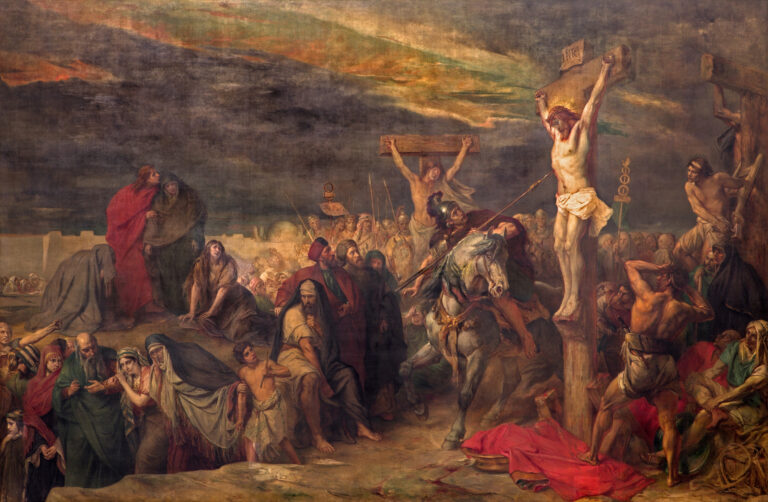
The Three Marys at the Cross
The Gospels reference multiple women named Mary present at the Crucifixion. Traditional Catholic interpretation, supported by the Church Fathers, identifies these as:
- Mary, the Mother of Jesus – the Blessed Virgin
- Mary Clopas (or Mary of Cleophas) – identified by tradition as the sister of the Blessed Virgin Mary
- Mary Salome – often identified as the mother of the sons of Zebedee
St. Joseph and His Lineage
St. Joseph, the foster father of Our Lord, descended from the royal line of David. Church Tradition, particularly as preserved by St. Jerome and supported by the Latin Church Fathers, maintains that Joseph was a young, righteous man who remained perpetually virginal throughout his life, never having been married before his betrothal to the Blessed Virgin Mary.
Evidence for St. Joseph’s Virginity and Youth
St. Jerome, in his treatise “Against Helvidius,” provides the most authoritative patristic defense of St. Joseph’s perpetual virginity. Jerome explicitly states: “we can contend that Joseph had several wives because Abraham and Jacob had several wives, and that from these wives the brethren of the Lord were born – a fiction which most people invent with not so much pious as presumptuous audacity. You say that Mary did not remain a virgin; even more do I claim that Joseph also was virginal through Mary, in order that from a virginal marriage a virginal son might be born. For if the charge of fornication does not fall on this holy man, and if it is not written that he had another wife, and if he was more a protector than a husband of Mary, whom he was thought to have as his wife, it remains to assert that he who merited to be called the father of the Lord remained virginal with her.”
The tradition of Joseph as a young man, rather than an elderly widower, is supported by several considerations:
- Scriptural evidence: The arduous journey to Egypt and the need to protect the Holy Family would require a man in his physical prime, not an elderly person
- Patristic testimony: Saint Jerome defends the “young Joseph belief” as the traditional belief of the Church and that held by Christians in the Holy Land in the 4th and 5th centuries. Saint Jerome also explicitly says that Saint Joseph lived and died as a virgin (not a widower).
- Early artistic representations: The most ancient artistic representations of Saint Joseph depict him as a youth.
- Church Fathers’ consensus: This also confirms to the belief of the early Fathers Saint Athanasius (d. 373) and Saint Gregory Nazianzus (d. 390) who taught that Joseph, like Mary, was a perpetual virgin and not a widower.
Rejection of the “Elderly Widower” Theory
The notion that Joseph was an elderly widower comes primarily from the apocryphal “Protoevangelium of James,” which was repeatedly condemned in the early Church and while it contains truth, it is not to be trusted in every regard – especially regarding the age of Saint Joseph. St. Jerome explicitly refutes this theory, stating that those who follow it are “following the ravings of the Apocrypha, and inventing a wretched creature (mulier- culam) Melcha or Escha by name.”
The Latin Fathers consistently taught four key points about St. Joseph: “1) Joseph did not generate Jesus. 2) He never had intercourse with Mary. 3) He was not married before his betrothal to Mary. 4) He always remained a virgin.”
The Question of the “Brethren of the Lord”
Traditional Catholic Teaching
The Church Fathers, particularly St. Jerome in his work “Against Helvidius” (383 AD), definitively established that the “brethren of the Lord” mentioned in the Gospels were not the biological children of Mary and Joseph, but rather cousins or close relatives. This interpretation preserves the perpetual virginity of the Blessed Virgin Mary, a dogma firmly established in Catholic doctrine.
The Sons and Daughters of Clopas/Cleophas
According to the testimony of Hegesippus (as recorded by Eusebius in his Ecclesiastical History), Clopas (also spelled Cleophas) was the brother of St. Joseph. This makes Mary Clopas the sister-in-law of the Blessed Virgin Mary, and her children the cousins of Jesus.
The children of Mary Clopas and Clopas traditionally include:
- James the Less (James the son of Alphaeus) – one of the Twelve Apostles
- St. Jude Thaddaeus – one of the Twelve Apostles
- St. Simon the Zealot – one of the Twelve Apostles
- Joseph/Joses – mentioned among the “brethren of the Lord”
- Mary Salome – who became the wife of Zebedee and mother of James the Greater and John the Evangelist
- Possibly other daughters – some traditions suggest additional daughters, though their names are less certain in the historical record
This identification is supported by the Church Fathers, including St. Jerome, who notes that “Alphaeus” and “Clopas” are variations of the same Aramaic name. The inclusion of Mary Salome as a daughter of Mary Clopas and Clopas is particularly significant, as it establishes the connection between the families of Clopas and Zebedee, further extending the network of relationships among the apostolic families.
The Zebedee Family and Their Connections
Zebedee and Mary Salome
Zebedee was a fisherman on the Sea of Galilee, and his wife Mary Salome is traditionally identified as one of the women who followed Jesus and witnessed the Crucifixion. According to the authoritative testimony of Fr. Cornelius a’ Lapide, S.J. (d. 1637), one of the most respected biblical scholars of the Counter-Reformation period, and supported by ancient Church tradition, Mary Salome was not the sister of the Blessed Virgin Mary, but rather the daughter of Mary Clopas and Clopas.
The Patristic Evidence for Salome’s Parentage
Fr. Cornelius a’ Lapide, citing the authority of patristic witness, states that “Cleopas was the brother of S. Joseph (the husband of the Blessed Virgin), the father of S. James the less, and S. Jude, and the grandfather of S. James the greater and S. John, who were the sons of Salome, the daughter of Cleopas.” This tradition makes Salome the daughter of Mary and Clopas, and therefore the granddaughter of St. Joseph’s brother.
According to this tradition, “Saint Mary Salome, a daughter of Saint Mary of Cleophas, was first called simply, Salome. She added Mary to her name in honor of the Blessed Virgin. Her father and her mother both were saints. She was the wife of Zebedee, who was not a saint. But she was the mother of Saint John and Saint James the Greater. And her brothers were Saint Simon, Saint James the Less and Saint Jude, Apostles, and Saint Joseph Barsabas, a disciple of Our Lord.”
The Sons of Zebedee
The sons of Zebedee and Mary Salome were:
- James the Greater – one of the inner circle of apostles (Peter, James, and John)
- John the Evangelist – the beloved disciple, author of the Fourth Gospel
According to this traditional identification, James the Greater and John were the grandsons of Clopas (brother of St. Joseph) and the nephews of James the Less, Jude, and Simon the Zealot. This would make them second cousins of Jesus Christ, which still explains their prominent position among the Twelve and their mother’s bold request for special places in the Kingdom (Matthew 20:20-21).
The Clarification of Relationships
This understanding resolves several apparent contradictions in the Gospel accounts and provides a clearer picture of the family relationships:
- Mary Salome was the daughter of Mary and Clopas, making her the niece of St. Joseph
- James the Greater and John were therefore the great-nephews of St. Joseph and second cousins of Jesus
- The brothers of Mary Salome were James the Less, Jude, Simon the Zealot, and Joseph/Joses – all apostles or close disciples
- This explains why Mary Salome is grouped with Mary Clopas in the Gospel accounts of the women at the Cross, as they were mother and daughter
This traditional understanding, preserved by Fr. Cornelius a’ Lapide and rooted in patristic authority, provides a more precise genealogical framework than the earlier “three marriages of St. Anne” theory, while maintaining the essential truth that multiple apostles were closely related to Our Lord through family connections.
Peter and Andrew: The Brothers from Bethsaida
Their Family Origins
Simon Peter and Andrew were brothers, sons of Jonah (also called Bar-Jonah, meaning “son of Jonah”). They were originally from Bethsaida but lived in Capernaum, where they worked as fishermen in partnership with the sons of Zebedee.
While the Gospels do not explicitly state their relationship to the Holy Family, the close association between the families of Zebedee and Jonah in the fishing business suggests possible kinship ties. Some patristic traditions hint at more distant relationships, but these are less clearly established than the connections between the other apostolic families.
The Complete Apostolic Family Network
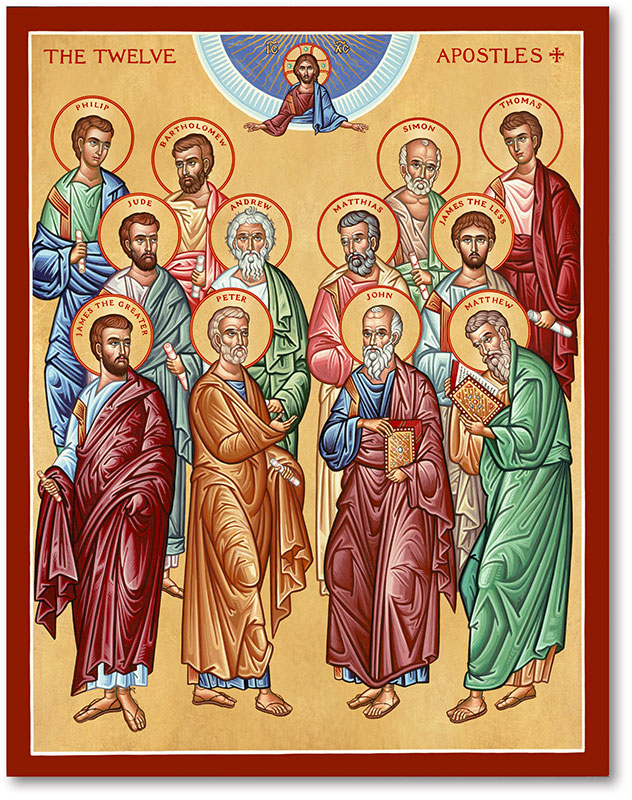
The Twelve Apostles and Their Relations
Based on Church Tradition and patristic testimony, the family relationships among the Twelve can be summarized as follows:
Direct Cousins of Jesus:
- James the Less (son of Clopas/Alphaeus and Mary Clopas)
- Jude Thaddaeus (son of Clopas/Alphaeus and Mary Clopas)
- Simon the Zealot (son of Clopas/Alphaeus and Mary Clopas)
- James the Greater (son of Zebedee and Salome)
- John the Evangelist (son of Zebedee and Salome)
Brothers to Each Other:
- Peter and Andrew (sons of Jonah)
- James the Greater and John (sons of Zebedee)
- James the Less, Jude, and Simon (sons of Clopas)
Other Apostles:
- Matthew/Levi (the tax collector)
- Philip (from Bethsaida)
- Bartholomew/Nathanael
- Thomas (Didymus)
- Judas Iscariot (the betrayer)
Patristic Witnesses and Church Tradition
St. Jerome’s Testimony
St. Jerome, in his treatise “Against Helvidius,” provides the most detailed patristic account of these relationships. He firmly establishes that:
- The “brethren of the Lord” were cousins, not siblings
- James the Less was the son of Mary Clopas, who was the sister-in-law (not blood sister) to the Blessed Virgin Mary
- Clopas and Alphaeus refer to the same person
- Mary Clopas would be considered the “sister” of the Blessed Virgin in the biblical sense, meaning sister-in-law, as she was married to Clopas, the brother of St. Joseph
St. Jerome’s interpretation is supported by the historical testimony of Hegesippus, who established that Clopas was the brother of St. Joseph. This makes Mary Clopas the sister-in-law of the Blessed Virgin Mary, and explains why the Gospel of John refers to her as the “sister” of Mary – using the term “adelphe” in its broader familial sense to include in-law relationships. Jerome’s careful exegesis demonstrates that this interpretation preserves both the perpetual virginity of Mary and explains the family relationships mentioned in Scripture.
Hegesippus and Early Church History
Hegesippus, a second-century Church historian quoted extensively by Eusebius, provides crucial testimony about the family of Jesus. He identifies Clopas as the brother of Joseph and establishes the line of succession in the Jerusalem Church through the family of the Lord.
St. Epiphanius of Salamis
St. Epiphanius, in his “Panarion,” provides detailed genealogical information about the Holy Family, supporting the traditional view of the relationships established through the marriage connections between the families of Joseph and Clopas.
St. John Chrysostom
The great preacher of Antioch and Constantinople affirms the traditional relationships in his homilies, particularly emphasizing the special status of John the Evangelist as both cousin and beloved disciple.
Theological Significance of These Relationships
Divine Providence in Human History
The intricate family relationships among the Apostles reveal the wonderful workings of Divine Providence. God chose to call His first apostles not from strangers, but from the extended family of His Incarnate Son. This demonstrates:
- The sanctification of human relationships – God works through natural family bonds
- The preparation of the Incarnation – These families were prepared by Providence to receive and support the Word made Flesh
- The foundation of the Church – The Church began within the sacred context of family relationships
The Role of Holy Women
The prominence of the holy women – Mary, Mary Clopas, and Salome – in these family networks shows the crucial role women played in the early Church. These women:
- Supported Jesus’ ministry financially and practically
- Remained faithful at the Cross when most apostles fled
- Were first witnesses to the Resurrection
- Provided the family context that nurtured future apostles
Traditional Catholic Conclusions
Based on the consistent testimony of Church Tradition and the Church Fathers, we can affirm:
- The Blessed Virgin Mary remained perpetually virgin, and the “brethren of the Lord” were her nephews through marriage
- The Apostolic College included multiple cousins of Jesus, showing Divine Providence working through family bonds
- The Holy Family extended beyond Mary, Joseph, and Jesus to include a network of holy families from which God drew His first disciples
- These relationships were preserved in sacred tradition and transmitted faithfully by the Church Fathers
Conclusion
The study of apostolic genealogy reveals not merely historical curiosities, but profound truths about how God works in human history. The Sacred Heart of Jesus beat within a network of human hearts bound by blood, marriage, and divine calling. From these holy families – the house of David through Joseph, the priestly line through Mary, and the faithful households of Galilee – God raised up the foundation stones of His Church.
This traditional Catholic understanding, preserved faithfully by the Church Fathers and maintained in sacred tradition, shows us that holiness is often a family affair, passed down through generations and flowering in the fullness of time when the Word became Flesh and dwelt among us. In contemplating these sacred relationships, we see how Divine Providence prepared not just individuals but entire family networks to receive, nurture, and proclaim the Gospel of Jesus Christ.
As we honor these holy relationships, we are reminded that our own families, blessed by grace and guided by tradition, can become seedbeds of sanctity and service to the Church founded by Our Lord Jesus Christ and His apostolic family.