The Miracle of the Sun at Fatima: A Historical Analysis of Eyewitness Accounts
What Happened on October 13, 1917, at Fatima According to Eyewitness Accounts?
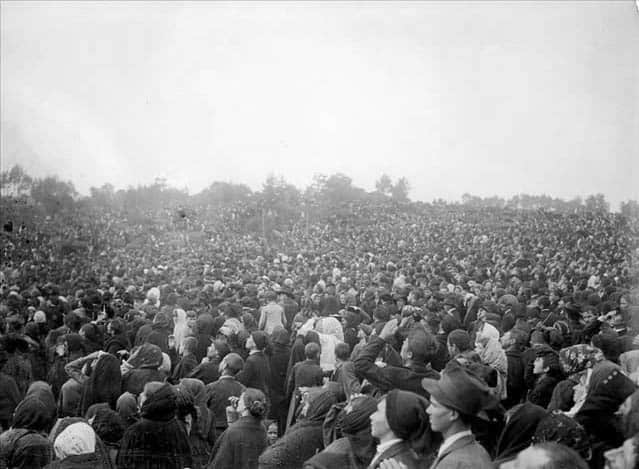
On October 13, 1917, an estimated 70,000 to 100,000 people gathered at the Cova da Iria near Fatima, Portugal, to witness what three shepherd children had predicted would be a public miracle. Dr. José Garrett, a Professor from the Faculty of Sciences at the University of Coimbra, provided one of the most systematic observations of the event. Standing on the rim of the Cova with powerful binoculars, he made a methodical count by calculating the density of people in the area closest to him and extrapolating across the total area of the crowd, arriving at an estimate of 100,000 witnesses (Haffert, 1961, p. 43).
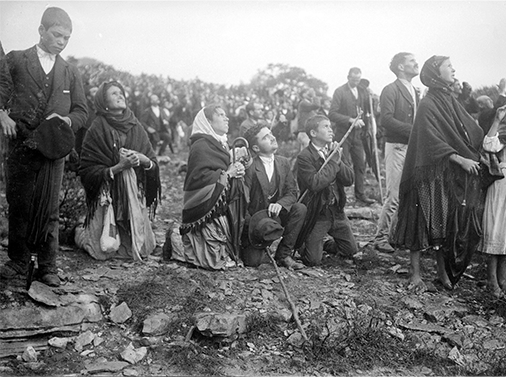
According to multiple eyewitness testimonies, the assembled crowd observed extraordinary solar phenomena that lasted approximately ten to fifteen minutes. The primary accounts describe seeing the sun appear as “a disk of dimmed glass illuminated from behind” that could be observed directly without harm to the eyes (Haffert, 1961, p. 10). Witnesses reported that the sun appeared to spin like a “Catherine wheel” of fireworks, emitting brilliant rays of colored light—red, blue, green, and purple—that not only emanated from the sun but actually colored objects on the ground, people’s faces, and the surrounding landscape (Haffert, 1961, p. 11).
The phenomenon culminated with the apparent movement of the sun toward the earth, causing widespread panic as many believed it was the end of the world. Following this terrifying descent, witnesses described an immediate and complete transformation of their environment: despite being soaked by hours of constant rain, their clothing and the muddy ground became completely dry within minutes.

Perhaps most remarkably, Dominic Reis described a paradoxical wind phenomenon that occurred immediately after the solar display: “As soon as the sun went back in the right place the wind started to blow real hard, but the trees didn’t move at all. The wind was blow, blow and in few minutes the ground was as dry as this floor here. Even our clothes had dried” (Haffert, 1961, p. 11). This detail of a powerful drying wind that left trees motionless adds another layer to the inexplicable nature of the reported events.
The phenomenon was visible over an extraordinary range of approximately 600 square miles, with witnesses reporting observations from distances up to 30 miles away. Father Joaquim Lourenço, who later became a Canon lawyer of the Diocese of Leiria, witnessed the event from nine miles away in the village of Alburitel, describing it as terrifying enough that he and others thought it was the end of the world (Haffert, 1961, p. 39).
Why Was the Miracle Reportedly “Lessened” According to the Child Visionaries?
One of the most intriguing aspects of the Fatima account involves the children’s claim that the October miracle was diminished due to their forced absence from the August 13, 1917 apparition. The three shepherd children had been imprisoned by Arturo dos Santos, the Administrator of Ourem, who threatened them with being boiled alive in oil if they did not recant their claims about the apparitions.
During the subsequent apparition on August 19, 1917, the children reported that their celestial visitor acknowledged their forced absence with “a sad nod of the head” and declared: “Because of this the miracle promised for October will not be as great” (Haffert, 1961, p. 33). This announcement, made just two months before the predicted miracle, raises profound questions about the nature of divine intervention and human cooperation.
The text notes the mystery inherent in this claim: “What could be served by the announcement—now so close to the predicted time of the miracle—that it would be ‘not as great’ as intended? Who would ever be able to know how great the miracle would have been? Might it have been seen over a greater area? Perhaps as far as Lisbon? Might it have been of greater duration?” (Haffert, 1961, p. 33).
This element of the account suggests a theology where human actions—even the persecution of innocent children—can affect divine manifestations. The implication that the miracle could have been even more extraordinary than what 100,000 people witnessed adds another dimension to evaluating these claims.
How Did Contemporary Newspapers Report the Event?
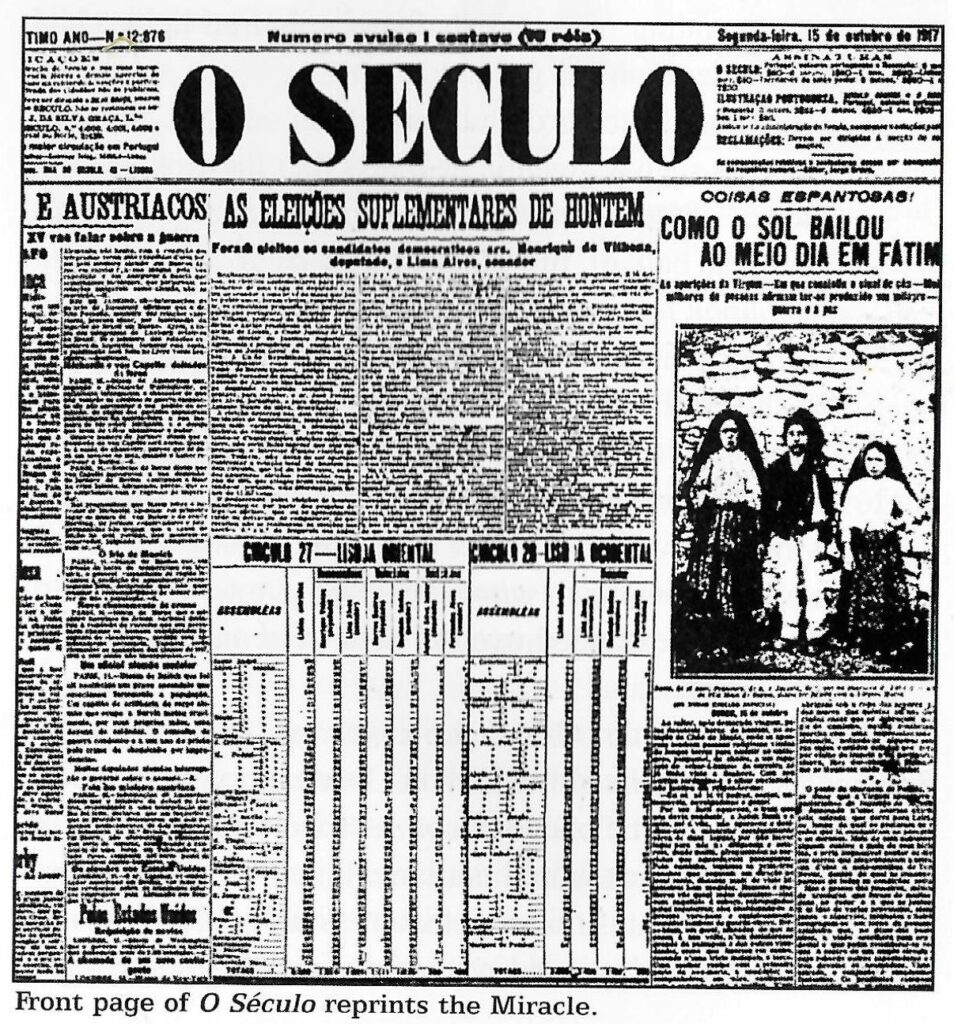
The newspaper coverage of the Fatima event is particularly noteworthy because it came from publications that were generally hostile to religious claims. O Século (“The Century”), Portugal’s largest newspaper at the time, was aligned with the atheistic government yet published detailed front-page accounts of the phenomenon.
The newspaper’s reporter, Avelino de Almeida, described the scene: “Before the astonished eyes of the people, whose attitude carried us back to Biblical times, and who, white with terror, heads uncovered, gazed at the sun which trembled and made brusque and unheard of movement beyond all cosmic laws, the sun seemed literally to dance in the sky” (Haffert, 1961, p. 74).
Diario de Noticias provided additional corroboration, reporting: “The sky had a certain gray clarity but seemed to suddenly be getting darker. The sun seemed veiled in gauze. We could look at it without strain. The gray tint of mother-of-pearl began changing as if into a silver disc that was growing and growing… until it broke the clouds!” (Haffert, 1961, p. 73).
These newspaper accounts are significant because they represent contemporary documentation from sources that had no religious motivation to fabricate or exaggerate the reports. The fact that hostile newspapers published such detailed accounts of phenomena they could not explain adds credibility to the witness testimonies.
What Was the Political and Religious Context of 1917 Portugal?
The Fatima events occurred during one of the most anti-religious periods in Portuguese history. The 1910 revolution had installed an aggressively atheistic government that systematically persecuted the Catholic Church. Religious officials faced persecution, Church properties were confiscated, and public displays of faith were forbidden (Haffert, 1961, p. 14).
By 1915, Lisbon was considered “the number one atheistic capital of the world,” and the government had implemented a plan to eradicate religious belief within two generations (Haffert, 1961, p. 15). This context makes the gathering of tens of thousands of people for a religious event particularly remarkable, as it occurred despite significant government opposition and the presence of armed soldiers attempting to prevent the assembly.
Arturo dos Santos, the Administrator of Fatima, embodied this persecution most directly. He had imprisoned the three shepherd children and threatened them with being “boiled alive in oil” should they persist in their claims about the apparitions (Haffert, 1961, p. 30). The children withstood this interrogation and maintained their testimony even under threat of death, with seven-year-old Jacinta declaring: “Never. We would never tell because the Lady would not want it. We would rather die” (Haffert, 1961, p. 30).
How Did the Catholic Church Respond to These Claims?
The Catholic Church’s response was characterized by careful investigation rather than immediate acceptance. Following the events of October 13, 1917, Church officials found themselves confronting a delicate situation: thousands of witnesses reported extraordinary phenomena, yet the Church’s duty remained to protect the faithful from potential falsehood.
The formal investigation commenced under the authority of José Alves Correia da Silva, Bishop of Leiria. This inquiry proved remarkably thorough, encompassing hundreds of interviews with witnesses from diverse backgrounds, medical and psychological evaluations of the three visionaries, documentation of any miraculous healings attributed to Fatima, and analysis of the political context and potential motivations for fabrication (Haffert, 1961, p. 98).
Following thirteen years of careful examination, Bishop da Silva issued his pastoral letter “A Divina Providência” on October 13, 1930—precisely thirteen years after the miracle itself. The letter declared that “the visions of the children in the Cova da Iria are worthy of belief” and officially permitted devotion to Our Lady of Fatima (Haffert, 1961, p. 99).
The Bishop’s declaration was based on established criteria for recognizing supernatural events: the occurrence could not be explained through natural causes, it contained no theological errors contrary to Catholic doctrine, and it produced genuine spiritual fruits, including conversions and renewed faith.
What Scientific Explanations Have Been Proposed for the Phenomenon?
Scientists have attempted to provide natural explanations for the extraordinary phenomenon witnessed at Fatima, but these attempts have proven insufficient to account for all aspects of what transpired on that October day, particularly the immediate environmental changes reported by witnesses.
Dr. François Leuret and Dr. Henri Bon proposed that unusual atmospheric conditions might have created a prism-like effect through refraction of the sun’s rays. However, such explanations encounter immediate difficulties when confronted with witness testimonies. The rapid drying of rain-soaked ground and clothing remains completely unexplained by optical theories. Furthermore, witnesses unanimously reported the ability to look directly at the sun “without harm to the eyes,” which contradicts normal solar observation (Haffert, 1961, p. 79).
The paradoxical wind phenomenon described by multiple witnesses presents additional challenges to conventional explanations. Dominic Reis’s account of a powerful wind that dried everything instantly while leaving trees completely motionless defies meteorological understanding. Such selective effects cannot be explained by known atmospheric or optical phenomena.
Colonel Frederico Oom, professor at the Faculty of Sciences and Director of the Lisbon Observatory, acknowledged that the phenomenon was “completely foreign to the branch of science that I cultivate” (Haffert, 1961, p. 15). His statement reveals the fundamental challenge facing scientific inquiry—the event defies categorization within established frameworks.
Pio Sciatizzi, S.J., a scientist who published a critique of the miracle in Rome, concluded: “Of the historic reality of this event there can be no doubt whatsoever. That it was outside and against known laws can be proved by certain simple scientific considerations… Given the indubitable reference to God, and the general context of the event, it seems that we must attribute to Him alone the most obvious and colossal miracle of history” (Haffert, 1961, p. 17).
What Were the Long-term Consequences of the Fatima Events?
The consequences of the October 13, 1917 event extended far beyond the immediate religious sphere, creating significant political and social changes throughout Portugal. The miracle provided the Church with what many considered a powerful response to the rising tide of atheism and communism that marked the 20th century.
Within Portugal, the atheistic government’s attempts to suppress devotion proved entirely counterproductive. Each act of opposition—the bombings of chapels, military intimidation, and propaganda missions—served only to strengthen the faithful’s resolve, and crowds grew larger with each persecution (Haffert, 1961, p. 21).
The transformation was remarkable: what was once a simple pasture where shepherd children tended their flocks became one of the world’s most significant places of Catholic pilgrimage. By the time of the Church’s official recognition in 1930, the site was drawing hundreds of thousands of pilgrims annually, with crowds reaching 400,000 by 1926 according to contemporary newspaper accounts (Haffert, 1961, p. 25).
Politically, the events contributed to the eventual fall of the atheistic revolutionary government. The revolution had spent five years of fury and force, but the faith of the people—which this revolution had vowed to wipe out in two generations—emerged with a strength the revolutionaries had never anticipated (Haffert, 1961, p. 25).
How Reliable Are the Eyewitness Testimonies?
The reliability of eyewitness testimonies presents both strengths and challenges typical of historical documentation. The sheer number of witnesses—estimated between 70,000 and 100,000 people—provides an unprecedented scale of testimony for any claimed miraculous event. Dr. Garrett’s systematic count using binoculars and mathematical extrapolation lends scientific credibility to the crowd estimates (Haffert, 1961, p. 43).
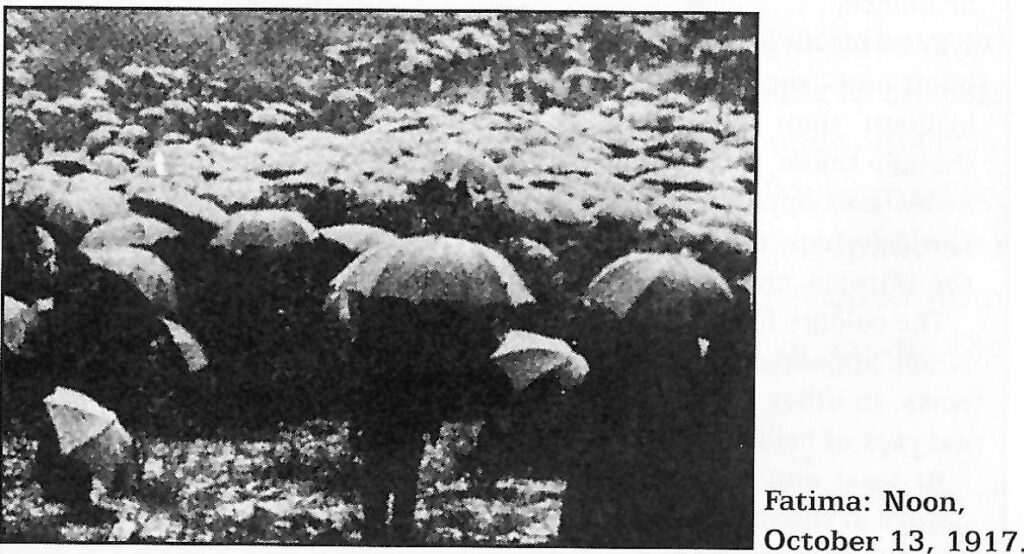
The consistency of testimonies across different social classes and belief systems strengthens their credibility. All witnesses testified to experiencing something inexplicable, with remarkable agreement on specific details: the ability to look at the sun without harm, the emission of colored rays that actually tinted objects on the ground, the apparent movement toward earth, the sudden drying of rain-soaked clothing and ground, and the paradoxical wind that dried everything while leaving trees motionless (Haffert, 1961, p. 78).
The precision of certain details adds weight to the testimonies. The children had specified not only the date but also the time—solar noon—which corresponded to about 1:30 PM by official Portuguese time, which had been adjusted to coordinate with battlefield time in France during World War I (Haffert, 1961, p. 43). This level of specificity eliminated the possibility of later reinterpretation or claiming of unrelated events.
However, several factors must be considered when evaluating these testimonies. The accounts were collected decades after the event, raising questions about the accuracy of long-term memory. The intense emotional state of the witnesses—many believing they were witnessing the end of the world—could have affected their perceptions and later recollections.
The testimonies show some variations: a few witnesses were not afraid, while others were terrified; some saw more phenomena than others. These variations actually strengthen the overall credibility, as completely uniform accounts would suggest coordination or fabrication.
What Role Did the Three Child Visionaries Play?
The three shepherd children—Lucia dos Santos (10), Francisco Marto (9), and Jacinta Marto (7)—played a central role not only in predicting the October 13 miracle but in the entire series of events that began in May 1917. Their behavior under extreme pressure provides significant evidence for the authenticity of their claims.
The children’s response to imprisonment and threats of death is particularly noteworthy. When threatened with being boiled alive in oil, seven-year-old Jacinta declared: “Never. We would never tell because the Lady would not want it. We would rather die” (Haffert, 1961, p. 30). This steadfast conviction in the face of such threats, particularly from young children from peasant families, suggests either extraordinary coaching or genuine belief in their experiences.
The children’s predictions were remarkably specific and public. They announced not only that a miracle would occur on October 13, 1917, but that it would happen at a precise location and time “so that everyone may believe.” This specificity eliminated the possibility of later reinterpretation or the claiming of unrelated events as fulfillment of their prophecy.
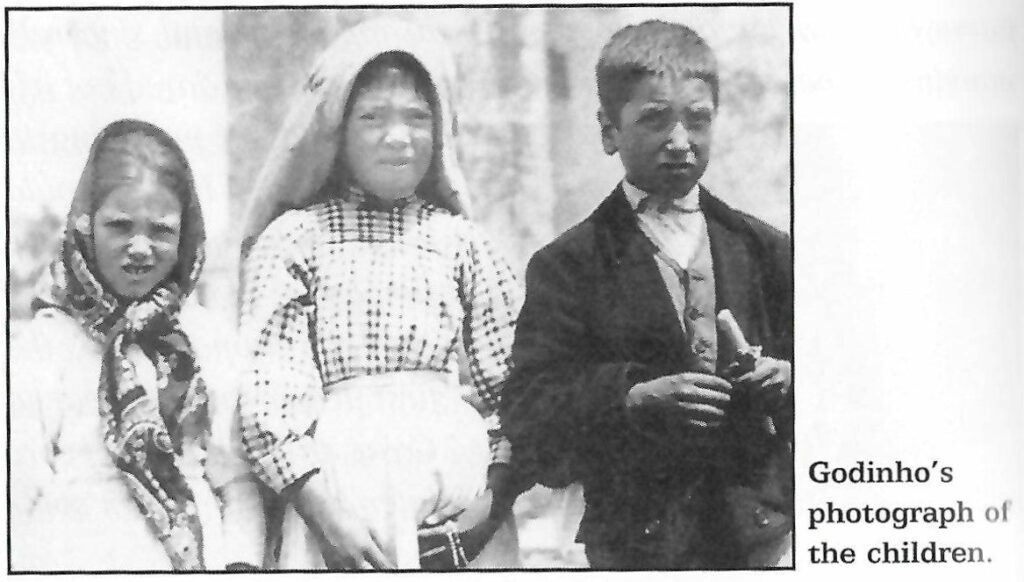
The children also introduced the concept that the planned miracle had been diminished due to their forced imprisonment in August, claiming their celestial visitor had said the October miracle would be “not as great” as originally intended (Haffert, 1961, p. 33). This unusual claim about a reduced miracle is difficult to explain as fabrication, since it seemingly diminishes rather than enhances their prophetic credibility.
After the October 13 event, only Lucia survived to adulthood (Francisco died in 1919 and Jacinta in 1920 during the Spanish flu pandemic). Lucia’s later testimony, given as an adult in religious life, maintained consistency with the children’s original claims while providing additional details about their experiences.
How Do Modern Historians and Scholars Evaluate These Events?
Modern historical and scholarly evaluation of the Fatima events presents a complex picture that varies significantly depending on the academic discipline and methodological approach employed. Religious historians generally focus on the documented aspects of the events while acknowledging the limitations of historical methodology in evaluating claims of supernatural intervention.
From a purely historical perspective, certain facts are well-documented: the gathering of tens of thousands of people on October 13, 1917; the consistent newspaper reports from generally hostile sources; the testimonies of numerous witnesses from diverse backgrounds; the specific environmental phenomena reported (including the paradoxical wind that dried everything while leaving trees motionless); and the subsequent significant social and political changes in Portugal. These elements form what historians call the “historical core” of the Fatima events.
Sociological analysis often focuses on the phenomenon as an example of collective religious experience and its impact on social structures. The events occurred during a period of significant political upheaval and religious persecution, which some scholars argue created conditions conducive to extraordinary religious experiences and their interpretation as miraculous.
Scientific evaluation remains divided. While no natural explanation has satisfactorily accounted for all reported phenomena—particularly the selective drying effects and the paradoxical wind behavior—many scientists maintain that the absence of a current explanation does not constitute evidence for supernatural causation. The lack of photographic evidence of the reported solar phenomena (contemporary photographs show only the crowd’s reactions) remains a significant challenge for objective analysis.
The systematic nature of Dr. Garrett’s crowd estimation using binoculars and mathematical calculation provides one of the few scientifically rigorous elements in the documentation, lending credibility to at least the scale of witnesses present (Haffert, 1961, p. 43).
Conclusion
The events at Fatima on October 13, 1917, represent one of the most extensively documented claims of supernatural intervention in modern history. The convergence of multiple lines of evidence—thousands of eyewitness testimonies including specific environmental details like the paradoxical wind phenomenon, contemporary newspaper accounts from hostile sources, systematic crowd estimation by qualified observers, the children’s behavior under extreme pressure, and the significant historical consequences—creates a historical puzzle that continues to challenge conventional explanatory frameworks.
The specific details reported by witnesses, such as the immediate drying of rain-soaked ground and clothing by a powerful wind that left trees motionless, add layers of complexity that resist simple explanations based on optical illusions or mass hysteria. The precision of the children’s predictions, including the exact time and location, combined with their claim that the miracle was “lessened” due to their August imprisonment, presents elements that are difficult to explain as mere fabrication or wishful thinking.
While the ultimate interpretation of these events depends largely on one’s philosophical and religious presuppositions, the historical documentation itself remains remarkable. The Catholic Church’s careful thirteen-year investigation and eventual acceptance of the events as “worthy of belief” represents one of the most thorough institutional examinations of claimed miraculous phenomena in modern times.
Whether viewed as genuine supernatural intervention, extraordinary natural phenomena, or collective religious experience, the Fatima events undeniably had profound and lasting effects on Portuguese society and continue to influence millions of people worldwide. The historical record demonstrates that something extraordinary occurred on that October day in 1917—something that continues to defy complete explanation more than a century later.
Bibliography
Haffert, J. M. (1961). Meet the witnesses of the miracle of the sun. The American Society for the Defense of Tradition, Family and Property.