The Chosen and Catholic Orthodoxy: Why Might “The Chosen” Be Wrong About Mary and What Does It Miss About Catholic Faith?
“The Chosen,” Dallas Jenkins’ ambitious multi-season dramatization of Christ’s ministry, has achieved unprecedented popularity among Christian audiences while simultaneously raising significant theological concerns for Catholic viewers and scholars (Jenkins, 2019-present). Two critical issues emerge from extensive academic analysis: the series’ problematic portrayal of Mary, the Mother of Jesus, contradicts fundamental Catholic Marian doctrine, and the production systematically omits or misrepresents core elements of Catholic faith, theology, and ecclesiology. These concerns extend beyond minor creative liberties to substantive theological errors that risk undermining authentic Catholic understanding, particularly when the series is increasingly adopted for religious education in Catholic institutions.
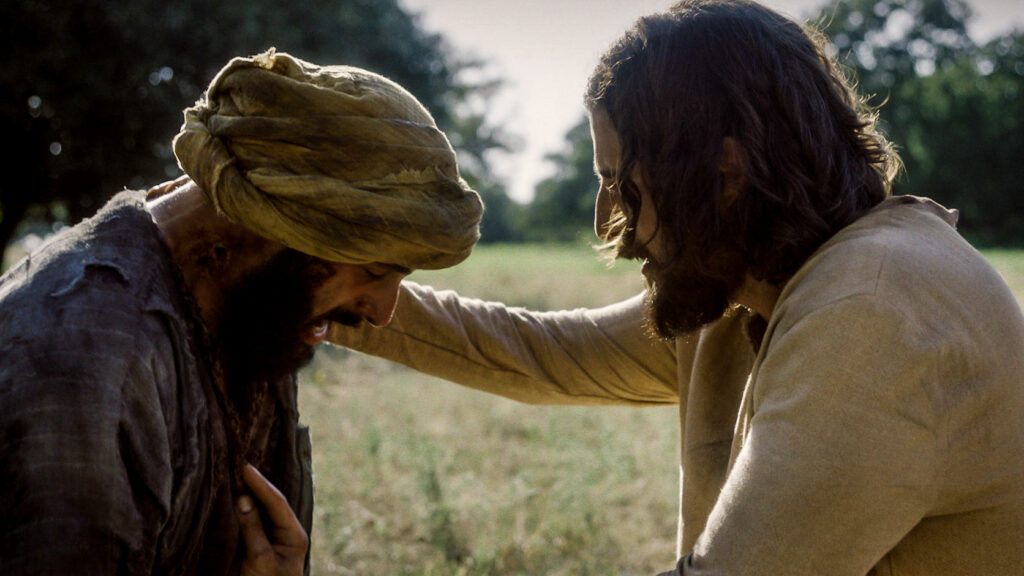
The series’ Protestant evangelical origins, under creator Dallas Jenkins, embed theological assumptions that conflict with Catholic doctrine while claiming ecumenical accessibility. Despite consultation with Catholic advisors, the series prioritizes broad appeal over doctrinal fidelity, resulting in what Catholic critics describe as a “modernist, fatally-flawed” production that may replace “twenty centuries of Catholic teaching” with Protestant interpretative frameworks (McLean, 2022). This analysis examines these concerns through scholarly biblical criticism, Catholic theological analysis, and academic reception studies to assess the series’ theological integrity from a Catholic perspective.
Why Might “The Chosen” Be Wrong About Mary?
The series’ treatment of Mary reveals fundamental conflicts with Catholic Marian doctrine across multiple theological dimensions. Most significantly, Season 2, Episode 3 contains what Fr. Timothy Nix describes as “blasphemy against the Immaculate Virgin Mary” through three specific theological errors that directly contradict defined Catholic dogma (Nix, 2021).
Does the Series Contradict Mary’s Sinlessness?
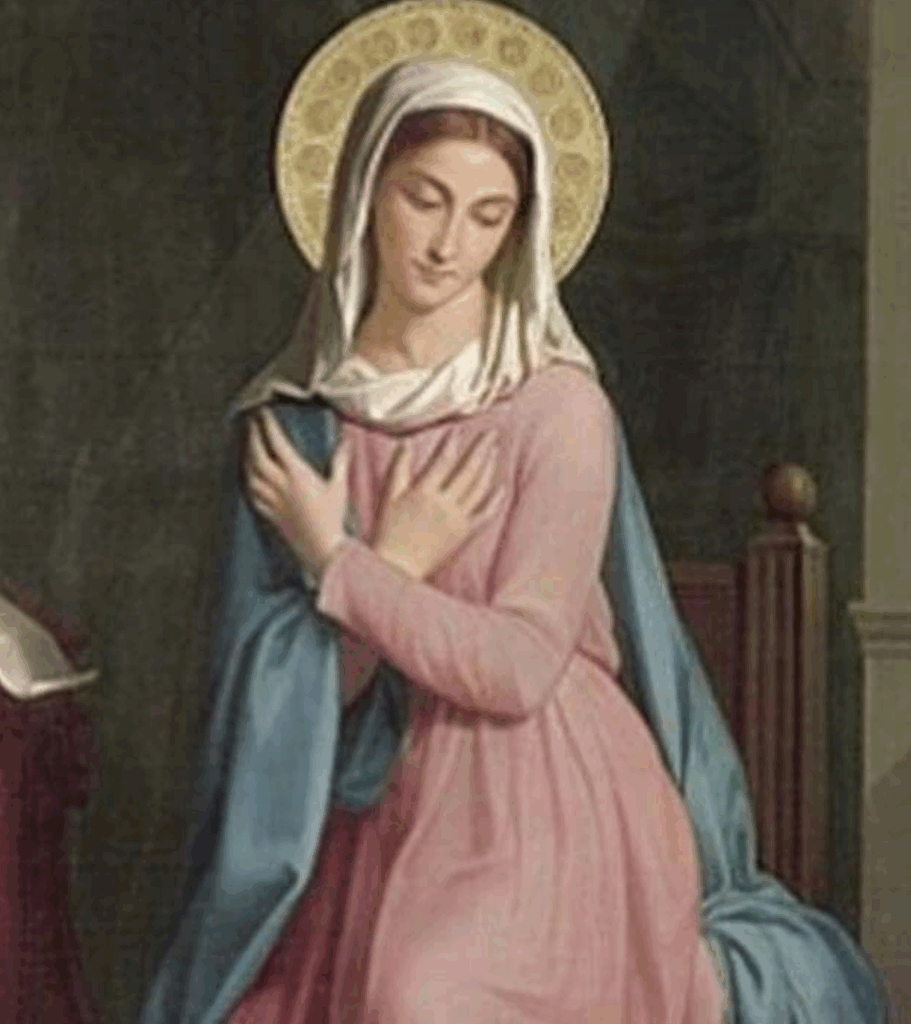
The first major problem concerns Mary’s sinlessness. In a pivotal scene, Mary responds to another character’s worry about making mistakes by asking, “How do you think I felt?” This dialogue implies Mary made mistakes during Jesus’ upbringing, directly contradicting the Catholic doctrine of Mary’s complete sinlessness. As Nix (2021) explains, this conflicts with the Greek “κεχαριτωμένη” (full of grace) in Luke 1:28, which Catholic theology interprets as indicating Mary’s preservation from all sin, both original and personal. The Immaculate Conception, defined by Pope Pius IX in 1854, holds that Mary was conceived without original sin and remained sinless throughout her life—a doctrine incompatible with the series’ suggestion of maternal errors or mistakes (Pius IX, 1854).
Does the Series Violate the Doctrine of Mary’s Perpetual Virginity?
The second theological error involves Mary’s labor experience, where she describes cleaning Jesus after birth and dealing with the “messy” aspects of childbirth. This portrayal violates the Catholic doctrine of “virginitas in partu” (virginity during birth), which holds that Mary’s delivery of Jesus was miraculous and painless, preserving her physical virginity and sparing her from the consequences of original sin that affect normal childbirth (Graebe, 2021). Fr. Brian Graebe, who wrote his doctoral dissertation on Jesus’ birth, specifically identifies this Christmas special scene as contradicting fundamental Catholic teaching about Mary’s perpetual virginity.
Does the Series Misrepresent Mary’s Knowledge of Christ’s Divinity?
The third problematic element shows Mary doubting Jesus’ divinity, saying, “It actually made me think for just one moment, is this really the son of God?” This contradicts Luke 1:35, where the angel Gabriel explicitly announces Jesus as the “Son of God” during the Annunciation. Catholic theology holds that Mary possessed prophetic knowledge of Christ’s divine identity from this moment forward, making later doubts about his divinity theologically impossible (Nix, 2021). The scene undermines Catholic understanding of Mary’s perfect faith and her unique role in salvation history as the first believer who fully accepted Christ’s divinity.
Is the Series’ Portrayal of Mary Biblically Accurate?
Biblical scholarship confirms these concerns extend beyond theological doctrine to scriptural accuracy. The Encyclopædia Britannica notes that “Mary is known from biblical references, which are, however, too sparse to construct a coherent biography” (Britannica, 2024)—yet the series creates extensive fictional scenarios showing Mary traveling with the disciples and serving as their maternal guide. This portrayal lacks biblical foundation, as Luke 8:1-3 lists “certain women” who accompanied Jesus’ ministry but notably excludes Mary, the mother of Jesus. The series’ anachronistic presentation of Mary in continuous close companionship with the apostles reflects modern feminist interpretations rather than first-century Jewish cultural norms or biblical evidence.
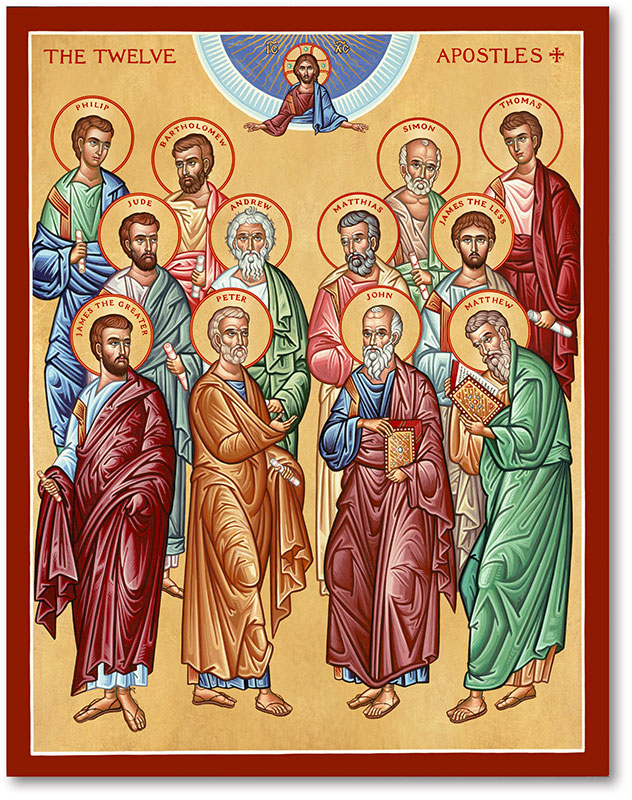
Catholic biblical scholars particularly object to the series’ expansion of Mary’s dialogue and presence far beyond scriptural accounts. While the Gospels present Mary in only nine specific incidents across Christ’s life, the series portrays her as a central figure throughout Jesus’ ministry. This creative expansion becomes theologically problematic when it contradicts established Catholic doctrine about Mary’s character, knowledge, and experience.
What Does “The Chosen” Miss About Catholic Faith?
Beyond Marian theology, “The Chosen” systematically omits or misrepresents core Catholic ecclesiological and theological principles, creating what Catholic critics describe as a “Protestant-filtered” version of early Christianity that undermines distinctive Catholic beliefs (McLean, 2022).
Does the Series Properly Represent Papal Authority and Peter’s Primacy?
The most serious omission involves papal authority and Peter’s primacy. Word on Fire identifies significant problems with Season 4’s portrayal of Matthew 16:18, where Jesus declares Peter the rock upon which he will build his church and gives him “the keys to the kingdom” (Barron, 2024). This passage constitutes foundational Catholic doctrine on papal primacy and apostolic succession. However, the series uses creative dialogue to dilute Peter’s singular authority, adding confusion about whether multiple apostles receive “keys” and apparently adopting Protestant interpretations that avoid Catholic understanding of papal succession. One Catholic reviewer noted the episode scored only “4/5 on Catholic orthodoxy” because it tried to “please everyone” in ways that muddled the clear meaning of Christ’s words about Peter’s unique leadership role (Catholic365, 2024).
Does the Series Present an Appropriately Catholic Understanding of Christ?
The series also promotes what Crisis Magazine identifies as “modernist ‘Buddy Jesus’ Christology” that diminishes Christ’s divine majesty and mystery (McLean, 2022). Jesus is portrayed making jokes, displaying casual modern behavior, and maintaining “easy relations” inappropriate for a first-century Jewish rabbi. This conflicts with traditional Catholic presentation, which emphasizes Christ’s divine authority and the proper reverence due to God. As McLean (2022) notes, citing G.K. Chesterton, there was “something that He hid from all men when He went up a mountain to pray”—a divine mystery the series reduces through overly familiar characterization.
Are Protestant Theological Assumptions Embedded Throughout the Series?
Protestant theological assumptions embedded throughout the series create systematic bias against Catholic doctrine. Since creator Dallas Jenkins maintains creative control while consulting with Protestant, Catholic, and Jewish advisors, the final product reflects evangelical Protestant theological priorities (Huffman et al., 2024). Home of the Mother Youth warns Catholics they are “systematically allowing the show to affect your way of thinking” with “Protestant ways of thinking” that may replace authentic Catholic understanding (Home of the Mother, 2023). La Civiltà Cattolica, the authoritative Vatican-approved journal, notes the series contains “questionable options” including “problematic American evangelical Protestant theology” (Spadaro & Di Mieri, 2022).
Should Catholic Religious Education Programs Use This Series?
Perhaps most concerning is the series’ widespread adoption in Catholic religious education without adequate theological supervision. Crisis Magazine warns that this “schlocky, modernist, fatally-flawed show” is replacing “twenty centuries of Catholic teaching” in Catholic formation programs (McLean, 2022). Catholic educators assume they can “correct the bad parts,” but images embedded in students’ minds through visual media are difficult to undo theologically. The problem compounds because, as Catholic critics note, not enough properly catechized Catholics exist in many educational settings to provide adequate correction.
Does the Series Reflect Catholic Understanding of Scripture and Tradition?
The series’ approach to Scripture and Tradition reflects Protestant “sola scriptura” assumptions rather than Catholic understanding of Tradition’s role in interpreting Scripture. The extensive fictional additions risk embedding non-Catholic theological perspectives through emotional engagement rather than doctrinal accuracy. G3 Ministries raises concerns about adding to or subtracting from Scripture (Deuteronomy 4:2), while Catholic sources worry that creative liberties may contain Protestant theological assumptions that undermine Catholic interpretative tradition (G3 Ministries, 2023).
How Have Scholars and Academics Received “The Chosen”?
The scholarly reception of “The Chosen” reveals a complex academic landscape where appreciation for the series’ artistic achievement coexists with significant theological reservations, particularly from Catholic academic sources.
Has the Series Generated Significant Academic Attention?
The series has generated unprecedented academic attention for a biblical television adaptation, including a dedicated academic conference at Brigham Young University (March 2024) featuring fourteen scholars from major universities, and a scholarly book published by Eerdmans Publishing Company titled “Watching The Chosen: History, Faith, and Interpretation” (Garcia et al., 2024). Contributors include faculty from Baylor University, Providence College, Rhodes College, Biola University, and Ave Maria University, indicating serious academic engagement across denominational lines.
What Do the Series’ Theological Advisors Say in Its Defense?
Dr. Douglas S. Huffman of Biola University, serving as one of three script consultants, provides the series’ strongest academic defense, arguing that “The Chosen is not adding to Scripture but is a work of art meant to capture people’s imaginations and point them to the Bible” (Huffman, 2024). However, Catholic academic voices express more substantial reservations. Patrick Gray of Rhodes College, in his scholarly analysis “The Chosen and the Tradition of Apostolic Fan Fiction” published in Church Life Journal (University of Notre Dame), compares the series to ancient apocryphal literature traditions while noting its “relative sobriety” compared to more fantastical biblical adaptations (Gray, 2021).
How Have Catholic Academic Institutions Responded?
Catholic academic institutions demonstrate mixed reception. While the Augustine Institute acquired broadcasting rights and created “Catholic Commentary on The Chosen,” and Bishop Robert Barron’s Word on Fire provided initially supportive coverage, more traditional Catholic academic voices raise serious concerns (Barron, 2024). Catholic Culture’s analysis by Thomas Mirus and James Majewski titled “Lectio Divina or Fan Fiction?” argues that “fictional subplots threaten to overshadow the actual Gospel events” and “increasingly interprets the Gospel events through the lens of fictional subplots, in a way that is necessarily reductive” (Mirus & Majewski, 2024).
What Are the Strongest Academic Criticisms of the Series?
Conservative theological institutions provide the strongest academic criticism. Reformed academic sources through The Puritan Board raise Second Commandment concerns, while New Geneva Theological Seminary provides master’s-level theological critique focusing on biblical fidelity (Puritan Board, 2021). G3 Ministries contributes scholarly analysis of “The Sufficiency of Scripture” in relation to the series, questioning the theological implications of extensive creative additions to biblical narratives (G3 Ministries, 2023).
How Does Academic Analysis Balance Artistic License and Theological Accuracy?
Dr. Jesse Stone of the University of St. Andrews, serving as Chair of the Global Theological Review Board, provides academic framework distinguishing between content “drawn directly from biblical texts” and “content added in service of the story” (Stone, 2024). However, his analysis prioritizes “positive and lasting impact on the lives of millions” over strict theological accuracy, reflecting the series’ utilitarian rather than doctrinal approach to biblical adaptation.
The academic discourse reveals fundamental disagreement about the proper relationship between artistic license and theological fidelity. While some scholars appreciate the series as legitimate artistic interpretation that maintains basic theological integrity, Catholic academics increasingly worry about Protestant theological infiltration and the series’ impact on authentic Catholic formation and understanding.
What Are the Theological Implications and Ecclesiological Concerns?
The analysis reveals that “The Chosen,” despite its artistic merits and evangelical effectiveness, contains systematic theological problems that should concern Catholic viewers, educators, and institutions. The series’ treatment of Mary directly contradicts defined Catholic dogma about her sinlessness, perpetual virginity, and prophetic knowledge, while its broader theological framework reflects Protestant interpretative assumptions incompatible with Catholic ecclesiology and tradition.
Can Christian Media Satisfy All Denominational Perspectives?
Most significantly, the series exemplifies how contemporary Christian media can achieve broad appeal by compromising distinctive doctrinal positions that different denominations consider essential to their faith. The attempt to create “ecumenical” entertainment results in theological relativism that may please diverse audiences while satisfying none completely from their respective doctrinal perspectives.
What Risks Does the Series Pose to Catholic Religious Education?
The widespread adoption of the series in Catholic religious education represents a concerning trend where visual media shapes theological understanding more powerfully than traditional catechetical methods. When Catholic institutions use entertainment products created from Protestant theological frameworks for formation purposes, they risk replacing centuries of Catholic theological development with contemporary evangelical interpretations embedded through emotional engagement rather than doctrinal accuracy.
How Should Catholics Engage with Biblical Media in the Future?
Future Catholic engagement with biblical media requires more rigorous theological evaluation that distinguishes between artistic interpretation and doctrinal formation. While “The Chosen” may serve certain evangelistic purposes, its use in Catholic educational contexts demands careful theological supervision and explicit correction of its Protestant assumptions about Mary, papal authority, ecclesiastical structure, and biblical interpretation.
Can There Be Genuinely Neutral “Christian” Entertainment?
The series ultimately demonstrates the impossibility of creating genuinely neutral “Christian” entertainment that satisfies diverse theological traditions without compromising distinctive doctrinal positions. For Catholic viewers, appreciation of the series’ artistic achievement must be balanced with recognition of its theological limitations and potential risks to authentic Catholic formation and understanding.
References
Barron, R. (2024). The keys to the kingdom: A gentle but firm correction to “The Chosen.” Word on Fire. https://www.wordonfire.org/articles/the-keys-to-the-kingdom-a-gentle-but-firm-correction-to-the-chosen/
Britannica. (2024). Mary: Mother of Jesus. In Encyclopædia Britannica. https://www.britannica.com/biography/Mary-mother-of-Jesus
Catholic365. (2024). The Chosen and ‘Peter the Rock’ recap. https://www.catholic365.com/article/39234/the-chosen-and-peter-the-rock-recap.html
G3 Ministries. (2023). “The Chosen” and the sufficiency of scripture. https://g3min.org/the-chosen-and-the-sufficiency-of-scripture/
Garcia, R. K., Gondreau, P., Gray, P., & Huffman, D. S. (Eds.). (2024). Watching The Chosen: History, faith, and interpretation. Eerdmans Publishing Company.
Graebe, B. (2021). Does ‘The Chosen’ get it right about Our Lady? National Catholic Register. https://www.ncregister.com/blog/virginity-in-partu-the-chosen
Gray, P. (2021). The Chosen and the tradition of apostolic fan fiction. Church Life Journal. University of Notre Dame. https://churchlifejournal.nd.edu/articles/the-chosen-and-the-tradition-of-apostolic-fan-fiction/
Home of the Mother. (2023). Catholics and The Chosen. Home of the Mother Youth. https://hmy.homeofthemother.org/index.php/blog/letters-beginner/7804-the-chosen
Huffman, D. S. (2024). How we make theological decisions for fictional scenes in ‘The Chosen.’ Religion News Service. https://religionnews.com/2024/10/18/how-we-make-theological-decisions-for-fictional-scenes-in-the-chosen/
Jenkins, D. (Creator). (2019-present). The Chosen [Television series]. Angel Studios.
McLean, K. (2022). The false Christ of The Chosen. Crisis Magazine. https://crisismagazine.com/opinion/the-false-christ-of-the-chosen
Mirus, T., & Majewski, J. (2024). The Chosen, Season 4: Lectio divina or fan fiction? Catholic Culture. https://www.catholicculture.org/commentary/chosen-season-4-lectio-divina-or-fan-fiction/
Nix, T. (2021). Blasphemy against Mother Mary in “The Chosen.” Catholic Exchange. https://catholicexchange.com/blasphemy-against-mother-mary-in-the-chosen/
Pius IX. (1854). Ineffabilis Deus. Apostolic Constitution on the Immaculate Conception. Vatican.
Puritan Board. (2021). The Chosen [Discussion forum]. https://puritanboard.com/threads/the-chosen.111903/
Spadaro, A., & Di Mieri, S. (2022). ‘The Chosen’—When Jesus becomes a TV series. La Civiltà Cattolica. https://www.laciviltacattolica.com/the-chosen-when-jesus-becomes-a-tv-series/
Stone, J. (2024). Theological review framework for The Chosen. University of St. Andrews Global Theological Review Board.