St. Veronica: Tradition, Legend, and Devotion in Christian History
Who Was St. Veronica?
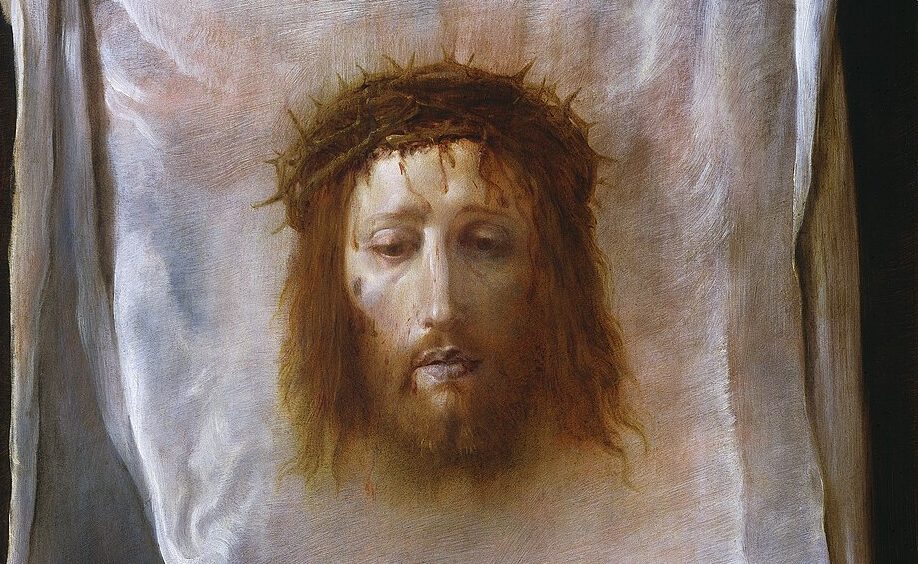
St. Veronica occupies a distinctive place in Christian tradition as the woman who, moved by compassion, offered her veil to Jesus Christ as he carried his cross to Calvary. According to sacred tradition, when Jesus wiped his face with the cloth, his image was miraculously imprinted upon it (Dégert, 1912). This relic, known as the Veil of Veronica or vera icon (true image), became one of Christianity’s most treasured relics and inspired widespread devotional practices throughout the medieval and early modern periods.
The name “Veronica” itself presents an intriguing etymological puzzle. The Catholic Encyclopedia suggests that it derives from the Latin vera (true) and the Greek eikon (image), making it a descriptive title rather than a proper name (Dégert, 1912). This interpretation, supported by medieval liturgical texts that refer to the relic as “De S. Veronica seu Vultus Domini” (Saint Veronica, or the Face of the Lord), suggests that the woman’s identity became conflated with the sacred object she preserved (Kessler, 2017).
While Veronica is not mentioned in canonical Scripture, some traditions have identified her with other biblical figures. The most common identification connects her with the haemorrhaging woman healed by touching Jesus’s garment (Matthew 9:20-22; Mark 5:25-34; Luke 8:43-48). The apocryphal Gospel of Nicodemus names this woman as Berenikē or Beronike, which was later Latinized to Veronica (Izydorczyk, 2017). However, modern scholarship generally treats this identification as a later harmonization of distinct traditions rather than historical fact.
What Are the Earliest Sources for the Veronica Tradition?

The literary tradition surrounding St. Veronica developed gradually over several centuries, with each successive text adding layers of detail to the basic narrative. The earliest reference to a woman named Veronica appears in the Acts of Pilate (also known as the Gospel of Nicodemus), an apocryphal text dating to approximately 380 A.D (Iannone, 2009). This document mentions Veronica in connection with Jesus’s trial but makes no reference to the veil or the miraculous image.
The narrative evolved significantly in the eighth-century text Cura sanitatis Tiberii (The Cure of Tiberius), which introduced the story of Veronica using the veil to cure Emperor Tiberius of an illness. According to this account, Veronica brought the cloth bearing Christ’s image to Rome, where its miraculous power healed the emperor (Gounelle & Urlacher-Becht, 2017). This addition transformed Veronica from a minor figure into a bearer of sacred power, linking her story to Rome’s Christian heritage.
The legend reached its most influential formulation in Jacobus de Voragine’s Legenda Aurea (Golden Legend), compiled around 1260. This widely circulated hagiographical collection standardized many elements of Veronica’s story and disseminated it throughout medieval Europe (Clark, 2015). However, the specific account of Veronica wiping Jesus’s face during the Passion—the version most familiar today—appears relatively late in the textual tradition, emerging around 1380 in the Meditations on the Life of Christ (Iannone, 2009).
How Did the Legend Develop in Medieval Literature?
The medieval development of the Veronica tradition reveals complex processes of literary elaboration and theological interpretation. The Vindicta Salvatoris (Vengeance of the Savior), another apocryphal text, presents Veronica as possessing an image “that the Lord gave to me, not for my merits but out of his mercy” (Gounelle & Urlacher-Becht, 2017, p. 52). This formulation emphasizes divine grace rather than human action, suggesting a gift freely bestowed rather than an image accidentally acquired.
Different manuscript traditions offer varying accounts of how Veronica obtained the sacred image. Some versions describe it as a portrait painted during Jesus’s lifetime; others attribute it to miraculous imprinting when Veronica wiped his face; still others present it as a gift from Christ himself (Nicklas, 2008). These variations reflect ongoing theological debates about the nature of sacred images and the appropriate veneration of relics.
The proliferation of Veronica narratives also served specific ecclesiastical purposes. The Mors Pilati (Death of Pilate), a text closely related to the Veronica tradition, emphasized the cloth’s authenticity and miraculous properties to support the veneration of images against iconoclastic movements (Izydorczyk, 2017). In this way, the literary tradition surrounding Veronica became intertwined with broader controversies about religious art and devotional practices.
What Is the Significance of the Veil of Veronica?
The Veil of Veronica achieved extraordinary prominence in medieval Christianity, becoming one of the most celebrated relics in Rome. Historical records indicate that a veil identified as Veronica’s was kept in St. Peter’s Basilica by at least the eighth century, when Pope John VII (705-708) constructed a chapel dedicated to its veneration (Jansen, 2024). By 1011, scribal records confirm the presence of a designated keeper of the cloth, indicating established protocols for its preservation and display.
Pope Innocent III dramatically elevated the veil’s status in 1207 when he instituted an annual procession in which the relic was carried from St. Peter’s Basilica to the Hospital of Santo Spirito in Sassia. He composed a special prayer for the occasion and granted indulgences to those who venerated the image (Rist, 2017). This papal endorsement sparked an explosion of devotional interest that extended far beyond Rome, as pilgrims from across Europe sought to glimpse the sacred cloth.
The veil’s influence reached its apex during the Jubilee of 1300, when Pope Boniface VIII prominently featured it among the “marvels of the city of Rome” (EWTN Vatican, 2024). Dante Alighieri, who visited Rome during this Jubilee, immortalized the Veronica in Canto XXXI of his Paradiso, comparing the beatific vision of God to a pilgrim’s awe upon beholding the sacred face. This literary treatment testifies to the relic’s profound emotional and spiritual impact on medieval Christians.
The theological significance of the Veronica extended beyond its material properties. Medieval theologians understood it as an acheiropoietos—an image “not made by human hands”—placing it in the same category as the legendary Image of Edessa (Iannone, 2009). This designation invested the veil with unique authority as an authentic representation of Christ’s physical appearance, addressing Christians’ desire for visual contact with their Savior. As St. Paul wrote, “God… hath shined in our hearts, to give the light of the knowledge of the glory of God, in the face of Christ Jesus” (2 Corinthians 4:6, cited in Lam, 2020, p. 3).
How Did the Cult of Veronica Spread in Medieval Europe?
The devotion to Veronica spread rapidly throughout medieval Europe through multiple interconnected channels. The primary mechanism was pilgrimage: Rome’s prominence as Christianity’s ecclesiastical centre ensured a steady stream of visitors who encountered the veil and carried reports of it home. The indulgences associated with viewing the Veronica—including the remarkable privilege extended to those who saw even copies or images of the veil—created powerful incentives for widespread reproduction (Doublier, 2017).
Medieval artists responded to this demand by creating numerous painted, carved, and embroidered representations of the Veronica. These images proliferated in churches, private chapels, and devotional manuscripts throughout Europe, particularly in France, the Low Countries, Germany, Italy, and Spain (Sureda i Jubany, 2017; van Asperen, 2017). Each reproduction claimed to preserve the essential spiritual power of the Roman original, even while acknowledging its status as a copy. This practice reflected medieval belief that sacred images derived their efficacy from their connection to holy prototypes rather than from material authenticity alone (Lam, 2020).
The Burgundian dukes developed an especially intense devotion to Veronica images. Philip the Good (1396-1467) collected multiple depictions of the Holy Face and integrated them into his private devotional practices. Kathryn Rudy describes how Philip engaged in tactile veneration of these images, treating them as vehicles for intimate spiritual communion with Christ (Rudy, 2017). This aristocratic patronage lent prestige to Veronica devotion and encouraged its adoption by social elites throughout Northern Europe.
Religious orders also played crucial roles in disseminating the Veronica cult. The Hospital of Santo Spirito in Sassia, closely associated with the annual procession of the veil, established daughter institutions across Europe that promoted devotion to the Holy Face (Drossbach, 2017). Franciscan spirituality, with its emphasis on meditation on Christ’s Passion, found natural affinity with Veronica imagery, incorporating it into preaching and devotional guidance (Milanese, 2017).
What Role Does St. Veronica Play in the Stations of the Cross?
St. Veronica’s enduring presence in Catholic devotional life is most evident in her inclusion in the Stations of the Cross, where she is commemorated at the Sixth Station. This devotional practice, which invites believers to meditate on Christ’s journey to Calvary, developed gradually between the fourteenth and seventeenth centuries, drawing on pilgrimage traditions in Jerusalem and evolving liturgical customs (Catholic Online, 2024).
The incorporation of Veronica into the Stations represents a significant devotional innovation. While most stations correspond to events mentioned in the Gospel Passion narratives, the Sixth Station—”Veronica wipes the face of Jesus”—derives entirely from pious tradition. Its inclusion reflects medieval Christianity’s willingness to integrate sacred legend with scriptural material, creating a more emotionally engaging narrative of Christ’s suffering.
The Sixth Station emphasizes several theological and spiritual themes. First, it highlights compassionate response to suffering as a Christian virtue. Veronica’s act of mercy, performed despite the danger and social disapproval, models active love in the face of injustice. Second, it affirms the value of small acts of kindness: Veronica could not prevent the crucifixion, but she offered what comfort she could. Third, it teaches that Christ leaves his image on those who serve him—a metaphor for the spiritual transformation effected through acts of charity (Bölling, 2017).
The Stations of the Cross became particularly important in Counter-Reformation Catholicism as a means of fostering devotion to Christ’s humanity and Passion. Spanish artist Francisco de Zurbarán (1598-1664) created numerous paintings of Veronica’s Veil during this period, using them to affirm Catholic teaching on sacred images against Protestant criticism. His distinctive three-quarter profile views of Christ’s face emphasized both the miraculous nature of the image and the artist’s role in mediating sacred reality (Delenda, cited in Painters’ Table, 2023).
Today, the Sixth Station continues to invite reflection on compassion, courage, and the encounter with Christ in suffering. It reminds believers that Jesus notices and honors even the smallest gestures of love, transforming them into instruments of grace. Many churches display artistic representations of this station, keeping Veronica’s legendary act alive in contemporary Christian imagination.
How Has Modern Scholarship Interpreted the Veronica Tradition?
Most historians acknowledge that reliable biographical information about a historical Veronica is essentially unavailable. As the Catholic Encyclopedia notes, “These pious traditions cannot be documented, but there is no reason why the belief that such an act of compassion did occur should not find expression in the veneration paid to one called Veronica” (Dégert, 1912, p. 362).
Several scholars have explored the etymological theory that “Veronica” originated as a descriptive term for the relic rather than as a personal name. Herbert Kessler’s analysis of medieval manuscripts demonstrates that liturgical texts often treated the vera icon and “Veronica” as interchangeable terms, suggesting fluidity between object and person in medieval consciousness (Kessler, 2017). This interpretation helps explain why no early martyrologies include Veronica and why historical details about her remain so elusive.
Art historians have examined how Veronica imagery evolved across different regions and periods. The “Veronica Route” project has created a comprehensive database tracking iconographic variations in Veronica representations across Europe, revealing patterns of artistic influence and devotional diffusion (Candiani, 2017; Petoletti & Piacentini, 2017). Statistical analysis of these images shows distinct regional styles while confirming the Roman Veronica’s influence as a primary source for later copies.
The question of the relic’s current location and authenticity remains contested. The Vatican preserves what it identifies as Veronica’s Veil in St. Peter’s Basilica, displaying it annually on the Fifth Sunday of Lent (EWTN Vatican, 2024).
Conclusion
St. Veronica’s story demonstrates Christianity’s capacity to create meaning through sacred narrative, even when historical documentation is absent. Whether or not a woman named Veronica offered her veil to Jesus, the tradition that developed around this act has profoundly shaped Christian spirituality, art, and devotional practice for more than a millennium.
The Veronica legend addresses fundamental human longings: the desire to see God’s face, the hope that small acts of mercy have eternal significance, and the belief that compassion in the face of suffering receives divine recognition and reward. By commemorating Veronica in the Stations of the Cross and preserving her veil as a treasured relic, the Church has kept these themes alive in Christian consciousness across the centuries.
Modern believers can appreciate the Veronica tradition on multiple levels. Historically, it reveals medieval Christianity’s rich devotional culture and the complex interactions between legend, liturgy, and popular piety. Theologically, it invites reflection on Christ’s humanity, the nature of sacred images, and the transformative power of charitable action. Spiritually, it offers a model of compassionate courage that remains relevant regardless of the tradition’s historical basis.
St. Veronica reminds us of a strong faith. Her feast day is honoured on July 12 by Catholics. Whether understood as history, legend, or sacred myth, the story of Veronica wiping Jesus’s face—and receiving his image in return—continues to inspire believers to recognize Christ in suffering humanity and to respond with compassion, knowing that such love leaves an indelible mark on the human heart.
References
Bölling, J. (2017). Face to face with Christ in late medieval Rome: The veil of Veronica in papal liturgy and ceremony. In G. Wolf, J. Connors, & L. Waldman (Eds.), The European fortune of the Roman Veronica in the Middle Ages (pp. 89-108). Brepols.
Candiani, S. (2017). The iconography of the Veronica in the region of Lombardy: 13th-14th centuries. In G. Wolf, J. Connors, & L. Waldman (Eds.), The European fortune of the Roman Veronica in the Middle Ages (pp. 287-306). Brepols.
Catholic Online. (2024). St. Veronica. https://www.catholic.org/saints/saint.php?saint_id=1953
Clark, A. L. (2015). St. Veronica—Evolution of a sacred legend. https://www.academia.edu/12112461/St_Veronica_Evolution_of_a_Sacred_Legend
Dégert, A. (1912). St. Veronica. In The Catholic Encyclopedia (Vol. 15). Robert Appleton Company. http://www.newadvent.org/cathen/15362a.htm
Doublier, É. (2017). Sui pretiossisimi vultus imago: Veronica e prassi indulgenziale nel XIII e all’inizio del XIV secolo. In G. Wolf, J. Connors, & L. Waldman (Eds.), The European fortune of the Roman Veronica in the Middle Ages (pp. 139-158). Brepols.
Drossbach, G. (2017). The Roman hospital of Santo Spirito in Sassia and the cult of the vera icon. In G. Wolf, J. Connors, & L. Waldman (Eds.), The European fortune of the Roman Veronica in the Middle Ages (pp. 109-126). Brepols.
EWTN Vatican. (2024, March 26). The historical origins of Veronica’s veil: Inside the cloth relic of Jesus’ holy face wiped on Calvary. https://ewtnvatican.com/articles/historical-origins-of-veronicas-veil-inside-the-cloth-relic-of-jesus-holy-face-wiped-on-calvary-2357
Gounelle, R., & Urlacher-Becht, C. (2017). Veronica in the Vindicta Salvatoris. In G. Wolf, J. Connors, & L. Waldman (Eds.), The European fortune of the Roman Veronica in the Middle Ages (pp. 51-68). Brepols.
Iannone, J. (2009). The veil of Veronica: Fact or fiction? Shroud.com. https://www.shroud.com/pdfs/iannone2.pdf
Izydorczyk, Z. (2017). The Cura sanitatis Tiberii a century after Ernst von Dobschütz. In G. Wolf, J. Connors, & L. Waldman (Eds.), The European fortune of the Roman Veronica in the Middle Ages (pp. 31-50). Brepols.
Jansen, K. L. (2024). The veil of Veronica in premodern Rome. University of Tennessee Calendar. https://calendar.utk.edu/event/katherine-l-jansen-the-veil-of-veronica-in-premodern-rome
Kessler, H. L. (2017). Introduction: The literary warp and artistic weft of Veronica’s cloth. In G. Wolf, J. Connors, & L. Waldman (Eds.), The European fortune of the Roman Veronica in the Middle Ages (pp. 15-30). Brepols.
Lam, K. (2020, July 2). The Veronica: Enacting the virtual and the physical. The Pilgrim’s Guide. https://thepilgrimsguide.com/projects/the-veronica-enacting-the-virtual-and-the-physical/
Milanese, G. (2017). Quaesivi vultum tuum: Liturgy, figura, and Christ’s presence. In G. Wolf, J. Connors, & L. Waldman (Eds.), The European fortune of the Roman Veronica in the Middle Ages (pp. 69-88). Brepols.
Nicklas, T. (2008). Gedanken zum Verhältnis zwischen christlichen Apokryphen und hagiographischen Literatur: das Beispiel der Veronica-Traditionen. Nederlands Theologisch Tijdschrift, 62(1), 45-63.
Painters’ Table. (2023, October 29). Zurbarán’s veil of Veronica at the MFAH. https://www.painters-table.com/article/zurbarans-veil-of-veronica-at-the-mfah/
Petoletti, M., & Piacentini, A. (2017). The Veronica of Boniface of Verona. In G. Wolf, J. Connors, & L. Waldman (Eds.), The European fortune of the Roman Veronica in the Middle Ages (pp. 269-286). Brepols.
Rist, R. (2017). Innocent III and the Roman Veronica: Papal propaganda or Eucharistic icon? In G. Wolf, J. Connors, & L. Waldman (Eds.), The European fortune of the Roman Veronica in the Middle Ages (pp. 51-68). Brepols.
Rudy, K. M. (2017). Eating the face of Christ: Philip the Good and his physical relationship with Veronicas. In G. Wolf, J. Connors, & L. Waldman (Eds.), The European fortune of the Roman Veronica in the Middle Ages (pp. 127-138). Brepols.
Sureda i Jubany, M. (2017). From holy images to liturgical devices. In G. Wolf, J. Connors, & L. Waldman (Eds.), The European fortune of the Roman Veronica in the Middle Ages (pp. 159-180). Brepols.
van Asperen, H. (2017). ‘Où il y a une Veronique attachiée dedens’: Images of the Veronica in religious manuscripts, with special attention for the dukes of Burgundy and their family. In G. Wolf, J. Connors, & L. Waldman (Eds.), The European fortune of the Roman Veronica in the Middle Ages (pp. 245-268). Brepols.
Veil of Veronica. (2025, September 5). In Wikipedia. https://en.wikipedia.org/wiki/Veil_of_Veronica
Wolf, G., Connors, J., & Waldman, L. (Eds.). (2017). The European fortune of the Roman Veronica in the Middle Ages (Convivium Supplementum 2018). Brepols.