Is Your Moral Conscience Truly Formed?
What is this inner voice that speaks to us when we face moral decisions? The Catholic Church teaches that conscience is far more than personal feelings or individual preferences about right and wrong. As the Catechism states, conscience is “the voice of God resounding in the human heart,” calling us to embrace good and reject evil.
The formation of our moral conscience begins in childhood and continues throughout our entire lives. The Church defines conscience as an inner guide that “urges a person to do good and avoid evil” whilst judging our particular choices according to the moral law. Without proper formation of conscience, we find ourselves ill-equipped to discern right from wrong amidst the moral complexities of our age.

According to Catholic teaching, a well-formed conscience requires more than good intentions. The education of conscience is indispensable for human beings who face negative influences and temptations to prefer personal judgment over authoritative Church teachings.
Let us consider what constitutes a truly formed moral conscience from the Catholic perspective. We shall examine the meaning of an informed conscience, explore practical steps for its development, and address those challenging moments when personal conscience appears to conflict with Church teaching.
The Interior Sanctuary – What is Conscience?
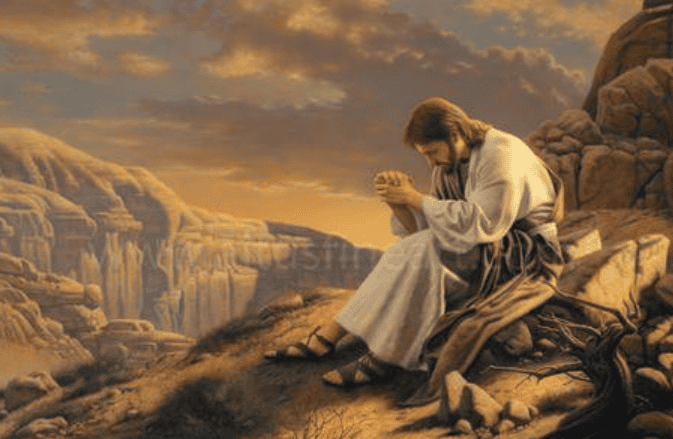
“[Conscience] is a messenger of him, who, both in nature and in grace, speaks to us behind a veil, and teaches and rules us by his representatives. Conscience is the aboriginal Vicar of Christ.” — John Henry Newman, Cardinal and Saint of the Catholic Church

Image Source: Souls & Hearts
“[Conscience] is a messenger of him, who, both in nature and in grace, speaks to us behind a veil, and teaches and rules us by his representatives. Conscience is the aboriginal Vicar of Christ.” — John Henry Newman, Cardinal and Saint of the Catholic Church
The human person possesses an interior sanctuary where the most profound moral decisions take place. This sacred space, which the Catholic Church calls conscience, serves as far more than mere feeling or personal preference.
What is The Catholic Understanding of Conscience?
The Catechism describes conscience as “man’s most secret core and sanctuary” where we find ourselves “alone with God whose voice echoes in his depths.” This interior space contains “a law inscribed by God” that calls us to love, do good, and avoid evil.
Conscience functions as a judgment of reason through which we recognize the moral quality of our acts – whether we are considering them, performing them, or have already completed them. The dignity of the human person requires this upright moral conscience which knows principles and applies them to particular circumstances. Conscience bears witness to the authority of truth and helps us perceive the divine law written upon our hearts.
How Conscience Guides Our Moral Decisions?
Moral conscience serves three essential functions:
- Antecedent conscience – reminds us always to pursue good and avoid evil
- Concomitant conscience – judges the goodness or evil of specific choices as we make them
- Consequent conscience – bears witness after the fact to the good or evil we have done
Through conscience, we hear God speaking when we truly listen. This interior dialogue helps us interpret our experiences and discern the moral dimensions of our choices. A well-formed conscience will never contradict objective moral truth as taught by Christ and His Church.
Conscience is not the source of moral law itself but rather the means God has given us to recognize that law within specific circumstances.
Conscience at Work in Daily Life
Consider how conscience operates in these practical situations:
A person experiences inner discomfort when tempted to deceive during a job interview. This discomfort signals conscience alerting them to a potential moral violation before they act.
A child who takes a toy without permission feels guilt afterward – conscience functioning properly by bearing witness to a wrong already committed.
When facing an ethical dilemma at work, a person with a well-formed conscience will examine the situation, pray for guidance, and consult trusted sources of moral wisdom before deciding.
Conscience formation begins in childhood as parents teach the difference between loving and hurtful actions. As we mature, our conscience develops greater sophistication, helping us traverse increasingly complex ethical terrain with Christ’s teachings as our guide.
Much is remarkable about how even very young children demonstrate this moral awareness. Studies show that children as young as three years old recognize cooperation and reward it by sharing equally, suggesting conscience development begins surprisingly early in human life.
The Catholic understanding of conscience offers a profound foundation for moral living – not as arbitrary rules but as an interior guide helping us fulfill our deepest human potential through alignment with God’s loving design.
What is The Foundation for Proper Formation of Conscience?
The formation of a moral conscience demands more than good intentions or personal feelings. According to the Catechism of the Catholic Church, “a well-formed conscience is upright and truthful” and “formulates its judgments according to reason, in conformity with the true good willed by the wisdom of the Creator.” Three essential foundations support authentic conscience formation.
I) Truth and Reason as the First Foundation
Moral conscience functions as a judgment of reason that recognizes the moral quality of specific acts. Cardinal Newman emphasized that conscience possesses both a theoretical and practical dimension – it discerns ethical values (moral sense) and recognizes our duty to act accordingly (sense of duty).
The pursuit of truth stands central to conscience formation. Pope Benedict XVI noted, “There must be something deeper, if freedom and, therefore, human existence are to have meaning.” This “something deeper” is objective moral truth. A conscience that ignores truth becomes what Benedict called “subjectivity’s protective shell” where one hides from reality.
Therefore, the “obligation to seek the truth” remains essential for authentic conscience formation. Reason helps us discern this truth and apply it consistently to our moral decisions. Without this foundation in objective truth, conscience becomes merely subjective opinion rather than a reliable moral guide.
II) The Teaching Authority of the Church
The Magisterium serves as an indispensable guide in forming our conscience. The Catechism emphasizes that “the education of conscience is indispensable for human beings who are subjected to negative influences and tempted by sin to prefer their own judgment and reject authoritative teachings.”
Studying Scripture and Church teaching becomes crucial for moral formation. The Church helps us understand moral issues we might not reason through on our own. As the Diocese of Tyler explains, “If we do not strive to understand Scripture and the teachings of the Church, our consciences will not be fully educated in saving truth.”
Furthermore, a properly formed conscience will not contradict Church teaching. The wisdom accumulated over two thousand years of Catholic tradition provides guidance that surpasses individual understanding, though conscience must never be violated.
III) What is The Holy Spirit’s Role in Conscience Formation?
Conscience formation requires divine assistance beyond human effort alone. Pope John Paul II taught that prudential discernment is accomplished through the “sense of faith,” a gift given by the Holy Spirit to all faithful.
The Vatican II document Gaudium et Spes recognizes that in conscience, “man detects a law which he does not impose upon himself, but which holds him to obedience.” This divine law speaks through conscience, guiding us toward authentic moral good.
To receive this guidance, we must cultivate certain dispositions:
- Humility to recognize that God’s wisdom surpasses our limited understanding
- Prayerful attentiveness to hear the Spirit’s voice
- Regular assimilation of God’s Word in faith and prayer
As the Catechism instructs: “In the formation of conscience the Word of God is the light for our path, we must assimilate it in faith and prayer and put it into practice.”
Cardinal Newman beautifully described this process: “Conscience is so constituted that, if obeyed, it becomes clearer in its injunctions, and wider in their range, and corrects and completes the accidental feebleness of its initial teachings.”
What are practical ways to form our moral conscience?
The formation of our moral conscience demands more than theoretical knowledge – it requires deliberate action. As the Catechism teaches, “the education of conscience is a lifelong task” [1]. The Catholic Church provides clear guidance on how we must undertake this essential work.
I highly recommend these five approaches to strengthen your moral conscience:
1. Seek objective truth rather than subjective feelings
The formation of conscience begins with a commitment to objective truth rather than personal emotions. A well-formed moral conscience “formulates its judgments according to reason, in conformity with the true good” [1].
This means acknowledging that feelings, whilst important, cannot serve as our primary moral guide. Our culture emphasizes emotional responses over reasoned judgment, yet authentic conscience formation requires accepting “that the Church’s understanding of God’s revelation and human nature is fuller, deeper and more reliable than any individual’s” [2]. This openness to truth beyond our personal feelings establishes the foundation for proper moral discernment.
2. Study the Catechism and Church teachings
The development of an informed conscience requires diligent study of the Church’s moral teachings. As the Catechism states, “in the formation of conscience the Word of God is the light for our path” [1].
According to Catholic tradition, we must spend time reading Scripture, the Catechism, and Church documents on moral questions. This education helps us “understand principles and apply them in particular circumstances” [3]. Much is unknown to us individually that the Church has clarified through centuries of wisdom. This study prevents us from making decisions based on incomplete or erroneous information [2].
3. Pray for divine wisdom and clarity
Prayer serves as an essential component in conscience formation. Use the following prayer to guide, “Lord, I come to You feeling confused and unable to clearly discern the right path… I desperately need Your spirit of discernment” [4].
The Holy Spirit must guide our moral decisions. Recommended prayers include: “Come Holy Spirit into my soul, enlighten my mind that I may know the sins I ought to confess” [5]. Through regular prayer, particularly before important decisions, we receive divine assistance to recognize moral truth.
4. Consult with a confessor or spiritual director
Seeking guidance from knowledgeable spiritual leaders provides invaluable assistance in moral formation. The Church advises us to “consult with a pastor, confessor or reliable spiritual guide before making a final decision” [2].
These conversations help us evaluate our personal opinions and circumstances honestly. A spiritual director offers perspective we might miss on our own, especially when we struggle to understand or follow specific Church teachings. This shows the wisdom of seeking counsel beyond our individual understanding.
5. Practice regular examination of conscience
Regular self-examination forms the cornerstone of moral growth. The U.S. Conference of Catholic Bishops recommends that “before celebrating the Sacrament of Penance, one should prepare oneself with an examination of conscience” [6].
This practice involves “reflecting prayerfully on one’s thoughts, words, and deeds” [6]. Make this a daily practice – perhaps before retiring each evening – to identify patterns of sin and areas requiring growth. A thorough examination should be “rooted in Scripture, particularly the Ten Commandments and Beatitudes” [6], helping develop greater moral sensitivity over time.
These steps require patience and perseverance, yet they provide the solid foundation necessary for a properly formed Catholic conscience.
What happens when our conscience appears to conflict with Church teaching?
“If you take away obedience to the Church, there is no error which will not be embraced.” — St. Alphonsus Maria Liguori, Doctor of the Church, Moral Theologian
The most challenging situations for Catholics arise when personal conscience appears to diverge from Church teaching. This tension between following one’s conscience and adhering to Church authority requires careful discernment and faithful response.
What causes this apparent conflict?
According to Catholic teaching, conflicts between conscience and Church doctrine typically arise from several sources:
a) You may have an incomplete understanding of what the Church actually teaches.
b) You may know the teaching but not fully comprehend the wisdom behind the Church’s position. Throughout the centuries, even saints have experienced this tension—some were martyred for refusing to violate their conscience whilst remaining faithful to Church teaching.
The Church identifies another common cause as an “erring conscience.” As the Catechism explains, moral conscience can make erroneous judgments due to
c) “ignorance of Christ and his Gospel, bad example given by others, enslavement to one’s passions,” or notably, “rejection of the Church’s authority and her teaching.”
Much is unknown to us individually that the Church, guided by the Holy Spirit over two millennia, has come to understand through careful study of Scripture and Tradition.
How should we respond with humility and faith?
The proper response to this tension begins with humility. Humility helps us recognize our individual understanding is limited compared to the Church’s collective wisdom gathered over centuries.
St. Thomas Aquinas taught that even an erring conscience binds—meaning you should never act against your conscience. Yet simultaneously, a rightly formed conscience is expected to align with Catholic teaching. The solution lies in seeking further information about the teaching, praying for wisdom, and consulting knowledgeable spiritual guides.
As Catholics, we believe the Church’s understanding of God’s revelation surpasses individual interpretation. Therefore, when faced with such conflicts, we must work to form our conscience according to Church teaching rather than expecting the Church to conform to our personal understanding.
How Moral Relativism is a Danger to Our Soul?
Moral relativism—the belief that there are no absolute moral truths—presents a grave danger to authentic conscience formation. This position claims moral truths are subjective and personal, leaving no grounds for making definitive moral judgments about harmful behaviors.
The Catholic Church offers the correct alternative: objective moral standards that respect both truth and personal conscience. The Church respects that “a human being must always obey the certain judgment of his conscience” whilst simultaneously helping form that conscience according to divine truth revealed through Scripture and Tradition.
This approach avoids both the error of forcing compliance without understanding and the error of treating all moral positions as equally valid.
How do we live with an informed conscience in today’s world?
The challenges facing Catholics today require a well-formed moral conscience rooted in Church teaching and sustained by the sacraments. Our contemporary age presents moral complexities unknown to previous generations, yet the principles of Catholic moral theology remain constant.
What does moral decision-making require in complex situations?
Modern life confronts us with moral dilemmas that demand more than good intentions. A disciplined approach to moral reasoning becomes essential. The process follows these steps:
- Identify the facts of the situation without emotional distortion
- Examine relevant moral principles from Church teaching
- Prayerfully discern how these principles apply to specific circumstances
Complexity does not justify moral compromise. As Pope Benedict XVI noted, “We must reject the idea that our choices are merely a matter of taste.” Even the most difficult situations have morally sound responses when approached with patience and faith.
How can we witness to truth in public life?
Our culture increasingly views objective moral standards as personal preferences rather than universal truths. Catholics are called to be witnesses to moral truth in families, workplaces, and civic engagement.
This witness begins with integrity—living what we believe regardless of social pressure. We must speak truth with both clarity and charity. Truth without love becomes brutality, but love without truth becomes sentimentality.
Why do community and sacraments matter for conscience?
No Catholic can maintain a well-formed moral conscience in isolation. We require both spiritual and communal nourishment. The sacraments—especially regular Confession and the Eucharist—provide essential grace for moral living.
Faith communities offer mutual support and accountability. Small faith-sharing groups, parish-based ministries, and spiritual friendships create spaces where moral questions can be honestly discussed. These relationships remind us that we are not alone in our struggles to live faithfully.
I highly recommend participation in regular spiritual direction and frequent reception of the sacraments for those seeking to live with an informed conscience. The development of our moral conscience serves not merely to avoid sin but to grow in virtue and become who God created us to be.
Conclusion
Conscience formation stands as one of the most crucial aspects of Catholic spiritual life. As we have seen throughout this exploration, the development of moral conscience requires far more than personal feelings or individual preferences about right and wrong.
The Catholic Church teaches that conscience serves as “the voice of God resounding in the human heart.” This sacred interior space demands careful cultivation through objective truth, Church teaching, and divine assistance. A properly formed conscience will never contradict the moral teachings handed down through two thousand years of Catholic tradition.
The education of conscience is indeed a lifelong task. This formation begins with our openness to truth rather than subjective emotions. Regular study of Scripture, the Catechism, and Church documents provides the solid foundation needed for sound moral judgment. Prayer illuminates our understanding, whilst spiritual direction offers invaluable guidance during difficult moral questions.
Those moments when personal conscience appears to conflict with Church teaching require particular humility. The wisdom accumulated over centuries of Catholic tradition surpasses individual understanding. We must follow our conscience whilst simultaneously working to align it with revealed truth.
The sacraments—especially regular Confession and the Holy Eucharist—provide essential grace for moral living. Faith communities offer mutual support and accountability that no Catholic can maintain in isolation. These relationships remind us that we are not alone in our struggles to live faithfully according to God’s design.
I highly recommend regular examination of conscience as a daily practice. This spiritual discipline helps identify patterns of sin and areas for growth. A thorough examination should be rooted in Scripture, particularly the Ten Commandments and the Beatitudes.
The effort we invest in developing our conscience determines how faithfully we hear God’s voice guiding us toward goodness and truth. This interior sanctuary—our conscience—leads us to authentic freedom when properly formed according to the wisdom of the Creator.
Praise God for His Mercy and the gift of conscience that calls us to holiness.
FAQs
Q1. What is a moral conscience according to Catholic teaching? A moral conscience is an inner guide that helps us discern right from wrong. It’s described as “man’s most secret core and sanctuary” where we encounter God’s voice calling us to love, do good, and avoid evil. Conscience helps us recognize the moral quality of our actions and apply ethical principles to specific situations.
Q2. How can I form a well-informed conscience? To form a well-informed conscience, start by being open to objective truth rather than relying solely on feelings. Regularly study Church teachings, including Scripture and the Catechism. Pray for wisdom and clarity, especially before making important decisions. Seek guidance from a confessor or spiritual director, and practice regular self-examination to identify areas for moral growth.
Q3. What should I do when my conscience seems to conflict with Church teaching? When facing a conflict between personal conscience and Church teaching, respond with humility. Recognize that your understanding may be limited compared to the Church’s collective wisdom. Seek further information about the teaching, pray for guidance, and consult knowledgeable spiritual guides. Remember that a properly formed conscience should align with Catholic teaching.
Q4. How can I live with an informed conscience in today’s complex world? Living with an informed conscience today requires courage, discernment, and community support. When facing moral dilemmas, identify the facts, examine relevant Church teachings, and prayerfully discern how to apply these principles to your specific situation. Be a witness to moral truth in your daily life, and stay rooted in your faith community and the sacraments for spiritual nourishment and support.
Q5. Is conscience formation a one-time process or ongoing? Conscience formation is a lifelong journey, not a one-time event. The Catechism teaches that “the education of conscience is a lifelong task.” As we encounter new situations and challenges throughout life, we must continually seek to deepen our understanding of moral truth and refine our ability to make ethical decisions in line with God’s will.
References
[1] – https://www.vatican.va/content/catechism/en/part_three/section_one/chapter_one/article_6/ii_the_formation_of_conscience.html
[2] – https://waterloocatholics.org/how-to-form-a-moral-conscience
[3] – https://www.usccb.org/prolife/understanding-conscience
[4] – https://www.divinedisclosures.com/prayers-for-discernment/
[5] – https://www.catholic.com/tract/the-catholic-answers-guide-to-an-examination-of-conscience
[6] – https://www.usccb.org/prayer-and-worship/sacraments-and-sacramentals/penance/examinations-of-conscience