How to Pray the Three Hail Marys Devotion: A Simple Daily Guide
The Three Hail Marys devotion carries with it an extraordinary promise from the Blessed Virgin Mary herself. This devotion traces its origins to the 13th century when St. Mechtilde of Hackeborn, a Benedictine nun, received a special revelation from Our Lady. The Blessed Virgin instructed her to pray three Hail Marys daily, promising to assist her at the hour of death. Our Lady made this remarkable pledge: those who faithfully recite the three Hail Marys each day will receive her assistance during life and, most importantly, at the moment of death, when she will appear in “extraordinary splendor.”
The devotion has been championed by numerous saints throughout Church history. St. Anthony of Padua was among the first to advocate for the three Hail Mary practice, specifically to honor Mary’s virginity and preserve purity. St. Leonard of Port-Maurice had his followers recite the three Hail Marys both morning and evening, assuring them of eternal salvation if they remained faithful to this practice.
What makes the Three Hail Marys devotion particularly beautiful is its simplicity combined with spiritual potency. Each Hail Mary honors a different divine attribute: power, wisdom, and mercy. This connection to the Most Holy Trinity elevates this devotion beyond a simple Marian prayer into a profound spiritual exercise that has received the Apostolic Blessing of Pope St. Pius X and was later raised to an Archconfraternity by Pope Benedict XV.
This treasured devotion has been a source of spiritual strength for Catholics across the centuries. I highly recommend this practice to all who seek the protection and intercession of the Mother of God.
What is the Three Hail Marys Devotion?

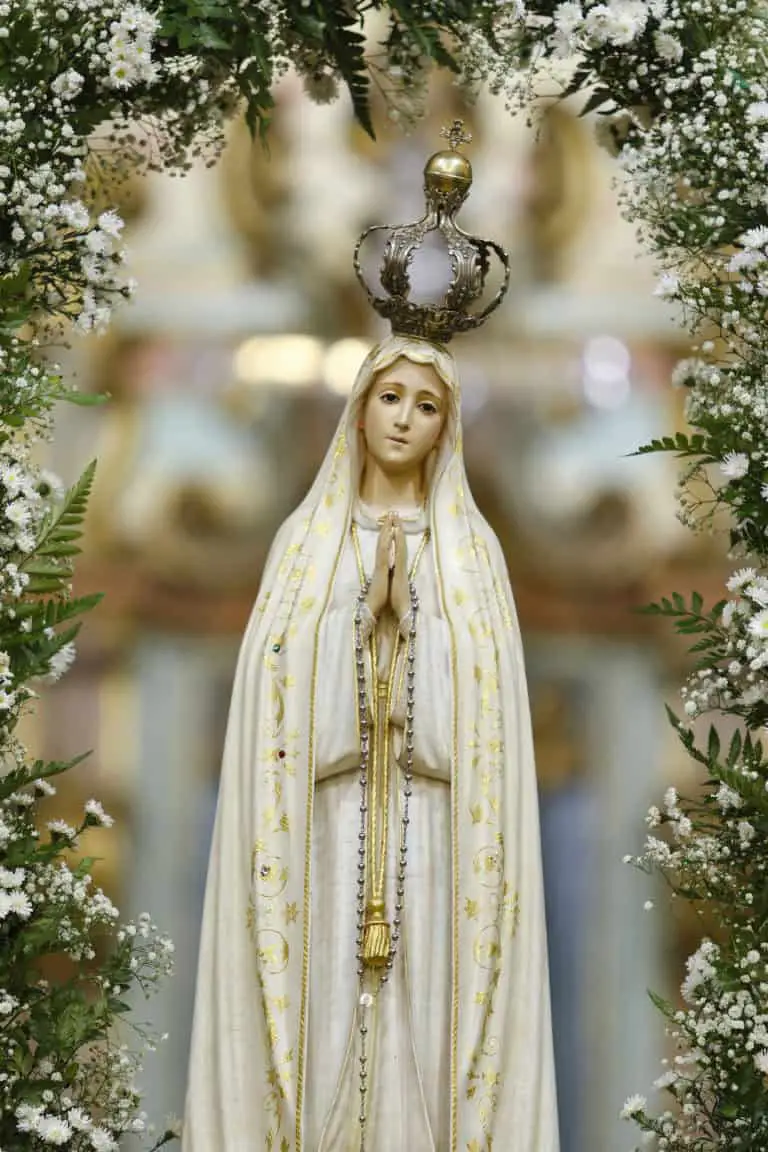
Image Source: Etsy
The Three Hail Marys devotion stands as one of the most accessible yet profoundly effective spiritual practices within Catholic tradition. This devotion traces its roots to a divine revelation granted to St. Mechtilde of Hackeborn around the year 1270, establishing it as a centuries-old practice with remarkable spiritual power.
A Simple Daily Prayer Practice
What makes the Three Hail Marys devotion so extraordinary? The essence lies in its beautiful simplicity. The straightforward nature makes it perfect for both beginners and seasoned Catholics alike. The devotion consists of reciting three Hail Mary prayers daily, typically in the morning upon waking and again in the evening before sleep. What distinguishes this practice from merely saying three consecutive Hail Marys is the specific intention behind each prayer and the addition of a special invocation.
The basic formula involves the following elements:
Three Hail Mary prayers – recited with reverence and devotion
Special invocation – “O my Mother, preserve me this day (or night) from mortal sin” [2]
Specific timing – morning upon waking and evening before sleep
This invocation serves as a powerful plea for protection against serious spiritual harm throughout our waking and sleeping hours.
Many practitioners also incorporate a brief consecration before each Hail Mary, although this is not required for the essential practice. The consecration might begin with “With all my heart I praise Thee, Most Holy Virgin above all Angels and Saints in Paradise…” followed by specific intentions related to each Person of the Trinity [2].
Another common addition after each Hail Mary is the aspiration: “By thy Immaculate Conception, O Mary, make my body pure and my soul holy” [2]. St. Leonard of Port Maurice particularly recommended this addition, highlighting its significance for those seeking greater purity [2].
For those who wish to use prayer beads, a special Three Hail Mary chaplet exists, consisting of three beads plus a crucifix [1]. The physical aid of beads can help maintain focus and establish consistency in this devotion.
What makes this devotion exceptionally remarkable is that the Blessed Virgin herself taught it to St. Mechtilde [1]. According to the revelation, Our Lady told St. Mechtilde: “I will, certainly. But I also want you to say three special Hail Marys to me every day” [1]. This occurred when the saint was distressed about her eternal salvation and prayed for Mary’s presence at her death [1].
The practice has remained essentially unchanged since the 13th century, maintaining its core elements while occasionally receiving additional prayers or invocations from various saints who promoted it. Throughout the centuries, it has maintained its status as what St. Anthony of Padua called “one of the greatest means of salvation, and one of the surest signs of predestination” [1].
Why does this devotion honor the Most Holy Trinity?
One of the most profound aspects of the Three Hail Marys devotion is its theological richness – particularly its connection to the Most Holy Trinity. Each of the three Hail Marys is specifically directed to honor one Person of the Trinity and the unique gifts bestowed upon Mary by each Divine Person.
The prayer is intentionally said three times to honor the Most Blessed Trinity, recognized as “the source of all of Our Lady’s greatness” [1]. This tripartite structure connects the devotion directly to the central mystery of the Christian faith.
The Blessed Virgin explained the Trinitarian significance to St. Mechtilde with remarkable clarity:
The First Hail Mary honors God the Father, “Whose omnipotence raised my soul so high above every other creature that, after God, I have the greatest power in Heaven and on earth” [1]. This reflects the Father’s attribute of divine power, which He shared uniquely with Mary.
The Second Hail Mary is directed to God the Son, “Who communicated His inscrutable wisdom to me” [1]. This acknowledges the special wisdom Mary received from Christ, making her, as the revelation states, possess “more knowledge of the Holy Trinity than all the Saints” [4].
The Third Hail Mary glorifies God the Holy Spirit, “Who filled my soul with the sweetness of His love and tenderness and mercy” [1]. This celebrates the Holy Spirit’s gift of divine love poured into Mary’s heart.
This Trinitarian structure elevates the devotion beyond a simple Marian prayer. While honoring Mary, it simultaneously acknowledges that all her greatness comes from the Trinity. St. Gertrude (another German mystic and contemporary of St. Mechtilde) received a similar revelation confirming this theological understanding. During a vision at the matins of the Annunciation, she “suddenly saw spring out from the Heart of the Father and the Son, and of the Holy Spirit, three bright flames which penetrated the Heart of the Holy Virgin” [5].
Following this vision, St. Gertrude heard these words: “After the Power of the Father, the Wisdom of the Son and the merciful Tenderness of the Holy Spirit, nothing approaches the Power, the Wisdom and the merciful Tenderness of Mary” [5]. This profound theological insight shows how the Three Hail Marys devotion acknowledges both Mary’s greatness and its divine source.
As one resource eloquently puts it, “Can there be an easier or a more adaptable practice for all, than the recitation each day of three Hail Marys, in honor of the privileges conferred by the Adorable Trinity on the Blessed Virgin Mary?” [1]
Who Can Benefit from This Devotion?
The remarkable accessibility of the Three Hail Marys devotion makes it universally beneficial for Catholics at every stage of spiritual development. Virtually anyone seeking spiritual growth can incorporate this practice into their daily prayer routine with tremendous benefits.
This devotion offers extraordinary spiritual protection. Our Lady promised St. Mechtilde that for anyone who faithfully prays the Three Hail Marys, “I will appear at the hour of death in a splendor so extraordinary that it will fill the soul with heavenly consolation” [1]. This spectacular promise makes the devotion particularly valuable for those concerned about perseverance in faith until death.
For those struggling with purity, the Three Hail Marys serves as a powerful spiritual weapon. St. Leonard of Port Maurice “had the three Ave Marias recited morning and evening in honor of Mary Immaculate, to obtain the grace of avoiding all mortal sins during the day or night, especially for those who were struggling with sins of impurity” [2]. This makes the devotion especially beneficial for individuals battling temptations against chastity.
St. Alphonsus Liguori, a Doctor of the Church, “exhorts, in particular, parents and confessors to watch carefully that children be faithful in reciting each day their three Hail Marys, morning and evening” [1]. The simplicity of the practice makes it accessible even to young children, while its spiritual potency provides crucial protection during formative years.
The devotion serves well those who may struggle with lengthy prayers. As St. John Bosco suggested it to young people, it remains equally appropriate for the elderly or infirm [4].
Even priests and religious benefit from this devotion. The sources note that “Even persons consecrated to God will derive from this practice much precious and salutary fruit” [5]. St. Pio of Pietrelcina (Padre Pio) affirmed that “many would convert just by practicing this devotion” [4], highlighting its evangelical potential.
The universal appeal of this devotion is evident in its papal endorsements. Pope St. Pius X gave his Apostolic Blessing to this practice, and Pope Benedict XV elevated its status significantly when, “on July 30, 1921, in an Apostolic letter, [he] raised its status to that of an Archconfraternity, and accorded to it precious indulgences” [1].
The remarkable list of saints who championed this devotion testifies to its universal value. Besides those already mentioned, devotees included St. Bonaventure, St. John Berchmans, St. John Baptist Mary Vianney (the Curé of Ars), St. Stanislaus, St. Louis Marie Grignion de Montfort, St. John Joseph of the Cross, St. John Baptist de Rossi, St. Gerard Majella, St. Gabriel of Our Lady of Sorrows, Blessed Marcellinus Champagnat, St. Gemma Galgani, and St. Josemaría Escrivá [11].
St. Theresa of Avila captured the devotion’s power beautifully: “The glory due to one devout Hail Mary is worth a long life of suffering” [1]. Each Hail Mary carries tremendous spiritual weight, and multiplied by three with specific Trinitarian intentions, the devotion becomes even more powerful.
The effectiveness of this devotion rests ultimately on the power of the Hail Mary itself. As one source explains, “Why is this short, simple, and easy devotion to Our Lady so powerful? The answer lies in the power of the Hail Mary” [1]. This prayer combines biblical phrases spoken by the Archangel Gabriel and Elizabeth with the Church’s petition for Mary’s intercession, making it a prayer of extraordinary theological depth despite its brevity.
The consistent practice of the Three Hail Marys builds spiritual discipline. The morning and evening recitation creates sacred bookends to the day, establishing a rhythm of prayer that can transform one’s spiritual life. St. Leonard of Port Maurice promised “in a special manner, eternal salvation to all those who proved constantly faithful to this practice” [1].
What particularly strikes one about this devotion is how it combines theological depth with practical simplicity. While honoring profound Trinitarian mysteries, it remains accessible to everyone from children to theologians. It requires minimal time commitment while offering maximum spiritual benefits. As St. Leonard expressed, he “promised in a special manner eternal salvation to all those who proved constantly faithful to this practice” [11].
The consistent teaching across so many saints and over so many centuries points to the universal efficacy of this devotion. Whether you are a new convert seeking to establish prayer habits, a lifelong Catholic looking to deepen your Marian devotion, a person struggling with particular temptations, or someone preparing for death, the Three Hail Marys devotion offers spiritual riches perfectly suited to your needs.
How to Pray the Three Hail Marys?

Image Source: Unique Rosary Beads
Practicing the Three Hail Marys devotion requires neither complex rituals nor lengthy prayers, yet its spiritual impact remains profound. Having incorporated this devotion into my daily life, I can attest to its transformative power through consistent practice. Let me guide you through the practical aspects of this beautiful tradition.
Step-by-step guide for morning and evening
The core practice involves reciting three Hail Mary prayers at two specific times each day—upon waking and before sleeping. These sacred moments create a rhythm of prayer that transforms your spiritual life.
Morning Practice:
Choose a consistent time – Make this the first thing you do after waking. Consistency establishes this as a lifelong habit.
Assume a reverent posture – St. Alphonsus Liguori recommended saying the three Hail Marys “prostrate on the ground, or at least kneeling” [3]. This physical posture helps focus your mind and demonstrates reverence.
Begin with the Sign of the Cross – This acknowledges that your prayer is offered in the name of the Trinity.
Optional consecration before each Hail Mary – Many devotees add a brief consecration before each prayer. For the first Hail Mary: “With all my heart I praise Thee, Most Holy Virgin above all Angels and Saints in Paradise, Daughter of the Eternal Father, and I consecrate to Thee my soul with all its faculties” [6]. Similar consecrations honoring Mary as Mother of the Son and Spouse of the Holy Spirit precede the second and third Hail Marys.
Recite each Hail Mary slowly and reverently – The text reads: “Hail Mary, full of grace, the Lord is with Thee! Blessed art Thou among women and blessed is the fruit of Thy womb, Jesus. Holy Mary, Mother of God, pray for us sinners now and at the hour of our death. Amen” [5].
Add the morning invocation after each Hail Mary – Following each prayer, add: “O my Mother, preserve me from mortal sin during this day” [3]. Alternatively, you may use: “By thy holy and Immaculate Conception, O Mary, make my body pure and my soul holy; preserve me this day from mortal sin” [2].
Conclude with a brief moment of reflection – Take a moment to recommit yourself to avoiding sin throughout the day.
Evening Practice:
The evening practice follows the same pattern as the morning practice, with one modification: replace “this day” with “this night” in the invocation. Thus, after each Hail Mary, say: “O my Mother, preserve me from mortal sin during this night” [3] or “By thy holy and Immaculate Conception, O Mary, make my body pure and my soul holy; preserve me this night from mortal sin” [2].
Setting a regular time for evening prayers helps maintain consistency. Many traditional Catholics incorporate the three Hail Marys into their night prayers before bed. This creates a beautiful spiritual symmetry to the day—beginning and ending under Mary’s protection.
Using the Three Hail Mary Chaplet Beads
For those who appreciate tangible aids to prayer, the three Hail Mary chaplet provides a beautiful physical companion to this devotion. Unlike the standard rosary with its five decades, this specialized chaplet is designed specifically for the three Hail Marys devotion.
The typical three Hail Mary chaplet consists of just four elements: a crucifix and three beads [9]. This simple structure perfectly accommodates the devotion’s basic format. Here’s how to use it:
Begin by holding the crucifix and making the Sign of the Cross [9]. This sets a reverent tone for your prayer.
Move to the first bead and recite your first Hail Mary, followed by the invocation. This first Hail Mary honors God the Father and His gift of power to Mary.
Proceed to the second bead for your second Hail Mary and invocation, honoring God the Son and His gift of wisdom to Mary.
Finally, use the third bead for your third Hail Mary and invocation, honoring the Holy Spirit and His gift of love and mercy to Mary.
Some chaplets also include a medal of the Immaculate Conception or other Marian image, serving as a focal point for the prayer. Having a dedicated chaplet helps establish this devotion as a distinct practice rather than just a quick addition to other prayers.
The physical act of moving from one bead to the next creates a tactile rhythm that can deepen your engagement with the prayer. This is particularly helpful when praying in environments with distractions or when feeling tired at the end of the day.
The chaplet can be especially beneficial for teaching children this devotion. The tangible beads give young hands something to hold and manipulate, making prayer a more engaging experience. Given St. Alphonsus Liguori’s exhortation that “parents and confessors watch carefully that children be faithful in reciting each day their three Hail Marys” [7], the chaplet becomes a valuable teaching tool.
Throughout the centuries, countless Catholics have found that this simple chaplet helps them persevere in this powerful devotion. As the Pallottine Fathers note, “Many saints have had the practice of adding three Hail Marys here in honor of Mary’s purity for the grace of a chaste and holy life” [10].
The three Hail Marys devotion beautifully exemplifies how profound spiritual practices need not be complicated. With just three beads, three Hail Marys, and simple invocations, we tap into centuries of spiritual wisdom and place ourselves under the protective mantle of the Blessed Virgin. Through faithful daily practice, we forge a powerful spiritual habit that, as St. Leonard of Port Maurice promised, can lead to “eternal salvation to all those who proved constantly faithful to this practice” [3].
An Expanded Meaning Behind Each Hail Mary
The Trinitarian foundation of the Three Hail Marys devotion reveals its profound theological depth. Each Hail Mary honors a specific Person of the Most Holy Trinity and the unique gifts bestowed upon the Blessed Virgin. Understanding the meaning behind each prayer transforms this devotion from simple recitation into a profound meditation on divine attributes.
1) Honoring the Power of God the Father
The first Hail Mary specifically honors God the Father and the extraordinary power He shared with the Blessed Virgin. According to the revelation given to St. Mechtilde, Our Lady explained: “The first will be in honor of God the Father, Whose omnipotence raised my soul so high above every other creature that, after God, I have the greatest power in Heaven and on earth.”
This divine power granted to Mary by the Father is truly extraordinary. Through it, she participates in the Father’s omnipotence in a unique way. Though Mary remains fully human, the Father elevated her dignity above all other creatures, making her the most powerful being in creation after God Himself.
This power becomes the foundation for a remarkable promise attached to the first Hail Mary. Our Lady assured St. Mechtilde: “In the hour of your death, I will use that power of God the Father to keep any hostile power far from you.” This protection extends to all who faithfully practice this devotion.
The theological significance here is profound—the Father’s attribute of power becomes our spiritual shield through Mary’s intercession. This power represents the Father’s creative and protective force that Mary now exercises on behalf of her devoted children.
2) Honoring the Wisdom of God the Son
The second Hail Mary honors God the Son and the incomparable wisdom He shared with His Mother. Our Lady told St. Mechtilde: “The second Hail Mary will be said in honor of the Son of God, Who communicated His inscrutable wisdom to me.”
Christ, the eternal Word and Wisdom of God, granted Mary a participation in His divine knowledge. This wisdom enabled her to understand divine mysteries with unparalleled clarity. As we read in the revelation, Mary received wisdom to such an extent that she has “more knowledge of the Holy Trinity than all the Saints.”
This extraordinary wisdom becomes the basis for Mary’s second promise: “In the hour of your death, I will fill your soul with the light of that wisdom, so that all the darkness of ignorance and error will be dispelled.” The Son’s attribute of wisdom becomes our illumination at death’s door through Mary’s intercession.
The practical implication is immense—at the moment when spiritual confusion might be greatest, Mary promises to share Christ’s clarifying wisdom with the soul. This second Hail Mary secures for us intellectual and spiritual clarity when we need it most.
3) Honoring the Mercy of the Holy Spirit
The third Hail Mary honors God the Holy Spirit and the tender love He poured into Mary’s heart. Our Lady revealed: “The third Hail Mary will be in honor of God the Holy Ghost, Who filled my soul with the sweetness of His love and tenderness and mercy.”
The Holy Spirit, the divine Person who is Love itself, filled Mary with extraordinary mercy and compassion. This made her “the sweetest and most merciful” creature after God Himself. This infusion of divine love enables Mary to be the Mother of Mercy who understands and responds to our needs with unfailing tenderness.
From this attribute flows the third remarkable promise: “In your last hour, I will then change the bitterness of death into divine sweetness and delight.” The Holy Spirit’s attribute of love and mercy becomes our consolation at death through Mary’s intercession.
This transformation of death’s bitterness into sweetness represents one of the most comforting aspects of the Three Hail Marys devotion. It addresses the natural human fear of death by promising spiritual consolation precisely when we need it most.
Throughout the centuries, this threefold Marian prayer has maintained its theological richness. As the Church teaches, “The three branches signified Our Lady’s participation in the omnipotence of the Father, the wisdom of the Son, and the charity of the Holy Ghost.” This participation in Trinitarian attributes makes the Three Hail Marys devotion uniquely powerful.
The deepest beauty of this devotion lies in its connection to fundamental Catholic theology. Though simple in appearance, each Hail Mary opens a window into the life of the Trinity and Mary’s relationship with each divine Person. These three prayers create complete spiritual protection—power against evil, wisdom against error, and love against fear.
Understanding these profound meanings transforms the recitation of the Three Hail Marys from routine prayer into a daily renewal of trust in Mary’s threefold promise and a deeper appreciation of the Trinity’s work in her life and, through her, in ours.
Conclusion
The Three Hail Marys devotion stands as a remarkable testament to the depth that can exist within simplicity. Throughout the centuries, countless souls have found protection, guidance, and salvation through this brief yet powerful practice. The promises attached to this devotion offer compelling reasons to embrace it—Our Lady’s presence at death, protection from mortal sin, and assistance throughout life represent priceless spiritual treasures.
What strikes me most profoundly about this devotion is its beautiful Trinitarian structure. Each Hail Mary honors a specific divine attribute shared with Mary—the Father’s power, the Son’s wisdom, and the Holy Spirit’s mercy. This theological richness transforms three simple prayers into a profound profession of faith in the Most Holy Trinity.
The saints understood this devotion’s efficacy, which explains why so many figures throughout Church history championed it with such enthusiasm. Their endorsements, alongside papal blessings and indulgences, confirm its place among the Church’s most valued spiritual practices.
Our modern world often dismisses simple devotions as outdated, yet faithful Catholics recognize spiritual wisdom that transcends time. This ancient practice requires minimal time—perhaps one minute in the morning and evening—yet potentially yields eternal benefits. The promise of salvation for those who prove constantly faithful to this practice deserves our serious attention.
Mary herself taught this devotion because she understood our spiritual vulnerabilities. Her maternal love seeks our salvation, offering this simple yet profound means to strengthen our spiritual defenses. Through faithful recitation of the Three Hail Marys, we place ourselves under her powerful mantle and draw closer to the Trinity she serves.
This devotion represents one of the Church’s hidden treasures—accessible to all yet packed with spiritual power. The Three Hail Marys, properly understood and faithfully recited, can transform your spiritual life and secure Mary’s powerful protection both now and at the hour of death.
I highly recommend this devotion to all Catholics seeking the protection of the Mother of God. Morning and evening, these three Hail Marys with their invocation create powerful spiritual bookends to your day, gradually building a fortress of Marian protection around your soul.
Praise God for His Mercy in giving us such a Mother.
FAQs
Q1. What is the Three Hail Marys devotion? The Three Hail Marys devotion is a simple Catholic prayer practice that involves reciting three Hail Mary prayers daily, typically in the morning and evening. Each Hail Mary honors a different attribute of the Holy Trinity bestowed upon the Virgin Mary.
Q2. How do you pray the Three Hail Marys devotion? To pray the Three Hail Marys devotion, recite three Hail Mary prayers upon waking and before sleeping. After each Hail Mary, add the invocation: “O my Mother, preserve me this day (or night) from mortal sin.” Some people also include a brief consecration before each Hail Mary.
Q3. What are the benefits of practicing the Three Hail Marys devotion? The devotion offers spiritual protection, assistance in avoiding mortal sin, and Mary’s presence at the hour of death. It’s also believed to help with purity, provide spiritual strength, and potentially lead to eternal salvation for those who practice it faithfully.
Q4. Who can benefit from the Three Hail Marys devotion? This devotion is beneficial for all Catholics, regardless of age or spiritual maturity. It’s particularly recommended for those seeking protection from sin, young people developing their faith, the elderly or infirm who may struggle with longer prayers, and anyone desiring to deepen their Marian devotion.
Q5. Is there a special way to use prayer beads for this devotion? Yes, there is a special Three Hail Mary chaplet consisting of a crucifix and three beads. You can use this chaplet by holding the crucifix to make the Sign of the Cross, then using each bead for one Hail Mary and its accompanying invocation. This provides a tangible aid to focus your prayers.
References
[1] – https://visitationproject.org/pages/the-three-hail-marys?srsltid=AfmBOoqwxmXx4bO4uFfGVfIPIj1uQ3A1qtKNsAihqwGoySuDnNcyzgaH
[2] – http://www.catholictradition.org/Mary/three.htm
[3] – https://ruggedrosaries.com/blogs/news/the-three-hail-mary-chaplet-a-simple-but-powerful-devotion?srsltid=AfmBOoqsd4svW218HC9RHWfFxnDUs-9PUvveePbGc87kqqaHCtViBrTB
[4] – https://en.wikipedia.org/wiki/Three_Hail_Marys
[5] – https://aleteia.org/2017/08/14/the-beautiful-devotion-of-the-three-hail-marys
[6] – https://fatima.org/the-three-hail-marys/
[7] – https://visitationproject.org/pages/the-three-hail-marys?srsltid=AfmBOorpMZDUPPWzYI-cAJsSF_De00V2erWQ3nhv5E0Z3PvdkcI4rEpZ
[8] – https://uniquerosarybeads.com/pages/three-hail-mary-devotion?srsltid=AfmBOopsRLSOb-Gq4Zdi_NwAw0ohTYGdfPpgQNgtxIT40F5oxW959VUD
[9] – https://visitationproject.org/pages/the-three-hail-marys?srsltid=AfmBOorkjCoefrRMY0mtQkxWINvO6gRyQ-SVoDYVfxZ9MWQMOifB8g0A
[10] – https://www.holyrosary.com.au/three-hail-marys-devotion.htm
[11] – https://ruggedrosaries.com/blogs/news/the-three-hail-mary-chaplet-a-simple-but-powerful-devotion?srsltid=AfmBOoqKKQrWzU-M34AKMM2A5EwDlN_PpW892F7IAkbuVGDpsd-Jw9sa