How God Uses Natural Events for Supernatural Purpose in the Bible?
What if the most profound miracles in Scripture occurred not through the suspension of natural laws, but through their divine orchestration? This question has captivated theologians and believers for centuries, yet the answer reveals itself clearly when we examine the Sacred Scriptures with careful attention.
Throughout the Holy Scriptures, we discover a remarkable pattern: the Almighty God consistently employs the natural world as His instrument for supernatural purposes. From the very first chapter of Genesis, where the Lord establishes the heavens and the earth, to the wondrous accounts of the Patriarchs, we witness divine intervention working through—rather than against—the created order.
Consider the great flood in the time of Noah, where the Lord utilized both the “fountains of the great deep” and the rain from heaven to execute His judgment upon the earth. Or reflect upon the confusion of tongues at Babel, where God languages to scatter the peoples across the face of the earth. These events demonstrate that the natural and supernatural are not opposing forces in Scripture, but rather complementary aspects of God’s sovereign will.

The most striking example appears in the account of our father Abraham, when the Lord fulfilled His covenant promise through Sarah’s conception at an advanced age. Here we see supernatural intervention operating within the natural order of biological processes—not by abolishing the laws of nature, but by directing them according to Divine purpose.
As we read in the Scriptures, “The Lord sits as King at the flood; yes, the Lord sits as King forever” (Psalm 29:10). This verse illuminates a profound truth: God’s sovereignty extends over all natural processes, and what we often separate into “natural” and “supernatural” categories are unified under His divine authority.
This exploration will guide us through the Sacred Scriptures to understand how the Almighty consistently uses the natural world to achieve His divine purposes, revealing the profound connection between ordinary events and extraordinary divine action.
How Scripture Reveals God’s Method?
Throughout Sacred Scriptures, a profound pattern emerges that many readers often overlook: the Lord consistently works through His creation rather than against it. This truth challenges common misconceptions about divine intervention and reveals the depth of God’s sovereignty over all things.
A) Natural Events as Instruments of Divine Will
According to the Scriptures, natural phenomena and divine intervention are not competing explanations but complementary aspects of the same divine reality. Consider the account of Moses at the Red Sea, where “the Lord caused the sea to go back by a strong east wind all that night, and made the sea dry land” (Exodus 14:21). The supernatural parting occurred through a natural mechanism—wind directed by divine command.
This demonstrates a crucial principle: what makes an event supernatural is not the suspension of natural law but rather the divine timing, purpose, and meaning behind it. The burning bush that Moses encountered illustrates this truth perfectly. Fire remains entirely natural, yet this particular fire burned without consuming its fuel—a natural element behaving according to divine purpose to convey God’s presence.
Much is unknown about the precise mechanisms God employs, yet the Scriptures consistently show His sovereignty extending over all natural processes. As the Psalmist declares, “Fire and hail, snow and clouds; stormy wind, fulfilling His word” (Psalm 148:8).
B) Discerning Supernatural Meaning in Scripture
The supernatural meaning in Holy Scripture is found not by seeking events that defy natural explanation, but by discerning divine purpose within both ordinary and extraordinary occurrences. This requires spiritual discernment beyond mere physical observation.
The biblical authors recognized God’s hand operating through:
- Atmospheric phenomena (rain, drought, storms)
- Celestial movements (the star guiding the Magi)
- Biological processes (conception and birth)
- Dreams and visions (prophetic revelations)
This is consistent with Catholic teaching that God is the author of natural law, not its opponent. The Church has long understood that the natural world serves as the stage upon which divine drama unfolds.
The Incarnation itself—God becoming man in Jesus Christ—represents the ultimate example of supernatural purpose working through natural means. Our Lord possessed a true human body that followed biological processes while simultaneously being the supernatural presence of God on earth. Similarly, the Resurrection involved a real and transformed physical body restored to life—a supernatural event with physical manifestations.
Throughout His earthly ministry, Christ’s miracles often employed natural elements: water transformed into wine, bread and fish multiplied to feed multitudes, clay mixed with spittle to heal blind eyes. This shows how the divine and natural work in harmony rather than opposition.
The Catholic worldview, therefore, does not separate nature and supernature into distinct realms but presents them as integrated aspects of God’s creation. Those seeking to understand the supernatural in Scripture must look not merely for violations of natural law but for the divine meaning, purpose, and timing within natural events.
This understanding opens our hearts to recognize God’s continuous activity in the world around us, both in the great events recorded in Scripture and in the ordinary moments of our daily lives.
The Creation of All Things: Foundation of Divine Authority over Nature
Image Source: Zondervan Academic
“In the beginning, God created the heavens and the earth” (Genesis 1:1) – this opening declaration of Sacred Scripture establishes the most fundamental truth of our faith: the Almighty God is the Creator and sovereign Lord of all that exists. The Genesis creation narrative forms the foundation of both Judaism and Christianity [1], presenting the one true God who brings forth all things through divine decree.
The Divine Word as Creator of Natural Order
The Book of Genesis reveals that Yahweh alone was responsible for creation with no rivals [1]. The Almighty creates primarily through speech – things literally come into existence by divine fiat [1]. This creation by divine word, while appearing in some ancient Egyptian creation myths [1], finds its clearest and most purposeful expression in Genesis.
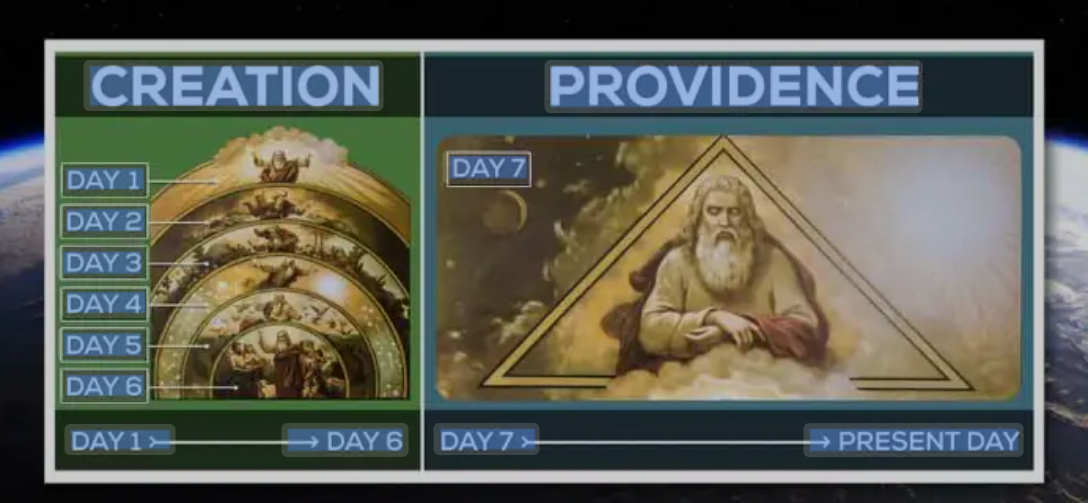
Each creative act follows a deliberate pattern: it begins with speech and concludes with naming [1], establishing God’s absolute authority over everything He creates. Consider this remarkable structure:
The first three days involve divine separation:
- Light from darkness
- Waters above from waters below
- Land from sea
The next three days involve divine population: 4. Sun, moon, and stars 5. Fish and birds 6. Land animals and humans [1]
This pattern reveals not random occurrence but deliberate design – natural laws being established with supernatural precision and purpose.
The numerology within Genesis 1 carries profound significance as well. The number seven, symbolizing divine completion, permeates the sacred text: verse 1:1 consists of seven words, verse 1:2 has fourteen (2×7), and verses 2:1-3 contain thirty-five words (5×7) [1]. The phrases “and it was so” and “God saw that it was good” each appear seven times [1], further emphasizing divine perfection within the natural order.
Divine Sovereignty Operating Through Created Order
Much is often misunderstood about how God’s sovereignty relates to the natural laws He established. The creation account demonstrates that although the Almighty established natural laws through creation, He did not make Himself subject to them. Rather, Genesis shows divine sovereignty working through established patterns.
Notice that God does not merely create trees and plants directly – He commands the earth to produce them [1], essentially programming nature with generative capability. The primeval waters, which represented chaotic forces in pagan mythologies, possess no independent power in Genesis – they remain completely subject to God’s command [1].
This establishes a principle that echoes throughout the Sacred Scriptures: the Lord often works through natural processes while remaining fully in control of them. As one theologian notes, “Creationists insist that both the physical universe and living things within the universe function according to natural law… Natural law was instituted by the Creator as the way to maintain His incredibly complex creation” [2].
The creation account serves as an explicit polemic against ancient mythologies [1]. While pagan creation stories depicted natural forces as divine beings in conflict, Genesis presents one sovereign God working purposefully through the natural order He establishes. The climax of creation – humanity – reflects God’s purpose for creating the world [1], establishing both natural and supernatural meaning from the very beginning.
Therefore, what we call “natural laws” are actually supernatural in origin – divinely established patterns through which God continues to work. This foundational truth provides the framework for understanding all subsequent divine interventions recorded in Scripture.
Recommended Reading: For a deeper understanding of the creation account and its theological implications, I highly recommend studying the Church Fathers’ commentaries on Genesis, particularly those of St. Augustine and St. John Chrysostom.
Divine Purpose Through Natural Elements: Biblical Accounts of God’s Sovereignty

Image Source: International Society for Science and Religion
Throughout the Sacred Scriptures, we encounter remarkable accounts where the Almighty employs the forces of nature as instruments of His divine will. These events demonstrate that God’s power is not limited by natural processes but operates through them with perfect timing and purpose.
The Crossing of the Red Sea: Wind as Divine Instrument
As we read in the book of Exodus, when Moses stretched forth his hand over the sea, “the Lord caused the sea to go back by a strong east wind all that night, and made the sea into dry land, and the waters were divided” [3]. This passage reveals a profound truth: the Lord did not suspend the laws of nature but commanded them for His purpose.
The supernatural element lies not in the mechanism but in the divine timing, location, and purpose that transformed a natural occurrence into the deliverance of Israel.
The Great Flood: Nature as Instrument of Divine Justice
The account of Noah represents perhaps the most extensive example of God employing natural forces for divine judgment. As the Scriptures tell us, “The Lord sat as King at the flood” [5], demonstrating His absolute authority over the waters of the earth.
The biblical text provides specific details of how this judgment unfolded through natural means: “Thou didst blow with Thy wind, the sea covered them; They sank like lead in the mighty waters” [5]. This was not merely rising water—it was divine justice executed through the forces of creation itself.
I find it remarkable that over 270 different nations, tribes, and peoples around the world preserve flood narratives in their traditions [6], providing testimony to the universal scope of this divine judgment through natural means.
Babel: Language Confusion and Divine Scattering
At the Tower of Babel, mankind sought to prevent being “scattered across the face of the entire earth” [7]. The Lord’s response accomplished precisely what they feared through the confusion of their language. As the account reveals, “God merely confuses their language, and it’s all over” [7].
This divine intervention followed natural linguistic principles while fulfilling the original command to “fill the earth” [8]. Contemporary linguistic research supports the biblical account, showing that modern languages trace back not to a single parent language but to multiple unrelated parent languages—exactly as the Babel narrative predicts [8].
The Burning Bush: Natural Elements Carrying Divine Presence
When Moses encountered the burning bush, he witnessed a natural element—fire—behaving in service to supernatural purpose. The Scripture records: “The bush was burning with fire, but the bush was not consumed” [9].
This theophany demonstrated how the Almighty could manifest His presence through natural elements without destroying them. As theological interpretation reveals, “The burning bush—the fire and wood—symbolizes both deity and humanity” [9]. This encounter established that ordinary ground becomes holy when infused with divine presence through natural elements directed by God’s will.
These accounts consistently demonstrate that the Lord works through His creation rather than against it, revealing His sovereignty over all natural processes while accomplishing His divine purposes.
Divine Encounters in the Lives of the Holy Patriarchs
The lives of our holy Patriarchs provide remarkable testimony to how the Almighty weaves His supernatural purposes through ordinary human experience. These sacred accounts reveal the most intimate encounters between God and His chosen servants, demonstrating how divine plans unfold within the natural order of human existence.
I) The Miraculous Conception of Sarah
Consider the account of our mother Sarah, whose conception at ninety years of age stands as one of the most extraordinary interventions in Sacred Scripture. When the Angel of the Lord announced that she would bear a son, Sarah’s response was entirely human—she laughed at such an impossibility. Yet the Angel’s reply cuts to the very heart of divine omnipotence: “Is anything too hard for the Lord?” (Genesis 18:14).
As we read in the Scriptures, “Sarah conceived and gave birth to a son for Abraham in his old age, at the appointed time of which God had spoken to him” (Genesis 21:2). Abraham was one hundred years old when Isaac was born, underscoring the miraculous nature of this divine intervention. Sarah herself acknowledged God’s supernatural work, declaring, “God has made me to laugh, so that all that hear will laugh with me” (Genesis 21:6).
This conception occurred through natural biological processes, yet the timing and circumstances rendered it purely supernatural—a perfect example of how the Lord operates through His creation to accomplish His divine will.
II) Jacob’s Vision of the Heavenly Ladder
Let us examine the profound encounter of the Patriarch Jacob, who received one of the most vivid revelations in the Old Testament. While fleeing his brother Esau’s wrath, Jacob slept with a stone for his pillow—a most ordinary circumstance that became the setting for extraordinary divine revelation.
“And he dreamed, and behold a ladder set up on the earth, and the top of it reached to heaven: and behold the angels of God ascending and descending on it” (Genesis 28:12). This vision revealed the connection between heaven and earth, showing Jacob that the Lord’s presence was not confined to holy places but could manifest anywhere according to His divine will.
Upon awakening, Jacob declared with holy awe: “Surely the Lord is in this place; and I knew it not… This is none other but the house of God, and this is the gate of heaven” (Genesis 28:16-17). Through natural sleep and dreams, the Most High revealed His supernatural purposes to His chosen servant.
III) Joseph’s Prophetic Dreams and Divine Providence
The account of Joseph demonstrates how the Almighty employs even the natural process of sleep to reveal His divine plans. Joseph’s dreams of sheaves bowing and celestial bodies paying him homage appeared to be the fantasies of youth, yet they carried profound prophetic significance.
As Scripture records, Joseph dreamed that “the sun and the moon and the eleven stars made obeisance to me” (Genesis 37:9). These visions, though they earned him the hatred of his brothers, proved to be divine revelations of God’s providential plan. Years later, when his brothers bowed before him in Egypt, these dreams were fulfilled precisely as God had revealed.
This demonstrates a crucial truth: the Lord often reveals His divine purposes through the most natural human experiences—in this case, ordinary sleep and dreams that carried extraordinary meaning.
Each of these encounters shows how our Heavenly Father works through natural human experience to accomplish His supernatural purposes, confirming the pattern established from the very beginning of creation.
How to Discern God’s Hand in Our Daily Lives?
The Sacred Scriptures reveal that the Almighty’s work through natural events did not cease with the close of the biblical era. The same divine patterns we observe in the lives of Moses, Noah, and the Patriarchs continue to unfold in our modern world, though they often remain unrecognized by those who lack spiritual discernment.
Developing Spiritual Sensitivity to Divine Providence
Recognizing God’s hand in natural occurrences requires the cultivation of spiritual sensitivity—a gift that grows through prayer, meditation, and careful attention to the movements of Divine Providence. Just as Moses perceived the burning bush as more than a curious phenomenon, we too must learn to see beyond mere coincidence.
I recommend focusing on these essential principles:
1. Timing and Context Over Spectacle Divine purpose often reveals itself not through dramatic displays but through the precise timing of ordinary events. The arrival of rain during a drought, following persistent prayer, carries profound meaning that transcends meteorological explanation.
2. Recognition of Patterns The blessed Joseph understood his dreams by recognizing recurring themes and symbols. Similarly, our lives contain patterns—repeated circumstances, consistent themes in our prayers, or persistent spiritual impressions—that may indicate divine guidance.
3. Attention to Answered Prayers Natural events that directly correspond to specific petitions often reveal God’s providential care. These “coincidences” frequently demonstrate the Almighty working through ordinary circumstances to answer the prayers of His faithful.
Much is unknown about the precise mechanisms through which God orchestrates natural events for our benefit. Yet the examples throughout Scripture provide a reliable template for recognizing similar patterns in our contemporary experience.
Faith and the Interpretation of Divine Signs
Faith does not require blind acceptance but rather spiritual perception that penetrates beyond physical appearances. As Catholics, we believe that God’s general revelation continues through creation itself, though we must exercise proper discernment in interpreting these signs.
The experiences of our fathers in faith teach us that divine intervention does not eliminate natural processes but rather directs them according to God’s eternal purposes. Sarah’s pregnancy occurred through biological means, yet its timing and circumstances revealed supernatural significance because of the divine promise attached to it.
Humility remains essential in this endeavor. Not every natural occurrence carries a specific divine message, yet the Lord’s providence governs all creation. As we read in the Psalms, “The earth is the Lord’s and all that is in it, the world, and those who live in it” (Psalm 24:1).
I would recommend regular examination of conscience regarding our attentiveness to God’s voice in creation. Do we see His hand in the changing seasons? Do we recognize His provision in the daily necessities of life? Do we acknowledge His mercy in the restoration that follows natural disasters?
The supernatural examples throughout Scripture illuminate the path for recognizing God’s continued work in our world today—not through the suspension of natural law, but through its purposeful direction according to His divine will.
Conclusion
The Sacred Scriptures reveal to us a profound and consistent truth: the Almighty God works not in opposition to His created order, but through it with perfect wisdom and timing. From the very act of creation itself to the miraculous accounts of the Patriarchs, we witness the Lord employing natural processes as instruments of His divine will.
This understanding should not diminish our sense of wonder at God’s mighty works, but rather enhance it. The strong east wind that parted the Red Sea, the natural processes that enabled Sarah’s conception at ninety years of age, and the confusion of languages at Babel—all these demonstrate that the Lord’s sovereignty extends over every aspect of creation. As the Psalmist declares, “Fire and hail, snow and mist, stormy wind fulfilling His word” (Psalm 148:8).
Much remains mysterious about how the Almighty orchestrates His purposes through the natural world. The precise mechanisms by which God directs natural events for supernatural purposes exceed our full comprehension, yet the pattern throughout Scripture remains unmistakable. The Catholic Church has long recognized this truth—that God’s providence works through both ordinary and extraordinary means to accomplish His divine plan.
I highly recommend continuing to study these patterns in Scripture, as they illuminate our understanding of how God continues to work in our world today. The burning bush that Moses encountered still burns before those with eyes to see, though it may appear in the form of answered prayers perfectly timed, of circumstances aligning according to divine providence, or of natural events carrying supernatural significance.
This recognition requires spiritual discernment—the ability to perceive God’s hand in events that others might dismiss as mere coincidence. The same Lord who spoke creation into existence continues to speak through His creation today, revealing His presence to those who seek Him with humble hearts.
As we walk through this world, let us remember that every sunset, every birth, every providential circumstance bears the potential for divine encounter. The natural world around us serves not merely as a stage for God’s action, but as His very instrument. What appears ordinary to the world may be extraordinary to the eye of faith.
Praise be to God for His wisdom in creation, His sovereignty over all natural processes, and His continuing presence among us through the very world He has made.
FAQs
Q1. How does God use natural events for supernatural purposes in the Bible? God often works through natural processes to accomplish supernatural goals. For example, He used a strong east wind to part the Red Sea, and natural rainfall combined with underground water sources for Noah’s flood. These events demonstrate God’s control over nature to fulfill His divine plan.
Q2. Can scientific explanations coexist with supernatural events in the Bible? Yes, scientific explanations and supernatural events in the Bible can coexist. The Bible presents God as the author of natural laws, not their opponent. Many biblical miracles, like the parting of the Red Sea, operated within natural frameworks while accomplishing extraordinary divine purposes.
Q3. How can we recognize God’s hand in everyday natural occurrences? Recognizing God’s hand in natural events requires developing spiritual sensitivity. Pay attention to timing, context, and patterns in your life. Events that directly answer specific prayers or align with recurring themes in your spiritual journey may indicate divine guidance working through ordinary circumstances.
Q4. What is the significance of the creation story in understanding God’s supernatural acts? The creation story establishes God’s authority over natural laws and demonstrates how He uses natural processes for supernatural purposes. It shows that what we call “natural laws” are actually supernatural in origin—divinely established patterns through which God continues to work.
Q5. How does faith play a role in interpreting natural occurrences as supernatural? Faith allows us to perceive divine purpose within natural events. It doesn’t ask us to reject natural explanations but to see beyond physical reality and recognize God’s larger narrative. This perspective helps us interpret ordinary moments as potential supernatural encounters, much like the biblical patriarchs did.
References
[1] – https://en.wikipedia.org/wiki/Genesis_creation_narrative
[2] – https://www.icr.org/article/do-creationists-believe-natural-law
[3] – https://www.biblegateway.com/passage/?search=Exodus 14&version=NKJV
[4] – https://www.npr.org/2010/09/26/130112925/study-wind-may-have-helped-moses-part-red-sea
[5] – https://bible.org/seriespage/4-natures-part-gods-perfect-plan-psalm-19-romans-818-25-isaiah-6517-25
[6] – https://www.gty.org/library/sermons-library/90-260/the-power-of-divine-judgment-in-the-global-flood
[7] – https://bible.org/seriespage/4-confusion-languages-babel-genesis-101-1125
[8] – https://answersingenesis.org/tower-of-babel/?srsltid=AfmBOoqVBe5nnUZtImU7tqTYyM_KpLllxi6GffDVz2GuV4lB51y1r2nq
[9] – https://www.oneforisrael.org/bible-based-teaching-from-israel/why-a-burning-bush/