How Does Christ’s Final Word Provide the Model for Christian Death and the Complete Surrender of Self to the Father?
“Father, into your hands I commend my spirit.” — Luke 23:46
Why Is the Seventh Word the Consummation of All That Preceded It?
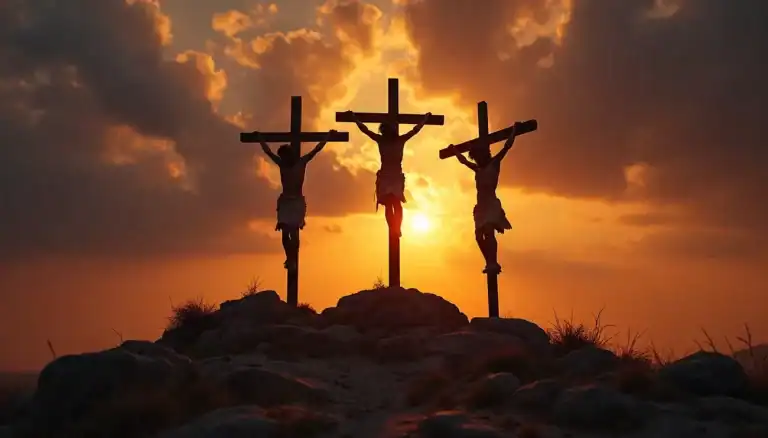
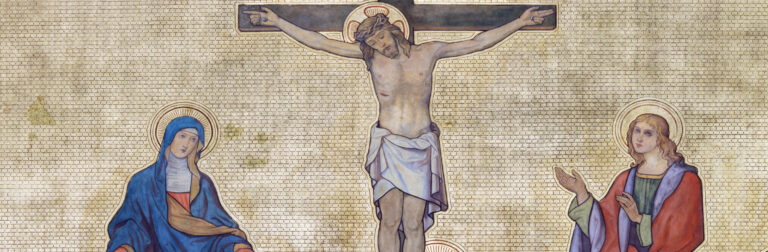
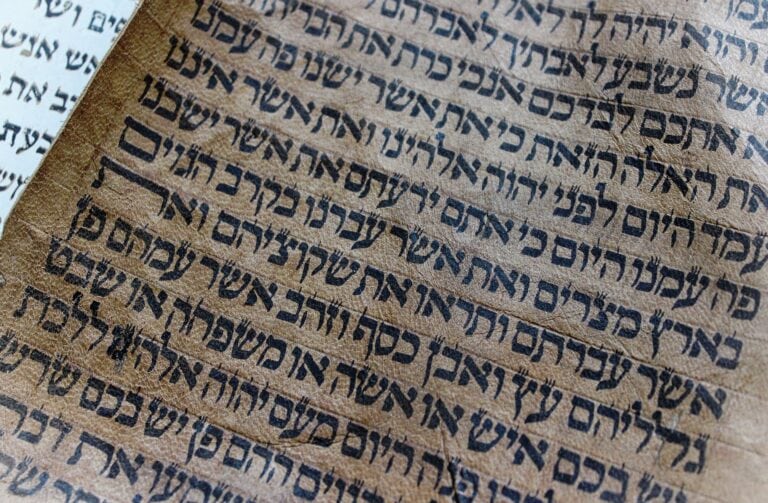
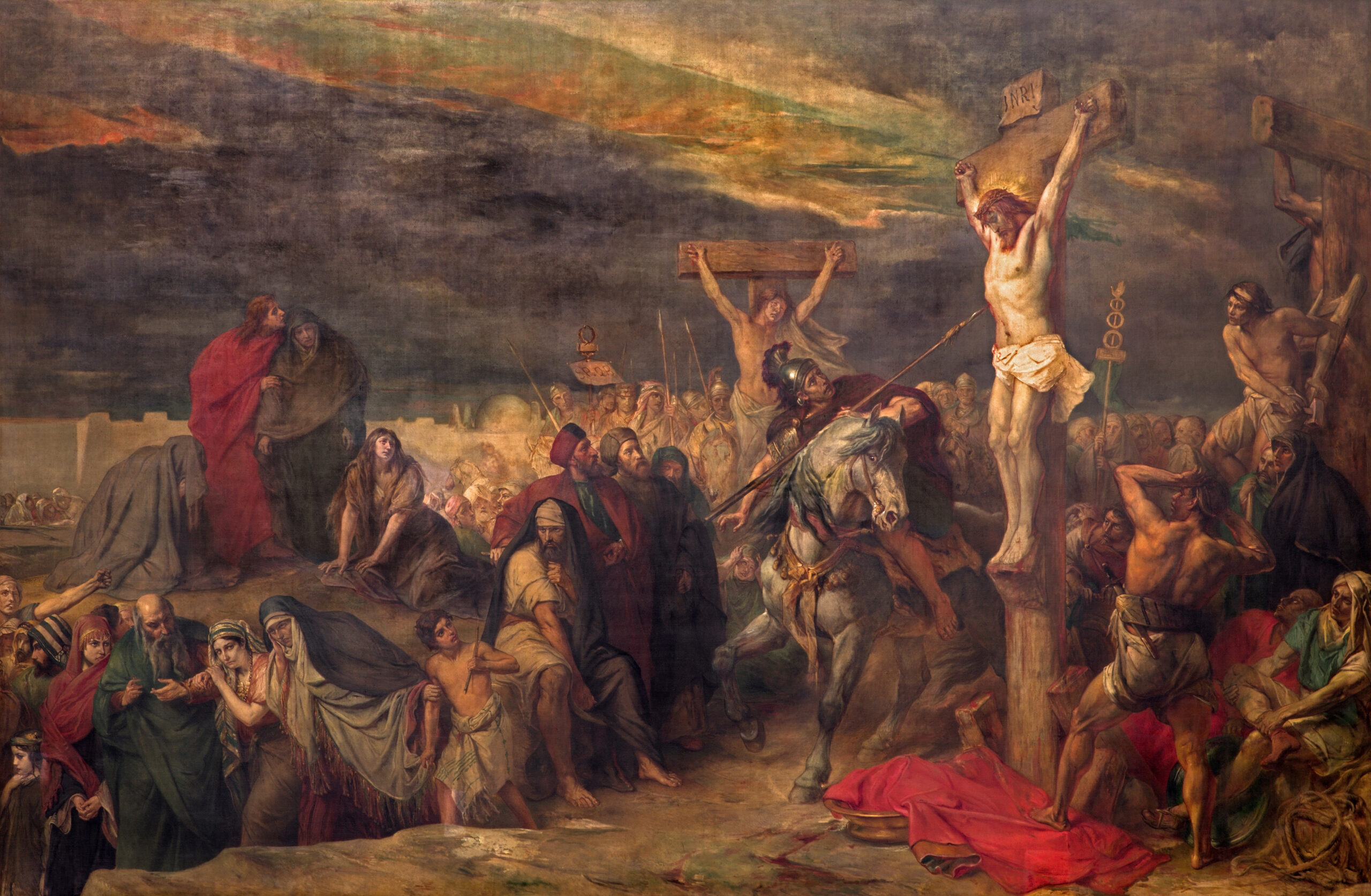
The seventh and final word from the Cross is the word with which Jesus dies. ‘And Jesus, crying out with a loud voice, said: Father, into your hands I commend my spirit. And saying this, he gave up the ghost’ (Luke 23:46). Once more, Christ quotes the Psalms — this time Psalm 31:5 (30:6 in the Septuagint): ‘Into your hands I commend my spirit.’ But the citation is incomplete: the Psalmist continues, ‘you have redeemed me, O Lord, faithful God.’ Christ does not need to quote the continuation; His entire Passion is its fulfilment. And crucially, Christ adds to the Psalmist’s words the one word that changes everything: ‘Father.’ The Psalmist addresses ‘the Lord’; the dying Son addresses ‘Father.’ This single word of intimate address encapsulates the entire mystery of the Incarnation — that the Son of God has become a Son of Man so that the children of man might become children of God.
If the sixth word (tetelestai) announced the objective, cosmic, and salvific completion of the work of Redemption, the seventh word is its subjective and personal expression: the movement of the Son’s will and love back toward the Father in the ultimate act of surrender. The sixth word is the completion of a transaction; the seventh word is the completion of a relationship. Together, they form an inseparable pair: the Redemption is at once a work accomplished and a love expressed.
The seventh word also brings the entire arc of the seven words to its resolution. Beginning with an intercession for others (the first word), passing through a gift of mercy (the second), a gift of maternal love (the third), a cry of desolation (the fourth), a cry of physical need (the fifth), and a proclamation of completion (the sixth), the seven words end with the most intimate act of all: the personal surrender of the Self to the Father. The Cross is ultimately not a spectacle but a prayer — and this seventh word is its final and definitive ‘Amen.’
How Does Cornelius a Lapide Reflect on the Voluntary Character of Christ’s Death?
Cornelius a Lapide devotes special attention to this final word in his Commentary on Luke 23:46. He begins by noting the striking details emphasised by Luke: Christ cried out with a ‘loud voice’ before dying — an unusual detail, since those dying of crucifixion typically had no strength left for loud speech. A Lapide follows the tradition of seeing in this detail a sign of the voluntary character of Christ’s death: He did not die from the progressive exhaustion of crucifixion but surrendered His spirit at the moment of His own choosing. The loud cry itself is the exercise of sovereignty over His own death.
Behold the death of deaths: not snatched away but freely given. He who holds all things in being surrenders His spirit into the hands that are His own — for the Father’s hands are also the hands of Him who said, ‘I and the Father are one.’ In dying, He demonstrates the supreme freedom of divine love, which is love that sacrifices itself not because it must but because it will. (a Lapide, 1876, Vol. IV, p. 362, Commentary on Luke 23:46)
A Lapide reflects extensively on the word ‘Father’ (Pater) as the defining addition to the Psalmist’s prayer. The Psalm was a prayer of an Israelite in distress, trusting in Yahweh. Christ transforms it into a prayer of the Son to the Father — revealing the Trinitarian depth that the Old Testament prayer had always implicitly contained. This transformation of the Psalmist’s address from ‘Lord’ to ‘Father’ is not a small liturgical variation; it is a revelation of the innermost nature of God. The dying prayer of every Christian baptised into Christ’s death and resurrection can now echo this address: we may cry ‘Father’ because Christ has made us, by adoption and grace, what He is by nature — children of the Father.
A Lapide also notes that this word is a model for the prayer of every dying Christian: as Christ commended His spirit into the Father’s hands, so every soul should aspire to die with this same act of total self-surrender, trusting absolutely in the mercy of the Father. This pastoral application connects the theology of the seventh word directly to the Church’s tradition of prayers for the dying, including the commendation of the soul at the moment of death, which has always drawn upon the language of Psalm 31 and of Luke 23:46.
What Do the Church Fathers Teach About the Final Act of Self-Surrender?
How Does Luke’s Gospel Shape Our Understanding of the Seventh Word as the Ultimate Prayer?
It is no accident that the seventh word is preserved only in St. Luke’s Gospel. St. Luke is the evangelist of prayer par excellence — no other Gospel contains so many accounts of Jesus at prayer. The framing of Christ’s death as an act of prayer, an act of filial self-surrender to the Father, is entirely characteristic of St. Luke’s theological vision. The Passion is not a tragedy that happens to Jesus; it is a prayer that Jesus performs — the final and definitive prayer of the Son to the Father. St. Luke’s entire Gospel has been building toward this moment: from the prayer at the Annunciation, through the prayer at the Baptism, through the night of prayer before choosing the Twelve, through the agony in the garden, the Passion reaches its climax not in a shout of defeat but in an act of total filial surrender.
How Does St. Augustine Understand the Seventh Word as the Supreme Act of Obedience?
St. Augustine, in his Tractates and in The City of God, reflects on this seventh word as the ultimate act of obedience — the fulfilment of Philippians 2:8, ‘obedient unto death.’ He contrasts this with the death of ordinary human beings, over whose dying moment they typically have no control. Christ’s death is an act of the will; His spirit is ‘given up’ (traditit spiritum — John 19:30), not ‘taken.’ Augustine draws the pastoral conclusion that the Christian ought to practise this spiritual self-surrender throughout life, so that the moment of death is not a catastrophe but the culmination of a lifelong habit of entrusting oneself to the Father (Augustine, c. 426/2003, The City of God, Book XIV, Ch. 9). This habitual surrender — learning to say ‘Father, into your hands’ in every circumstance of life, not only at death — is the practical programme of Christian discipleship distilled from the seventh word.
How Does St. Ambrose Present the Seventh Word as the Archetype of a Holy Death?
St. Ambrose, in his On the Goodness of Death and in his Exposition of Luke, meditates on the seventh word as the archetype of a holy death. He argues that Christ’s dying prayer teaches the Church how to approach death: not with terror, despair, or clinging to life, but with the serene confidence of one who surrenders to a loving Father. St. Ambrose notes that this word directly influenced the tradition of deathbed prayers in the early Church — many of the first martyrs explicitly echoed Psalm 31:5 as they died, having learned it from the death of the Lord (Ambrose, c. 390/1954, Exposition of Luke, Book X, §§ 127–132). The martyrological tradition of the early Church is thus directly formed by the seventh word: to die like Christ was to die with this prayer on one’s lips.
How Does the Parallel of St. Stephen Illuminate the Seventh Word as the Pattern of Christian Death?
Just as the first word of Christ on the Cross (the prayer of forgiveness) was echoed by St. Stephen in his dying prayer for his persecutors, so the seventh word is echoed by Stephen’s other dying prayer: ‘Lord Jesus, receive my spirit’ (Acts 7:59). Stephen commends his spirit not to the Father but to Jesus — implicitly confessing the divinity of Christ, since only God can receive the human spirit in death. This parallel, noted by Chrysostom and Augustine, establishes the pattern for Christian martyrdom: to die as Christ died, commending one’s spirit to God (Chrysostom, c. 400/1858, Homilies on the Acts of the Apostles, Homily 17). Stephen’s prayer is simultaneously an act of worship (directed to the divine Christ), an act of faith (confessing His divinity), and an act of surrender (entrusting the spirit to its divine Recipient) — all three dimensions being present in Christ’s own seventh word.
How Does St. Bonaventure Meditate on the Seventh Word as the Final Fruit of the Tree of the Cross?
In his Lignum Vitae (Tree of Life), St. Bonaventure meditates on the seventh word as the final fruit of the Tree of the Cross. The whole Passion has been, for St. Bonaventure, a tree on which the fruits of the Redemption grow and ripen; the seventh word is the last and greatest fruit — the voluntary self-offering of the Son to the Father in death, which is the ultimate act of the High Priest laying down His life as the victim of the perfect sacrifice (Bonaventure, 1259/1978, Lignum Vitae, §§ 33–36). St. Bonaventure uses this meditation as a model for contemplative prayer: as Christ surrendered everything into the Father’s hands, so the soul in contemplation is called to total self-emptying before God. The mystical tradition of apophatic prayer — the prayer of pure surrender, beyond words and concepts — finds its ultimate ground and model in this seventh word.
How Does St. Francis de Sales Extend the Seventh Word Into a Programme of Devout Life?
St. Francis de Sales, Doctor of the Church and master of lay spirituality, in his Introduction to the Devout Life and Treatise on the Love of God, returns repeatedly to the seventh word as the summit of devout life. He argues that all authentic Christian devotion aims at this same act of total self-surrender to God — not only at the moment of death but in every moment of life (Francis de Sales, 1609/1953, Introduction to the Devout Life, Part I, Ch. 14). The ‘practice of the presence of God’ that St. Francis de Sales teaches is essentially a continuous living-out of ‘Father, into your hands I commend my spirit’: a constant entrusting of one’s entire self to the loving providence of the Father. For St. Francis, the spirituality of everyday life — lived amid the ordinary duties of family, work, and society — is not a lesser form of devotion than the monastic life, but an equally radical and total surrender of self to God, made in every moment by the soul that has learned to commend its spirit into the Father’s hands.
How Does St. Alphonsus Liguori Use the Seventh Word as Preparation for Death?
St. Alphonsus Liguori, in his Preparation for Death, dedicates extensive reflection to the seventh word as the model for the deathbed prayer of every Christian. He provides practical spiritual guidance on how to dispose oneself throughout life so that the final moment may be, like Christ’s, an act of free and loving surrender rather than a desperate clutching at life or a terrified confrontation with God’s judgment. St. Alphonsus advises frequent meditation on the seventh word as part of a preparation for death that is also, simultaneously, a deepening of life (Liguori, c. 1758/1887, Preparation for Death, Consideration 26). For St. Alphonsus, the art of dying well and the art of living well are ultimately the same art: to learn, day by day, to commend one’s spirit into the Father’s hands.
What Is the Final Theological Synthesis of All Seven Words?
The seventh word is the consummation of the seven. If the sixth word (consummatum est) announces the objective completion of Redemption, the seventh word is its subjective expression — the movement of the Son’s will and love back toward the Father in the ultimate act of surrender. The Cross is not merely a transaction of justice but a drama of love: Love ascending from the world of sin and death, returning in freedom to the Source of all being. Christ commends His spirit into the Father’s hands; the Father will not leave His Holy One in the power of death (Ps. 16:10) but will raise Him on the third day, vindicating the seventh word as the foundation of Christian hope.
For the believer, these seven words taken together constitute a complete school of Christian living:
- forgiveness of enemies (the first word),
- trust in mercy (the second),
- filial love toward Mary (the third),
- perseverance in desolation (the fourth),
- spiritual thirst for God (the fifth),
- the completion of one’s vocation (the sixth), and
- the final surrender of self to the Father (the seventh). Cornelius a Lapide, whose Great Commentary draws together the riches of the entire tradition, saw in the Seven Last Words nothing less than a summary of the entire Gospel — the last testament of God incarnate, written not in ink but in Blood.
The seven words also form a coherent narrative arc that encompasses the full range of human experience in its encounter with God: from the most outward and social dimension (forgiveness of enemies), through the interpersonal (mercy and motherhood), through the darkest depth of inner experience (desolation and thirst), to the most intimate and final movement of the soul toward its Source (surrender to the Father). In these seven words, the dying Christ speaks to every dimension of human need, every stage of the spiritual life, and every soul — however broken, however simple, however advanced — that turns to look upon the Cross and hears, addressed personally and with inexhaustible love, the seven words of the dying God.
References
a Lapide, C. (1876). The great commentary of Cornelius a Lapide: The holy Gospel according to Saint Luke (T. W. Mossman, Trans., Vol. IV). John Hodges. (Original work 1616)
Ambrose of Milan. (c. 390/1954). Exposition of the Holy Gospel According to Saint Luke (T. Tomkinson, Trans.). Center for Traditionalist Orthodox Studies. (Original work c. 390)
Aquinas, T. (1274/1948). Summa theologiae (Fathers of the English Dominican Province, Trans., 5 vols.). Benziger Bros. (Original work c. 1265–1274)
Augustine of Hippo. (c. 426/2003). The city of God (H. Bettenson, Trans.). Penguin Classics. (Original work c. 413–426)
Bonaventure. (1259/1978). The tree of life (E. Cousins, Trans.). In Bonaventure: The Soul’s Journey into God, The Tree of Life, The Life of St. Francis. Classics of Western Spirituality. Paulist Press. (Original work 1259)
Chrysostom, J. (c. 400/1858). Homilies on the Acts of the Apostles (J. Walker & J. Sheppard, Trans.). In P. Schaff (Ed.), Nicene and Post-Nicene Fathers, First Series (Vol. 11). Christian Literature Publishing. (Original work c. 400)
Francis de Sales. (1609/1953). Introduction to the devout life (J. K. Ryan, Trans.). Doubleday Image Books. (Original work 1609)
Liguori, A. (c. 1758/1887). Preparation for death (R. A. Coffin, Trans.). Burns and Oates. (Original work c. 1758)