“Call No Man Father”: The Catholic Understanding of Matthew 23:1-12
Jesus’s prohibition against calling anyone “father,” “rabbi,” or “master” in Matthew 23 has never been understood by the Catholic Church as an absolute ban on honorific titles. The unanimous witness of the Church Fathers, medieval scholastics, and centuries of Catholic exegesis interprets this passage as a condemnation of prideful self-exaltation and vainglory, not a literal prohibition against acknowledging spiritual fatherhood (St Thomas Aquinas, 1274/2006; St Jerome, 398/1999). St. Jerome articulated the decisive distinction:
“It is one thing to be father or master by nature, another by sufferance” — God alone possesses fatherhood essentially, while human ministers participate derivatively in His creative and nurturing work (St Jerome, 398/1999). This interpretation harmonizes Christ’s emphatic warning with St. Paul’s explicit claim to spiritual fatherhood (“I became your father in Christ Jesus through the gospel,” (First Corinthians 4:15) and the continuous practice of the Church from apostolic times.
What Does the Sacred Text Say and What Is Its Immediate Context?
The Douay-Rheims translation, the traditional Catholic English rendering, presents the passage as:
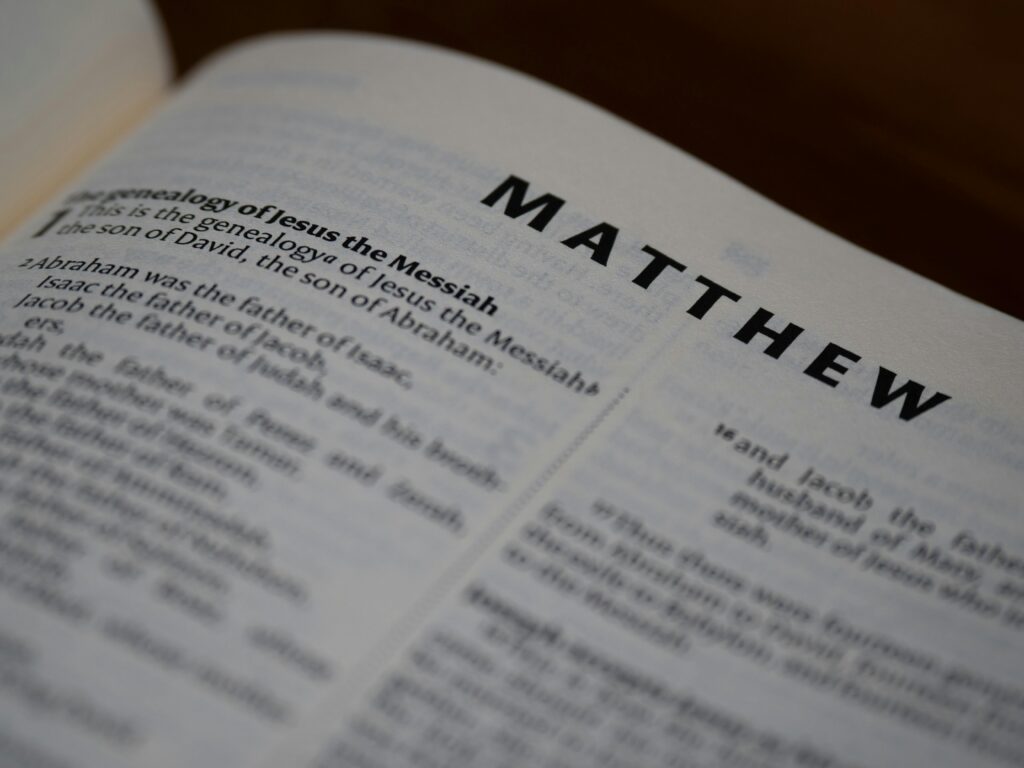
“Then Jesus spoke to the multitudes and to his disciples, saying: The scribes and the Pharisees have sitten on the chair of Moses. All things therefore whatsoever they shall say to you, observe and do: but according to their works do ye not; for they say, and do not. For they bind heavy and insupportable burdens, and lay them on men’s shoulders; but with a finger of their own they will not move them. And all their works they do for to be seen of men. For they make their phylacteries broad, and enlarge their fringes. And they love the first places at feasts, and the first chairs in the synagogues, And salutations in the market place, and to be called by men, Rabbi. But be not you called Rabbi. For one is your master; and all you are brethren.
And call none your father upon earth; for one is your father, who is in heaven. Neither be ye called masters; for one is your master, Christ. He that is the greatest among you shall be your servant. And whosoever shall exalt himself shall be humbled: and he that shall humble himself shall be exalted.” (Matthew 23:1-12, Douay-Rheims Bible, 1899).
Bishop Challoner’s authoritative footnote on verse 9 establishes the traditional interpretive framework:
“The meaning is that our Father in heaven is incomparably more to be regarded, than any father upon earth: and no master to be followed, who would lead us away from Christ. But this does not hinder but that we are by the law of God to have a due respect both for our parents and spiritual fathers (1 Cor. 4:15) and for our masters and teachers” (Challoner, 1750/2009).
The immediate literary context reveals Jesus addressing a specific disease afflicting the religious leaders of Israel – vainglory, hypocrisy, and the desire for public honor. The Pharisees loved “the first places at feasts,” “the first chairs in the synagogues,” “salutations in the market place,” and being “called by men, Rabbi.” Christ’s prohibition targets this spiritual pathology, not the mere use of honorific titles (St John Chrysostom, 390/1888).
What Is St. Jerome’s Foundational Distinction Between Nature and Participation?
St. Jerome’s Commentary on Matthew (c. 398 AD) provides the most influential patristic treatment of this passage and directly addresses the apparent tension with Church practice. His exegesis establishes the theological categories that would govern subsequent interpretation:
“No one should be called teacher or father except God the Father and our Lord Jesus Christ. He alone is the Father, because all things are from him. He alone is the teacher, because through him are made all things and through him all things are reconciled to God.
But one might ask, ‘Is it against this precept when the apostle calls himself the teacher of the Gentiles? Or when, as in colloquial speech widely found in the monasteries of Egypt and Palestine, they call each other Father?’ Remember this distinction. It is one thing to be a father or a teacher by nature, another to be so by generosity.” (St Jerome, 398/1999, Commentary on Matthew 23:9)
St Jerome’s answer pivots on a crucial philosophical distinction: God is Father “by nature” – essentially, primordially, and absolutely -while humans are fathers “by generosity” or “sufferance,” participating derivatively in God’s creative fatherhood. This parallels the distinction between the one natural Son of God and adopted sons:
“The fact that we have one God and one Son of God through nature does not prevent others from being understood as sons of God by adoption. Similarly this does not make the terms father and teacher useless or prevent others from being called father” (St Jerome, 398/1999). St Jerome’s reference to contemporary monastic practice is historically significant. By the late fourth century, monks throughout Egypt and Palestine routinely addressed their spiritual guides as “Father” (Abba) – a practice documented in the
Apophthegmata Patrum (Sayings of the Desert Fathers) (Ward, 1975). No one in St Jerome’s time considered this a violation of Christ’s command, demonstrating the continuous tradition from apostolic times.
How Does St. John Chrysostom Identify Vainglory as the Root Sin?
St. John Chrysostom’s Homily 72 on Matthew provides extensive commentary that identifies ambition for the master’s seat
as “the cause of all evils” that Jesus addresses (St John Chrysostom, 390/1888). St John Chrysostom emphasizes that Christ “insists upon this to instruct His disciples”:
“For what says He? ‘But be not ye called Rabbi.’ Then follows the cause also; ‘For one is your master, and all you are brethren;’ and one has nothing more than another, in respect of his knowing nothing from himself… And again, ‘Call not, father,’ not that they should not call, but they may know whom they ought to call Father, in the highest sense. For like as the master is not a master principally; so neither is the father. For He is cause of all, both of the masters, and of the fathers.” (St John Chrysostom, 390/1888, Homily 72 on Matthew)
St John Chrysostom’s interpretation centers on the word “principally” (κυρίως). Human masters and fathers are not masters and fathers in the principal, primary, or ultimate sense – only God holds that position (St John Chrysostom,390/1888). The prohibition reminds disciples to whom ultimate honor belongs, not to avoid all use of such language. As St John Chrysostom summarizes: “Nothing is equal to the practice of modesty, wherefore He is continually reminding them of this virtue.”
The Golden-Mouthed Doctor connects this teaching to St Paul’s self-description as “minister” rather than “master” (1 Corinthians 3:5), showing the proper disposition: even while exercising genuine spiritual fatherhood and teaching authority, the apostle presented himself humbly as a servant. (St John Chrysostom, 390/1888).
How Does the Catena Aurea Gather the Patristic Consensus?
St. Thomas Aquinas’s Catena Aurea (“Golden Chain”) compiles patristic commentary verse-by-verse, revealing the consensus interpretation of this passage (St Thomas Aquinas, 1274/2006). The Pseudo-Chrysostom (Opus Imperfectum in Matthaeum) provides the key theological explanation:
“‘Be not ye called Rabbi,’ that ye take not to yourselves what belongs to God. And call not others Rabbi, that ye pay not to men a divine honour. For One is the Master of all, who instructs all men by nature. For if man were taught by man, all men would learn that have teachers; but seeing it is not man that teaches, but God, many are taught, but few learn. Man cannot by teaching impart an understanding to man, but that understanding which is given by God man calls forth by schooling.” (as cited in St Thomas Aquinas, 1274/2006).
This text illuminates the theological reality underlying the prohibition: God alone teaches “by nature” – human teachers merely “call forth by schooling” what God gives interiorly. Similarly with fatherhood: “Though man begets man, yet there is one Father who created all men. For we have not beginning of life from our parents, but we have our life transmitted through them.” (as cited in St Thomas Aquinas, 1274/2006).
Rabanus Maurus (c. 780-856) clarifies an important pastoral point: Christ “does not forbid those to whom this belongs by right of rank
to be saluted in the forum, or to sit or recline in the highest room; but those who unduly desire these things, whether they obtain them or not, these He enjoins the believers to shun as wicked”(as cited in St Thomas Aquinas, 1274/2006). The sin lies not in receiving honor appropriate to one’s office but in inordinately desiring such honor.
What Is Aquinas’s Systematic Analysis of Pride, Humility, and Proper Honor?
Beyond the Catena Aurea, St Thomas Aquinas’s Summa Theologica provides systematic theological categories for understanding the proper use of titles. His treatment of humility (II-II, Q. 161) establishes that this virtue “restrains the impetuosity of the soul from tending inordinately to great things” and “regards chiefly the subjection of man to God, for Whose sake he humbles himself by subjecting himself to others.” (St Thomas Aquinas,1274/1920, II-II, Q. 161, Art. 1).
Crucially, St Thomas Aquinas distinguishes between latria (worship due to God alone) and dulia (honor legitimately given to those in higher positions). This distinction, developed in II-II, Q. 103, explains how honor can be rendered to human authorities without usurping what belongs to God:
“God has absolute and paramount lordship over the creature wholly and singly, which is entirely subject to His power: whereas man partakes of a certain likeness to the divine lordship, for as much as he exercises a particular power over some man or creature. Wherefore dulia, which pays due service to a human lord, is a distinct virtue from latria, which pays due service to the lordship of God.” (St Thomas Aquinas, 1274/1920, II-II, Q.103, Art. 3). Human fathers and teachers exercise a participated authority that derives from and reflects God’s absolute authority. Honoring them appropriately does not compete with honoring God but rather acknowledges God’s ordering of human society (St Thomas Aquinas, 1274/1920). The Summa’s treatment of pride (II-II, Q. 162) identifies the specific sin Jesus condemns. Gregory the Great’s four species of pride, cited by St Thomas Aquinas, illuminate the Pharisees’ error:
(1) thinking one’s good is from oneself;
(2) believing divine gifts are owed to one’s merits;
(3) claiming excellence not possessed;
(4) despising othersand wishing to seem the exclusive possessor of what one has (St Thomas Aquinas, 1274/1920, II-II, Q. 162, Art. 4).
The Pharisees exhibited all four pathologies.
How Does Scripture Interpret Scripture? What Is the Apostolic Witness?
The Catechism of the Catholic Church reminds all readers of Scripture that “The Catholic hermeneutical principle of the analogy of faith requires reading any passage in light of the whole of Scripture” (Catechism of the Catholic Church, 1997, §114). Numerous New Testament texts demonstrate that the apostles understood Jesus’s words as the Church has always understood them. St. Paul’s assertion in 1 Corinthians 4:14-15 is explicit: “For though you have countless guides in Christ, you do not have many fathers. For I became your father in Christ Jesus through the gospel” (RSV). St Paul claims spiritual fatherhood without qualification, using the imagery of “begetting” spiritual children through his preaching. If Jesus had intended an absolute prohibition, St Paul’s statement would be inexplicable (Hahn, 2009).
St Paul consistently employs father-son language for his relationships with spiritual disciples: Timothy: “my true child in the faith” (1 Timothy 1:2), “my beloved child” (2 Timothy 1:2), “as a son with a father he has served with me” (Phil. 2:22) Titus: “my true child in a common faith” (Titus 1:4) Onesimus: “my child, Onesimus, whose father I have become in my imprisonment” (Philemon 10).
St. Stephen, filled with the Holy Spirit before his martyrdom, addressed the Jewish council: “Brethren and fathers, hear me” (Acts 7:2, Douay-Rheims) – using “father” as a respectful title for religious elders. St. John writes to a distinct group in his community: “I am writing to you, fathers, because you know him who is from the beginning” (1 John 2:13-14). Peter calls Mark his “son” (1 Peter 5:13), implying his own spiritual fatherhood. Even Abraham is called “father” repeatedly throughout the New Testament – seven times in Romans 4 alone. .Jesus Himself refers to “father Abraham” (Luke 16:24). If the prohibition were absolute, this language would violate Christ’s own command (Akin, 2003).
What Is the Theological Foundation? How Does All Fatherhood Derive from God?
Ephesians 3:14-15 provides the deepest theological grounding for understanding spiritual fatherhood: “For this reason I bow my knees before the Father (pater), from whom every family (patria) in heaven and on earth is named” (RSV). The Greek contains a deliberate wordplay: patria (“family” or “fatherhood”) derives directly from pater (“father”). Many translations render this “every fatherhood
takes its name from God” (Hahn, 2009). The theological implication is profound: all fatherhood – biological and spiritual – is a
participation in God’s unique Fatherhood. Earthly fathers do not diminish or compete with divine Fatherhood; they represent and reflect it. As Catholic theologians have articulated: “God, the Father, is our one true Father. All other fatherhood participates in the Father’s unique Fatherhood and represents it to us. They neither take away nor add to this one unique Fatherhood; they
establish it on the earth” (Staples, 2013, para. 12). A priest called “Father” points beyond himself to the One from whom all fatherhood derives.
What Is the Historical Practice of the Church?
The title “Father” for religious leaders appears in the earliest centuries of Church history. Clement of Alexandria(c. 150-215) wrote: “Those that instructed us are called fathers” (Clement, c. 195/1885, Stromata 1.1). By St Jerome’s time (late fourth century), monks throughout Egypt and Palestine routinely used this address (St Jerome,398/1999). St. Ignatius of Antioch (early second century) compared the bishop to “the image of the Father”(St Ignatius, c. 110/1885, Letter to the Magnesians 6:1).
The word “Pope” itself derives from the Latin papa (father/daddy), originally applied broadly to bishops and later restricted to the Bishop of Rome (Cross & Livingstone, 2005). “Abbot” comes from the Aramaic abba (father) – the very word Jesus used in addressing God (Mark 14:36). St. Benedict (d. 547) designated the title for monastic superiors in his Rule (St Benedict, c. 530/1949).
This continuous practice from apostolic times represents the sensus fidelium – the lived understanding of the faith by the whole Church (Catechism of the Catholic Church, 1997, §92). If Jesus had intended an absolute prohibition, the entire Church would have been in error from the beginning, a conclusion incompatible with Christ’s promise to guide His Church into all truth (John 16:13).
What Does Jesus Actually Condemn and What Does He Permit?
The patristic and scholastic tradition identifies precisely what Jesus forbids and what He permits (Akin, 2003;Staples, 2013):
Jesus condemns:
– Seeking titles for self-glorification and vainglory. – Setting oneself up as an ultimate authority in competition with God.
– Hypocrisy – teaching one thing while living another.
– Doing religious acts “to be seen of men”.
– Using religious authority to burden others while exempting oneself.
– Creating schisms and personality cults around human leaders.
Jesus does not condemn:
– Legitimate acknowledgment of spiritual fatherhood through the Gospel.
– Titles of respect given to those exercising spiritual ministry.
– Calling biological fathers “father” (which would violate the Fourth Commandment).
– Appropriate honor for teachers and religious authorities.
– The hierarchical structure Christ Himself established in His Church.
The decisive criterion is interior disposition. Haydock’s Bible Commentary summarizes: “Nothing is here forbidden but the contentious divisions, and self-assumed authority, of such as make themselves leaders and favourers of schisms and sects… But by no means the title of father, attributed by the faith, piety, and confidence of good people, to their directors” (Haydock, 1859/2008, note on Matthew 23:9).
Conclusion
The Catholic interpretation of Matthew 23:1-12 rests on the unanimous witness of Scripture, the Church Fathers, and the continuous practice of the faithful. Jesus employed emphatic, hyperbolic language – as He did when commanding that we “pluck out” an offending eye (Matthew 5:29)—to warn against the spiritual disease of vainglory that afflicted the Pharisees. His words constitute a radical call to humility, not a literal prohibition of honorific titles (St John Chrysostom, 390/1888; St Jerome, 398/1999).
St. Jerome’s distinction between fatherhood “by nature” (God alone) and “by sufferance” (human participation) provides the interpretive key that harmonizes Christ’s warning with apostolic practice (St Jerome, 398/1999). When Catholics call their priests “Father,” they acknowledge a real spiritual fatherhood—the transmission of divine life through the sacraments and the Gospel—while recognizing that this fatherhood derives entirely from the One “from whom every fatherhood in heaven and on earth is named” (Ephesians 3:14-15).
The priest who bears the title “Father” is reminded thereby of his grave responsibility: to nourish, instruct, correct, forgive, and sustain those entrusted to his care. The title points not to his own excellence but to his participation in the ministry of Him who alone is Father in the absolute sense. Far from violating Christ’s command, the Catholic practice of calling priests “Father” embodies precisely the humble acknowledgment of derivative authority that Jesus demanded (Aquinas, 1274/1920; Hahn, 2009; Staples, 2013).
References
Akin, J. (2003). Call no man father? The biblical and historical evidence. Catholic Answers.
https://www.catholic.com/tract/call-no-man-father
Aquinas, T. (1920). Summa Theologica
(Fathers of the English Dominican Province, Trans.). Benziger Brothers.(Original work completed 1274).
http://www.newadvent.org/summa/
Aquinas, T. (2006). Catena Aurea: Commentary on the four Gospels, collected out of the works of the Fathers
(J. H. Newman, Ed.). (Original work completed 1274). http://www.catenabible.com
Benedict of Nursia. (1949). The rule of St. Benedict (A. C. Meisel & M. L. del Mastro, Trans.). Image Books. (Original work written c. 530)
Catechism of the Catholic Church (2nd ed.). (1997). Libreria Editrice Vaticana.
Challoner, R. (2009). Annotations on Matthew 23:9. In Douay-Rheims Bible with Challoner notes. (Originalannotations published 1750).
http://www.drbo.org
Chrysostom, J. (1888). Homily 72 on Matthew. In P. Schaff (Ed.), Nicene and post-Nicene fathers, First series (Vol. 10, pp. 433-439). Christian Literature Publishing Co. (Original work written c. 390). http://www.newadvent.org/fathers/200172.htm
Clement of Alexandria. (1885). Stromata (Book 1). In A. Roberts & J. Donaldson (Eds.), Ante-Nicene fathers (Vol. 2). Christian Literature Publishing Co. (Original work written c. 195)
Cross, F. L., & Livingstone, E. A. (Eds.). (2005). The Oxford dictionary of the Christian church (3rd ed.).Oxford University Press.
Hahn, S. (2009). Celebrating fathers’ month. St. Paul Center for Biblical Theology. https://stpaulcenter.com
Haydock, G. L. (2008). Commentary on Matthew 23:9. In Haydock’s Catholic Bible commentary. (Originalwork published 1859)
Ignatius of Antioch. (1885). Letter to the Magnesians. In A. Roberts & J. Donaldson (Eds.), Ante-Nicene fathers (Vol. 1, pp. 62-65). Christian Literature Publishing Co. (Original work written c. 110)
Jerome. (1999). Commentary on Matthew (T. P. Scheck, Trans.). The Catholic University of America Press.(Original work written c. 398)
Matthew 23:1-12 Douay-Rheims Bible). (1899). John Murphy Company. http://www.drbo.org/chapter/47023.htm
Staples, T. (2013). Call no man father: Understanding Matthew 23:9. Catholic Education Resource Center.
https://catholiceducation.org/en/religion-and-philosophy/call-no-man-father-understanding-matthew-23-9.html
Ward, B. (Trans.). (1975). The sayings of the Desert Fathers: The alphabetical collection. Cistercian Publications.