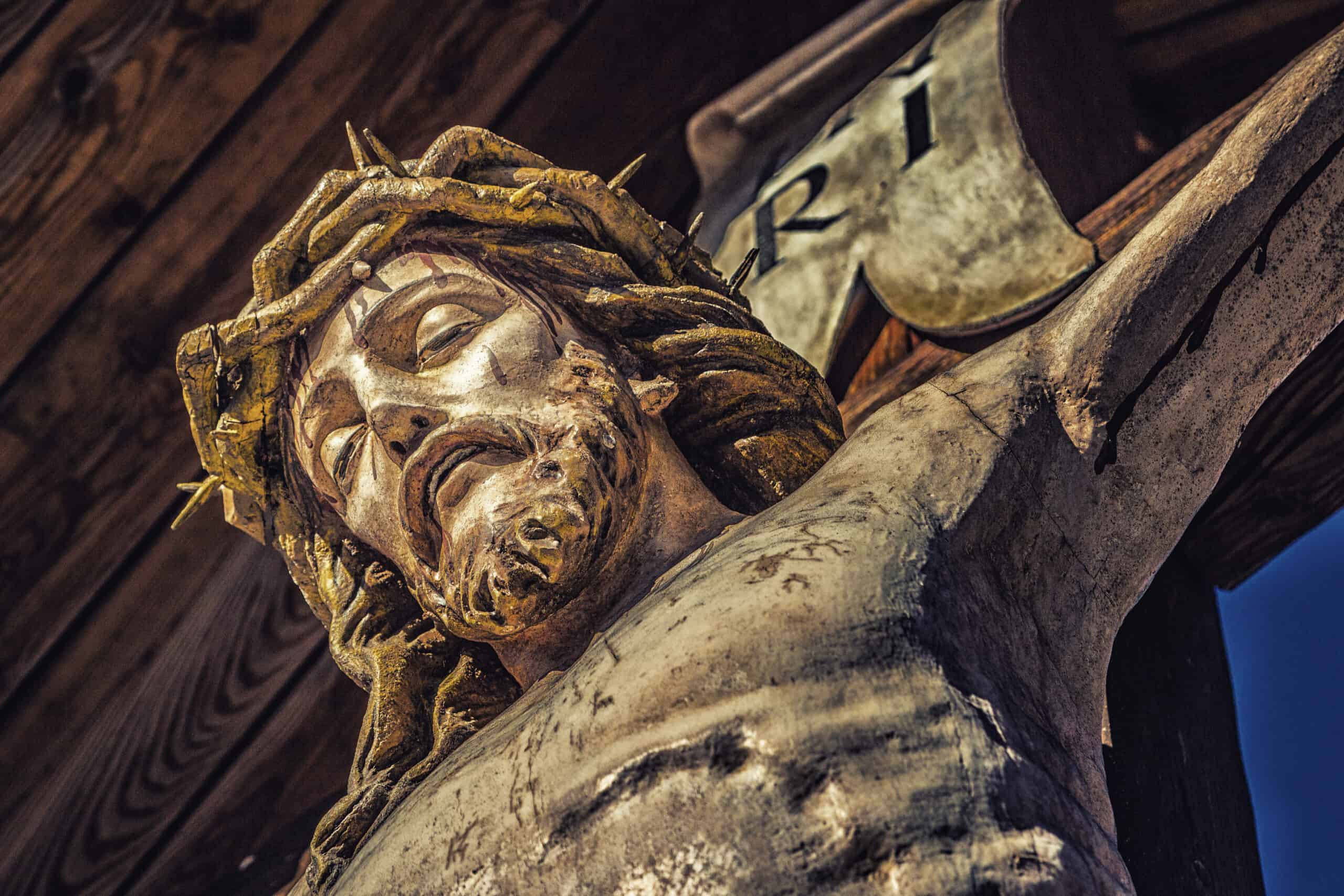
What Is the Theological Meaning of Christ’s Declaration ‘I Thirst’ — And What Does It Reveal About the Vulnerability of Divine Love?
“I thirst.” — John 19:28
Why Does the Briefest Word Carry the Deepest Theological Weight?
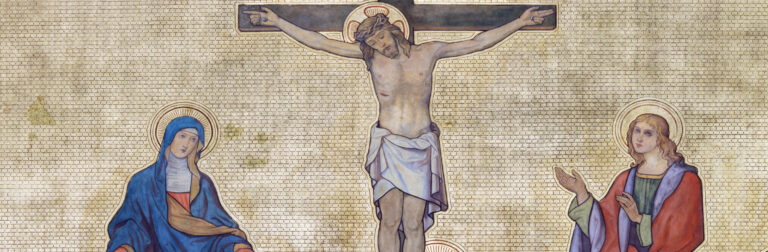
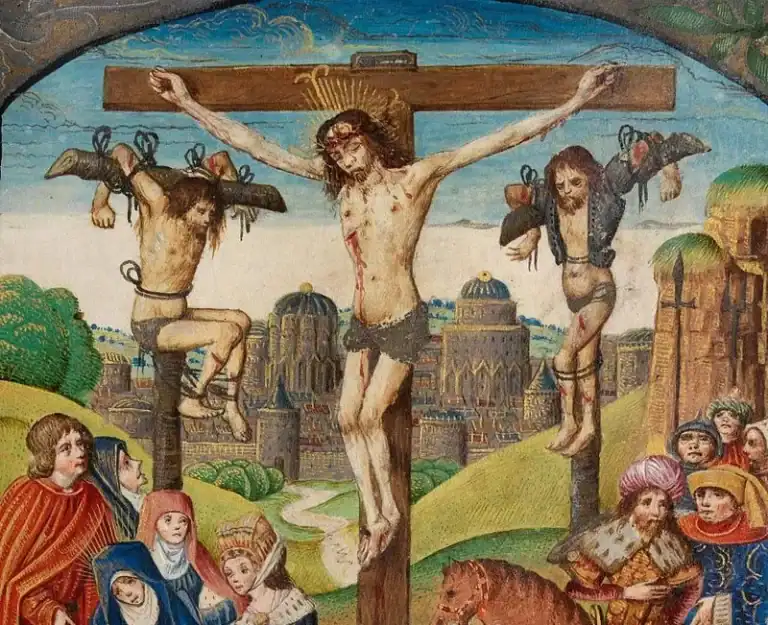
The fifth word from the Cross, recorded only in the Gospel of John, is the briefest of the seven: ‘I thirst’ (John 19:28). In two syllables, the eternal God declares a human need. The One who is the Fount of Living Water (John 4:10; 7:37–38) cries out in physical dehydration upon the instrument of His death. The theological tradition has never been content to treat this word as a merely physiological detail. From the earliest Fathers to Cornelius a Lapide and beyond, the thirst of Christ on the Cross has been read as simultaneously physical, spiritual, and eschatological — expressing His suffering humanity, His burning desire for souls, and His longing for the completion of the Father’s salvific plan.
The physiological reality must first be honoured. Medical scholarship on crucifixion has long recognised that thirst — produced by haemorrhage, profuse sweating, respiratory exertion, and exposure — was among the most agonising aspects of crucifixion. After hours on the cross, the human body loses fluids at a catastrophic rate. Christ’s thirst is not merely a spiritual metaphor; it is an expression of genuine and extreme physical torment. The theological tradition’s move toward the spiritual sense of this word does not diminish the physical but builds upon it: precisely because Christ truly thirsts in His flesh, the symbol of His spiritual thirst carries its full redemptive weight.
St John signals a theological context for this cry with characteristic precision: ‘After this, Jesus, knowing that all things were now accomplished, that the scripture might be fulfilled, said: I thirst’ (John 19:28). The scripture in view is generally taken to be Psalm 69:21 (‘They gave me gall for food, and for my thirst they gave me vinegar to drink’) or Psalm 22:15 (‘My strength is dried up like a potsherd; and my tongue cleaveth to my jaws’). Both psalms, like Psalm 22 cited in the fourth word, are Messianic psalms of the suffering righteous one — and St John’s framing makes clear that this physiological detail is, simultaneously, the fulfilment of sacred prophecy.
How Does Cornelius a Lapide Interpret the Physical and Spiritual Dimensions of This Thirst?
Cornelius a Lapide, in his Commentary on John 19:28, begins by establishing the literal sense: after hours on the cross, dehydrated from blood loss, sweat, and exposure, Jesus experiences an extreme physical thirst that is among the acutest torments of crucifixion. A Lapide notes that St John signals a theological context for this cry, connecting it with the fulfilment of scriptural prophecy regarding the Messiah’s suffering.
But beyond this bodily thirst, which was real and most grievous, the soul of Christ thirsted with an infinite thirst for the salvation of souls, for the honour of His Father, for the completion of the work of Redemption. This spiritual thirst is what He expressed not only in His dying words but in His entire life, mission, and sacrifice. (a Lapide, 1876, Vol. V, p. 528, Commentary on John 19:28)
A Lapide develops the spiritual-allegorical dimension of this thirst with great depth. Drawing on the Augustinian tradition, he notes that the same Christ who said to the Samaritan woman, ‘Give me to drink’ (John 4:7) now says ‘I thirst’ from the Cross. In both cases, the surface request conceals a deeper spiritual longing: Christ who is the Living Water thirsts not for water but for the souls of sinners. His thirst is His love made vulnerable — the love of the Creator who has reduced Himself to dependence, who has taken on flesh capable of drying out, in order to draw humanity into the infinite moisture of divine charity.
This Johannine parallelism — ‘Give me to drink’ at the well (John 4:7) and ‘I thirst’ at the Cross (John 19:28) — is theologically deliberate. In both cases, Christ reveals Himself as the one who thirsts for the human soul. At the well, the thirst leads to the revelation of living water; at the Cross, the thirst leads to the opening of the side of Christ from which flows blood and water — the sacramental birth of the Church (John 19:34). The fifth word thus belongs to a Johannine theology of the gift of the Spirit through the glorified Body of Christ.
What Do the Church Fathers Teach About the Thirst of Christ?
How Does St. Augustine Connect the Thirst at Jacob’s Well with the Thirst at Calvary?
St. Augustine provides one of the most celebrated reflections on the fifth word in his Tractates on the Gospel of John. Reflecting on the Samaritan woman passage in light of the Cross, Augustine observes that Christ’s thirst at Jacob’s Well — ‘Give me to drink’ — anticipates His thirst on the Cross. In both cases, what Christ truly thirsts for is faith: the faith of the Samaritan woman, the faith of future believers, the conversion of sinners. The bodily thirst on the Cross is real, but it is a sacrament of the deeper thirst. St Augustine writes that Christ thirsted for us while we thirsted for Him — and He satisfied our thirst with His Blood before His own bodily thirst was quenched (Augustine, c. 416/1988, Tractates on the Gospel of John, Tractate 15). This reciprocal thirst — Christ thirsting for the soul, the soul thirsting for God — becomes one of the most fruitful themes in the entire tradition of Christian mysticism.
How Does St. Jerome Use the Fifth Word as a Model for Ascetical Life?
In his Letter to Eustochium, St. Jerome meditates on the thirst of Christ as a model for ascetical life. The monk or nun who renounces earthly pleasures and thirsts only for God is configured to Christ thirsting on the Cross. St Jerome uses the fifth word as a call to spiritual poverty and longing — the soul that has tasted the living water of Christ’s grace ought to thirst continually for more, and this holy thirst is itself a participation in Christ’s Passion (Jerome, c. 384/1893, Letter 22, To Eustochium, § 40). St Jerome’s application is characteristically concrete and ascetical: the discipline of fasting, of restricting bodily pleasures, of maintaining a habitual hunger and thirst of soul, is a continual configuration to the dying Christ. The ascetic life is not self-punishment but a form of discipleship that conforms the body to the Body of Christ.
How Does St. John Chrysostom See the Acceptance of Vinegar as Providential Completion?
St John Chrysostom, in his Homilies on the Gospel of John, emphasises the physical reality of Christ’s thirst as a proof of His true humanity against the Docetist heresy. Christ truly suffered; His Body was a real human body subject to real human needs. St John Chrysostom then pivots to the spiritual sense: the vinegar offered in response to Christ’s thirst is itself a fulfilment of prophecy (Ps. 69:21), and Christ accepts it not because it relieves His thirst but in order to complete the number of scriptural prophecies (Chrysostom, c. 400/1848, Homilies on the Gospel of John, Homily 85). Every detail of the Passion is under the governance of divine providence. Even the sponge soaked in vinegar, even the hyssop branch on which it is raised — details so apparently incidental as to seem beneath theological notice — are woven into the tapestry of fulfilment that the Passion represents.
How Does St. Thomas Aquinas Understand Thirst Within His Theology of Christ’s Suffering?
In the Summa Theologiae, St Thomas Aquinas reflects on the bodily sufferings of Christ and confirms that His thirst was a genuine physical torment, among the most painful aspects of crucifixion. St Thomas’s principle that ‘Christ assumed all the defects common to human nature’ applies directly here: thirst is a natural human condition, and Christ’s assumption of it in its most extreme form is continuous with the logic of the Incarnation (Aquinas, 1274/1948, Summa Theologiae, III, Q. 46, A. 6). Theologically, St Thomas connects the fifth word with Christ’s function as the True High Priest who offers a sacrifice of infinite value precisely because the sufferer is of infinite dignity. Every torment Christ endured — including the extreme thirst of crucifixion — contributes its own measure to the infinite satisfaction offered to divine justice.
What Is the Theological Synthesis Offered by the Fifth Word?
The fifth word reveals the vulnerability of love. God thirsts. The Omnipotent reduces Himself to need. The Giver of every good gift holds out a hand for a cup of water. This theological paradox is at the heart of the Incarnation and is crystallised in these two syllables. A Lapide’s synthesis, faithful to the whole tradition, holds together the literal and the spiritual: Christ’s physical thirst was real and was among His greatest sufferings, and it was simultaneously an expression of the divine thirst for the salvation of souls — a thirst that the Cross was in the very act of satisfying, as His Blood poured out became the drink of eternal life for all who would receive it.
The response to the fifth word — both in its literal dimension and its spiritual — is the same: to give Christ what He thirsts for. In its literal dimension, this means the works of mercy, including the giving of drink to the thirsty (Matt. 25:35), which Christ identifies with giving to Himself. In its spiritual dimension, it means the gift of oneself — the surrender of the human will and heart to the divine love that is burning to possess it. The fifth word is therefore a call not merely to external charity but to that deepest form of love which satisfies the Bridegroom’s thirst: total self-gift.
References
a Lapide, C. (1876). The great commentary of Cornelius a Lapide: The holy Gospel according to Saint John (T. W. Mossman, Trans., Vol. V). John Hodges. (Original work 1616)
Aquinas, T. (1274/1948). Summa theologiae (Fathers of the English Dominican Province, Trans., 5 vols.). Benziger Bros. (Original work c. 1265–1274)
Augustine of Hippo. (c. 416/1988). Tractates on the Gospel of John (J. W. Rettig, Trans.). Fathers of the Church Series (Vols. 78–92). Catholic University of America Press. (Original work c. 416–420)
Chrysostom, J. (c. 400/1848). Homilies on the Gospel of Saint John (P. Schaff, Trans.). In P. Schaff (Ed.), Nicene and Post-Nicene Fathers, First Series (Vol. 14). Christian Literature Publishing. (Original work c. 390–407)
Jerome. (c. 384/1893). Letters and select works (W. H. Fremantle, Trans.). In P. Schaff & H. Wace (Eds.), Nicene and Post-Nicene Fathers, Second Series (Vol. 6). Christian Literature Publishing. (Original work c. 384)