Dressed for Damnation or for Heaven?
Six Centuries of Supernatural Warnings Against Immodest Dress
Throughout Catholic mystical history, a remarkable convergence of saints, visionaries, and mystics has received supernatural communications — through apparitions, visions, locutions, and prophetic revelations — in which Our Lord Jesus Christ or the Blessed Virgin Mary issued solemn warnings about the spiritual danger of immodest dress. This expanded study documents nine major supernatural accounts spanning the fourteenth to the twentieth centuries, situating them within the doctrinal framework of Sacred Scripture, the Fathers of the Church, and the Magisterium. Together these accounts constitute a coherent supernatural tradition calling the faithful to modesty as a condition of spiritual life and a safeguard for the salvation of souls.
What Has Heaven Said About the Way We Dress?
The question of modest dress has been answered not only by the Magisterium of the Catholic Church but, according to a consistent and credible mystical tradition, by Heaven itself. Over the course of six centuries, saints, visionaries, and prophetic figures have reported supernatural communications — from Jesus Christ, from the Blessed Virgin Mary, and from the angels — in which the spiritual gravity of immodest dress has been made explicit. These communications are not isolated curiosities. They form a pattern: a convergence of testimony that reinforces with remarkable consistency the perennial teaching of the Church that immodest dress constitutes a serious occasion of sin, both for the one who wears it and for those who are led into sin by it.
This article does not present private revelations as binding on the faithful. The Catechism of the Catholic Church is clear that such revelations ‘do not belong to the deposit of faith’ (Catechism of the Catholic Church, 1997, §67). Rather, these accounts are examined as significant spiritual testimony consonant with, and illuminating of, the Church’s public teaching. Each supernatural account is considered in its historical context, followed by a theological synthesis and reflection on the pastoral urgency of these warnings in the twenty-first century.
What Does Scripture and the Magisterium Actually Teach About Modesty?
Any serious treatment of supernatural warnings against immodest dress must begin with the divine words that ground the entire tradition. Our Lord Jesus Christ in the Sermon on the Mount declared: ‘Everyone who looks at a woman with lust has already committed adultery with her in his heart’ (Matthew 5:28). He followed this with a solemn warning about those who occasion sin in others: ‘Woe to the world because of things that cause sin! Woe to the one through whom they come!’ (Matthew 18:7). The structural connection is clear: one who dresses immodestly, thereby occasioning lustful thoughts in others, falls directly within the scope of Christ’s solemn condemnation.
St. Paul reinforces this teaching by commanding that women should adorn themselves with proper conduct, with modesty and self-control (1 Timothy 2:9), and by insisting that the body is a temple of the Holy Spirit (1 Corinthians 6:19). Isaiah prophetically condemns the daughters of Zion for their haughty bearing and immodest display (Isaiah 3:16–24), associating exterior immodesty with interior pride and spiritual disorder.
The Magisterium has been equally consistent. Pope Pius XI, through the Cardinal Vicar of Rome in 1930, issued specific directives defining immodest dress. Pope Pius XII, addressing the Latin Union of High Fashion in 1957, warned against fashions that serve ‘only vanity and the devil’ and declared an absolute norm to be preserved in modest dress that cannot legitimately change with custom or fashion (Pius XII, 1957). The Second Vatican Council reaffirmed in Gaudium et Spes §27 that whatever insults human dignity offends both God and neighbour (Vatican II, 1965). The supernatural warnings examined below give prophetic urgency to this entire magisterial framework.
Did St. Frances of Rome Actually See Souls Punished in Hell for Vanity?
St. Frances of Rome (1384–1440) is one of the most theologically significant sources of Catholic mystical testimony on immodest dress and its eternal consequences. An Italian noblewoman of extraordinary sanctity who founded the Oblates of St. Frances of Rome and was canonised by Pope Paul V in 1608, Frances received a series of detailed visions of Hell, Purgatory, and Heaven, which she narrated to her spiritual director under holy obedience (Frances of Rome, 2022).
In her vision of Hell, Frances witnessed a section specifically dedicated to souls damned through vanity and immodest adornment. The torments she described were deliberately calibrated to mirror and magnify the sins that caused them. Women who had devoted excessive care to their appearance and clothing were shown suffering specific punishments corresponding precisely to their vanity and the impurity they had occasioned in others:
Women who during their lives have taken excessive care of themselves, adorned themselves and made themselves more beautiful by toiletries and luxurious clothes, expiate their vanity in the other world in a very particular way. Their hair, which they arranged with such care, has disappeared. Instead, ugly snakes are wrapped around their naked skulls which bite their heads with ferocity. (The Catacombs Forum, n.d.)
A particular figure in Frances’s vision is a married woman who had combined vanity in dress with the enkindling of impurity in others. Demons mock her with words that echo across the centuries: ‘O sorrowful soul, who was so vain, now wash yourself and make yourself beautiful in the midst of this fire’ (The Catacombs Forum, n.d.). Frances was instructed by her spiritual director to share these visions precisely so that souls still in the body might receive timely warning.
What Did a Devout Catholic Woman See When She Asked God What Displeased Him Most?
The seventeenth-century Jesuit theologian Fr. Eusebius Nieremberg, S.J. (1595–1658), a professor at the Royal College of Madrid and confessor to persons of the highest rank, recorded an account that has become one of the most frequently cited in the Catholic literature on immodest dress (Our Lady of the Rosary Library, n.d.). A noble and devout Catholic woman had prayed earnestly to God, asking Him to reveal what displeased His Divine Majesty most in persons of her sex. God answered in an extraordinary manner: He opened before her eyes the eternal abyss, and within it she recognised a woman she had known in life — a woman whose outward religious practice had seemed blameless. The condemned soul then spoke directly to the living woman:
It is true that I practiced religion, but I was a slave of vanity. Ruled by the passion to please, I was not afraid to adopt indecent fashions to attract attention, and I enkindled the fire of impurity in more than one heart. Ah! If Christian women knew how much immodesty in dress displeases God! (Our Lady of the Rosary Library, n.d.)
The account is theologically precise in several respects. First, it identifies immodesty as a sin consistent with outward religious practice — the soul had attended Mass and received the sacraments. Second, it specifies the mechanism of her damnation: not immodest dress in isolation, but the causal chain from immodest dress to impure thoughts enkindled in others, and consequently to the sins of others for which she bore a portion of responsibility. This account stands as a sobering reminder that religious observance cannot coexist comfortably with habitual immodesty.
How Did Our Lady of Good Success Prophesy the Loss of Modesty Centuries in Advance?
One of the most prophetically precise Marian apparitions in history took place in colonial Quito, Ecuador, where the Blessed Virgin Mary appeared repeatedly between approximately 1594 and 1634 to Mother Mariana de Jesús Torres (1563–1635), a Spanish Conceptionist nun and founding mother of the Convent of the Immaculate Conception. These apparitions received Church approval, and Mother Mariana has since been declared Venerable, with her body found incorrupt when her casket was opened in 1906 (TFP Student Action, 2025).
Among the most striking elements of these prophecies is Our Lady’s explicit warning about the loss of modesty among women as one of the defining signs of a coming spiritual crisis:
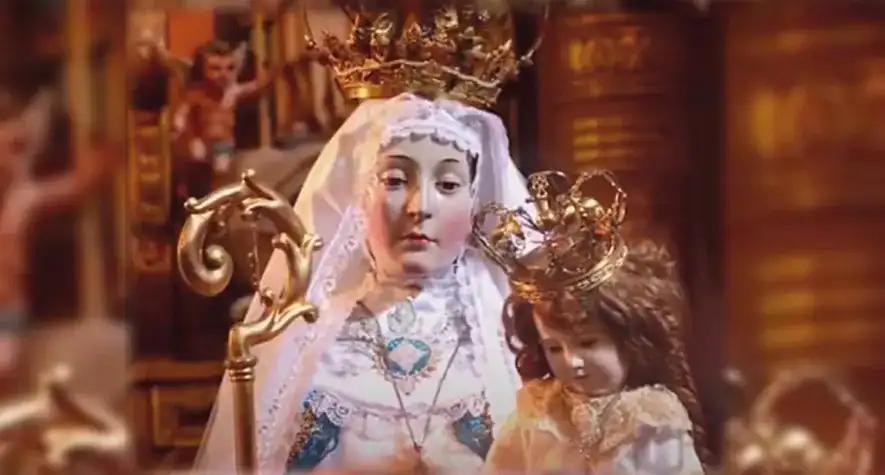
Moreover, in these unhappy times, there will be unbridled luxury which, acting thus to snare the rest into sin, will conquer innumerable frivolous souls who will be lost. Innocence will almost no longer be found in children, nor modesty in women. In this supreme moment of need of the Church, the one who should speak will fall silent! (Our Lady, as cited in TFP Student Action, 2025)
Our Lady placed the loss of modesty in women alongside the loss of innocence in children as twin symptoms of a total corruption of customs. The phrase ‘innumerable frivolous souls who will be lost’ indicates that this is not merely a cultural concern but a matter of eternal salvation for an enormous number of souls. That Mother Mariana could not have conceived, in colonial Ecuador in 1610, of a world in which immodesty in women’s dress would become a universal cultural norm — yet that is precisely what she reported Our Lady as warning — lends the prophecy a particular force verified by subsequent history (Virgosacrata.com, n.d.).
What Did St. Bridget of Sweden and Our Lady Teach About the Spiritual Meaning of Dress?
St. Bridget of Sweden (1303–1373), a Swedish noblewoman, mystic, foundress of the Bridgettine Order, and canonised saint whose Celestial Revelations were confirmed orthodox by the Council of Basel in 1436, occupies a place of unique authority in the Catholic mystical tradition (Bridget of Sweden, 2026). While Bridget’s revelations do not include a vision of a soul specifically damned for immodest dress, they contain a sustained mystical teaching on dress as a moral and spiritual category. The Blessed Virgin Mary appears to Bridget and speaks directly to the proper spiritual disposition expressed through clothing:
You should be adorned with the most proper clothes, and I will show you how and what kind they should be… The undershirt you shall have is contrition for your sins; for just as an undershirt is closest to the body, so contrition and confession are the first way of conversion to God. Through these the mind, which once enjoyed sin, is purified, and the unchaste flesh restrained from evil lusts. (Our Lady to St. Bridget, as cited in Saints Books Net, n.d.)
In this passage, Our Lady employs dress itself as a theological category. The woman who is spiritually well-dressed wears, closest to her body, the garment of penitence and purity. The contrast is implicit but unmistakable: the woman who concerns herself with fashionable outer clothing rather than the inner garment of virtue has reversed the entire order of spiritual values. Bridget’s broader Revelations contain extended warnings against worldliness and vanity that Bridgettine commentators have consistently understood to include the vanity expressed through immodest fashion (Saints Books Net, n.d.).
How Did St. Teresa of Ávila’s Vision of Hell Connect Her Own Youthful Vanity to Damnation?
St. Teresa of Ávila (1515–1582), the first woman proclaimed a Doctor of the Church, is a central figure in Catholic mystical tradition whose relevance to this article is specific: her vision of Hell in 1562, recounted in chapter 32 of The Book of Her Life, produced a moral and pastoral transformation explicitly directed at saving souls from the kinds of sins — including vanity and worldliness — that the other visionaries in this study connect to immodest dress. Teresa describes her vision in harrowing terms:
While I was in prayer one day, I suddenly found that, without knowing how, I had seemingly been put in hell… The entrance it seems to me was similar to a very long and narrow alleyway, like an oven, low and dark and confined; the floor seemed to me to consist of dirty, muddy water emitting a foul stench and swarming with putrid vermin. (Teresa of Ávila, as cited in Catholic Mass Times, 2025)
Teresa understood that she was being shown the place prepared for her in Hell on account of her past sins — which she specifically identified elsewhere as including the vanity of dress and the company of worldly persons in her youth (EWTN, n.d.). She wrote that as a young woman she had become fond of dress, taken pains with her hair, made use of perfumes, and been very fastidious about her person — precisely the patterns of vanity that Frances of Rome and Nieremberg identify as leading souls to damnation.
The pastoral consequence of Teresa’s vision was direct and immediate. She resolved to do everything in her power to save souls from the Hell she had witnessed, leading to the founding of the reformed Carmelite communities. As she wrote: ‘I cried to the Lord and begged Him that I might remedy so much evil. It seemed to me that I would have given a thousand lives to save one soul out of the many that were being lost there’ (Teresa of Ávila, as cited in Carmelite Quotes Blog, 2024). Teresa’s witness contributes to this study in two ways: her vision of Hell confirms the reality of eternal punishment for the kinds of sins connected to immodest dress; and her account of her own youthful vanity, seen in retrospect as spiritually dangerous, provides a first-person testimony from a Doctor of the Church.
What Did a Nine-Year-Old Dying Child Reveal About Fashion and Hell at Fatima?
The apparitions of Our Lady of Fatima (Portugal, 1917) constitute the single most authoritative supernatural source of warnings against immodest dress in the modern era. The Fatima apparitions received full Church approval, Francisco and Jacinta Marto were canonised by Pope Francis on 13 May 2017, and Sister Lucia was declared Venerable (The Fatima Center, 2023). On 13 July 1917, Our Lady showed the three children a terrifying vision of Hell before explicitly linking this vision to the sins of the flesh. Our Lady’s words were recorded by Lucia: ‘You have seen hell where the souls of poor sinners go. To save them, God wishes to establish in the world devotion to my Immaculate Heart’ (as cited in National Catholic Register, 2022).
Jacinta Marto, dying in Lisbon’s Hospital of Dona Estefânia from pleuropneumonia in February 1920 at only nine years of age, conveyed these words with prophetic urgency:
Certain fashions will be introduced which will offend Our Divine Lord very much. Those who serve God ought not to follow these fashions. Our Lord is always the same. (Jacinta Marto, as cited in Our Lady of the Rosary Library, n.d.)
Our Lady had communicated a parallel warning directly to Sister Lucia: ‘There will be fashions which will greatly offend My Divine Son’ (as cited in Dominicans of Avrille, n.d.). These words from a dying child of nine, transmitted from the Mother of God, constitute one of the most moving supernatural interventions on this subject in the entire Catholic tradition. Jacinta also transmitted what has become the most cited Fatima statement connecting immodesty and eternal loss: ‘The sins that lead most souls to hell are the sins of the flesh. Certain styles will be introduced that will offend Our Lord very much’ (as cited in The Fatima Center, 2023). Given in 1920, these warnings proved prophetically accurate with extraordinary speed: within a decade the flapper revolution had transformed Western women’s dress in precisely the direction warned against, a trajectory only accelerating through the twentieth century and into our own day.
How Did Blessed Elizabeth Canori Mora See the Loss of Modesty as a Sign of Divine Chastisement?
Blessed Elizabeth Canori Mora (1774–1825), a Roman laywoman and Trinitarian tertiary who was beatified by Pope John Paul II on 24 April 1994, represents an important nineteenth-century prophetic voice whose visions directly address the loss of modesty as a sign and cause of divine wrath. Her spiritual writings were examined by an ecclesiastical commission whose official judgment, issued on 5 November 1900, found in them ‘nothing against faith and good customs, and no doctrinal innovation or deviation’ (as cited in Tradition in Action, n.d.).
On Christmas Day 1816, Our Lady appeared to Elizabeth with the Christ Child in her arms. Struck by the deep sorrow on Our Lady’s face, Elizabeth asked: ‘My Lady, what is the cause of such sorrow?’ Our Lady replied: ‘Behold, my daughter, such great ungodliness’ (Return to Fatima, 2023). Elizabeth’s broader prophetic vision specifically identified the loss of modesty in women as one of the defining characteristics of a coming age of chastisement. Her writings describe a world in which the loss of Christian standards in dress and behaviour would be so universal as to call down divine justice (Tradition in Action, n.d.). The convergence of Elizabeth’s testimony in Rome in 1816 with Mother Mariana’s identical warning from Ecuador in 1610 — that ‘innocence will almost no longer be found in children, nor modesty in women’ — given two centuries apart by women who could not have known of each other’s revelations, strengthens immeasurably the case for taking these warnings seriously.
Why Did the Stigmatist St. Padre Pio Turn Away Immodestly Dressed Women From His Confessional?
St. Padre Pio of Pietrelcina (1887–1968), the Italian Capuchin Franciscan priest who bore the stigmata for fifty years and was canonised by Pope John Paul II in 2002, did not leave a recorded vision specifically on immodest dress. He constitutes, however, a form of supernatural witness that is in some respects more striking than a vision: the witness of action rooted in mystical perception of souls.
Padre Pio possessed, by universal testimony and Church attestation, the gift of reading consciences — the ability to perceive the spiritual state of souls with supernatural accuracy. The Dominicans of Avrille (n.d.) record that in the last years of his life, Padre Pio ‘unrelentingly dismissed from his confessional, before they could step inside, all women he judged to be incorrectly dressed. By 1967, on some mornings, he turned them away one after another, until he ended up confessing very few.’ A notice was posted at the church of San Giovanni Rotondo stating that by Padre Pio’s explicit wish, women must enter the confessional wearing skirts at least eight inches below the knee.
Padre Pio’s own words to women who came to confession immodestly dressed were unsparing: ‘If you have the courage to imitate Mary Magdalene in her sins, have the courage to imitate her penance!’ (Mother of God Library, n.d.). What distinguishes Padre Pio’s witness from personal fastidiousness is its foundation in supernatural gift. A man who could read the spiritual state of souls with extraordinary accuracy — a gift recognised by the Church in his canonisation — acted with increasing severity on this matter precisely as Western fashion became increasingly immodest. Those familiar with his life understand this not as cultural conservatism but as prophetic response to a spiritual reality he perceived with supernatural clarity.
What Did the Fathers of the Church Teach That Grounds All These Mystical Warnings?
The supernatural warnings of the mystics do not stand alone but are grounded in the explicit prophetic teaching of the Fathers of the Church. St. John Chrysostom (347–407), Archbishop of Constantinople and Doctor of the Church, articulated the theological principle underlying all the mystical warnings examined in this study with arresting force:
You carry your snare everywhere and spread your nets in all places… When you have made another sin in his heart, how can you be innocent? You have prepared the abominable cup, you have given the death-dealing drink, and you are more criminal than are those who poison the body; you murder not the body but the soul. (as cited in Traditional Catholic Apologetics, n.d.)
St. John Chrysostom’s comparison of the immodestly dressed woman to a poisoner is not rhetorical excess but theological precision: it locates her action within the category of those who cause spiritual death in another. That this teaching comes from a Doctor of the Church gives it a weight consonant with, though not identical to, the Magisterium itself. The supernatural warnings of the mystics — from Frances of Rome to the Fatima children — can be understood as divine confirmations of this patristic principle: that immodest dress is not a trivial matter but a form of spiritual endangerment for which the one who commits it will be held accountable before God.
What Can Six Centuries of Independent Mystical Testimony Tell Us Today?
A careful examination of the nine supernatural accounts documented in this article reveals a convergence of themes so consistent across different centuries, nations, and mystical traditions that it constitutes a compelling form of evidence for the seriousness with which these warnings must be taken. The convergence is all the more striking for being largely independent: St. Frances of Rome in fifteenth-century Italy, Mother Mariana in sixteenth-century Ecuador, St. Teresa of Ávila in sixteenth-century Spain, Fr. Nieremberg’s noblewoman in seventeenth-century Madrid, St. Bridget of Sweden in fourteenth-century northern Europe, Blessed Elizabeth Canori Mora in nineteenth-century Rome, and the Fatima children in twentieth-century Portugal — none of these visionaries had access to the reports of the others, yet they testify to the same truth with remarkable consistency.
Four convergent themes emerge. First, immodest dress directly offends God. Every account uses formulations — ‘displeases God,’ ‘offends Our Divine Lord very much,’ ‘greatly offend My Divine Son,’ ‘such great ungodliness’ — that locate the offence not in social propriety but in the divine relationship itself. Second, immodest dress occasions sin in others, and the one who dresses immodestly bears a portion of moral responsibility for those sins — a principle explicit in Nieremberg’s account, in St. John Chrysostom’s patristic teaching, and in Our Lord’s own words at Matthew 18:7. Third, multiple accounts explicitly connect immodest dress with eternal damnation, not as a theoretical possibility but as a witnessed reality. And fourth, many of these warnings proved prophetically accurate in ways that were humanly unforeseeable at the time they were given — a form of authentication in itself.
Conclusion: Is Modesty Still a Matter of Life and Death for the Soul?
The supernatural warnings against immodest dress constitute a coherent, multi-century, trans-national body of mystical testimony that reinforces and illuminates the Church’s perennial teaching. These witnesses range from a canonised saint’s vision of Hell (Frances of Rome), to the dying words of a nine-year-old canonised visionary receiving the revelation of the Mother of God (Jacinta Marto), to the approved prophecies of a Venerable Conceptionist nun in colonial Ecuador (Mother Mariana de Jesús Torres), to the practical witness of a stigmatist saint whose supernatural gifts enabled him to perceive the spiritual harm of immodesty with extraordinary clarity (Padre Pio).
None of these accounts, as private revelations, carries the binding force of defined doctrine. Catholics are free — and theologically obliged — to subject private revelations to critical discernment. But the convergence of this testimony across nine independent sources, spanning six centuries, cannot responsibly be dismissed. When the Mother of God herself warns that certain fashions ‘greatly offend My Divine Son’; when a Doctor of the Church, having seen Hell in vision, connects her own past vanity in dress with the place prepared for her there; when a mystic nun in sixteenth-century Ecuador prophesies that the loss of modesty in women will accompany a generalised corruption of souls — the contemporary Catholic, living in an age when all these warnings have been verified by history, has every reason to listen.
The pastoral urgency of these warnings cannot be overstated. In a culture that has systematically dismantled every standard of modesty in dress, the voices of the saints and mystics — and through them, the voice of Christ and His Mother — represent a corrective that the Church has always affirmed. Modesty is not a cultural relic. It is a form of charity toward one’s neighbour, an act of reverence toward the God who dwells in the human body, and — as the great mystics of the Church have testified at the cost of much suffering — a condition of eternal life.
Bibliography
Bridget of Sweden. (2022). Revelationes coelestes [Celestial revelations]. In Saints Books Net. https://www.saintsbooks.net/books/St.%20Bridget%20(Birgitta)%20of%20Sweden%20-%20Prophecies%20and%20Revelations.html
Bridget of Sweden. (2026, January 11). In Wikipedia. https://en.wikipedia.org/wiki/Bridget_of_Sweden
Carmelite Quotes Blog. (2024, August 23). St. Teresa of Avila: From vision to reform. https://carmelitequotes.blog/2024/08/23/ep20-teresafounder/
Catechism of the Catholic Church (2nd ed.). (1997). Libreria Editrice Vaticana.
Catholic Mass Times. (2025). 5 remarkable stories from the life of Saint Teresa of Avila. https://catholicmasstimes.com/5-remarkable-stories-from-the-life-of-saint-teresa-of-avila/
The Catacombs Forum. (n.d.). Visions of Hell of St. Frances of Rome. https://thecatacombs.org/archive/index.php?thread-1328-1.html
Dominicans of Avrille. (n.d.). Modesty in dress. https://dominicansavrille.us/tag/modesty-in-dress/
EWTN. (n.d.). St. Teresa of Avila. https://www.ewtn.com/catholicism/library/st-teresa-of-avila-5894
The Fatima Center. (2023). Why and how to practice Christian modesty. https://fatima.org/news-views/catholic-apologetics-220/
Frances of Rome, St. (2022). The visions of Saint Frances of Rome: Hell, purgatory, and heaven revealed. TAN Books.
Jehannedarc.org. (n.d.). The coming chastisement: Revelations to Blessed Elizabeth Canori Mora. https://jehannedarc.org/mora.html
Mother of God Library. (n.d.). A papal decree concerning modesty — Pope Pius XI, 1930. https://motherofgodlibrary.org/2021/08/02/a-papal-decree-concerning-modesty-pope-pius-xi-1930/
National Catholic Register. (2022, December 2). These saints had visions of heaven and hell and revealed what they saw. https://www.ncregister.com/blog/saints-who-saw-heaven-and-hell
Our Lady of the Rosary Library. (n.d.). The requirements for modesty in dress. https://www.olrl.org/modesty-in-dress/
Pius XII. (1957, November 8). Address to the Congress of the Latin Union of High Fashion. Libreria Editrice Vaticana.
Return to Fatima. (2023, December 8). The prophecy of Blessed Elizabeth Canori Mora. https://returntofatima.org/2015/09/17/the-prophecy-of-blessed-elizabeth-canori-mora/
Saints Books Net. (n.d.). Prophecies and revelations of St. Bridget of Sweden. https://www.saintsbooks.net/books/St.%20Bridget%20(Birgitta)%20of%20Sweden%20-%20Prophecies%20and%20Revelations.html
Teresa of Avila, St. (1985). The collected works of St. Teresa of Avila, Vol. 1: The book of her life (K. Kavanaugh & O. Rodriguez, Trans.). ICS Publications. (Original work written c. 1565)
TFP Student Action. (2025). Our Lady of Good Success: Prophecies about our times. https://www.tfp.org/prophecies-of-our-lady-of-good-success-about-our-times/
Thigpen, P. (2019). Saints who saw hell: And other Catholic witnesses to the fate of the damned. TAN Books.
Traditional Catholic Apologetics. (n.d.). St. John Chrysostom on immodest dress. https://www.traditioninaction.org/Questions/E067_Imm.htm
Tradition in Action. (n.d.). Venerable Elizabeth Canori Mora sees the latter times tribulations. https://www.traditioninaction.org/religious/g019_Judg-6.htm
Vatican II. (1965). Gaudium et Spes [Pastoral constitution on the Church in the modern world]. Libreria Editrice Vaticana.
Virgosacrata.com. (n.d.). Our Lady of Good Success: Prophecies for our times. https://www.virgosacrata.com/our-lady-of-good-success-prophecies-for-our-times.html