“Father, Forgive Them”: Does Divine Forgiveness Contradict Apostolic Accusation?
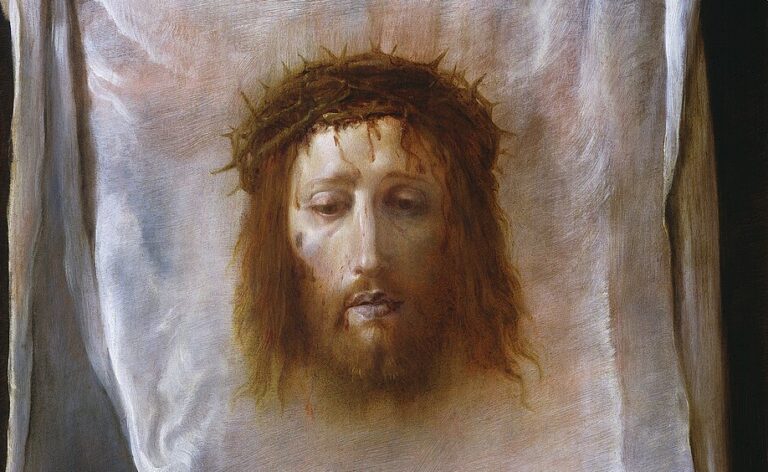
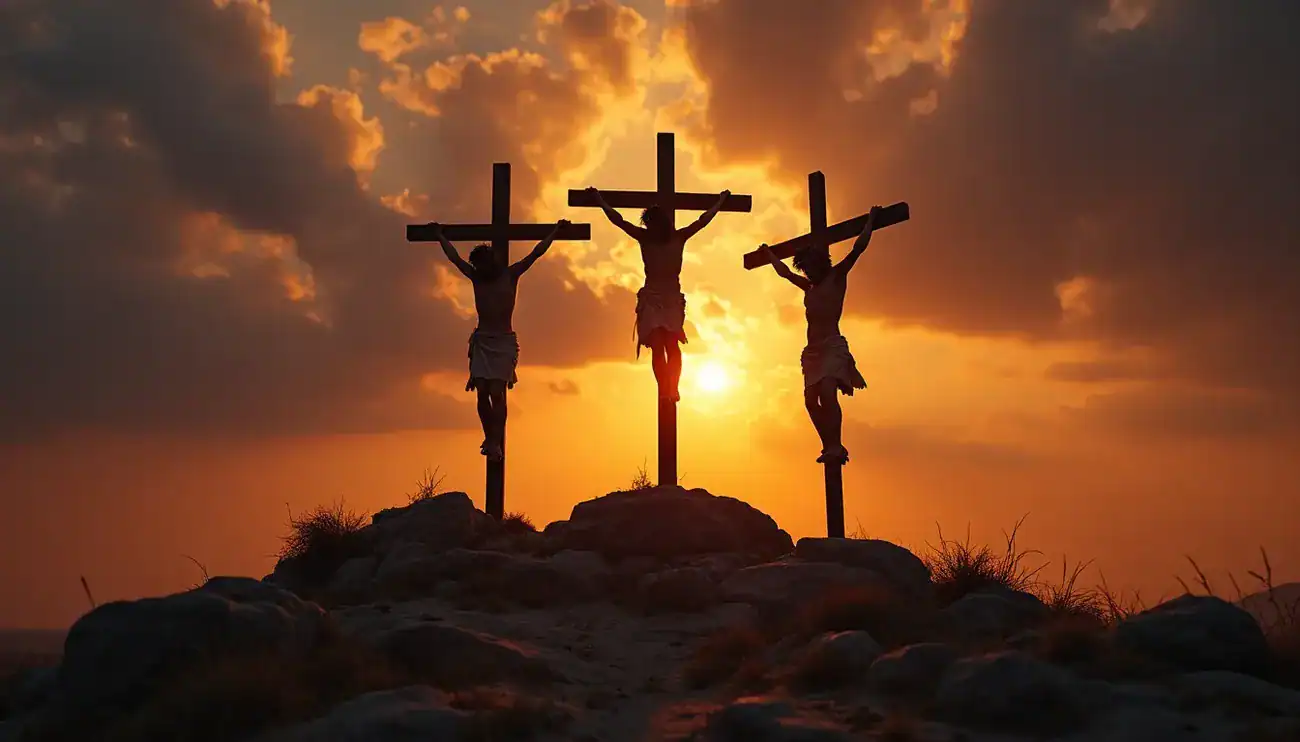
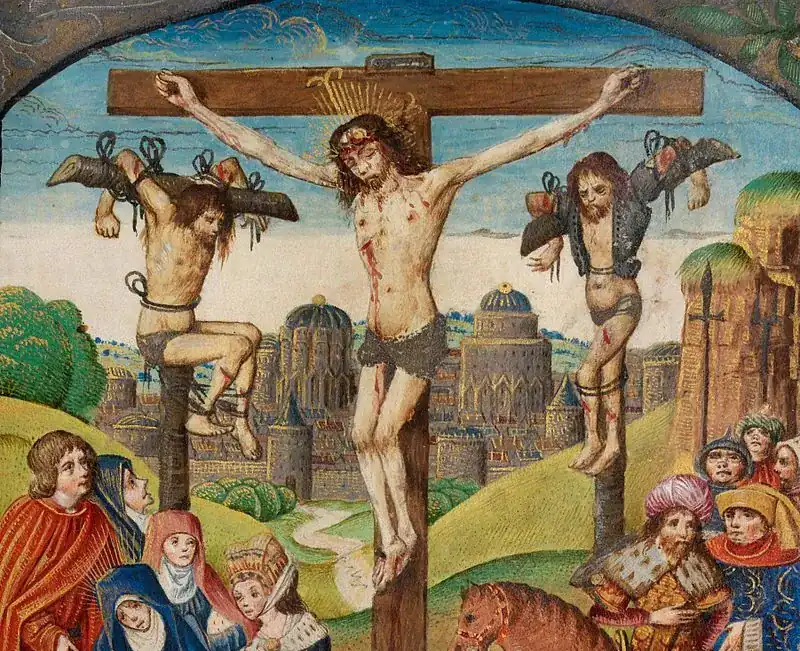
One of the most striking moments in the Passion narrative occurs when Jesus Christ, nailed to the cross, prays: “Father, forgive them, for they do not know what they are doing” (Luke 23:34, New International Version). It is an act of breathtaking mercy—forgiveness offered in the very moment of agony. Yet, almost immediately after His resurrection and ascension, the apostles deliver forceful speeches accusing Jewish leaders and people of murdering the Messiah (Acts 2:23, 36; 3:13–15; 5:30). The Apostle Paul would later write that the Jews “killed the Lord Jesus” (1 Thessalonians 2:15).
How do we reconcile these two realities? If Jesus already forgave those who crucified Him, why are His followers making such strong accusations? Far from being a contradiction, these two strands of early Christian proclamation form a deeply unified and theologically rich vision of mercy, repentance, and salvation. This article explores what the Church Fathers and Doctors of the Church have said about this apparent paradox—and why it matters for us today.
Who Exactly Was Jesus Forgiving When He Said ‘Them’?
The pronoun “them” (Greek: αὐτοῖς, autois) in Jesus’s prayer has generated rich discussion throughout Church history. St. Ambrose of Milan (c. 340–397) understood it to refer primarily to the Roman soldiers carrying out the physical act of crucifixion, as they were most directly ignorant of whom they were executing (Ambrose, 1896). But St. John Chrysostom (c. 349–407), one of the greatest preachers of the early Church, expanded that scope considerably:
He prayed for those who were crucifying Him, not for the soldiers only, but also for the Jews. They knew indeed that they were crucifying, but they knew not whom they were crucifying. (Chrysostom, 1889, Homilies on the Gospel of St. Matthew, Homily 88)
St. Cyril of Alexandria (c. 376–444) went further still, arguing that Christ’s prayer extended to the entire world: “His prayer was not for them only, but rather for the whole world. For He was given as a propitiation for the sins of the whole world” (Cyril of Alexandria, 1874, Commentary on the Gospel of Luke, 23:34). This universal dimension is essential: Jesus’s intercession was not a narrow legal pardon but an opening of the door to reconciliation for all of humanity.
What Did the Apostles Actually Say—and Why Did They Say It?
Following Pentecost, the apostles did not shy away from naming what had happened. Peter’s sermon in Acts 2 addresses his fellow Israelites directly:
“God has made this Jesus, whom you crucified, both Lord and Messiah” (Acts 2:36).
After healing a lame man at Solomon’s Colonnade, he declares:
“You killed the author of life, but God raised him from the dead” (Acts 3:15).
Before the Sanhedrin, Peter states plainly:
“Jesus Christ of Nazareth, whom you crucified but whom God raised from the dead”
(Acts 4:10).
Stephen’s final speech before his martyrdom was even more confrontational:
“You stiff-necked people! Your hearts and ears are still uncircumcised… you have betrayed and murdered him” (Acts 7:51–52).
And Paul would write to the Thessalonians of “the Jews who killed the Lord Jesus and the prophets” (1 Thessalonians 2:14–15).
On the surface, these words seem to clash with Jesus’s prayer of forgiveness. But St. John Chrysostom helps us understand their purpose:
Peter does not speak these words to insult them, but to bring them to repentance. For the physician does not reproach the sick man to make him ashamed, but to make him accept the remedy… So too Peter, by bringing their sin to remembrance, draws them to repentance. (Chrysostom, 1851, Homilies on the Acts of the Apostles, Homily 7)
The apostolic accusations were not condemnations—they were diagnoses. Like a doctor who must name a disease before treating it, the apostles named the sin to open the path to healing.
Is Forgiveness Automatic, or Does It Need to Be Received?
Here we arrive at the theological heart of the matter. St. Augustine of Hippo (354–430) drew a crucial distinction between forgiveness offered and forgiveness received:
The Lord Jesus, when He hung upon the cross, said, ‘Father, forgive them, for they know not what they do.’ He prayed for them that crucified Him. But His prayer was conditional; He sought forgiveness for those who would repent. For how could those be forgiven who, persisting in the same wickedness, refused to believe in Him whom they had slain? (Augustine, 1888, Tractates on the Gospel of John, Tractate 95.3)
Catholic theology formalises this distinction through the concepts of redemptio objectiva and redemptio subjectiva—the objective redemption accomplished by Christ’s sacrifice and the subjective application of that redemption to individual souls through faith and repentance. Christ’s prayer from the cross established the objective foundation; the apostolic preaching invited each hearer to claim it personally.
St. Bonaventure (1221–1274) expressed it this way: “Christ by His passion merited salvation for all, but this salvation is not applied to all except through faith and the sacraments” (Bonaventure, 1963, Breviloquium, Part IV, Chapter 9). God’s mercy is genuinely universal in its offer—but it demands a free human response.
What Role Does Ignorance Play in the Question of Guilt?
When Jesus says “for they do not know what they are doing,” He introduces the concept of ignorance as a mitigating factor. But St. Thomas Aquinas (1225–1274) makes a vital clarification here. In his Summa Theologiae, Aquinas argues that the ignorance was partial and culpable:
Christ said, ‘They know not what they do,’ and thereby excused them from the sin of deicide insofar as they did not know that He was truly God. However, this did not excuse them from all sin, for they sinned from malice in crucifying one whom they knew to be a just man sent by God. (Aquinas, 1947, Summa Theologiae, III, q. 47, a. 5)
In other words, the Jewish leaders and Roman authorities did not fully grasp that they were killing the eternal Son of God—a kind of ignorance that reduced their culpability for deicide specifically. But they did knowingly execute a righteous man, reject His prophetic witness, and suppress the evidence of His miracles. This is why forgiveness was genuinely offered, yet repentance remained genuinely necessary.
How Does the Hebrew Prophetic Tradition Help Us Understand the Apostles’ Words?
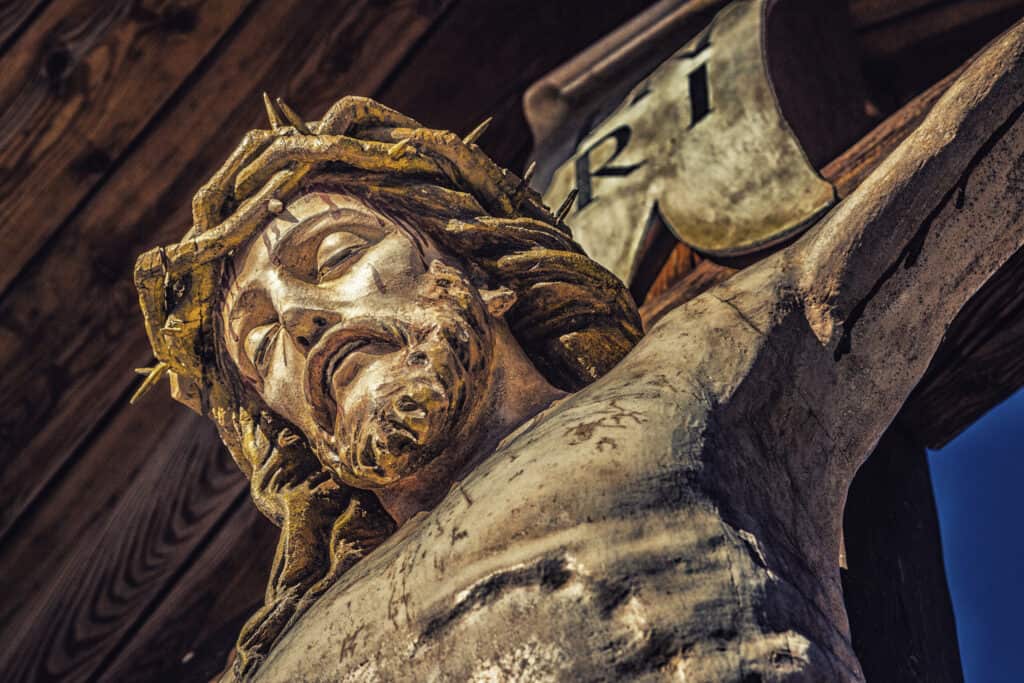
The apostolic speeches do not arise in a vacuum. They stand firmly within the long tradition of Hebrew prophetic literature, where God’s messengers regularly confronted Israel with its sins—not to destroy, but to restore. St. Cyril of Jerusalem (c. 313–386) recognised this continuity clearly:
The holy apostles, filled with the Holy Spirit, spoke in the manner of the prophets. As Isaiah cried, ‘Woe to the sinful nation,’ and Jeremiah lamented over Jerusalem, so too Peter declared, ‘You crucified the Lord of glory.’ This was not vindictiveness but prophecy, not hatred but holy zeal for souls. (Cyril of Jerusalem, 1894, Catechetical Lectures, Lecture 13.40)
The Venerable Bede (c. 673–735) added a beautiful pedagogical insight: the prayer and the preaching work together as a single movement of divine mercy. Christ’s intercession prepared the forgiveness; the apostles’ proclamation created the conditions for claiming it: “The accusation was the means by which the forgiveness was to be claimed” (Bede, 1991, Commentary on the Acts of the Apostles, 2:23).
Are All of Us Implicated in the Death of Christ?
The Church Fathers consistently rejected any notion that Christ’s death was the fault of one group alone. St. Francis of Assisi gave this truth its most memorable expression:
It was not the Jews who crucified Christ, nor those who put Him to death, but we, by our sins, are the ones who have crucified Him and crucify Him still, when we take delight in our vices and sins. (Francis of Assisi, as cited in The Little Flowers of St. Francis, Chapter 5)
The Catechism of the Catholic Church (2000) affirms this plainly: “Sinners were the authors and the ministers of all the sufferings that the divine Redeemer endured… Our crime in this case is greater in us than in the Jews” (§597–598). Every human sin—past, present, and future—is part of what nailed Christ to the cross. The apostolic accusations, understood in this light, are not a finger pointed at one group, but a mirror held up to all of us.
How Did the Early Church Avoid Misusing These Texts?
It must be acknowledged honestly that throughout history, passages from Acts and the Pauline letters have been horrifically misused to justify anti-Semitism and persecution of Jewish people. The Church has firmly and repeatedly rejected such interpretations. The Second Vatican Council’s declaration Nostra Aetate (1965) was unequivocal:
True, the Jewish authorities and those who followed their lead pressed for the death of Christ; still, what happened in His passion cannot be charged against all the Jews, without distinction, then alive, nor against the Jews of today. (§4)
St. Augustine made the same point in his own time: “When Peter said, ‘You crucified Him,’ he spoke to those who were present, who had either consented to His death or actively participated in it. He did not speak to all Jews in all places and times” (Augustine, 1887, Sermon 76, 3). Pope Benedict XVI similarly clarified that any notion of collective guilt “cannot include the Jewish people as such, either then or now, as a collective entity” (Benedict XVI, 2011, p. 186).
The apostles were Jews themselves, speaking within an intra-Jewish prophetic discourse. Their words were directed to specific historical actors in Jerusalem, not as a timeless condemnation of an entire people.
What Does This Mean for How We Proclaim the Gospel Today?
St. Catherine of Siena (1347–1380), Doctor of the Church, offered a profound insight into the relationship between conviction and mercy: “The soul cannot recognise the mercy of God until it first recognises its own sin” (Catherine of Siena, 1896, The Dialogue of Saint Catherine of Siena, Chapter 27). The apostles were not engaging in condemnation for its own sake. They were preparing hearts to receive the forgiveness Christ had already won.
St. Alphonsus Liguori (1696–1787) grounded this in the theology of grace: “God gives to all the grace necessary for salvation, but grace must be cooperated with… Forgiveness is offered to all but received only by those who repent” (Liguori, 1887, The Great Means of Salvation, Chapter 1). Divine mercy is boundless—but God respects human freedom too much to force it upon anyone.
In our own era, marked by a false choice between a “cheap grace” that dismisses sin and a harsh moralism that leaves no room for mercy, the apostolic model offers a third way. We must name sin clearly and courageously—not to wound, but to heal. We must proclaim forgiveness fully and freely—not as an excuse to avoid repentance, but as an invitation to embrace it. The same Holy Spirit who moved Peter’s lips at Pentecost is the Spirit Jesus promised would “prove the world to be in the wrong about sin and righteousness and judgment” (John 16:8).
Conclusion: Are Mercy and Truth Really in Conflict?
They are not. Christ’s prayer from the cross and the apostles’ bold proclamations are not rival theologies—they are two movements of the same divine symphony. Jesus’s intercession—“Father, forgive them, for they do not know what they are doing”—established the objective foundation of reconciliation for all humanity. The apostolic preaching made explicit what that prayer had already secured: that forgiveness is real, that sin is real, and that repentance is the doorway between them.
As St. Augustine wrote: “God loves each of us as if there were only one of us to love” (Augustine, c. 400, as cited in Confessions)—loving us enough to tell us the truth about our sin, and loving us enough to offer forgiveness when we repent. That is the paradox, beautifully resolved: not cheap grace, not harsh condemnation, but the fullness of divine mercy meeting the fullness of human freedom.
Bibliography
Ambrose of Milan. (1896). Exposition of the Gospel according to Luke (T. Tomkinson, Trans.). Center for Traditionalist Orthodox Studies. (Original work published c. 389)
Aquinas, T. (1947). Summa theologiae (Fathers of the English Dominican Province, Trans.). Benziger Brothers. (Original work published 1265–1274)
Augustine of Hippo. (1886). Sermon 295. In P. Schaff (Ed.), Nicene and post-Nicene fathers (First Series, Vol. 6). Christian Literature Publishing Co. (Original work published c. 410)
Augustine of Hippo. (1887). Sermon 76. In P. Schaff (Ed.), Nicene and post-Nicene fathers (First Series, Vol. 6). Christian Literature Publishing Co. (Original work published c. 410)
Augustine of Hippo. (1888). Tractates on the Gospel of John (J. Gibb & J. Innes, Trans.). In P. Schaff (Ed.), Nicene and post-Nicene fathers (First Series, Vol. 7). Christian Literature Publishing Co. (Original work published c. 416–417)
Bede the Venerable. (1991). Commentary on the Acts of the Apostles (L. T. Martin, Trans.). Cistercian Publications. (Original work published c. 709)
Benedict XVI. (2011). Jesus of Nazareth: Holy week—From the entrance into Jerusalem to the resurrection. Ignatius Press.
Bonaventure. (1963). Breviloquium (E. E. Nemmers, Trans.). B. Herder Book Co. (Original work published c. 1257)
Catherine of Siena. (1896). The dialogue of Saint Catherine of Siena (A. Thorold, Trans.). Kegan Paul, Trench, Trübner & Co. (Original work published 1370)
Chrysostom, J. (1851). Homilies on the Acts of the Apostles. In P. Schaff (Ed.), Nicene and post-Nicene fathers (First Series, Vol. 11). Christian Literature Publishing Co. (Original work published c. 400)
Chrysostom, J. (1889). Homilies on the Gospel of St. Matthew. In P. Schaff (Ed.), Nicene and post-Nicene fathers (First Series, Vol. 10). Christian Literature Publishing Co. (Original work published c. 390)
Cyril of Alexandria. (1874). Commentary on the Gospel of Luke. In P. E. Pusey (Ed.), Sancti patris nostri Cyrilli archiepiscopi Alexandrini opera (Vol. 3). Clarendon Press. (Original work published c. 428)
Cyril of Jerusalem. (1894). Catechetical lectures. In P. Schaff & H. Wace (Eds.), Nicene and post-Nicene fathers (Second Series, Vol. 7). Christian Literature Publishing Co. (Original work published c. 350)
John Damascene. (1958). Exposition of the Orthodox faith (S. D. F. Salmond, Trans.). In P. Schaff & H. Wace (Eds.), Nicene and post-Nicene fathers (Second Series, Vol. 9). Eerdmans. (Original work published c. 743)
Liguori, A. (1887). The great means of salvation and of perfection. Benziger Brothers. (Original work published 1759)
Metzger, B. M. (1994). A textual commentary on the Greek New Testament (2nd ed.). Deutsche Bibelgesellschaft.
Second Vatican Council. (1965). Nostra aetate: Declaration on the relation of the Church to non-Christian religions. http://www.vatican.va/archive/hist_councils/ii_vatican_council/documents/vat-ii_decl_19651028_nostra-aetate_en.html
The Catechism of the Catholic Church (2nd ed.). (2000). Libreria Editrice Vaticana. http://www.vatican.va/archive/ENG0015/_INDEX.HTM