
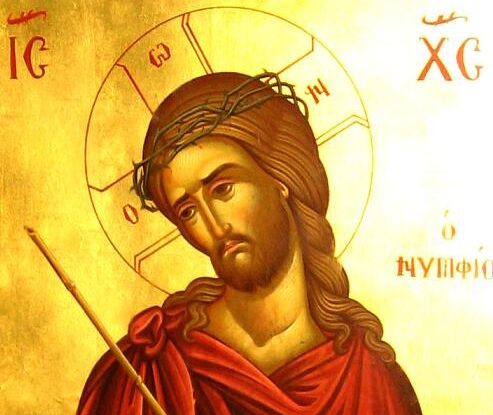
Did Jesus Really Exist? The Historical Evidence Outside the Bible
The overwhelming consensus among historians of antiquity, regardless of religious affiliation, affirms that Jesus existed as a historical figure. This conclusion rests not merely on New Testament documents but on a small but significant body of non-Christian evidence that corroborates key elements of the Gospel narrative. As Bart D. Ehrman (2012), an agnostic scholar at the University of North Carolina, states definitively: “He certainly existed, as virtually every competent scholar of antiquity, Christian or non-Christian, agrees” (p. 4). This article examines the documented evidence for Jesus Christ preserved in Roman, Jewish, and other ancient sources, analyzing what these texts reveal about the historical Jesus and how contemporary scholars evaluate their authenticity and significance.
While the New Testament remains the primary source for Jesus’s life and teachings, the external witnesses—hostile, neutral, and sympathetic—establish the basic historical framework within which any serious reconstruction of Jesus must operate. As Graham Stanton (2002) observed, “Today nearly all historians, whether Christians or not, accept that Jesus existed and that the gospels contain plenty of valuable evidence which has to be weighed and assessed critically” (p. 145).
What Did Roman Historians Write About Jesus?
The Roman Empire’s bureaucratic apparatus and literary culture produced several references to Christ and Christians within a century of Jesus’s death. These sources are particularly valuable because they come from authors either hostile or indifferent to Christianity, eliminating the possibility of devotional embellishment.
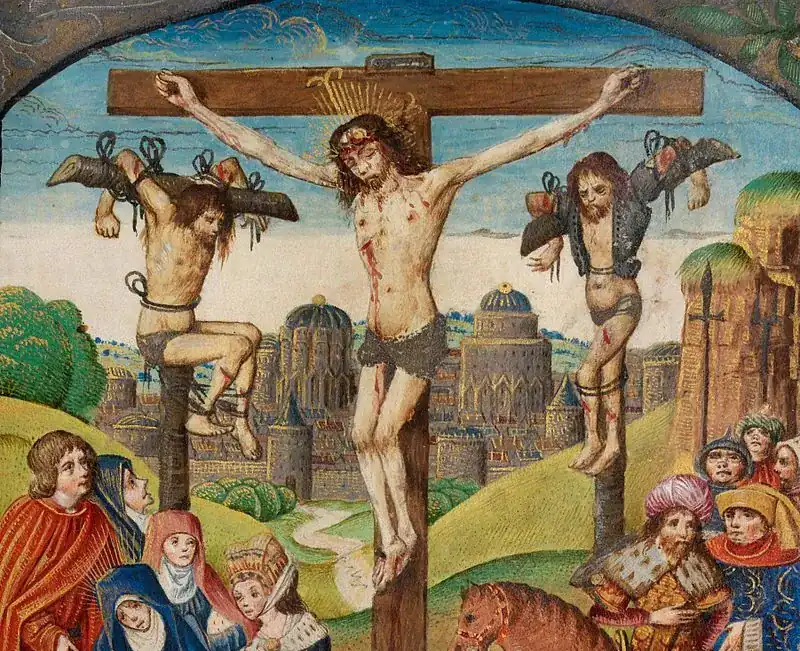
Did Tacitus Mention Jesus in His Account of Nero’s Persecution?
Gaius Cornelius Tacitus (c. 56–120 A.D), widely regarded as ancient Rome’s greatest historian, provides the most detailed Roman reference to Christ. A senator who served as governor of Asia and member of the Quindecimviri sacris faciundis—a priestly council supervising foreign religious cults—Tacitus possessed both the credentials and potential access to official records that lend weight to his testimony. In his Annals, written approximately 116 A.D during Trajan’s reign, Tacitus describes Nero’s persecution of Christians following the Great Fire of Rome in 64 A.D:
“Consequently, to get rid of the report, Nero fastened the guilt and inflicted the most exquisite tortures on a class hated for their abominations, called Christians by the populace. Christus, from whom the name had its origin, suffered the extreme penalty during the reign of Tiberius at the hands of one of our procurators, Pontius Pilatus, and a most mischievous superstition, thus checked for the moment, again broke out not only in Judæa, the first source of the evil, but even in Rome, where all things hideous and shameful from every part of the world find their centre and become popular.” (Tacitus, Annals 15.44, trans. Church & Brodribb, 1876)
Robert Van Voorst (2000), in his comprehensive study Jesus Outside the New Testament, concludes that “of all Roman writers, Tacitus gives us the most precise information about Christ” (p. 43). The passage confirms several key facts:
- Jesus was called “Christus,”
- He was executed under Pontius Pilate during Tiberius’s reign (14–37 A.D),
- His movement originated in Judea, and
- It spread to Rome within three decades of his death.
What Does Suetonius Tell Us About “Chrestus” and the Expulsion from Rome?
Gaius Suetonius Tranquillus (c. 69–122 A.D), serving as secretary to Emperor Hadrian with access to imperial archives, wrote Lives of the Twelve Caesars around 122 A.D. In his biography of Claudius, Suetonius reports: “Since the Jews constantly made disturbances at the instigation of Chrestus, he expelled them from Rome” (Claudius 25.4, trans. Rolfe, 1913).
The scholarly debate centers on whether “Chrestus” refers to Christ. Louis Feldman (1984) observed that “most scholars assume that in the reference Jesus is meant and that the disturbances mentioned were due to the spread of Christianity in Rome” (p. 431). Several arguments support this identification: Menahem Stern noted that Suetonius would have added “a certain” before the name if referring to an unknown agitator; confusion between “Christus” and “Chrestus” was common in antiquity—indeed, Codex Sinaiticus reads “Chrestianos” in Acts 11:26, 26:28, and 1 Peter 4:16 (Lane, 1998). Raymond Brown (1997) documented that “in the second century, Christus and Christianus were often written with ‘e’ instead of ‘i'” (p. 423).
However, dissenting scholars including Barbara Levick (1993) and Edwin Yamauchi (1995) note that “Chrestus” was a common slave name—Heikki Solin’s epigraphic research identified 126 people from Rome named Chrestus, 59 of whom were slaves. The passage’s authenticity is unquestioned; the debate concerns only its referent. If it does refer to Christ, it would indicate that disputes about Jesus were causing disturbances in Rome’s Jewish community by the late 40s A.D, corroborating Acts 18:2.
Suetonius provides a clearer reference in Nero 16.2: “Punishment was inflicted on the Christians, a class of men given to a new and mischievous superstition.” This confirms the existence of a Christian community in Rome during Nero’s reign and reflects the same dismissive tone found in Tacitus.
What Did Pliny the Younger Discover About Early Christian Worship?
Gaius Plinius Caecilius Secundus (61–113 A.D), nephew of the naturalist Pliny the Elder, served as governor of Bithynia-Pontus in northern Asia Minor from approximately 109–113 A.D. His correspondence with Emperor Trajan, preserved as Book 10 of his letters, contains the earliest detailed pagan description of Christian worship practices.
Writing around 111 A.D, Pliny describes his interrogation of Christians and reports what he learned about their practices:
“They asserted, however, that the sum and substance of their fault or error had been that they were accustomed to meet on a fixed day before dawn and sing responsively a hymn to Christ as to a god (carmenque Christo quasi deo dicere secum invicem), and to bind themselves by oath, not to some crime, but not to commit fraud, theft, or adultery, not falsify their trust, nor to refuse to return a trust when called upon to do so.” (Pliny, Epistulae 10.96, trans. Melmoth, revised Hutchinson)
The passage reveals that Christianity had spread widely through cities and rural areas of Asia Minor, that Christians met regularly for worship, sang hymns to Christ, and committed themselves to ethical behavior. Pliny also mentions female deacons (ministrae), indicating organized church leadership. The scholarly consensus affirms the correspondence’s authenticity. The hostile tone—calling Christianity a “depraved, excessive superstition”—argues conclusively against Christian fabrication.
What Jewish Historical Sources Mention Jesus?
Flavius Josephus (37–100 A.D), born Yosef ben Mattityahu into a priestly aristocratic family in Jerusalem, stands as our most important non-Christian Jewish witness to the first century. A military commander during the First Jewish-Roman War who later received Roman patronage, Josephus wrote Antiquities of the Jews around 93–94 A.D – a twenty-volume history of the Jewish people. Two passages in this work mention Jesus, making Josephus crucial for historical Jesus research.
Is the Testimonium Flavianum Authentic or a Christian Forgery?
The more controversial passage, known as the Testimonium Flavianum (Antiquities 18.63–64), appears in all extant Greek manuscripts. In its received form, it reads:
“About this time there lived Jesus, a wise man, if indeed one ought to call him a man. For he was a doer of wonderful works, a teacher of such men as receive the truth with pleasure. He drew over to him both many of the Jews and many of the Gentiles. He was the Christ. And when Pilate, at the suggestion of the principal men amongst us, had condemned him to the cross, those that loved him at the first did not forsake him, for he appeared to them alive again on the third day, as the divine prophets had foretold these and ten thousand other wonderful things concerning him. And the tribe of Christians, so named from him, are not extinct to this day.” (Antiquities 18.63–64, trans. Whiston)
The current scholarly consensus, represented by John P. Meier’s influential analysis in A Marginal Jew (1991), holds that Josephus wrote an authentic core that was later embellished by Christian scribes. Meier’s reconstruction removes the three suspected phrases:
“About this time there appeared Jesus, a wise man. For he was a doer of surprising deeds, a teacher of people who receive the truth with pleasure. He won over many Jews and many of the Greeks. And when Pilate, at the suggestion of the principal men among us, had condemned him to the cross, those who had first come to love him did not cease. And the tribe of Christians, so named from him, has not disappeared to this day.” (Meier, 1991, p. 61)
Several arguments support the authenticity of a core passage. The vocabulary analysis reveals Josephan style: the opening phrase “About this time” (Γίνεται δὲ κατὰ τοῦτον τὸν χρόνον) is characteristic of Josephus; “wise man” (σοφὸς ἀνήρ) appears elsewhere in his works for Solomon and Daniel; “surprising deeds” (παραδόξων ἔργων) describes Elisha’s miracles in Antiquities 9; and “tribe” (φῦλον) for ethnic/religious groups reflects typical Josephan usage. The passage’s placement among accounts of disturbances during Pilate’s governorship fits its context naturally.
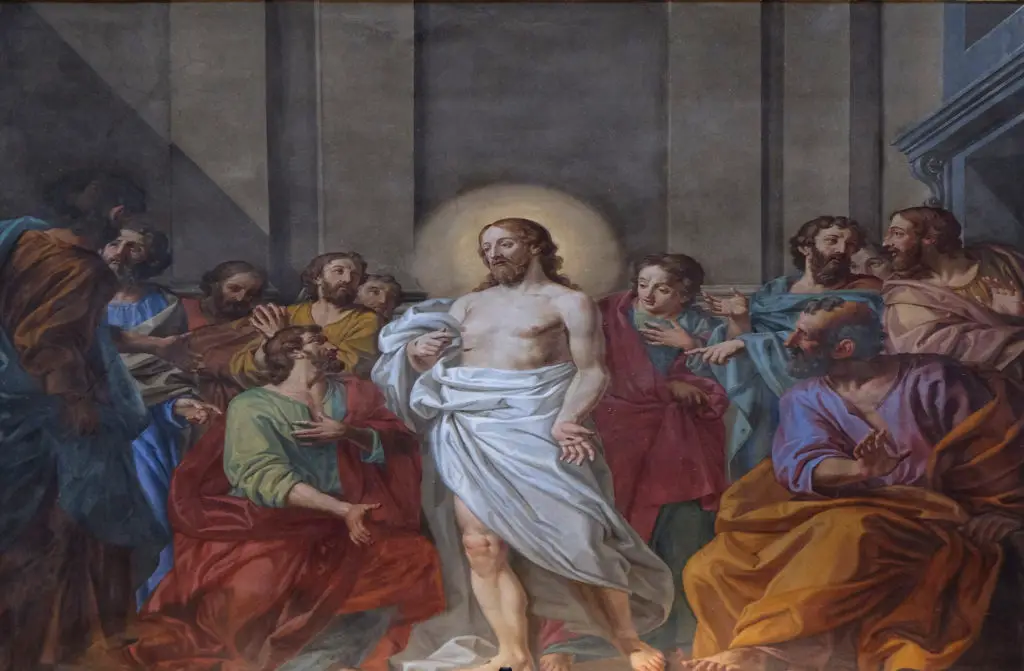
What Other Ancient Sources Reference Jesus?
Beyond the major Roman and Jewish witnesses, several additional sources from antiquity mention Jesus or events associated with him. While these texts vary considerably in their reliability and independence, they collectively demonstrate that Jesus was known and discussed outside Christian circles.
Did Thallus Explain the Darkness at the Crucifixion?
The earliest potential non-Christian reference to Jesus comes from Thallus, a first-century historian whose works survive only in fragments quoted by later authors. Writing around 52 A.D, Thallus composed a three-volume history of the Mediterranean world. His reference to Jesus survives through a chain of transmission: Thallus to Julius Africanus (History of the World, c. 220 A.D) and then to George Syncellus (Chronicle, c. 800 A,D).
Julius Africanus, critiquing Thallus, wrote:
“On the whole world there pressed a most fearful darkness; and the rocks were rent by an earthquake, and many places in Judea and other districts were thrown down. This darkness Thallus, in the third book of his History, calls, as appears to me without reason, an eclipse of the sun.” (preserved in Syncellus, trans. Van Voorst, 2000, p. 20)
Africanus objects that a solar eclipse is impossible during Passover, which occurs at full moon when the moon is opposite the sun. The significance lies in Thallus’s apparent attempt to explain the darkness naturalistically rather than deny it occurred. Maurice Goguel (1926) argued: “If Thallus had been writing simply as a chronographer who mentions an eclipse which occurred in the fifteenth year of the reign of Tiberius, Julius Africanus would not have said that he was mistaken” (p. 92). If this interpretation is correct, Thallus represents the earliest non-Christian reference to an event associated with Jesus’s crucifixion—evidence that the darkness tradition was known and discussed publicly within two decades of the event.
What Does Mara bar Serapion Say About the “Wise King” of the Jews?
A Stoic philosopher from Roman Syria, Mara bar Serapion wrote a letter in Aramaic to his son while imprisoned after Roman conquest of his city, likely shortly after 73 A.D. The letter compares three wise men executed by their countrymen:
“What advantage did the Athenians gain from putting Socrates to death? Famine and plague came upon them as a judgment for their crime. What advantage did the men of Samos gain from burning Pythagoras? In a moment their land was covered with sand. What advantage did the Jews gain from executing their wise king? It was just after that their kingdom was abolished. God justly avenged these three wise men… Nor did the wise king die for good; he lived on in the teaching which he had given.” (trans. Cureton, 1855, p. 73)
Robert Van Voorst (2000) sees “little doubt” this refers to Jesus (p. 54). Bruce Chilton notes the phrase “king of Jews” may relate to the titulus crucis (Mark 15:26). The timing aligns with Jerusalem’s destruction in 70 A.D, presented as divine punishment. Significantly, the letter makes no reference to resurrection—Jesus “lived on in the teaching which he had given”—suggesting a non-Christian perspective. Gerd Theissen notes the reference to “our gods” indicates Mara was neither Jew nor Christian, making this a valuable pagan outsider’s evaluation of Jesus as a wise teacher whose legacy persisted through his teachings.
How Did the Satirist Lucian Mock Christians and Their Founder?
The Syrian Greek satirist Lucian (c. 115–200 A.D) wrote The Death of Peregrinus around 165 A.D, describing the Cynic philosopher Peregrinus Proteus who exploited Christian communities before burning himself alive at the Olympic Games. Lucian’s description of Christians includes:
“The Christians, you know, worship a man to this day—the distinguished personage who introduced their novel rites, and was crucified on that account… It was impressed on them by their original lawgiver that they are all brothers, from the moment that they are converted, and deny the gods of Greece, and worship the crucified sage, and live after his laws.” (Peregrinus 11, 13, trans. Fowler)
Van Voorst (2000) notes Lucian’s vocabulary is “dissimilar to NT language”—he uses distinctive terms like “lawgiver” and his characteristic word for “crucified” (anaskolopisthenta) rather than New Testament terminology, arguing against direct dependence on Christian texts (p. 58). Lucian confirms that Christians worshipped a crucified man who introduced new religious practices, established laws for his followers, and whose movement continued over a century after his death. His hostile tone (“misguided creatures”) and satirical purpose argue against derivation from sympathetic Christian sources.
What Alternative Stories Did Celsus Preserve About Jesus?
The Platonist philosopher Celsus (fl. 175–177A.D) composed The True Word (Λόγος Ἀληθής), the earliest known comprehensive intellectual attack on Christianity. Though the original was destroyed, extensive quotations survive in Origen’s eight-book refutation Contra Celsum (c. 248 A.D). Celsus employed a “Jewish interlocutor” who presented alternative traditions about Jesus.
The scholarly significance of Celsus lies not in providing independent historical information but in demonstrating that Jewish counter-narratives about Jesus circulated by the late second century—narratives that never denied Jesus’s existence but offered alternative explanations for Christian claims about him.
Do the Talmudic References Actually Refer to Jesus of Nazareth?
The Babylonian Talmud (compiled third–sixth centuries A.D) contains scattered references to an individual named “Yeshu” that some scholars identify with Jesus of Nazareth. The most significant passage appears in Sanhedrin 43a:
“On the eve of Passover they hanged Yeshu. And a herald went out before him for forty days, saying: ‘Yeshu is going forth to be stoned because he practiced sorcery and instigated and seduced Israel to idolatry. Whoever knows anything in his defense, let him come and declare it.’ But since they did not find anything in his defense, they hanged him on the eve of Passover.” (Sanhedrin 43a, uncensored text, trans. Schäfer)
Peter Schäfer (2007), in Jesus in the Talmud, concludes:
“There can be no doubt that the narrative of the execution of Jesus in the Talmud refers to Jesus of Nazareth” (p. 64). The timing (“eve of Passover”) and charges (“sorcery,” “seduced Israel”) align with Gospel traditions while representing them polemically. The passage acknowledges Jesus’s existence while explaining his execution as justified.”
What Do Modern Scholars Conclude About These Sources?
The scholarly consensus on Jesus’s existence represents one of the most robust conclusions in ancient history. James Dunn (2003) states: “Today nearly all historians, whether Christians or not, accept that Jesus existed” (p. 339). This consensus transcends religious boundaries—secular historians, Jewish scholars, and Christian academics unite in affirming the basic historicity of Jesus while disagreeing about theological interpretations.
Why Have Scholars Rejected the “Jesus Myth” Theory?
The “Christ myth theory”—arguing that Jesus never existed as a historical person—is advocated by a small number of writers including Richard Carrier, Robert M. Price, and Earl Doherty. However, this position is rejected by virtually all mainstream scholars of antiquity and has been considered a fringe theory for over two centuries.
Bart Ehrman (2012), writing as an agnostic with “no interest in promoting a Christian cause or a Christian agenda,” devoted an entire book to refuting mythicism:
“I am not a Christian, and I have no interest in promoting a Christian cause or a Christian agenda. I am an agnostic with atheist leanings, and my life and views of the world would be approximately the same whether or not Jesus existed. Yet as a historian I think evidence matters. And the past matters. And for anyone to whom both evidence and the past matter, a dispassionate consideration of the case makes it quite plain: Jesus did exist.” (Ehrman, 2012, p. 5)
Michael Grant, the classical historian, observed: “If we apply to the New Testament, as we should, the same sort of criteria as we should apply to other ancient writings containing historical material, we can no more reject Jesus’ existence than we can reject the existence of a mass of pagan personages whose reality as historical figures is never questioned” (Grant, 1977, p. 200).
What Historical Facts Can We Establish From Non-Biblical Sources?
Taking the non-Christian evidence collectively—and applying appropriate critical analysis to disputed passages—scholars conclude that external sources confirm the following about Jesus:
“The Roman sources (Tacitus, Pliny, Suetonius) establish that Jesus was called “Christus,” that he was executed under Pontius Pilate during Tiberius’s reign, that his movement originated in Judea and spread to Rome, and that his followers worshipped him “as to a god” by the early second century.
The Jewish sources (Josephus) add that he was known as a wise man and teacher, that he attracted followers among Jews and Greeks, that Jewish leaders were involved in his death, and that he had a brother named James who was executed around 62 A.D.
The lesser sources (Mara bar Serapion, Lucian, Celsus, Talmud) corroborate that Jesus was remembered as a teacher or lawgiver, that he was executed by his own people, and that alternative explanations for his significance circulated in both pagan and Jewish circles.”
John Dominic Crossan (1999) summarizes the convergence: “That he was crucified is as sure as anything historical can ever be, since both Josephus and Tacitus… agree with the Christian accounts on at least that basic fact” (p. 145). The baptism by John the Baptist and crucifixion under Pilate enjoy what Dunn calls “almost impossible to doubt or deny” status on the scale of historical certainty (Dunn, 2003, p. 339).
Why Don’t More Ancient Writers Mention Jesus?
Critics sometimes ask why more ancient sources do not mention Jesus. Scholars explain this apparent silence through several factors. Jesus was a marginal figure during his lifetime—a peasant preacher from rural Galilee rather than someone Roman elites would naturally record. The vast majority of ancient writings have not survived; our knowledge of antiquity depends on the accidents of preservation. Comparable figures also lack documentation; as Ehrman notes, “there is no known archaeological or textual evidence for the existence of most people in the ancient world, even famous people like Pontius Pilate” before the discovery of the Pilate Stone in 1961 (Ehrman, 2012, p. 44).
The silence of Philo of Alexandria (c. 20 BCE–50 CE) is often cited, but Philo was a philosopher in Egypt focused on allegorical interpretation of Torah and Greek philosophy—Jesus did not fit his intellectual agenda. Significantly, Christians who copied and transmitted Philo’s works never added references to Jesus, suggesting they were not in the habit of fabricating such references.
What Can We Confidently Conclude About the Historical Jesus?
The non-Biblical evidence for Jesus, while limited compared to the New Testament testimonies, provides crucial independent corroboration for the historical existence and basic circumstances of Jesus of Nazareth. The Roman historians Tacitus and Pliny, writing with characteristic disdain for what they considered a degraded superstition, nevertheless confirm that Christians took their name from a founder called Christus who was executed under Pontius Pilate. The Jewish historian Josephus, despite textual complications, preserves testimony to Jesus as a teacher who attracted followers and was crucified, and unambiguously identifies James as “the brother of Jesus who was called Christ.” The lesser witnesses—Thallus, Mara bar Serapion, Lucian, Celsus, and the Talmud—add texture to this portrait while demonstrating that Jesus was known and discussed in pagan and Jewish circles well beyond Christian communities.
What emerges from this evidence is not a detailed biography but a secure historical framework?
- Jesus existed.
- He was active in Palestine during the governorship of Pontius Pilate (26–36 A.D).
- He was known as a teacher and wonder-worker.
- He attracted followers among Jews and others.
- Jewish leaders were involved in the circumstances leading to his death.
- He was executed by crucifixion under Roman authority.
- His movement survived his death and spread rapidly throughout the Mediterranean world.
- His followers worshipped him with divine honors within decades of his crucifixion.
This framework, established through secular historical methodology and confirmed by sources hostile or indifferent to Christianity, provides the foundation upon which all serious historical Jesus research must build. As Ken Dark, an archaeologist specializing in the first-century Holy Land, stated in 2023:
“Like almost all professional archaeologists and historians who have worked on the first-century Holy Land—whatever their beliefs—I think that the answer is certainly ‘yes'” to the question of whether Jesus existed as a historical figure.” (Dark, 2023, p. 12).
The significance of the external evidence extends beyond mere existence claims. These sources demonstrate that the Christian movement’s basic narrative about its founder—that he was a Jewish teacher executed under Pilate whose followers believed he had risen from the dead—was known and engaged by outsiders within a century of the events described. Whether explaining the darkness at the crucifixion (Thallus), dismissing Christianity as superstition (Tacitus, Pliny), offering alternative birth narratives (Celsus), or acknowledging Jesus’s execution while disputing its meaning (Talmud), the non-Christian sources confirm that Jesus was remembered as a real person whose life and death demanded explanation. The evidence preserved outside the New Testament, carefully evaluated by modern scholarship, establishes beyond reasonable doubt that Christianity’s central figure was a historical person rather than a mythological invention.
References
Allison, D. C. (2009). The historical Christ and the theological Jesus. Eerdmans.
Blomberg, C. L. (2007). The historical reliability of the Gospels (2nd ed.). InterVarsity Press.
Brown, R. E. (1997). An introduction to the New Testament. Doubleday.
Charlesworth, J. H. (1988). Jesus within Judaism: New light from exciting archaeological discoveries. Doubleday.
Chilton, B., & Evans, C. A. (1998). Studying the historical Jesus: Evaluations of the state of current research. Brill.
Crossan, J. D. (1999). The birth of Christianity: Discovering what happened in the years immediately after the execution of Jesus. HarperSanFrancisco.
Dark, K. (2023). Archaeology and the historical Jesus. Cambridge University Press.
Dunn, J. D. G. (2003). Jesus remembered. Eerdmans.
Eddy, P. R., & Boyd, G. A. (2007). The Jesus legend: A case for the historical reliability of the synoptic Jesus tradition. Baker Academic.
Ehrman, B. D. (2012). Did Jesus exist? The historical argument for Jesus of Nazareth. HarperOne.
Feldman, L. H. (1984). Josephus and modern scholarship (1937–1980). de Gruyter.
Goguel, M. (1926). The life of Jesus (O. Wyon, Trans.). Macmillan.
Grant, M. (1977). Jesus: An historian’s review of the Gospels. Scribner’s.
Keith, C. (2011). Jesus’ literacy: Scribal culture and the teacher from Galilee. T&T Clark.
Lane, W. L. (1998). Romans. In D. A. Hagner & M. J. Harris (Eds.), Pauline studies (pp. 134–165). Eerdmans.
Levick, B. (1993). Claudius. Yale University Press.
Maier, J. (1978). Jesus von Nazareth in der talmudischen Überlieferung. Wissenschaftliche Buchgesellschaft.
Meier, J. P. (1991). A marginal Jew: Rethinking the historical Jesus: Vol. 1. The roots of the problem and the person. Doubleday.
Pines, S. (1971). An Arabic version of the Testimonium Flavianum and its implications. Israel Academy of Sciences and Humanities.
Schäfer, P. (2007). Jesus in the Talmud. Princeton University Press.
Sherwin-White, A. N. (1966). The letters of Pliny: A historical and social commentary. Clarendon Press.
Stanton, G. (2002). The Gospels and Jesus (2nd ed.). Oxford University Press.
Theissen, G., & Merz, A. (1998). The historical Jesus: A comprehensive guide (J. Bowden, Trans.). Fortress Press.
Van Voorst, R. E. (2000). Jesus outside the New Testament: An introduction to the ancient evidence. Eerdmans.
Whealey, A. (2008). The Testimonium Flavianum in Syriac and Arabic. New Testament Studies, 54(4), 573–590.
Yamauchi, E. M. (1995). Jesus outside the New Testament: What is the evidence? In M. J. Wilkins & J. P. Moreland (Eds.), Jesus under fire (pp. 207–230). Zondervan.