St. Alphonsus de Liguori: What Did the Damned Souls Reveal?
True Stories of Hell from a Doctor of the Church
Who Was St. Alphonsus de Liguori and Why Should We Listen to Him?
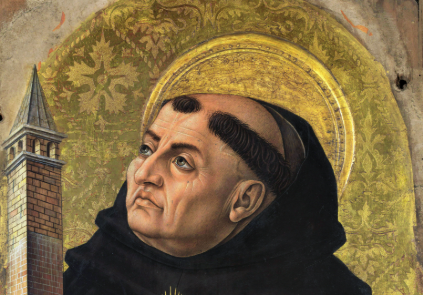
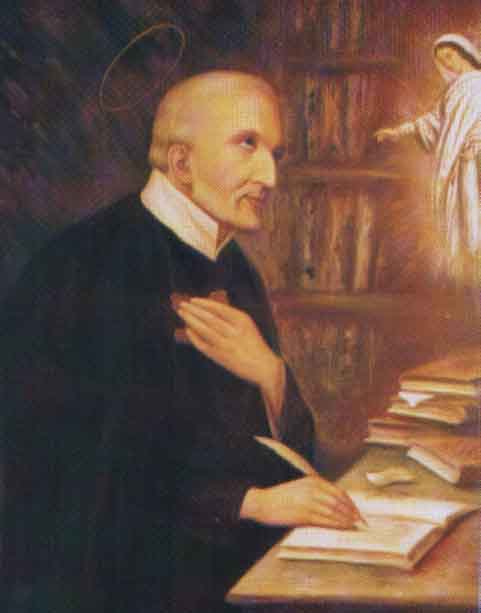
St. Alphonsus Maria de Liguori (1696-1787) wasn’t your typical medieval mystic prone to visions. He was a brilliant lawyer who earned his doctorate at age sixteen and built a successful legal career before abandoning it all to become a priest. He founded the Redemptorist order, wrote 111 books, and became one of the most influential figures in Catholic history. The Church recognized his extraordinary wisdom by naming him a Doctor of the Church and the patron saint of confessors and moral theologians. His writings have been translated into 72 languages with over 21,500 editions published (Jones, 1992).
What made Alphonsus different? He balanced mercy and justice perfectly. While the Jansenist heretics of his time portrayed God as a harsh judge who arbitrarily damned souls, Alphonsus spent hours showing compassion to sinners in the confessional—while also warning them clearly about the consequences of dying in mortal sin.
What Did St. Alphonsus Teach About Sin and Confession?
St. Alphonsus revolutionized confession through his practical manual, Praxis Confessarii, which became the standard guide for priests. He taught that confessors should be “gentle and compassionate with their penitents, to manifest the merciful love of Christ” while maintaining the integrity of Catholic moral teaching (The Divine Mercy, 2024).
He gave confessors specific phrases to use:
- “There’s no need to be afraid.”
- “God’s mercy is bigger than your sins.”
- “You’ve got every reason in the world to be at peace.”
But Alphonsus also warned against presumption—the dangerous idea that you can sin now and confess later. He wrote:
“Brother, when the devil tempts you again to sin, if you wish to be lost, you have it in your power to commit sin; but do not then say that you wish to be saved. As long as you wish to sin, regard yourself as damned” (Catholic Critique, 2022).
His teaching was clear: God’s mercy is infinite, but it requires genuine repentance, not presumption.
How Did St. Alphonsus Balance God’s Mercy and Justice?
This is where Alphonsus showed his genius. He taught that “the mercy of God is different from the acts of His mercy; the former is infinite, the latter are finite. God is merciful, but He is also just” (Virgó Sacráta, 2025). Drawing on St. Augustine, he made this crucial distinction: “After the sin, hope for mercy, before the sin, have fear of His justice” (Digilander, n.d.).
In other words:
- Before you sin: Remember God’s justice and the reality of Hell
- After you sin: Trust in God’s mercy and seek His forgiveness immediately
Alphonsus warned that those who deliberately sin while planning to confess later are abusing God’s mercy: “Those who need God’s mercy to offend him do not deserve it” (Digilander, n.d.).
Why Did St. Alphonsus Document Stories of the Damned?
St. Alphonsus wasn’t trying to terrorize people—he was trying to save them. He recorded authenticated accounts of damned souls appearing to the living as pastoral tools for conversion. These weren’t folklore or legend; they were documented by multiple ecclesiastical sources and led to dramatic conversions. As he wrote in his meditation on the folly of sinners: “O God of my soul, what should be my lot at this moment, if thou hadst not shown me so many mercies? I should be in hell, among the number of the foolish, to which I have belonged” (Spiritual Direction, 2015).
His goal was always conversion: “Alas! poor sinner, do penance rather now! amend your life at once…Begin to love Him truly” (Responsorial Psalm Catholic, 2021).
What Happened to the Brussels Students in 1604?
This account is documented in three separate ecclesiastical sources, including St. Alphonsus’s The Glories of Mary. It became famous because it converted Blessed Richard of St. Ann, who later became a Franciscan missionary and martyr.

The Story:
Two young students in Brussels lived for pleasure and sin. One night, they visited a house of prostitution together. One student left early, leaving his companion behind. When he got home exhausted, he remembered his childhood habit of praying three Hail Marys to the Blessed Virgin every day. Though barely able to keep his eyes open, he forced himself to say the prayers and fell asleep.
Shortly after, violent knocking woke him. He opened the door to find his companion—but completely disfigured and hideous.
“Who are you?” he asked in terror.
“Don’t you recognize me?” the apparition replied. “Oh, take pity upon me, for I am damned! After leaving that accursed house, an evil person attacked and strangled me. My body is lying in the middle of the street right now, and my soul is in Hell.”
Then came the most chilling part:
“The same fate awaited YOU tonight. But the Virgin Mary preserved you—because of those three Hail Marys you’ve been faithful to pray every day. Blessed are you if you profit from this warning that the Mother of God gives you through me” (Mystics of the Church, 2013).
The damned soul then opened his garment, revealing flames and demons tormenting him, before vanishing.
The Aftermath:
The surviving student collapsed in tears, thanking the Blessed Virgin. The next morning, he went to the Franciscan monastery and told them everything. The Father Guardian sent two friars to check—they found the corpse exactly where described.
That young man entered the Franciscans immediately and lived the rest of his life in penance and reparation.
What Did the London Widow Experience in 1847?
This account was documented by a priest-superior who received the details from a close relative of the woman involved. She was still alive when he recorded it on Christmas Day, 1859, so names were omitted for privacy.
The Story:
A wealthy widow in London, about 29 years old, was living a worldly life. Among her visitors was a young lord of bad character. They committed various sins together. Late one night while reading in bed, one o’clock struck. She blew out her candle and was about to sleep when a strange light spread from her drawing room into her bedroom.
The door slowly opened. The young lord—her partner in sin—walked in. Before she could speak, he seized her by the left wrist. In a hissing voice, he said just four words:
“THERE IS A HELL!”
The pain was so intense she immediately fainted (Mystics of the Church, 2013).
The Physical Evidence:
When she woke half an hour later, she called for her chambermaid. The servant noticed an overwhelming smell of burning. The burn on her wrist was so deep that the bone was exposed—the flesh almost completely consumed. But there was more: From the drawing room to the bed and back, the carpet had burned footprints scorched completely through the fibers.
The next day, she learned that at exactly one o’clock that morning—the precise time of the apparition—the young lord had been found dead drunk under a table. His servants carried him to his room, where he died of alcohol poisoning in their arms.
The Permanent Reminder:
The priest who documented this wrote: “I don’t know if that terrible lesson converted her heart. But I do know she’s still alive, and to hide the burn mark, she wears a wide gold bracelet on her left wrist that she never takes off, day or night” (Mystics of the Church, 2013).
That burn was permanent proof: There IS a Hell.
What Happened in Rome in 1873?
This account was documented by Monsignor de Segur in his book on Hell and subsequently cited by various Church authorities. It occurred just days before the Feast of the Assumption.
The Story:
After the Piedmontese invasion, brothels had been opened in Rome. One unfortunate woman was injured and taken to the hospital, where she died suddenly during the night. At the exact moment of her death, one of her companions back at the brothel—with no knowledge of what happened at the hospital—began screaming in terror so loudly she woke the entire neighborhood.
The dead woman had appeared to her, surrounded by flames, delivering a simple message:
“I am damned! And if you do not wish to be like me, leave this place of infamy and return to God” (Mystics of the Church, 2013).
Nothing could calm the girl. By dawn, she had fled the house, leaving everyone in confusion—especially when they learned her companion had indeed died at the hospital at that exact moment.
The Conversion:
The mistress of the brothel—described as a militant anti-Catholic—fell sick shortly after. Terrified by what had happened, she sent for a priest. Monsignor Sirolli came but required her to publicly renounce her blasphemies against the Pope and close down her establishment before receiving the sacraments. She agreed immediately. She made her confession, received Holy Communion with genuine repentance, and died shortly after—reconciled to God. Soon all of Rome knew about these events. As Monsignor de Segur wrote: “As usual, the ungodly mocked them. But the good became more devout and faithful to their duties” (Mystics of the Church, 2013).
What Pattern Do These Stories Reveal?
Notice the consistent elements in all three accounts:
1. Sudden Death in Mortal Sin No time for last-minute repentance. Death came unexpectedly. The Brussels student was strangled leaving a brothel. The London lord died drunk under a table. The Roman prostitute died in a hospital bed. None expected to die that night.
2. Apparitions to Warn Others The damned souls appeared specifically to warn the living. Even in judgment, God’s mercy was at work—giving opportunities for conversion to those who witnessed these apparitions.
3. Physical Evidence Burns, smells, scorched carpets, corpses found exactly where described. These weren’t dreams or hallucinations but supernatural encounters with tangible proof.
4. Dramatic Conversions Every account led to conversion—exactly what God intended. The Brussels student entered religious life. Rome’s faithful became more devout. Even the brothel mistress died reconciled to God.
What Did St. Alphonsus Teach About Hell’s Torments?
In his meditation “On Hell,” St. Alphonsus painted a vivid picture based on Scripture and Church teaching:
Physical Torments: “Contemplate for a moment that frightful prison of hell, filled with fire, where the damned suffer eternally. Into this fire they are, so to speak, plunged and buried. Under them a sea of fire, over them a sea of fire, around on all sides fire—fire in the eyes, fire in the mouth, fire penetrating everywhere” (Responsorial Psalm Catholic, 2021).
Sensory Torments: “The eyes are tormented by darkness and smoke, and by sight of the devils and the rest of the damned. Day and night, the ears hear nothing but howling, weeping, and cursing. The sense of smell is sickened by the insupportable stench of so many putrid bodies” (Responsorial Psalm Catholic, 2021).
Psychological Torments: “The memory will be everlastingly tormented by the stings of conscience. This is that worm which will forever gnaw in the conscience of the damned, to remind him how foolishly he consented to his own ruin for the sake of a few poisoned pleasures” (Responsorial Psalm Catholic, 2021).
The damned remember everything: “That gnawing worm will recall to his mind the time which God gave him for conversion, all the opportunities and means he had to secure the salvation of his soul, the good example of his friends, all the holy resolutions made, alas! but broken.”
What About God’s Mercy—Is There Hope?
Absolutely! This is crucial to understand. St. Alphonsus preached Hell’s reality not to cause despair but to encourage conversion while there’s still time.
In his essay “Motives for Confidence in Divine Mercy,” he wrote:
“From all this can you now have any doubt that God wishes to save you? From this moment onward never dare to utter again: ‘I wonder does God wish to save me. Maybe He wishes to see me damned on account of the sins I have committed against Him.’ Get rid of all such thoughts, once and for all, since you must now realize that God is helping you with His graces and calling you insistently to love Him” (The Divine Mercy, 2022).
He grounded this teaching in Scripture:
- 1 Timothy 2:3-4: God “wills everyone to be saved”
- 2 Peter 3:9: God is “not wishing that any should perish but that all should come to repentance”
What Saved the Brussels Student’s Life?
Remember the critical detail: the damned soul told his companion, “The Virgin Mary preserved you—because of those three Hail Marys you’ve been faithful to pray every day.”
A simple childhood devotion—three Hail Marys daily—saved that young man’s life and eternal soul.
This demonstrates the power of Marian devotion. St. Alphonsus wrote extensively in The Glories of Mary about how Our Lady protects those devoted to her, even when they fall into sin.
The lesson? Start praying daily to the Blessed Virgin. It might save your life—and your soul.
What Should We Do With These Warnings?
St. Alphonsus’s final prayer in his meditation on Hell gives us the answer:
“O God of my soul, what should be my lot at this moment, if thou hadst not shown me so many mercies? I should be in hell, among the number of the foolish, to which I have belonged. I thank thee, O my Lord, and I entreat thee not to abandon me in my blindness” (Spiritual Direction, 2015).
Then he urged: “Alas! poor sinner, do penance rather now! amend your life at once. O yes, wait not till time with you shall be no longer! Give yourself wholly to God. Begin to love Him truly” (Responsorial Psalm Catholic, 2021).
Three Practical Steps:
- If you’re in mortal sin—go to Confession immediately. Don’t presume you’ll have time later. All three of these souls died suddenly.
- Start praying three Hail Marys daily. This simple devotion saved the Brussels student’s life. Our Lady wants to protect you.
- Live as if today could be your last. Because it could be. Are you ready to meet God right now?
What Are St. Alphonsus’s Most Important Works?
If these accounts have moved you, dive deeper into St. Alphonsus’s complete teachings:
Click TAN BOOKS to access these titles. Use code ‘CARMEL15’ to receive 15% OFF your order. NB: Sale items not included!

Essential Reading:
- The Glories of Mary – Where he recorded these accounts and taught about Mary’s power
- Preparation for Death – Meditations on the Four Last Things
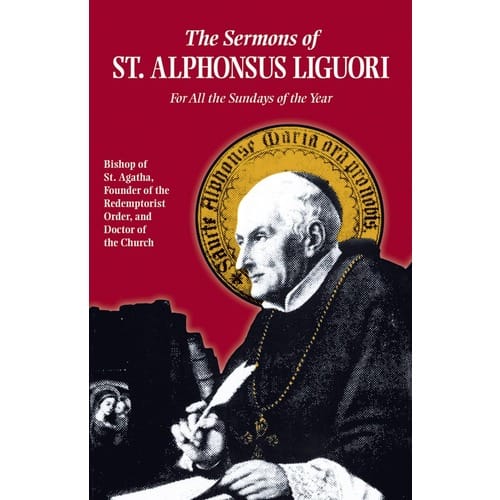
- The Sermons of St. Alphonsus – Complete collection for every Sunday
- Visits to the Blessed Sacrament – Still one of the most beloved Catholic prayer books
- Uniformity with God’s Will – How to unite your will with God’s
- The Practice of the Love of Jesus Christ – Practical guidance on Christian virtue
All available through TAN Books, which has been publishing authentic Catholic classics since 1967.
Why Is This Teaching Relevant Today?
Pope Benedict XVI said: “In our epoch, in which there are clear signs of the loss of the moral conscience and a certain lack of esteem for the sacrament of Confession, St. Alphonsus’ teaching is very timely” (Catholic Exchange, 2019).
We live in an age that denies Hell’s existence or treats it as an empty threat. Many Catholics live in mortal sin while presuming God’s mercy covers everything automatically.
St. Alphonsus’s message cuts through this complacency:
- Hell is real
- Damnation is possible
- Death can come suddenly
- But God’s mercy is available—NOW—through Confession
As he taught: “After the sin, hope for mercy, before the sin, have fear of His justice.”
What’s the Final Takeaway?
Hell is real. These three documented accounts prove it. The Brussels student’s companion. The London lord. The Roman prostitute. All three are in Hell right now—and will be forever.
But here’s the hope: God permitted these apparitions as acts of mercy. They saved the Brussels student. They brought conversion to Rome. They’ve been preserved in Church records for centuries to warn us.
Don’t waste the warning.
If you’re living in mortal sin, go to Confession today. Not tomorrow. Not next week. Today.
Start praying to Our Lady. She saved that Brussels student—she can save you.
Live each day ready to meet God. Because you don’t know when your last day will come.
St. Alphonsus’s prayer is our prayer:
“I am sorry for having offended thee, O Sovereign Good! and I love thee above all things. I resolve to forfeit everything rather than lost thy grace and thy love. Do not permit me ever more to depart from thee.”
References
Benedict XVI. (2007). Doctors of the Church. Vatican City: Libreria Editrice Vaticana.
Catholic Critique. (2022, December 12). St. Alphonsus de Liguori on judgment and mercy. Retrieved from https://catholiccritique.com/2021/09/04/st-alphonsus-de-liguori-on-judgment-and-mercy/
Catholic Exchange. (2019, August 2). St. Alphonsus Liguori: Patron saint of confessors & lover of souls. Retrieved from https://catholicexchange.com/st-alphonsus-liguori-patron-saint-of-confessors-lover-of-souls/
Digilander. (n.d.). Abuse of divine mercy: Reflections of Saint Alfonso Maria de Liguori. Retrieved from https://digilander.libero.it/speran/misericordia/inglese/abuso.htm
Jones, F. M. (1992). Alphonsus de Liguori: Saint of Bourbon Naples, 1696–1787. Westminster, MD: Christian Classics.
Mystics of the Church. (2013, March). Stories of hell in the lives of the saints. Retrieved from https://www.mysticsofthechurch.com/2013/03/stories-of-hell-in-lives-of-saints.html
Responsorial Psalm Catholic. (2021, September 7). Friday meditation – St Alphonsus Liguori – on hell. Retrieved from https://responsorialpsalmcatholic.wordpress.com/2021/09/07/friday-meditation-st-alphonsus-liguori-on-hell/
Spiritual Direction. (2015, March 12). Folly of sinners. Retrieved from https://spiritualdirection.com/2015/03/12/folly-of-sinners
The Divine Mercy. (2022, May 11). The spirituality of St. Alphonsus Liguori. Retrieved from https://www.thedivinemercy.org/articles/spirituality-st-alphonsus-liguori
The Divine Mercy. (2024, May 17). St. Alphonsus Liguori. Retrieved from https://www.thedivinemercy.org/articles/st-alphonsus-liguori
Virgó Sacráta. (2025, April 24). On the abuse of divine mercy, sermon by St. Alphonsus Liguori. Retrieved from https://www.virgosacrata.com/divine-mercy.html