What Did Heaven Request 100 Years Ago? The First Five Saturdays Devotion at Its Centennial.
A Call to Reparation on the 100th Anniversary of Our Lady’s Request
On December 10, 2025, the Catholic world marked a profound yet largely forgotten centennial: one hundred years since the Blessed Virgin Mary appeared to Sister Lúcia dos Santos in Pontevedra, Spain, requesting the establishment of the First Five Saturdays Devotion. This momentous anniversary arrived at a time when the world seems to be experiencing the very crisis Our Lady warned about—apostasy, moral chaos, and a decisive spiritual battle. As we stand at this critical juncture, it is essential to understand what Heaven requested, why the message faced suppression, and how the faithful can respond to this urgent call.
Sister Lúcia’s words to Father Augustin Fuentes in 1957 echo with even greater urgency today: “God is giving two last remedies to the world. These are the Holy Rosary and devotion to the Immaculate Heart of Mary. These are the last two remedies which signify that there will be no others” (de la Sainte Trinité, 1990, p. 505). One hundred years after Heaven extended this lifeline, the question confronting every Catholic is stark: Will we finally respond?
What Is the Theological Foundation for Reparation to the Immaculate Heart of Mary?
The First Five Saturdays Devotion rests upon the ancient Catholic understanding that while Christ’s sacrifice on Calvary was infinitely sufficient for the redemption of all humanity, the faithful are called to participate in His redemptive work. This profound mystery finds expression in Saint Paul’s words: “I rejoice in my sufferings for your sake, and in my flesh I am filling up what is lacking in the afflictions of Christ on behalf of his body, that is, the church” (Colossians 1:24, New American Bible). The apparent paradox—that nothing is “lacking” in Christ’s perfect sacrifice, yet we are invited to “fill up” what remains—reveals the beautiful truth of our participation in the divine plan of salvation.
Pope Pius XI articulated this theology comprehensively in his 1928 encyclical Miserentissimus Redemptor, which established reparation as a central practice of Catholic piety. The Holy Father wrote: “If the first and foremost thing in Consecration is this, that the creature’s love should be given in return for the love of the Creator, another thing follows from this at once, namely that to the same uncreated Love, if so be it has been neglected by forgetfulness or violated by offense, some sort of compensation must be rendered for the injury” (Pius XI, 1928, para. 7). Significantly, Pius XI explicitly identified Mary as “the Reparatress”—one who, by her mystical union with Christ and singular grace, “likewise became and is piously called a reparatress” (Pius XI, 1928, para. 14).
The devotion to the Immaculate Heart of Mary developed gradually through Church history. While early Church Fathers like Ildefonsus of Toledo (607-670) referenced Mary’s interior life, it was Saint John Eudes (1601-1680) who established the theological unity of devotion to both the Sacred Heart of Jesus and the Immaculate Heart of Mary (Laurentin, 1988). Pope Saint Pius X named him “the father, Doctor, and Apostle of the liturgical cult of the Sacred Hearts of Jesus and Mary,” formally recognizing this dual devotion’s importance in Catholic spirituality.
Pope Pius XII further developed this connection in his 1956 encyclical Haurietis Aquas, stating: “In order that favors in great abundance may flow on all Christians, nay, on the whole human race, from the devotion to the most Sacred Heart of Jesus, let the faithful see to it that to this devotion the Immaculate Heart of the Mother of God is closely joined” (Pius XII, 1956, para. 108). This papal teaching confirmed that the First Five Saturdays devotion—revealed in 1925—stands firmly within established Catholic tradition, complementing the devotion to the Sacred Heart of Jesus revealed to Saint Margaret Mary Alacoque two and a half centuries earlier.
The theological foundation is clear: reparation flows from love, seeks to console the wounded hearts of Jesus and Mary, and participates in the ongoing work of redemption by making amends for the sins that continue to offend divine love.
What Happened on December 10, 1925? Understanding the Pontevedra Apparition
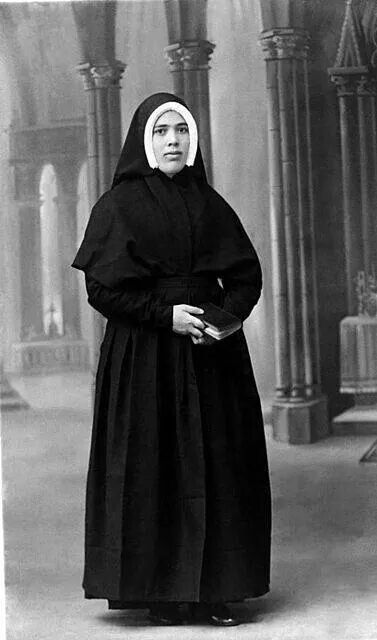
Exactly one hundred years ago this December, Heaven made an extraordinary request that would largely go unheeded by the Catholic faithful. Sister Lúcia dos Santos, then a young Dorothean nun residing at the convent in Pontevedra, Spain, experienced an apparition that she carefully documented in her memoirs (dos Santos, 1976). Writing in the third person, she described the event:
The Most Holy Virgin Herself appeared, and beside Her, borne by a luminous cloud, the Child Jesus. The Most Holy Virgin put Her hand on her shoulder and showed her, at the same time, a Heart surrounded by thorns which She held in the other hand. (dos Santos, 1976, p. 162)
The Child Jesus spoke first, His words piercing the heart with their poignancy: “Have compassion on the Heart of your Most Holy Mother, covered with thorns with which ungrateful men pierce It at every moment, and there is no one to make an act of reparation to remove them” (dos Santos, 1976, p. 162). The image—a Heart encircled by thorns with no one willing to remove them—conveys the profound sorrow of a Mother whose children have abandoned and insulted her.
Our Lady then revealed both the devotion and its extraordinary promise:

Look, My daughter, at My Heart, surrounded with thorns with which ungrateful men pierce Me at every moment by their blasphemies and ingratitude. You at least try to console Me and announce in My name that I promise to assist at the moment of death, with all the graces necessary for salvation, all those who, on the first Saturday of five consecutive months, shall confess, receive Holy Communion, recite five decades of the Rosary, and keep Me company for fifteen minutes while meditating on the mysteries of the Rosary, with the intention of making reparation to Me. (dos Santos, 1976, p. 162)
The promise is staggering in its generosity: the Blessed Mother herself—the Mediatrix of All Graces—guarantees to assist at the hour of death with “all the graces necessary for salvation.” This includes the grace of final perseverance, which the Council of Trent declared cannot be merited but must be sought through prayer (Trent, Session VI, Canon 16). For Catholics who understand that the moment of death determines one’s eternal destiny, this promise represents an incalculable spiritual treasure.
Two months later, on February 15, 1926, the Child Jesus appeared again to provide crucial clarifications. When Sister Lúcia expressed concern about souls who might find it difficult to confess on the exact first Saturday, Our Lord responded with remarkable mercy:
“The practice of this devotion will be equally acceptable on the Sunday following the first Saturday when, for just reasons, My priests will allow it” (dos Santos, 1976, p. 163).
Regarding confession specifically, Jesus assured:
“It can even be made later on, provided that the souls are in the state of grace when they receive Me on the first Saturday, and that they had the intention of making reparation to the Sacred Heart of Mary” (dos Santos, 1976, p. 163).
These merciful accommodations reveal Heaven’s earnest desire for the devotion to spread widely, removing potential obstacles that might prevent the faithful from fulfilling its requirements.
Why Five Saturdays? What Are the Five Blasphemies Against Mary’s Immaculate Heart?
The specific number—five consecutive first Saturdays—remained mysterious until the night of May 29-30, 1930, when Our Lord revealed the reason to Sister Lúcia at her convent in Tuy, Spain. The five Saturdays correspond to five distinct categories of blasphemies and offenses committed against the Immaculate Heart of Mary:
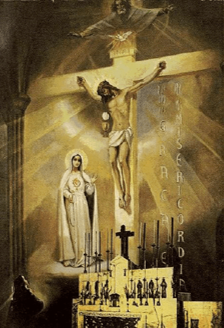
- Blasphemies against the Immaculate Conception — denying that Mary was conceived without original sin
- Blasphemies against her Perpetual Virginity — attacking the doctrine that Mary remained a virgin before, during, and after the birth of Christ
- Blasphemies against her Divine Maternity — refusing to recognize her both as the Mother of God (Theotokos) and as the spiritual Mother of all humanity
- The blasphemies of those who publicly seek to sow in the hearts of children indifference, contempt, or even hatred toward the Immaculate Mother
- The offenses of those who outrage her directly in her holy images
Our Lord concluded His explanation: “Here, my daughter, is the reason why the Immaculate Heart of Mary made Me ask for this little act of reparation and, in consideration of it, move My mercy to forgive those souls who had the misfortune of offending Her” (dos Santos, 1976, p. 164).
Each blasphemy strikes at a fundamental Marian dogma or essential Church teaching. The Immaculate Conception (defined by Pope Pius IX in 1854) and the Divine Maternity (defined at the Council of Ephesus in 431) are dogmas of the faith; denying them places one outside Catholic communion. The perpetual virginity of Mary has been taught consistently since the earliest centuries of Christianity, affirmed by Church Fathers like Saint Augustine and Saint Athanasius.
The fourth blasphemy—instilling indifference or hatred toward Mary in children’s hearts—appears particularly prophetic given contemporary trends. Even within Catholic circles, one finds a minimization of Marian devotion, a reluctance to teach children traditional Marian prayers, and sometimes outright hostility toward authentic Marian piety. The fifth blasphemy—outraging her holy images—manifests not only in vandalism of statues and icons but in the artistic degradation of Mary’s image in contemporary religious art.
Looking at our contemporary world, each of these five blasphemies has intensified rather than diminished. Protestant theology continues to reject Catholic Marian doctrines; secularism mocks the very concept of virginity; modern Catholic catechesis often downplays Mary’s unique role; and sacred images face both physical desecration and artistic profanation. The need for reparation has never been more urgent.
How Did the Church Officially Respond to This Request?
The path from private revelation to diocesan approval proved surprisingly arduous. Despite the apparition occurring in December 1925, official diocesan approval did not come until September 13, 1939—nearly fourteen years later. This delay occurred despite Sister Lúcia’s persistent requests to her spiritual directors and ecclesiastical superiors (Kondor, 2007).
Bishop José Alves Correia da Silva of Leiria-Fátima, the diocese with jurisdiction over Fátima, finally granted formal approval on September 13, 1939. Several factors converged to prompt this decision: the Bishop himself had suffered a serious illness in July 1939; World War II had been declared on September 3, plunging Europe into another catastrophic conflict just as Our Lady had warned; and the new pontificate of Pope Pius XII (elected March 1939) had brought renewed attention to Fátima (Kondor, 2007).
The Bishop announced his approval during the pilgrimage homily at the Cova da Iria and subsequently published it in the October 1939 issue of Voz da Fátima, the official publication of the Fátima shrine, which reached approximately 380,000 readers (Apostoli, 2010). In his statement, Bishop da Silva clarified that confession “may be made during the eight days preceding or following the first Saturday of each month, provided that Holy Communion be received in the state of grace” (Apostoli, 2010, p. 189).
Significantly, while the devotion received diocesan approval, it has never received explicit papal approval or been raised to universal Church practice. It remains an approved private devotion, which means Catholics are free to practice it but are not obliged to do so. The Apostolic Penitentiary has further decreed that confession may be made within twenty days before or after the first Saturday, provided the communicant is in a state of grace when receiving Communion (Catholic Answers, 2024).
Pope Pius XII demonstrated his devotion to the Immaculate Heart of Mary by consecrating the entire world to her Immaculate Heart on October 31, 1942, and establishing the universal Feast of the Immaculate Heart of Mary on May 4, 1944 (Apostoli, 2010). However, these papal actions, while acknowledging the importance of devotion to Mary’s Immaculate Heart, did not specifically promote the First Five Saturdays devotion itself.
The question naturally arises: Why has a devotion with such extraordinary promises, revealed by the Mother of God herself and approved at the diocesan level, remained relatively unknown and unpracticed by the vast majority of Catholics worldwide?
What Controversy Surrounded Sister Lúcia’s 1957 Interview with Father Fuentes?
The most significant controversy regarding Sister Lúcia’s communications about Fátima centers on her December 26, 1957 interview with Father Augustin Fuentes, a Mexican priest serving as postulator for the beatification causes of Francisco and Jacinta Marto. The interview occurred just three weeks after the death of Bishop da Silva on December 4, 1957—a bishop who, according to some accounts, had failed to read the Third Secret despite Sister Lúcia’s urgings (de la Sainte Trinité, 1990).
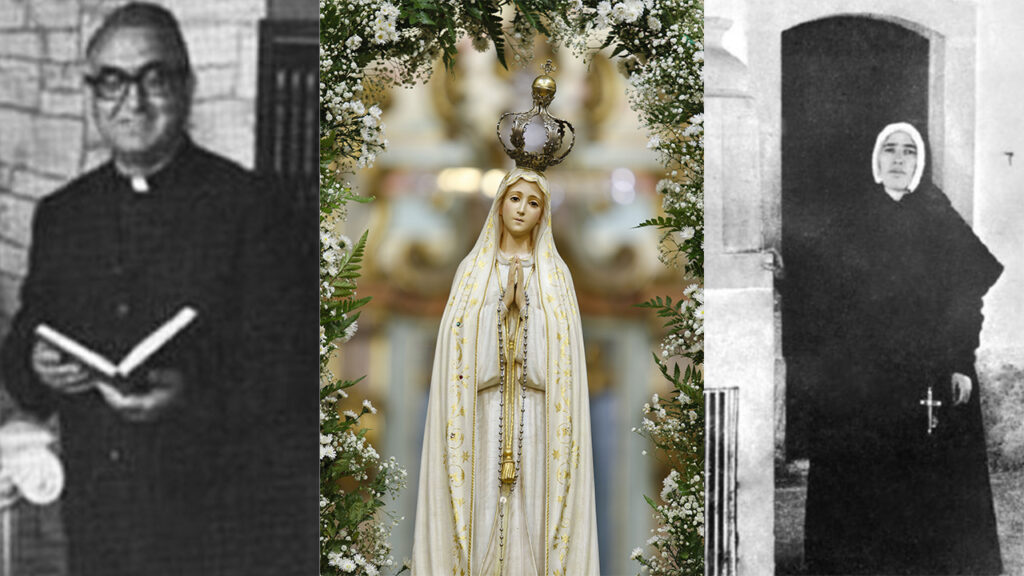
Father Fuentes reported that Sister Lúcia appeared “very sad, very pale and emaciated” when they met (de la Sainte Trinité, 1990, p. 504). According to his account, she delivered urgent warnings about the state of the world and the Church. Most significantly for our purposes, she allegedly identified God’s “two last remedies” for the world:
“She is giving two last remedies to the world: the Holy Rosary and Devotion to the Immaculate Heart of Mary. And, being the last remedies, that is to say, they are the final ones, means that there will be no others” (de la Sainte Trinité, 1990, p. 505).
Sister Lúcia reportedly spoke of three reasons why we are in “the last times”: first, because the devil is engaged in a “decisive battle” against the Virgin Mary; second, because God is giving these two last remedies; and third, because “in the plans of Divine Providence, God always, before He is about to chastise the world, exhausts all other remedies” (de la Sainte Trinité, 1990, p. 505).
The interview was published in May 1958 with episcopal approval, including that of the Bishop of Fátima. However, on July 2, 1959—during the pontificate of John XXIII and as preparations for Vatican Council II were underway—the Coimbra chancery issued a harsh, anonymous condemnation of Father Fuentes. The statement accused him of making “sensational declarations, of an apocalyptic, eschatological and prophetic character” and claimed to include a denial from Sister Lúcia herself (de la Sainte Trinité, 1990, p. 506).
Father Fuentes was immediately relieved of his position as postulator and replaced by Father Luis Kondor. The controversy appeared settled—Father Fuentes had fabricated or grossly exaggerated Sister Lúcia’s statements.
But the story did not end there.
Father Joaquin María Alonso, appointed official Fátima archivist in 1966 with unprecedented access to Sister Lúcia and all Fátima documentation, initially accepted the Coimbra statement. After ten years of meticulous research, however, Father Alonso completely reversed his position. In his 1976 work The Secret of Fátima: Fact and Legend, he concluded:
What Father Fuentes says in the genuine text of his conference… corresponds no doubt in its essentials to what he heard during his visit to Sister Lúcia… these texts say nothing that Sister Lucy has not said in her numerous published writings. (Alonso, 1979, p. 104)
Father Alonso observed that while Father Fuentes may have embellished his presentation with “oratorical” flourishes when speaking to a religious community, the substance of what he reported matched Sister Lúcia’s documented writings. The principal defect, Alonso suggested, was presenting these statements as a formal “message” addressed to the world, when Sister Lúcia had not intended them as such (Alonso, 1979).
Both Father Alonso and Father Kondor believed that Father Fuentes had not fabricated his reports. Tellingly, Sister Lúcia—who did not hesitate to correct errors in other authors’ works—never corrected Father Alonso’s published conclusions, though she lived nearly three more decades after his book appeared.
The Fuentes controversy reveals a troubling pattern: urgent warnings from Sister Lúcia, followed by official denials or suppressions, leaving the faithful confused about what Heaven actually communicated through the last surviving Fátima seer.
What Evidence Exists of Systematic Restrictions on Sister Lúcia’s Communications?
Beyond the Fuentes controversy, a documented pattern of communication restrictions emerges when examining Sister Lúcia’s life from the 1950s onward. These restrictions became progressively more severe, effectively silencing the primary witness to the Fátima apparitions during the very period when, according to her own statements, the urgency of the message was greatest.
A timeline of documented restrictions reveals the pattern:
1955: Cardinal Ottaviani of the Holy Office personally interviewed Sister Lúcia. Subsequently, Rome issued censures that limited her freedom to communicate about Fátima (Kramer, 2000).
1957: Following the Fuentes interview, Rome requested that all secrets be sent from Sister Lúcia. According to Father Alonso, “strict orders” were issued that she not receive visitors unless specifically authorized by Rome (de la Sainte Trinité, 1990).
February 8, 1960: Rather than revealing the Third Secret as many expected, the Vatican issued an anonymous press release stating “it is most likely that the letter will never be opened” (de la Sainte Trinité, 1990, p. 579).
Post-1960: Sister Lúcia was “strictly forbidden to speak about the Third Secret.” Even her longtime confessor, Father José da Silva Aparicio, was denied access to her (Kramer, 2000, p. 47).
1966: When Pope Paul VI abrogated canons that had required ecclesiastical approval before publishing on Marian apparitions, Sister Lúcia—uniquely among the world’s 700 million Catholics—was explicitly denied this freedom (Kramer, 2000).
May 1967: When Pope Paul VI visited Fátima for the fiftieth anniversary of the apparitions, Sister Lúcia reportedly “pleaded to speak with him, but was rebuffed and told to ‘speak to your bishop'” (Kramer, 2000, p. 49).
Father Aparicio, Sister Lúcia’s confessor for many years, stated publicly: “I have not been able to speak with Sister Lucy because the Archbishop could not give the permission to meet her. The conditions of isolation in which she finds herself have been imposed by the Holy See. Consequently, no one may speak with her without a license from Rome” (Kramer, 2000, p. 49).
Perhaps most significantly, Father Alonso completed a massive 24-volume critical documentary history of Fátima, comprising approximately 5,396 documents and roughly 800 pages per volume—the most comprehensive scholarly work on Fátima ever produced (de la Sainte Trinité, 1990). This monumental work was completed in 1975 but was forbidden from publication by Bishop Alberto Cosme do Amaral of Leiria-Fátima. Only two heavily edited volumes were released after Father Alonso’s death in 1981, with the remaining 22 volumes remaining suppressed (de la Sainte Trinité, 1990).
These restrictions raise profound questions: If Sister Lúcia’s messages aligned perfectly with Church teaching and posed no doctrinal problems, why the systematic silencing? If Father Fuentes had genuinely fabricated his interview, why didn’t ecclesiastical authorities produce Sister Lúcia for a public statement? Why was the world’s foremost Fátima scholar’s comprehensive work suppressed?
The pattern suggests that Sister Lúcia’s messages—particularly regarding the urgency of the times, the need for reparation, and warnings about crisis in the Church—met resistance from ecclesiastical authorities who preferred a different narrative.
How Has the Devotion Spread Over the Past Century?
Despite limited official promotion and the controversies surrounding Sister Lúcia, the First Five Saturdays devotion has spread throughout the Catholic world, primarily through grassroots movements and dedicated lay apostolates. The principal vehicle for this dissemination has been the Blue Army of Our Lady of Fátima (now known as the World Apostolate of Fátima).
Founded in 1946-1947 by Father Harold Colgan and John Haffert with Sister Lúcia’s direct input and blessing from Pope Pius XII, the Blue Army formulated a pledge that included the practice of the First Five Saturdays devotion (Haffert, 1950). The movement experienced remarkable growth in its early decades:
- 1947: Formal founding with papal blessing
- 1950: One million members worldwide
- 1953: Five million members
- 1960s-1970s: Peak membership estimated at 20-25 million
- October 7, 2005: Elevated to a public international association of the faithful by the Holy See
Today, the World Apostolate of Fátima claims presence in 57 countries with millions of members, though precise current membership figures are difficult to verify (World Apostolate of Fátima, 2024). The movement established its U.S. national shrine in Washington, New Jersey (later moved to Asbury), and has been particularly strong in traditionally Catholic countries including Portugal, Poland, the Philippines, and various Latin American nations.
However, despite this organizational framework, contemporary practice rates of the First Five Saturdays devotion remain disappointingly low. David Carollo, executive director of the World Apostolate of Fátima U.S.A., acknowledges that the devotion is “the unfulfilled part of the Fátima message” and notes that most Catholics have never completed—or even heard of—the First Five Saturdays (Marians of the Immaculate Conception, 2024).
The devotion is frequently described as “the forgotten request” of Fátima. While millions of Catholics know about the Rosary request and many are aware of the secrets revealed at Fátima, the specific practice of the First Five Saturdays has failed to achieve widespread observance. Surveys and anecdotal evidence suggest that even among Catholics who consider themselves devoted to Our Lady of Fátima, only a small minority have completed the five consecutive first Saturdays, and an even smaller percentage continue the practice monthly as recommended.
This reality stands in stark contrast to Heaven’s promise and the urgency with which Sister Lúcia communicated its importance. December 10, 2025, marked the centennial of the request for the First Five Saturday Devotion, however the devotion has been largely ignored. The question facing the Catholic Church is whether the post-centennial anniversary will finally awaken widespread response to the devotion or will the devotion continue to be ignored?
What Practical Steps Can Catholics Take to Fulfill This Devotion?
The First Five Saturdays devotion requires four specific practices, all performed with the intention of making reparation to the Immaculate Heart of Mary. That intention—reparation for sins against Mary’s Immaculate Heart—is the spiritual foundation that gives meaning to the external practices.
The Four Requirements
1. Sacramental Confession: Receive the Sacrament of Reconciliation. Confession may be made within eight days before or after the first Saturday (some sources indicate up to twenty days), provided you are in a state of grace when receiving Communion. If you forget to form the intention of reparation during confession, you may form it at your next confession.
2. Holy Communion: Receive Holy Communion on the first Saturday while in the state of grace and with the intention of making reparation. This may be fulfilled at a Saturday morning Mass or at a Saturday evening vigil Mass.
3. Five Decades of the Rosary: Pray at least five decades (one complete set of mysteries) of the Rosary on the first Saturday with the intention of reparation.
4. Fifteen Minutes of Meditation: Spend fifteen minutes meditating on one or more mysteries of the Rosary. This meditation is separate from and in addition to the Rosary itself. Sister Lúcia clarified that it is not necessary to meditate on all fifteen mysteries; one may focus on a single mystery, several mysteries, or all of them together, though she recommended meditating on one mystery each month (dos Santos, 1976). This meditation may be done at any time during the first Saturday—in church before the Blessed Sacrament, at home, or wherever quiet prayer is possible.
Important Clarifications
Our Lord graciously provided accommodations for those who face legitimate obstacles. If work, illness, or other just reasons prevent fulfilling the devotion on Saturday, “the practice of this devotion will be equally acceptable on the Sunday following the first Saturday when, for just reasons, My priests will allow it” (dos Santos, 1976, p. 163).
The devotion must be completed on five consecutive first Saturdays. If you miss a month, you must begin the sequence again. However, after completing the five consecutive months, many spiritual directors recommend continuing the practice monthly for life, both to continue making reparation and to deepen one’s devotion to the Immaculate Heart of Mary.
Why Does This Centennial Matter? What Is Heaven Calling Us to Do?
On December 10, 2025, one hundred years will have passed since Our Lady revealed her Heart surrounded by thorns to Sister Lúcia and requested this devotion. One hundred years of mostly being ignored. One hundred years while the world has descended into exactly the crises Sister Lúcia warned about: world wars, the spread of atheistic communism, moral collapse, family breakdown, massive apostasy from the faith, and confusion within the Church itself.
Sister Lúcia’s words from 1957 take on prophetic weight: “Father, the Most Holy Virgin is very sad because no one has paid any attention to Her Message, neither the good nor the bad. The good continue on their way but without giving any importance to Her Message” (de la Sainte Trinité, 1990, p. 504).
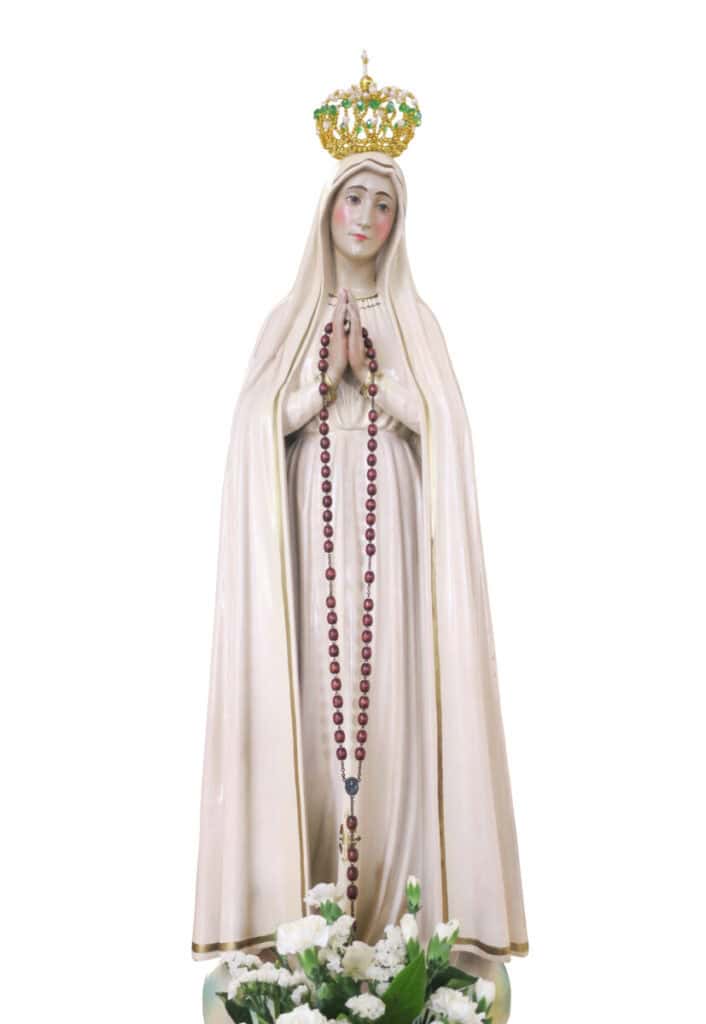
The centennial is not merely a historical anniversary—it is a divine alarm bell. When Heaven says these are the “last remedies” and there will be “no others,” we must take those words with the utmost seriousness. God has exhausted His remedies. The Blessed Mother has revealed her wounded Heart and asked for this small act of reparation. The promise she attaches—assistance at death with all graces necessary for salvation—should compel every Catholic to ask: Can I afford to ignore this?
The centennial offers an opportunity for renewal. Catholic parishes, apostolates, and families can mark December 10, 2025, as a day of special devotion to the Immaculate Heart of Mary and commitment to the First Five Saturdays. Bishops might consider promoting the devotion in their dioceses. Priests could preach on its importance and facilitate its practice by offering Saturday Masses and promoting Saturday confessions.
Most importantly, individual Catholics can make a personal decision: Beginning in January 2026, I will complete the First Five Saturdays devotion. I will continue it monthly for the rest of my life. I will teach it to my children. I will share it with fellow Catholics. I will be part of the faithful remnant that finally responds to Heaven’s call.
The stakes could not be higher. As Sister Lúcia reportedly said: “War or Peace of the world depends upon the practice of this devotion joined with the consecration to the Immaculate Heart of Mary” (de la Sainte Trinité, 1990, p. 587).
Conclusion: A Century of Waiting, A Moment for Response
As this comprehensive examination has shown, the First Five Saturdays devotion rests on solid theological foundations, was revealed through authentic private revelation, received diocesan approval, and carries extraordinary promises from the Mother of God herself. Yet it remains “the forgotten request”—known by few, practiced by fewer.
The documented restrictions on Sister Lúcia’s communications, the suppression of Father Alonso’s comprehensive research, and the controversy surrounding messages of urgency raise troubling questions. But regardless of these historical complexities, one fact remains clear: Heaven made a request, attached a promise, and has been waiting for a response.
The centennial anniversary of December 10, 2025, marks a providential moment. One hundred years is a biblically significant number—a complete generation, a full lifetime, a span that should awaken even the most complacent soul to action. The world has witnessed everything Sister Lúcia warned about. The “decisive battle” between the Woman and the serpent continues to rage. The thorns still pierce Our Lady’s Immaculate Heart.
But it is not too late. The promise still stands. The devotion remains available. The graces are waiting to be claimed.
On this centennial, every Catholic faces a choice: Will we be among those who finally respond to Heaven’s urgent call? Will we console the wounded Heart of our Mother? Will we secure for ourselves and our loved ones the promise of assistance at death with all graces necessary for salvation?
The Immaculate Heart of Mary is waiting. The decision is ours.
References
Alonso, J. M. (1979). The secret of Fatima: Fact and legend (D. Foley, Trans.). Ravengate Press.
Apostoli, A. (2010). Fatima for today: The urgent Marian message of hope. Ignatius Press.
Catholic Answers. (2024). First Saturday devotion requirements, including time frame for confession. https://www.catholic.com/qa/first-saturday-devotion-requirements
de la Sainte Trinité, F. M. (1990). The whole truth about Fatima: Volume III—The third secret. Immaculate Heart Publications.
dos Santos, L. (1976). Fatima in Lucia’s own words: Sister Lucia’s memoirs (L. Kondor, Ed.). Secretariado dos Pastorinhos.
Haffert, J. (1950). Russia will be converted. AMI Press.
Kondor, L. (Ed.). (2007). Fatima in Lucia’s own words: Sister Lucia’s memoirs (16th ed.). Secretariado dos Pastorinhos.
Kramer, P. (2000). The battle of the angels. Good Counsel Publications.
Laurentin, R. (1988). The meaning of consecration today. Ignatius Press.
Marians of the Immaculate Conception. (2024). Five first Saturdays for peace and salvation. https://marian.org/13th/five-first-saturdays-of-reparation
Pius XI. (1928). Miserentissimus Redemptor [Encyclical letter on reparation to the Sacred Heart]. https://www.vatican.va/content/pius-xi/en/encyclicals/documents/hf_p-xi_enc_19280508_miserentissimus-redemptor.html
Pius XII. (1956). Haurietis Aquas [Encyclical letter on devotion to the Sacred Heart]. Libreria Editrice Vaticana.
World Apostolate of Fatima. (2024). First Saturdays devotion. https://www.bluearmy.com
Author’s Note: This article has been written in a spirit of filial devotion to the Blessed Virgin Mary and obedience to the Magisterium of the Catholic Church. All interpretations of private revelation are subject to the judgment of the Church. Catholics are encouraged to consult with their spiritual directors regarding the practice of this devotion.
Advertisement: Deepen your understanding of Fatima and traditional Catholic spirituality with books from TAN Publishers. Use code CARMEL15 for 15% off your purchase (excludes items already on sale). Visit www.tanbooks.com to explore their extensive collection of Catholic classics, Marian devotionals, and spiritual reading.
For more information about the First Five Saturdays devotion and resources for practicing it, visit eternallycatholic.com.