November and the Holy Souls in Purgatory: A Comprehensive Guide to Catholic Teaching and Practice
The Catholic Church dedicates November to the faithful departed in Purgatory, offering extraordinary spiritual opportunities for the living to aid those still undergoing final purification. During the first eight days of November, Catholics can gain a plenary indulgence daily—potentially removing all temporal punishment for a soul and hastening their entry into Heaven (Catholic Culture, n.d.-a). This practice rests on the ancient doctrine of the Communion of Saints, where the Church Militant (faithful on earth), Church Suffering (souls in Purgatory), and Church Triumphant (saints in Heaven) remain spiritually united through Christ’s Mystical Body. November’s significance emerges from the liturgical placement of All Saints Day (November 1) and All Souls Day (November 2), creating a natural progression from celebrating those in Heaven to praying for those still being purified. The Church does not teach that souls are automatically released during November, but rather that this month provides exceptional means through indulgences, prayers, and the Holy Sacrifice of the Mass to accelerate their purification and entry into eternal glory.
What Does the Church Teach About Purgatory as Final Purification?
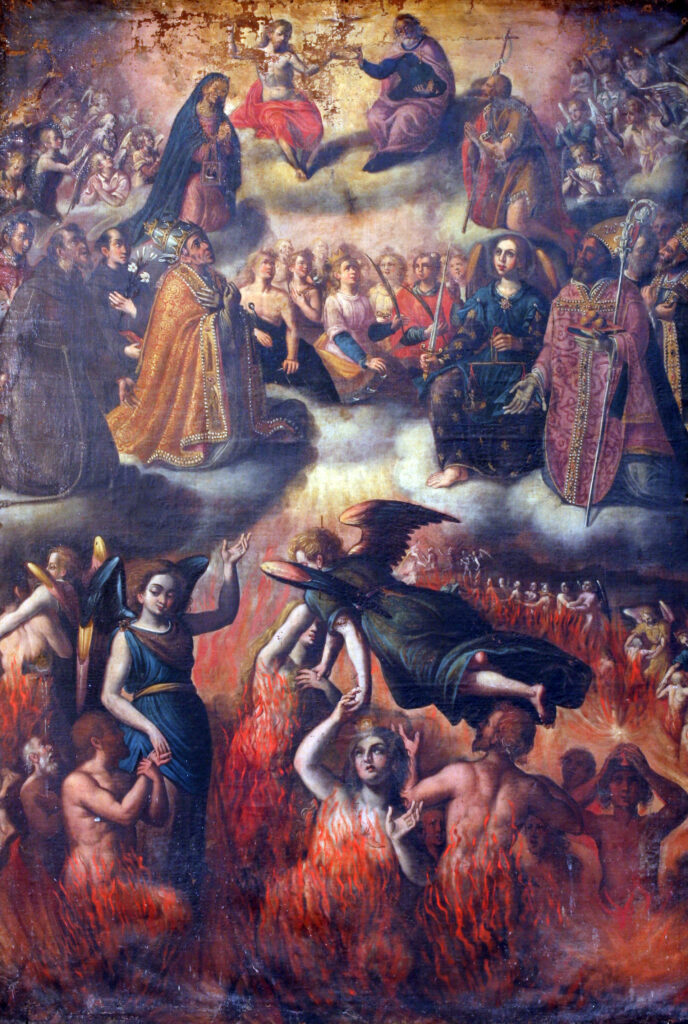
The Catechism of the Catholic Church definitively teaches that “all who die in God’s grace and friendship, but still imperfectly purified, are indeed assured of their eternal salvation; but after death they undergo purification, so as to achieve the holiness necessary to enter the joy of heaven” (CCC 1030; Catechism of the Catholic Church, 1994). This doctrine, formally defined at the Councils of Florence and Trent, represents a dogma of Catholic faith—not optional belief but binding teaching for all Catholics.
The Council of Trent declared in 1563 that “there is a purgatory and that the souls detained there are helped by the acts of intercession of the faithful, and especially by the acceptable sacrifice of the altar” (Council of Trent, 1563/1978). This came as the Church’s definitive response to Protestant reformers who had rejected the doctrine entirely. Purgatory is entirely different from Hell—those in Purgatory are saved and certain of reaching Heaven, while those in Hell have definitively rejected God. Purgatory is remedial and temporary; Hell is punitive and eternal.
Pope Benedict XVI provided profound theological insight in his 2007 encyclical Spe Salvi, describing Purgatory not primarily as a place but as “an encounter with Christ the Judge” (Benedict XVI, 2007, para. 47). He wrote that “the encounter with him, as it burns us, transforms and frees us, allowing us to become truly ourselves” (Benedict XVI, 2007, para. 47). This transformative fire is Christ’s love itself, which “burns us” yet simultaneously heals us through “an undeniably painful transformation ‘as through fire'” (Benedict XVI, 2007, para. 47). Modern theology emphasizes Purgatory as a condition or state of existence rather than merely a geographical location, though the purification remains real and often described as involving genuine suffering.
The biblical foundation rests primarily on 2 Maccabees 12:42-46, where Judas Maccabeus makes atonement for fallen soldiers “that they might be delivered from their sin,” and 1 Corinthians 3:12-15, where Paul describes being “saved, yet so as through fire” (New American Bible, 2011). From the earliest Christian centuries, inscriptions in the Roman catacombs requested prayers for the departed, demonstrating apostolic-era practice (Catholic Encyclopedia, 1911). Church Fathers including Tertullian, Cyprian, Cyril of Jerusalem, and especially Augustine of Hippo developed the theology systematically. Augustine distinguished between purgatorial fire that purifies and eternal fire that condemns, teaching that “some believers will pass through a kind of purgatorial fire” (Catholic Encyclopedia, 1911).
Who Enters Purgatory and Why Is Purification Necessary?
Only those who die in a state of grace enter Purgatory—those who die in unrepented mortal sin go directly to Hell, not Purgatory. The Church teaches that Purgatory receives the imperfectly purified who die with venial sins not yet forgiven, temporal punishment still due for forgiven sins, attachments to created things preventing full union with God, or imperfections in virtue hindering complete holiness (Catechism of the Catholic Church, 1994).
The theological necessity arises from God’s absolute holiness. As Revelation 21:27 declares, “nothing unclean shall enter” Heaven, and Hebrews 12:14 teaches that “without holiness no one will see the Lord” (New American Bible, 2011). The Catechism explains that sin has a “double consequence”—eternal punishment (remitted through absolution) and temporal punishment (CCC 1472; Catechism of the Catholic Church, 1994). Even after sins are forgiven sacramentally, this temporal punishment must be satisfied either on earth through penance or after death in Purgatory.
Those in Purgatory experience two forms of suffering traditionally described as the pain of loss (poena damni)—temporary deprivation of the beatific vision, which constitutes their greatest suffering—and the pain of sense (poena sensus)—suffering proportionate to their attachments and impurities (Catholic Encyclopedia, 1911). Yet crucially, souls in Purgatory willingly accept this purification, desiring to be made perfect for God. They are certain of their salvation and possess supernatural hope, knowing they will reach Heaven. St. Catherine of Genoa, whose mystical experiences of Purgatory profoundly influenced Catholic understanding, wrote that “the joy of the souls of purgatory is so great that only that of the saints in heaven exceeds it,” describing their state as one of simultaneous suffering and profound peace (St. Catherine of Genoa, 1551/2009).
What Is the Theology of Indulgences and Their Power for the Dead?
An indulgence is “the remission before God of the temporal punishment due sins already forgiven as far as their guilt is concerned,” as Pope Paul VI defined in his 1967 apostolic constitution Indulgentiarum Doctrina (Paul VI, 1967). The Church, as minister of redemption, “dispenses and applies with authority the treasury of the satisfactions of Christ and the saints” (CCC 1471; Catechism of the Catholic Church, 1994). This treasury consists of the infinite value of Christ’s merits before God plus the prayers and good works of the Blessed Virgin Mary and all the saints.
Plenary indulgences remove ALL temporal punishment, while partial indulgences remove only a portion (Catholic Answers, n.d.-a). The 1967 reforms abolished the former measurement system of days and years, emphasizing that a partial indulgence now “supplements, and to the same degree, the remission that those performing the indulgenced action already gain by the charity and contrition with which they do it” (Paul VI, 1967). The Council of Trent solemnly defined that the Church possesses the power to grant indulgences and condemned with anathema those who deny this power, making it infallibly defined doctrine (Council of Trent, 1563/1978).
For the living, the Church uses her juridical authority to directly dispense graces. For the deceased, however, the Church applies indulgences “by way of suffrage”—through prayer and intercession (EWTN, n.d.). The Catechism states: “Since the faithful departed now being purified are also members of the same communion of saints, one way we can help them is to obtain indulgences for them, so that the temporal punishments due for their sins may be remitted” (CCC 1479; Catechism of the Catholic Church, 1994). When a Catholic gains a plenary indulgence and applies it to a specific soul in Purgatory, that indulgence can potentially release that soul immediately to Heaven, as it removes all remaining temporal punishment. The soul’s release depends on God’s will and the perfection with which the indulgence conditions were fulfilled.
The doctrinal foundation rests on the teaching of the Mystical Body of Christ. Pope Paul VI explained: “There reigns among men, by the hidden and benign mystery of the divine Will, a supernatural solidarity whereby the sin of one harms the others just as the holiness of one also benefits the others” (Paul VI, 1967). This spiritual solidarity means the spiritual goods of one member benefit all others, enabling the living to help the dead through the distribution of Christ’s infinite merits.
Download the November Cheat Sheet
What Are the Rigorous Conditions for Gaining Plenary Indulgences?
To gain a plenary indulgence, four conditions must be completely fulfilled. If any condition is imperfectly met, the indulgence automatically becomes partial rather than plenary (EWTN, n.d.). The stakes are high because a plenary indulgence can potentially release a soul entirely from Purgatory.
The first condition requires sacramental Confession. The faithful must receive the Sacrament of Reconciliation approximately 20 days before or after performing the indulgenced work (Catholic Culture, n.d.-b). This 20-day window was clarified by the Apostolic Penitentiary in 2005 and applies perpetually. Importantly, one confession suffices for gaining multiple plenary indulgences during that period, enabling those who confess regularly to potentially gain a plenary indulgence daily.
The second condition mandates Eucharistic Communion. Unlike Confession, a separate Communion is required for each plenary indulgence sought (EWTN, n.d.). It is preferable to receive Communion while participating in Holy Mass, but only the reception of Communion itself is strictly required for the indulgence. The timing remains flexible within the same 20-day window before or after the indulgenced work.
The third condition involves prayer for the Pope’s intentions. A separate prayer must be offered for each plenary indulgence (EWTN, n.d.). The Church suggests one Our Father and one Hail Mary as the minimum, but the faithful may choose any prayers according to personal devotion. These prayers should be offered within approximately 20 days before or after the indulgenced work.
The fourth and most challenging condition requires complete detachment from all sin, even venial sin (EWTN, n.d.). This does not mean the person must be sinless or never sin again—such perfection is impossible in this life. Rather, it means the person must be unwilling to remain attached to any sin whatsoever. There can be no sin—even the smallest venial transgression—that the person refuses to renounce. This interior disposition represents genuine conversion of heart. One can struggle with habitual sins yet still possess this detachment if truly willing to give them up. If this disposition is incomplete in any way, the indulgence becomes partial instead of plenary.
Additionally, the faithful must be in a state of grace—free from unconfessed mortal sin—at least by the time the indulgenced work is completed. Only one plenary indulgence can normally be gained per day, though an exception exists for the plenary indulgence at the point of death, which can be gained even if another was already obtained that day (Catholic Answers, n.d.-a).
What Are November’s Extraordinary Indulgence Opportunities for the Holy Souls?
The Catholic Church provides two distinct plenary indulgences specifically for the Holy Souls during early November, both applicable only to souls in Purgatory and not to the living (Catholic Culture, n.d.-a).
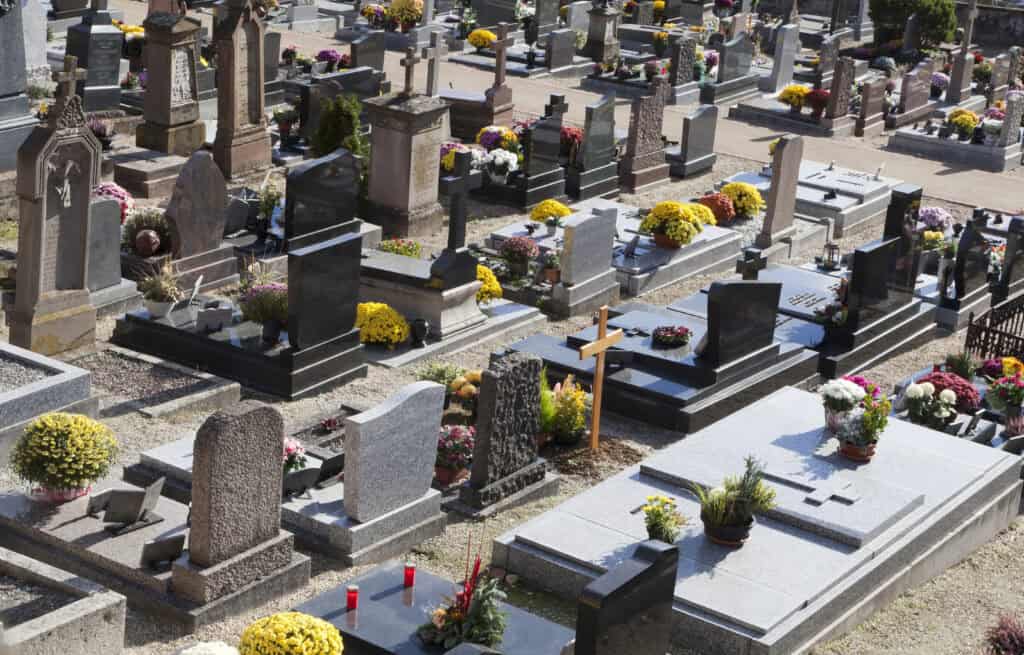
The cemetery visit indulgence spans November 1-8, allowing the faithful to gain one plenary indulgence each day during this octave (Catholic News Agency, 2021). The requirements involve devoutly visiting a cemetery, praying for the departed even if only mentally, and fulfilling the four standard conditions. This means a properly disposed Catholic attending daily Mass could potentially aid eight different souls during this octave—receiving Communion eight separate times, praying for the Pope’s intentions eight separate times, visiting the cemetery on each of the eight days, but needing only one Confession for the entire period if it occurs within 20 days of these works. Outside this November 1-8 window, cemetery visits gain only a partial indulgence (Learn Religions, n.d.).
The church visit indulgence occurs on November 2 (or on a Sunday before or after at the bishop’s discretion, or on November 1; Catholic Culture, n.d.-b). The faithful must devoutly visit a church or oratory and recite one Our Father and the Creed, plus fulfill the standard four conditions. During the COVID-19 pandemic, the Vatican extended special provisions allowing homebound Catholics to obtain this indulgence by reciting prayers for the dead before an image of Jesus or Mary, such as the Rosary, Divine Mercy Chaplet, or Lauds/Vespers of the Office for the Dead, while offering their pain to God as a work of mercy (Catholic News Agency, 2021).
Throughout November, additional partial indulgences remain available for devoutly reciting Lauds or Vespers from the Office of the Dead and for the traditional Eternal Rest prayer: “Eternal rest grant unto them, O Lord, and let perpetual light shine upon them. May the souls of all the faithful departed, through the mercy of God, rest in peace” (Catholic Culture, n.d.-c).
How Does All Saints Day Establish the Communion Binding All Three Churches?
November 1 commemorates All Saints Day, a solemnity celebrating all who have reached Heaven—both canonized saints and the countless faithful known only to God (Catholic Answers, n.d.-b). The liturgy uses white vestments symbolizing resurrection joy, and readings include the Beatitudes and the vision from Revelation 7 of the great multitude before God’s throne. This feast honors the Church Triumphant and demonstrates the universal call to holiness for all Christians.
The historical origins trace to early Christian practice of honoring martyrs. Pope Gregory III dedicated an oratory in St. Peter’s Basilica on November 1, 735, to all the saints, and Pope Gregory IV assigned November 1 throughout the Latin Church in the 9th century (Simply Catholic, n.d.). The connection to Purgatory is profound—All Saints Day celebrates those who have completed their journey and entered glory, providing hope and example for those still being purified.
All Saints Day is normally a Holy Day of Obligation in the United States, though the obligation is abrogated when November 1 falls on Saturday or Monday (USCCB, n.d.). The feast emphasizes that holiness is not reserved for extraordinary individuals but represents God’s plan for every baptized person. The theological placement immediately before All Souls Day creates a deliberate progression from celebrating the Church Triumphant to praying for the Church Suffering, demonstrating visually and liturgically the Communion of Saints.
What Is All Souls Day and How Was It Established by St. Odilo of Cluny?
All Souls Day on November 2 was established by St. Odilo, the fifth Benedictine Abbot of Cluny, around 1030 AD (Simply Catholic, n.d.). According to his biographer Jotsuald, a pilgrim returning from Jerusalem reported hearing a hermit describe the lamentations of souls in Purgatory who complained that monks, especially those of Cluny, did not pray sufficiently for their relief. St. Odilo responded by directing all monasteries under Cluny’s authority to dedicate November 2 to commemorating all the faithful departed through prayers, Masses, and almsgiving.
The practice spread from Cluny’s extensive monastic network throughout Europe. The Diocese of Liège became the first diocese to adopt it under Bishop Notger, then it extended to other Benedictine monasteries, throughout Italy, and to Rome in the 13th-14th centuries (Wikipedia, 2024). Rome officially accepted All Souls Day as a universal observance for the entire Church in 1748.
The liturgy for All Souls Day traditionally uses black or violet vestments and is characterized by sobriety and restraint. Priests may celebrate three Requiem Masses on this day, a privilege granted by Pope Benedict XV in 1915 during World War I given the enormous number of war dead: one for a specific intention, one for all the faithful departed, and one for the Holy Father’s intentions (Catholic Culture, n.d.-d). The Office of the Dead is recited by clergy and religious communities. Flowers are not placed on or near the altar, and organs and instruments are used only to sustain singing.
November 2 was deliberately chosen as the day immediately following All Saints to create theological continuity. All Saints (Church Triumphant) leads naturally to All Souls (Church Suffering), while the Church Militant on earth prays for both and with both. If November 2 falls on Sunday, the All Souls commemoration is celebrated that day rather than being transferred, demonstrating its liturgical importance (Adoremus, 2025).
Why Is the Holy Sacrifice of the Mass the Supreme Suffrage?
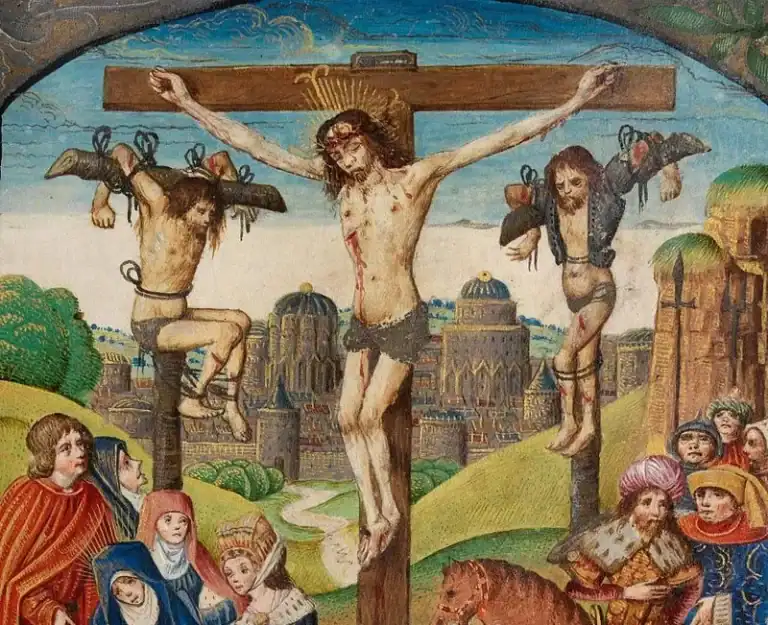
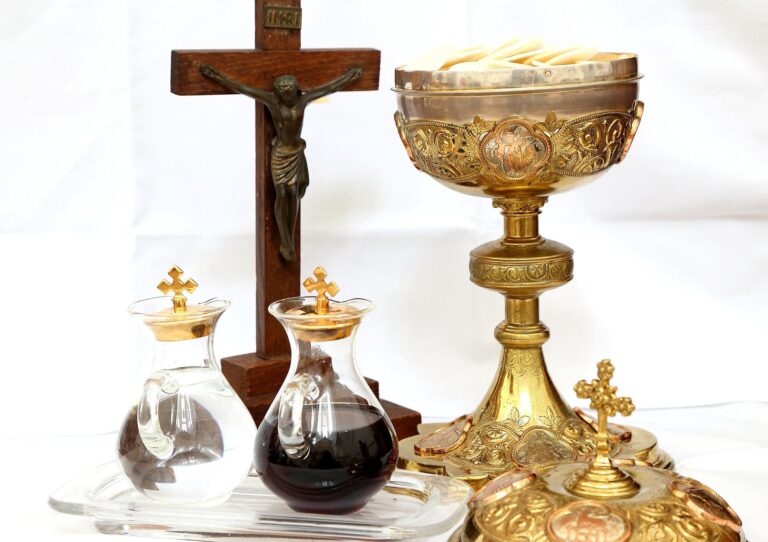
The Catechism declares that the Church offers prayers “in suffrage for them, above all the Eucharistic sacrifice” (CCC 1032; Catechism of the Catholic Church, 1994). The Mass represents the highest means the Church provides for helping souls in Purgatory because it makes present the one sacrifice of Calvary, applying the infinite merits of Christ’s Passion to the souls for whom it is offered.
The Requiem Mass, named from its opening words “Requiem aeternam dona eis, Domine” (Eternal rest grant unto them, O Lord), has been celebrated for the dead since the earliest Christian centuries (Catholic Encyclopedia, 1911). St. Gregory of Tours in the 6th century described a Christian woman having Mass offered daily for her deceased husband. St. Ambrose wrote: “Give unto them the holy mysteries, let us beseech for their rest by our pious office” (Catholic Encyclopedia, 1911). The practice rests on the understanding that Christ’s sacrifice on Calvary is infinite in value and can be applied to specific intentions through the sacramental re-presentation of that sacrifice.
Catholics can request Masses for deceased loved ones by contacting their parish office with a stipend (usually $10-20 per Mass; Catholic Culture, n.d.-e). Gregorian Masses consist of 30 consecutive Masses offered for one soul, a practice associated with a miracle during Pope St. Gregory the Great’s pontificate. The tradition holds that a soul for whom 30 consecutive Masses are offered will be released from Purgatory, though the Church has not dogmatically defined this. Various religious communities and organizations specialize in offering Masses for the Holy Souls, including shrines like the National Shrine of the Divine Mercy and the Marians of the Immaculate Conception.
Offering Mass for the dead demonstrates the Catholic understanding that the living and dead remain united in Christ’s Mystical Body. The Eucharist, as the source and summit of Christian life, naturally becomes the preeminent way to express and actualize this communion by directing Christ’s salvific power toward those still undergoing purification.
What Are the Essential Prayers and Devotions for the Holy Souls?
The De Profundis (Psalm 130/129) stands as one of the Church’s official prayers for souls in Purgatory. This penitential psalm cries “Out of the depths I have cried unto Thee, O Lord; Lord, hear my voice.” Its verses express hope in God’s mercy despite human sinfulness: “If Thou, O Lord, shalt mark our iniquities: O Lord, who can abide it? For with Thee there is mercy.” Traditionally, Catholics recited this psalm when church bells tolled an hour after evening prayers. It is sung every Wednesday at Vespers in the Divine Office and forms part of the Office of the Dead. The De Profundis is customarily followed by the Eternal Rest prayer.
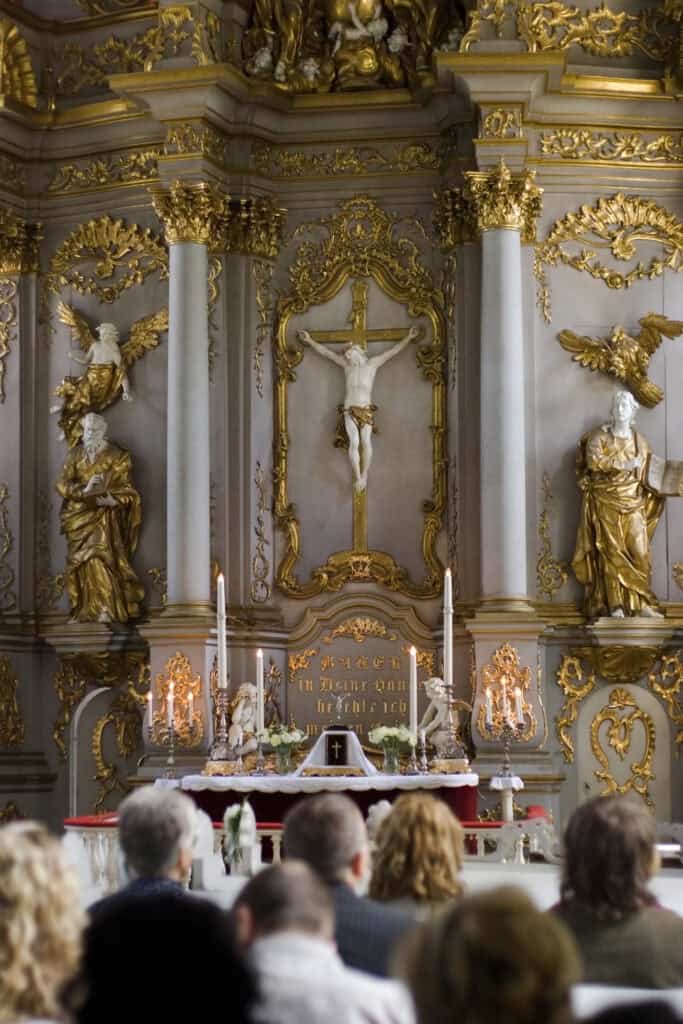
The Eternal Rest prayer represents perhaps the most frequently recited prayer for the dead: “Eternal rest grant unto them, O Lord, and let perpetual light shine upon them. May the souls of all the faithful departed, through the mercy of God, rest in peace. Amen.” This prayer appears in the earliest Christian sources, including the Acts of the Martyrs of Perpetua and Felicitas from 203 AD, and numerous ancient sepulchral inscriptions. It gains a partial indulgence each time it is prayed and can be incorporated into daily life—added to meal prayers, said between Rosary decades, prayed when passing cemeteries, or offered at any moment throughout the day.
The Rosary for the Holy Souls can be offered with specific intentions for different groups. A traditional practice assigns each decade: one for forgotten souls with no one to pray for them, one for family members and friends, one for priests and religious, one for those who died suddenly without preparation, and one for the souls nearest to Heaven and about to be released. When the Rosary is recited in church, as a family, or in a group, it gains a plenary indulgence under the usual conditions.
The Stations of the Cross for the Holy Souls combines meditation on Christ’s Passion with the intention of relieving souls from Purgatory. This devotion gained popularity through Franciscan promotion starting in 1686 when they displayed Stations in churches to make the devotion accessible to those who could not pilgrimage to Jerusalem. Pope Benedict XIII granted the same indulgence as visiting the Holy Land. Many versions exist with specific meditations applying Christ’s sufferings to the relief of souls in Purgatory, often including the prayer: “Eternal Father, I offer you the most precious blood of your divine son Jesus, in union with all the masses said throughout the world today, for the holy souls in Purgatory.”
The Prayer of St. Gertrude holds a special place in popular devotion. Tradition claims that each time this prayer is recited, 1,000 souls are released from Purgatory, though this is pious belief rather than defined doctrine: “Eternal Father, I offer You the most precious Blood of Thy Divine Son, Jesus, in union with the Masses said throughout the world today, for all the Holy Souls in Purgatory, for sinners everywhere, for sinners in the universal Church, those in my own home and within my family.”
What are the Traditional Catholic practices throughout November?
Visiting cemeteries constitutes the most ancient and universal practice. From the earliest Christian centuries, the faithful visited the tombs of deceased family members and martyrs. During November, Catholics clean and decorate gravesites, place or plant flowers, and light candles. This tangible expression of care for the dead serves as a physical reminder of mortality and the continuing bond with the departed. The plenary indulgence available November 1-8 provides powerful supernatural efficacy to these visits. Many parishes organize communal cemetery Masses or processions, with priests wearing black or violet vestments leading the faithful in sprinkling holy water and incensing burial sites.
Cultural variations enrich the universal practice. In Mexico and Latin America, Día de los Muertos (Day of the Dead) transforms cemeteries into celebrations of life with ofrendas (altars) displaying photos, food, marigolds, and candles. In Poland, Zaduszki creates a “sea of lights” as thousands of candles illuminate cemeteries during massive family visits. The Philippines observe Undas with overnight vigils, bringing food and fellowship to graves. Italy’s tradition includes specific foods like fave dei Morti (cookies shaped like beans), while France places chrysanthemums—the traditional flower for the dead—on graves.
Almsgiving and sacrificial practices have accompanied prayers for the dead since St. Odilo first linked them. Traditional practice involved giving generous portions to the poor each day in November on behalf of the deceased. Modern Catholics can offer the cost of a meal, purchase, or entertainment for the souls, or make charitable donations in memory of specific individuals. Fasting and mortifications—skipping favorite foods or drinks, abstaining from entertainment, bearing difficulties patiently—can be offered for souls in Purgatory. Traditional practice discouraged public amusements and dances during November out of respect for the dead.
Display of names and photographs in churches keeps the departed present to the worshipping community. Many parishes display photos of deceased parishioners who died during the past year, place names near the altar where Mass is offered, or maintain Books of Remembrance where families inscribe loved ones’ names. On All Souls Day, some parishes read the names of all who died in the parish during the previous year, making the communion between living and dead tangible.
Daily devotional practices thread remembrance throughout the month. Catholics can offer Holy Communion at daily Mass for specific souls, pray the Divine Mercy Chaplet with intentions for the Holy Souls, recite the Office of the Dead at morning (Lauds) or evening (Vespers), and offer up daily sufferings—traffic frustrations, headaches, rudeness from others—as small sacrifices united to Christ’s suffering for the benefit of souls in Purgatory. A traditional weekly practice assigns different groups of souls to each day: Sunday for the most destitute, Monday for those nearest Heaven, Tuesday for those farthest from Heaven, Wednesday for those richest in merits, Thursday for souls most devoted to the Blessed Sacrament, Friday for those most devoted to Christ’s Passion, and Saturday for souls most devoted to the Blessed Virgin Mary.
How the Communion of saints provide a theological foundation?
The doctrine underlying all November practices is the Communion of Saints, articulated in the Apostolic Creed and elaborated in the Catechism. This teaching holds that all members of Christ’s Mystical Body remain spiritually united across the boundaries of death. The Church exists in three states: the Church Militant (faithful on earth still struggling against sin), the Church Suffering (souls in Purgatory undergoing purification), and the Church Triumphant (saints in Heaven enjoying the beatific vision). These three states are not separate churches but one Church united in Christ.
Vatican II’s Lumen Gentium emphasized this unity: “This sacred Council accepts with great devotion this venerable faith of our ancestors regarding this vital fellowship with our brethren who are in heavenly glory or who, having died, are still being purified.” Because all members share in one Body, the spiritual goods of each member benefit the others. The holiness of the saints in Heaven, the prayers of the faithful on earth, and even the patient suffering of souls in Purgatory all contribute to the common spiritual treasury.
Pope Benedict XVI beautifully explained this interconnectedness in Spe Salvi: “In the interconnectedness of Being, my gratitude to the other—my prayer for him—can play a small part in his purification. And for that there is no need to convert earthly time into God’s time: in the communion of souls simple terrestrial time is superseded. It is never too late to touch the heart of another, nor is it ever in vain.” This means our prayers can help the departed even decades after their death, because in God’s eternal present, our prayer reaches them when they need it.
The theological rationale for helping souls in Purgatory rests on this solidarity in Christ’s Body. Just as we pray for the living and they for us, just as the saints in Heaven intercede for those on earth, so too can the living assist those undergoing purification. The Church acts as steward of Christ’s infinite merits and the superabundant satisfactions of the saints, distributing these spiritual riches through the sacraments, prayers, and indulgences to wherever they are needed—including to souls no longer able to merit for themselves.
Which Saints exemplified devotion to the Holy Souls?
St. Catherine of Genoa (1447-1510) wrote the most influential work on Purgatory through her Treatise on Purgatory, published after her death in 1551. Based on mystical experiences, she described Purgatory as a state of profound purification rather than merely punishment. Her revolutionary insight emphasized that souls willingly embrace purification because they see their need for it clearly. “The soul presents itself to God still bound by the desires and the suffering that derive from sin and that hinder its perfection. That is what makes Purgatory necessary,” she wrote. Remarkably, she taught that “the joy of the souls of purgatory is so great that only that of the saints in heaven exceeds it,” describing simultaneous suffering and peace as the love of God—the purifying “fire”—burns away all that separates the soul from union with Him.
St. Padre Pio (1887-1968) had numerous encounters with souls from Purgatory during his ministry at San Giovanni Rotondo. He wrote to his spiritual director: “For some time I have felt the need to offer myself to the Lord as a victim for poor sinners and for souls in purgatory… I made this offering to the Lord, imploring Him to lay on me the punishments that are prepared for sinners and for souls in purgatory, even multiplying them upon me a hundredfold as long as He converts and saves sinners and quickly releases the souls in purgatory.” In a famous incident from 1922, a man appeared to Padre Pio identifying himself as Pietro Di Mauro, who had died in that building on September 18, 1908, in a fire. He needed a Mass to be freed from Purgatory. Later investigation confirmed such a man had died on that exact date in the manner described. Friars reported hearing beautiful angelic singing during Padre Pio’s prayers, which he explained were “the voices of the angels, who are taking souls from purgatory into paradise.”
St. Gertrude the Great (1256-1302), a Benedictine mystic, received visions showing the release of thousands of souls through her prayers. Her prayers for the dead became widely circulated and remain popular today. St. Nicholas of Tolentino (1245-1305) had frequent visions of souls requesting prayers and Masses. St. Margaret Mary Alacoque (1647-1690) reported Christ showing her souls being released through devotion to His Sacred Heart. St. John Vianney, the Curé of Ars (1786-1859), experienced supernatural encounters with souls from Purgatory and offered countless Masses for them, teaching his parishioners to maintain constant awareness of their duty to pray for the dead.
What the Catholic Church does and does not teach?
The Church does not teach that souls are automatically or specially “released during November” as if November itself possesses magical properties. God’s mercy operates continuously throughout the year, and souls enter Heaven when their purification is complete according to God’s justice and mercy, not according to the calendar. November does not create a special “release season” from Purgatory.
What November does provide is extraordinary spiritual opportunities through the indulgences, liturgical celebrations, and focused devotion of the faithful. The plenary indulgences available November 1-8 give Catholics the means to potentially aid souls dramatically—even completely removing their remaining temporal punishment. But this happens through the ordinary operation of indulgences as the Church applies Christ’s merits, not through any temporal magic attached to November itself.
The Church also does not teach specific details about Purgatory’s duration, precise nature of its “fire,” or its spatial location. Vatican II and modern popes emphasize Purgatory as a “condition” or “state” rather than a place. Pope John Paul II clarified in 1999: “The term does not indicate a place, but a condition of existence. Those who, after death, exist in a state of purification, are already in the love of Christ who removes from them the remnants of imperfection.” The Church has definitively taught only that Purgatory exists, that it involves real purification which may be experienced as suffering, that those there are certain of salvation, and that the living can help them through prayers, Mass, and indulgences.
Purgatory is not a “second chance” at salvation. As Vatican II taught, we have only “the single course of our earthly life” to make our fundamental choice for or against God. Those in Purgatory have already chosen God and died in His grace—they simply require final cleansing. It is emphatically not an opportunity to accept salvation after rejecting it in life. Similarly, Purgatory does not contradict salvation by grace through faith. The souls there are already saved by Christ’s merits; Purgatory represents the final application of that redemption, preparing the soul to enter the divine presence.
How to Understand November’s role in Catholic spiritual life?
November transforms the entire month into a sustained meditation on mortality, judgment, mercy, and hope. Beginning with the celebration of those who have reached the goal (All Saints), continuing through focused prayer for those still journeying (All Souls), and extending throughout the month with daily opportunities to exercise spiritual charity, this season embodies the Catholic understanding that death does not sever the bonds of Christian communion.
The extraordinary indulgence opportunities—particularly the ability to gain a plenary indulgence each day from November 1-8—provide practical, concrete ways for ordinary Catholics to participate in the Church’s redemptive mission. A Catholic attending daily Mass during this octave and fulfilling the conditions could theoretically aid eight souls significantly, potentially even releasing them entirely from purification. This represents not mechanical manipulation of spiritual realities but cooperation with God’s grace through the channels Christ established in His Church.
The emphasis on the Requiem Mass as supreme suffrage grounds all November devotions in the Paschal Mystery. Catholics do not simply remember the dead sentimentally or hope abstractly for their well-being. Rather, through the liturgy, they actively apply Christ’s saving death and resurrection to their beloved dead, trusting in the infinite value of His sacrifice to accomplish what human prayers alone could never achieve. The Eucharist becomes the bridge between the living and dead, the means by which Christ’s Body on earth assists those members still being perfected.
Traditional practices like cemetery visits, lighting candles, offering the Rosary, and making sacrifices weave remembrance into daily life. Far from morbid preoccupation with death, these customs cultivate awareness of life’s ultimate purpose, the reality of judgment, and the hope of resurrection. They combat the modern tendency to deny death or sentimentalize it without confronting its spiritual implications. By praying for the Holy Souls, Catholics confront their own mortality while simultaneously exercising charity toward those no longer able to help themselves.
What Hope is there at the heart of Purgatory doctrine?
The doctrine of Purgatory ultimately represents profound Christian hope—hope that God’s mercy extends even beyond death to perfect His beloved children, hope that we can continue to love and help our departed family and friends, hope that our own imperfections need not separate us eternally from God. As Pope Benedict XVI wrote, Purgatory means “in the pain of this encounter, when the impurity and sickness of our lives become evident to us, there lies salvation. His gaze, the touch of his heart heals us through an undeniably painful transformation ‘as through fire’. But it is a blessed pain, in which the holy power of his love sears through us like a flame, enabling us to become totally ourselves and thus totally of God.”
This hope contrasts sharply with both presumption (assuming everyone automatically enters Heaven regardless of their state) and despair (fearing God’s justice without trusting His mercy). Purgatory teaches that God’s justice is real—”nothing unclean shall enter” Heaven—while simultaneously revealing that His mercy provides means of purification for those who die imperfectly prepared but fundamentally oriented toward Him. The existence of Purgatory means that not every imperfection, attachment, or unforgiven venial sin necessarily results in eternal separation from God.
The Communion of Saints transforms this individual hope into communal reality. Catholics do not face judgment isolated and alone. The saints in Heaven intercede, the faithful on earth pray and offer Mass, and even souls in Purgatory (according to many theologians) can pray for the living. The Church transcends death itself, united in the love that flows from the pierced Heart of Christ. November focuses this communion with laser intensity, mobilizing the entire Church Militant in a month-long campaign of prayer, sacrifice, and sacramental grace directed toward those who have “gone before us marked with the sign of faith.”
For those who have lost loved ones, November offers not just comfort but agency. Rather than helplessly grieving, Catholics can act—attending Mass, gaining indulgences, making sacrifices, offering prayers—confident that these actions truly benefit their departed through the mysterious but real bonds of the Mystical Body. The grief remains real, but it is transformed by hope and channeled into powerful spiritual charity. As St. John Vianney taught, souls we help in Purgatory become our best friends in Heaven, eternally grateful for the assistance that hastened their entry into glory.
November ultimately testifies that Christian love is stronger than death. The Church’s teaching on Purgatory and the Holy Souls proclaims that the bonds forged in Christ cannot be severed by the grave, that charity continues its work across the veil, and that God’s salvific will encompasses not just the moment of death but the entire journey from earthly life through purification to eternal glory. This is the heart of the Gospel hope that animates Catholic devotion throughout the month dedicated to the faithful departed.