Did Mary Have Children After Jesus? Ancient Hebrew Texts Reveal the Truth
Did the Blessed Virgin Mary bear children after Jesus? This question has been asked throughout Christian history, yet the answer remains clear: the Catholic Church teaches that Mary remained ever-virgin. As we read in the Scriptures, references to Jesus’ “brothers” have led some to question Mary’s perpetual virginity, but the Church Fathers and ancient linguistic evidence provide profound insights into this sacred mystery.
What strikes me most profoundly is how the Greek word “adelphoi” used in Matthew 13:55 encompasses relationships far beyond our modern understanding of “brothers” [6]. This becomes crucial when we consider that neither Hebrew nor Aramaic possessed specific words for “cousin” [10]. The early Church Fathers understood this distinction well. When Helvidius dared to propose in 380 A.D. that the Blessed Mother had other children, Saint Jerome—arguably the greatest biblical scholar of his era—thoroughly refuted this heretical notion [6].

Did the Blessed Virgin Mary bear children after Jesus? This question has been asked throughout Christian history, yet the answer remains clear: the Catholic Church teaches that Mary remained ever-virgin. As we read in the Scriptures, references to Jesus’ “brothers” have led some to question Mary’s perpetual virginity, but the Church Fathers and ancient linguistic evidence provide profound insights into this sacred mystery.
What strikes me most profoundly is how the Greek word “adelphoi” used in Matthew 13:55 encompasses relationships far beyond our modern understanding of “brothers” [6]. This becomes crucial when we consider that neither Hebrew nor Aramaic possessed specific words for “cousin” [10]. The early Church Fathers understood this distinction well. When Helvidius dared to propose in 380 A.D. that the Blessed Mother had other children, Saint Jerome—arguably the greatest biblical scholar of his era—thoroughly refuted this heretical notion [6].
Yet we must ask ourselves: would Our Lord Jesus Christ, knowing His Mother would need care, entrust Her to the Apostle John if She had other sons [11]? Such an act would have violated Jewish custom entirely. This apparent contradiction finds its resolution when we examine the ancient Hebrew context and the linguistic realities of Our Lord’s time.
The Doctrine of the Perpetual Virginity of Mary is part of the deposit of faith, developed through Scripture, Church tradition, and the wisdom of the Fathers. Throughout this examination, I will explore the scriptural evidence, the teachings of the Church Fathers, and the linguistic foundations that have shaped Catholic understanding of Our Lady’s unique role for centuries.
Recommended Reading: For a deeper understanding of Marian theology and the Church’s teachings on the Blessed Virgin, I highly recommend consulting the works of the Church Fathers, particularly Saint Jerome’s writings against Helvidius.
What Does “Brothers” Mean in Matthew 13:55?

A) The Greek Word Adelphoi and Hebrew Ach: Much Broader Than Modern Usage
The Greek word used throughout the New Testament is “adelphos” (plural: adelphoi). While its etymology suggests “from the same womb” – deriving from “a” (same) and “delphys” (womb) – actual biblical usage demonstrates far broader application than this literal meaning would suggest.
Similarly, the Hebrew word “ach” in the Old Testament encompasses relationships well beyond biological brotherhood. As we see throughout the Scriptures, both Greek and Hebrew employed these terms as flexible kinship designations rather than strictly biological ones. The ancient languages reflected different cultural understandings of family relationships than our modern English distinctions between brothers, cousins, and other relatives.
David Hill from the University of Sheffield makes this crucial point: “Etymology is no sure guide to the semantic value of words in their current usage…such value has to be determined from the current usage itself and not from derivation” [11]. This principle proves essential when examining biblical texts.
B) Why Adelphoi Encompasses Cousins and Kinsmen?
The New Testament writers faced a significant challenge: neither Hebrew nor Aramaic possessed a specific word for “cousin.” This linguistic limitation required speakers to use either “brother” or lengthy phrases such as “son of my uncle” [2].
The Septuagint (the Greek translation of Hebrew Scriptures) established precedent by translating the Hebrew “ach” as “adelphos” even when referring to extended family relationships [3]. This translation pattern influenced New Testament writers to employ “adelphos” in its broader sense.
Furthermore, Jewish culture emphasized relational bonds over biological precision in kinship terminology. This approach remains common today in many Eastern cultures, where near kinsmen are addressed as brothers and sisters [4].
C) Scriptural Examples Demonstrate This Broader Usage
Genesis 14:14 provides the clearest illustration of this linguistic pattern. Here, Lot is explicitly called Abraham’s “brother” (adelphos in the Septuagint), though Scripture clearly establishes that Lot was Abraham’s nephew – the son of Abraham’s brother Haran [3] [4]. This usage was not an error but reflected standard linguistic practice.
Even classical writers employed similar flexibility. Plato refers to Hephaestus and Athena as “brother and sister by birth” despite their having different mothers [11]. Royal correspondence from the Hellenistic period shows King Antiochus III addressing his wife Laodice as his “sister,” though she was actually his cousin [11].
Most remarkably, Saint Paul writes that after Our Lord’s resurrection, He “appeared to more than five hundred…brothers at the same time” (1 Corinthians 15:6). As one scholar aptly notes, “we need not infer from this verse that Mary gave birth to more than 500 children!” [3]
This evidence demonstrates that “brothers” in Matthew 13:55 cannot automatically indicate biological siblings. The linguistic foundation supports the Church’s historical teaching concerning the Perpetual Virginity of the Blessed Virgin Mary.
The Question of Greek “Anepsios” in the Sacred Scriptures
Critics of the Church’s teaching often raise this linguistic objection: the Greek language possessed the specific word “anepsios” (cousin), so why did the Gospel writers not employ this term when referring to Jesus’ relatives if they were not His biological siblings? This question merits careful examination through the lens of Church tradition and scriptural scholarship.
A) The Limitations of Greek in a Semitic Context
The New Testament was written in Greek, which indeed contained the term “anepsios” (cousin). However, this Greek word appears only once in the entire New Testament (Colossians 4:10) and merely three times in the Septuagint [5]. Hebrew and Aramaic—the languages Our Lord and His disciples spoke daily—lacked a single word for “cousin.” These languages required cumbersome phrases such as “son of an uncle” (Hebrew: ben dod; Aramaic: bar dad) [1].
The Evangelists faced a fundamental challenge: expressing Semitic concepts through Greek vocabulary. According to linguistic scholars, “It is simply not true that adelphos is used regularly in the Greek OT to mean cousin, and the equivalence cannot be taken for granted” [6]. When writing for audiences familiar with Jewish cultural contexts, restricting Greek terms to their classical definitions would have created confusion rather than clarity.
B) Jewish Oral Tradition and Kinship Terms
Jewish oral tradition—fundamental to first-century religious understanding—employed kinship terms with greater fluidity than modern Western languages. Ancient Jewish culture emphasized relational bonds over biological precision [7].
This approach stems from the Torah’s emphasis on tribal and familial identity. Modern linguists acknowledge this distinction: “The Hebrew word אח means ‘brother, sibling, fellow.’ It can refer to a boy who has the same parent as you do, any sibling, or someone, male or female, who belongs to the same group or nation” [8].
Jewish kinship terms reflected a worldview where family extended beyond biological boundaries. The Gospel authors naturally employed terminology familiar to their primary audience, regardless of available Greek alternatives.
C) Saint Matthew’s Choice of “Adelphoi”
Saint Matthew’s use of “adelphoi” instead of “anepsios” reflects not linguistic ignorance but cultural sensitivity. Unlike the Septuagint translators, the Gospel writers were not producing mechanical “translation Greek” [6].
Saint Paul demonstrates clear knowledge of both terms. He deliberately uses “anepsios” when referring to “Mark, the cousin of Barnabas” (Colossians 4:10) [9], yet employs “adelphoi” when mentioning “James, the brother of the Lord” (Galatians 1:19) [6]. Since Saint Paul wrote in his own style without translating existing documents, his terminological choice reflects intention, not ignorance.
The interchangeable nature of these terms becomes evident in scriptural comparisons:
- John 19:25 mentions “his mother’s sister, Mary the wife of Clopas”
- Matthew 27:56 identifies the same woman as “Mary the mother of James and Joseph” [10]
- These same men are called Jesus’ “brothers” in Matthew 13:55-56
This demonstrates that “adelphoi” could indeed refer to cousins, consistent with the Church’s teaching on Our Lady’s perpetual virginity.
Saint Matthew’s audience comprised both Jewish and Gentile Christians. Using “adelphoi” created continuity with Old Testament expressions while accommodating Jewish customs familiar to his primary readers.
The choice of “adelphoi” over “anepsios” therefore supports rather than contradicts the Catholic doctrine that Mary remained ever-virgin after Jesus’ birth—it reflects the complex linguistic reality of first-century Palestine and the wisdom of the inspired authors.
Does the word ‘Until’ in Matthew 1:25 suggest later children?
The passage in Matthew 1:25 states that Joseph “knew her not until she had borne a son,” which has led some to question the Blessed Virgin’s perpetual virginity. Does the English word “until” necessarily imply that marital relations commenced after Jesus’ birth?
A) The Greek word “heos” and its meaning
The Greek term translated as “until” in this passage is “heos” (or “heos hou”). I find it crucial to understand that this Greek word differs significantly from our modern English usage. The term “heos” focuses primarily on what occurred before the specified event, without necessarily implying any change afterward.
Ancient Greek usage of “heos” often marks the boundary of the author’s concern rather than suggesting a reversal of condition. As biblical scholars have noted, this particle excludes only the preceding time without affirming what happens in the future.
B) Scriptural parallels demonstrate this usage
Several biblical passages illustrate this non-implicative usage of “heos”:
- “Michal the daughter of Saul had no child until the day of her death” (2 Samuel 6:23). Clearly, this does not suggest she bore children after death.
- Our Lord quotes Psalm 110, saying “The Lord said to my Lord, sit at my right hand till I put your enemies under your feet.” No one interprets this to mean Christ ceases sitting at God’s right hand afterward.
- Saint Matthew himself uses “heos” elsewhere when Jesus promises, “I am with you always, to the close of the age” (Matthew 28:20). Certainly, Our Lord does not imply He will abandon His disciples after this age ends.
C) The Evangelist’s focus on the Virgin Birth
Saint Matthew’s primary concern in this passage centers on establishing the virgin birth of Our Savior, not on Mary’s subsequent marital life. The Evangelist emphasizes Saint Joseph’s restraint before Jesus’ birth to fulfill the prophecy: “Behold, the virgin shall conceive and bear a son” (Isaiah 7:14).
The text neither confirms nor denies what occurred afterward—it maintains silence on this matter, focusing exclusively on Christ’s miraculous origin. This linguistic analysis reveals that Matthew 1:25, rather than contradicting Mary’s perpetual virginity, actually remains neutral on the question when examined through proper Greek usage.
This demonstrates how Scripture, when properly understood through its original language and context, supports rather than contradicts the Church’s teaching on Our Lady’s perpetual virginity.
Who Were James, Joseph, Simon, and Jude?
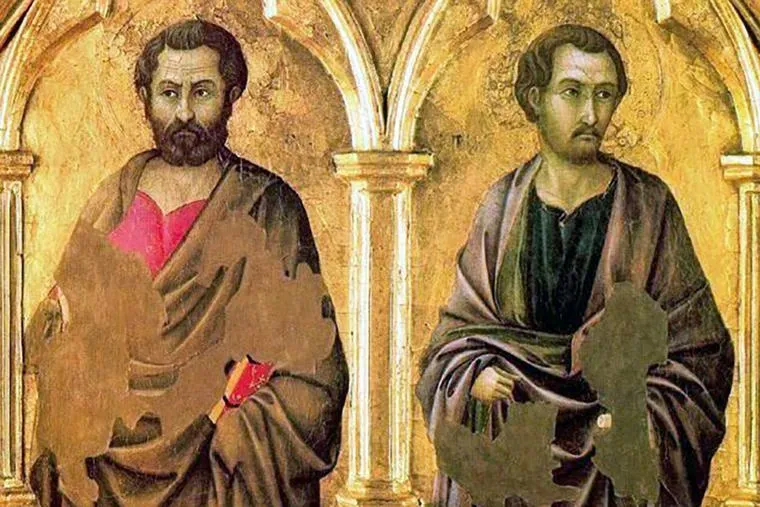
The names James, Joseph, Simon, and Jude appear in Matthew 13:55 as Jesus’ “brothers,” yet the Scriptures themselves provide crucial evidence about the true identity of these men. What emerges from careful examination is a picture quite different from what modern readers might assume.
A) The Other Mary – Mother of James and Joseph
As we read in Mark’s Gospel, a vital detail appears at the Crucifixion: “Mary the mother of James the younger and of Joses” stands among the women watching from a distance [11]. This same Mary appears again in Mark 16:1, preparing spices for Jesus’ body [11].
Mark’s distinction here is telling. Had James and Joseph been sons of the Blessed Virgin Mary, the Evangelist would have simply identified her as “Jesus’ mother.” Instead, he deliberately distinguishes this Mary from Our Lord’s Mother, indicating these men had a different maternal parentage entirely.
B) The Witness of Saint John’s Gospel
Saint John provides additional clarity, recording at the Crucifixion: “his mother’s sister, Mary the wife of Clopas” [12]. The early Church Fathers, including Eusebius of Caesarea (c. 275-339), identified this Mary as the mother of James and Joseph [12].
This establishes James and Joseph as sons of Clopas (also known as Alphaeus in certain passages [11]), making them cousins of Jesus through Mary’s sister-in-law. Saint Jerome (347-420) elaborated on this relationship, arguing that the brothers of Jesus “were children of Mary of Clopas, the siste-in-law of the mother of Jesus, making them first cousins of Jesus and not direct siblings” [13].
What does the Testimony of St James and St Jude reveal about their Identity?
Most significant is how these men identified themselves in their own epistles:
- James – Though Josephus describes him as “the brother of Jesus who is called Christ” [12], James introduces himself simply as “James, a servant of God and of the Lord Jesus Christ” [1]. No claim of biological brotherhood appears.
- Jude – Identifies himself only as “Jude…the brother of James” [14], never claiming to be Jesus’ brother directly.
This restraint speaks volumes. Had they been biological brothers of Our Lord, such a relationship would have carried immense authority in the early Church. Yet both men chose humility, identifying themselves merely as servants of Christ.
According to one scholar, “Pride would have nudged them to include that fact, but reverence and an understanding of Jesus’ divine identity motivated them to consider themselves as only His servants” [14].
The evidence points consistently toward these four men being cousins or close kinsmen of Jesus, not sons of the ever-virgin Mary. This understanding aligns perfectly with the Church’s ancient teaching on the Blessed Mother’s perpetual virginity.
Why Our Lord Entrusted His Mother to Saint John Rather Than to a Brother?
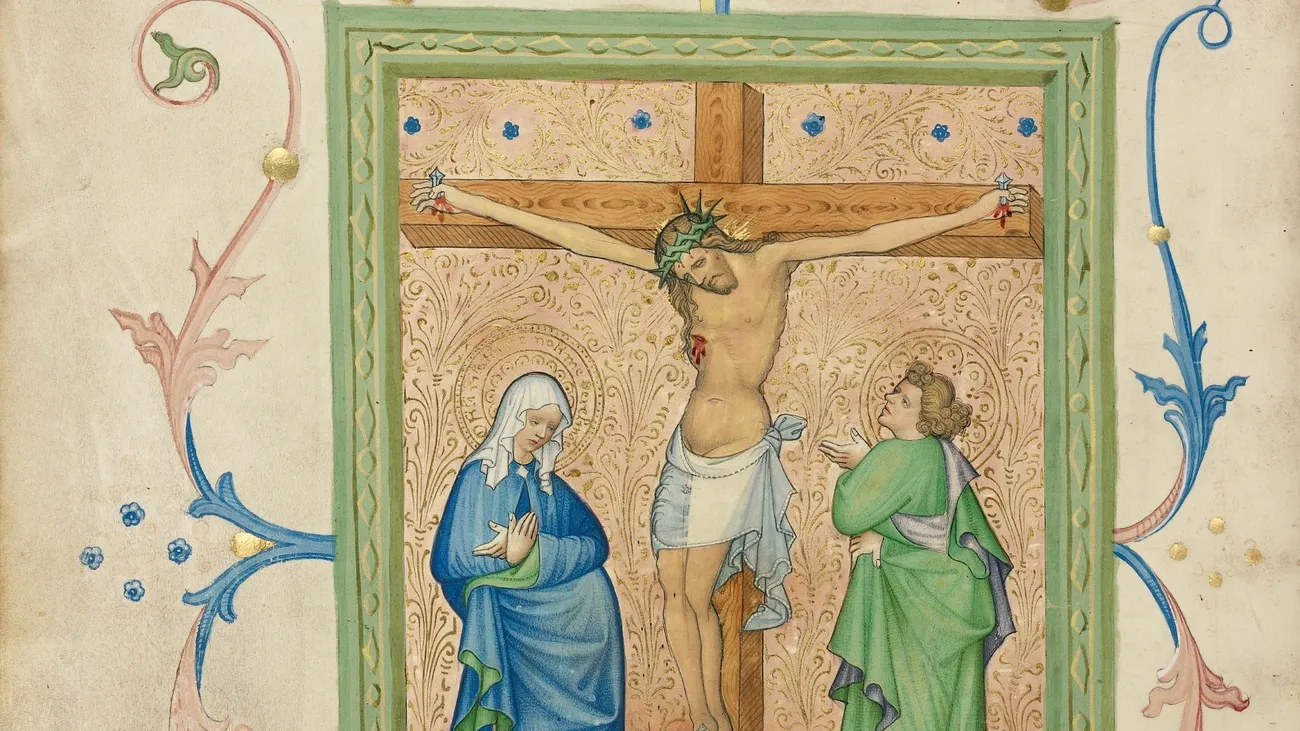
The Sacred Scriptures provide perhaps the most compelling evidence for the Blessed Virgin’s perpetual virginity through Our Lord’s actions at Calvary. This moment reveals not only Christ’s filial love but also the reality of Mary’s family situation.
A) The Words from the Cross and Jewish Law
As we read in Saint John’s Gospel, from the Cross Our Lord spoke these words to His Mother: “Woman, behold thy son,” and to the beloved disciple: “Behold thy Mother.” Saint John tells us that from that moment, he took her into his home [15]. This sacred exchange illuminates much about the Holy Family.
According to Jewish law and custom, the responsibility for caring for a widowed mother fell to the eldest son, and if he were unable, to the next oldest son [16]. Since Saint Joseph had died by this time, Our Lord—as the firstborn—bore this sacred obligation. Yet He entrusted His Mother to Saint John, who was not a family member [17].
B) The Teaching of Saint Paul on Family Obligations
Saint Paul later emphasized this fundamental duty in his letter to Timothy: “Take care of any widow who has no one else to care for her” [18]. The Apostle made this obligation even more explicit when he declared that anyone who “does not provide for his relatives, and especially for his immediate family, has denied the faith and is worse than an unbeliever” [18].
This was not merely social custom but religious duty in first-century Jewish society [19]. The gravity of this responsibility makes Our Lord’s entrustment of Mary to Saint John all the more significant.
C) What This Reveals About Mary’s Family?
Had James, Joseph, Simon, and Jude been biological sons of the Blessed Virgin, Our Lord’s action would have violated fundamental Jewish law and custom [1]. As scholars have noted, “It would have been against Jewish custom for Jesus to give his mother to the care of the disciple if Mary had other living sons” [1].
Furthermore, these men were notably absent from the crucifixion [15], while the holy women stood faithfully by the Cross. This absence, combined with Our Lord’s entrustment of Mary to Saint John, provides clear evidence that She had no other biological children who could fulfill this sacred duty.
This moment at Calvary thus confirms what the Church has always taught: the Blessed Virgin Mary remained ever-virgin, and those called the “brothers” of Jesus were His cousins or kinsmen, not children of His Most Holy Mother.
Has The Church Teaching Been Affirmed?
This examination of Scripture, the Church Fathers, and ancient linguistic evidence confirms what the Catholic Church has taught for centuries: the Blessed Virgin Mary remained ever-virgin throughout her life. The Doctrine of the Perpetual Virginity of Mary stands as part of the deposit of faith, ratified by the early Church Fathers and confirmed through careful study of the original texts.
The linguistic evidence from Hebrew, Aramaic, and Greek demonstrates that the term “adelphoi” encompasses relationships far beyond biological brotherhood. This is consistent with the understanding of Saint Jerome, Saint Augustine, and the other Fathers who defended this sacred doctrine against early heretics like Helvidius. As the Church teaches, these men identified in Matthew 13:55 were cousins or close kinsmen of Our Lord, not biological brothers born to the Blessed Mother.
Most significantly, Our Lord’s entrustment of His Mother to the Apostle John reveals the truth of Her perpetual virginity. This action, witnessed at the foot of the Cross, would have violated Jewish custom entirely had the Blessed Virgin possessed other sons. This shows the extent of God’s providence in preserving the purity of the Mother of God.
The Greek term “heos” in Matthew 1:25, rather than suggesting later marital relations between Mary and Joseph, simply emphasizes the miraculous nature of the Virgin Birth. Saint Jerome and the Church Fathers understood this distinction well, and their wisdom has guided Catholic teaching through the centuries.
What emerges from this study is not merely linguistic analysis, but a deeper appreciation for the unique role of the Blessed Virgin Mary in salvation history. Her perpetual virginity reflects her complete consecration to God and her singular dignity as the Mother of the Word Incarnate.
This is a Doctrine of the faith – The Doctrine of the Perpetual Virginity of Mary. Those who seek to understand the Sacred Mysteries through proper study of Scripture and Tradition will find this teaching both reasonable and beautiful.
May God bless those who seek to understand and defend the truth of Our Lady’s perpetual virginity.
Key Takeaways
This comprehensive analysis of ancient Hebrew and Greek texts reveals compelling linguistic evidence that challenges common assumptions about Mary’s family life after Jesus’ birth.
• The Greek word “adelphoi” (brothers) had much broader meaning in ancient times, encompassing cousins, kinsmen, and close associates—not just biological siblings.
• Hebrew and Aramaic lacked specific words for “cousin,” forcing speakers to use “brother” or lengthy phrases like “son of my uncle” for extended family relationships.
• Jesus entrusting Mary to John instead of a “brother” follows Jewish law requiring the eldest son to care for widowed mothers—impossible if other biological sons existed.
• The men called Jesus’ “brothers” (James, Joseph, Simon, Jude) never claimed biological siblinghood in their own writings, identifying themselves only as Christ’s servants.
• Matthew’s use of “until” (Greek: heos) doesn’t imply later marital relations but simply emphasizes events before Jesus’ birth, similar to “Michal had no children until her death.”
This linguistic and cultural evidence strongly supports the historical Christian belief in Mary’s perpetual virginity, demonstrating that apparent contradictions dissolve when Scripture is examined through its proper ancient context rather than modern English assumptions.
FAQs
Q1. Did Mary have other children besides Jesus? Based on linguistic and cultural evidence from ancient Hebrew texts, it appears Mary did not have other biological children after Jesus. The term “brothers” used in Scripture likely referred to cousins or close relatives, as Hebrew and Aramaic lacked a specific word for “cousin.”
Q2. Who were James, Joseph, Simon, and Jude mentioned as Jesus’ brothers? These men were most likely Jesus’ cousins or close relatives, not biological siblings. Biblical passages and historical records suggest they were sons of Mary of Clopas, who was possibly Jesus’ aunt. Neither James nor Jude claimed to be Jesus’ biological brothers in their own writings.
Q3. Why did Jesus entrust Mary to John’s care if He had brothers? Jesus entrusting Mary to John’s care at the crucifixion strongly indicates He had no biological brothers. Jewish custom required the eldest son to care for his widowed mother. If Mary had other sons, it would have been unthinkable for Jesus to assign her care to someone outside the immediate family.
Q4. Does Matthew 1:25 imply Mary had children after Jesus? No, the Greek term “heos” (until) used in this verse doesn’t necessarily imply a change after the specified event. It focuses on what happened before Jesus’ birth without suggesting anything about what followed. Similar usage can be found elsewhere in Scripture without implying a change in condition.
Q5. How do ancient texts support Mary’s perpetual virginity? Ancient Hebrew and Greek texts reveal that terms like “brothers” had broader meanings than in modern English, often including cousins and close relatives. Additionally, linguistic analysis of key passages and consideration of Jewish customs provide strong support for the historical Christian belief in Mary’s lifelong virginity.
References
[1] – https://www.catholic.com/magazine/print-edition/how-to-explain-the-perpetual-virginity-of-mary
[2] – https://www.ncregister.com/blog/biblical-evidence-for-the-perpetual-virginity-of-mary
[3] – https://catholicstand.com/a-defense-of-marys-perpetual-virginity/
[4] – https://www.catholic.com/magazine/print-edition/was-jesus-an-only-child-0
[5] – https://www.catholic.com/tract/brethren-of-the-lord
[6] – https://www.catholic.com/magazine/online-edition/jesus-had-brothers?utm_source=Catholic Answers Daily&utm_campaign=988dce8338-CADaily011019&utm_medium=email&utm_term=0_6b4f9e3af2-988dce8338-213092329&mc_cid=988dce8338&mc_eid=9be46f654f
[7] – https://www.quora.com/What-is-the-explanation-for-Lot-s-being-called-Abraham-s-brother-at-Genesis-14-14-when-he-was-in-fact-his-nephew
[8] – https://turningtogodsword.com/brothers/
[9] – https://en.wikipedia.org/wiki/Brothers_of_Jesus
[10] – https://www.reddit.com/r/AcademicBiblical/comments/111mbod/were_jesus_brothers_and_sisters_cousins/
[11] – https://www.patheos.com/blogs/davearmstrong/2022/06/jesus-cousins-not-brothers-vs-lucas-banzoli.html
[12] – https://bltnotjustasandwich.com/2012/09/20/kinship-terms-in-hebrew/
[13] – https://ehrmanblog.org/jesus-young-mother-and-half-brothers-the-proto-gospel-of-james/
[14] – https://www.catholic.com/qa/does-the-use-of-this-greek-word-for-sibling-indicate-that-jesus-had-brothers
[15] – https://www.bibleref.com/Mark/15/Mark-15-40.html
[16] – https://en.wikipedia.org/wiki/James,_brother_of_Jesus
[17] – https://en.wikipedia.org/wiki/Mary_of_Clopas
[18] – https://www.gotquestions.org/Jude-in-the-Bible.html
[19] – https://www.gotquestions.org/Jesus-Mary-John.html
[20] – https://catholicstraightanswers.com/did-jesus-have-blood-brothers-and-sisters/
[21] – https://www.biblestudytools.com/bible-study/topical-studies/why-does-jesus-give-his-mother-to-john-while-on-the-cross.html
[22] – https://www.gotquestions.org/worse-than-an-unbeliever.html
[23] – https://www.jesuswalk.com/7-last-words/3_woman.htm