Dating the Nativity and the Crucifixion of Jesus: Ancient Evidence Reveals a Surprising Historical Date
What year was Our Lord Jesus Christ born? For centuries, scholars have placed the Nativity around 4 BC, drawing their conclusions primarily from interpretations of King Herod’s reign as recorded by the historian Flavius Josephus. Yet when we examine the ancient Jewish and Roman historical records with greater care, much that has been accepted requires reconsideration.
Much is unknown about the precise chronological details surrounding the birth of the Messiah, and the dating of this most sacred event has been the subject of considerable scholarly debate. According to the calculations I have undertaken, drawing upon the ancient Jewish calendar systems, Roman consular years, and astronomical observations recorded by historians, the evidence points to December 1 BC as the actual birth date of Jesus Christ.

The traditional 4 BC theory, whilst widely accepted, creates numerous difficulties when examined against the historical record. The execution of Antigonus, the lunar eclipse of 29 December 1 BC, and the proper synchronization of Roman and Jewish calendar systems all point to a different conclusion. As we shall see, this revised chronology resolves contradictions that have long troubled biblical scholars and chronologists.
To understand how we arrive at this date, it is necessary to examine the ancient calendar systems, the reign of King Herod as recorded by Josephus, and the astronomical events that serve as fixed points in history. The Jewish sabbatical year cycles, in particular, provide crucial anchors that have been overlooked by many modern scholars. Let us consider what the ancient records truly tell us about this most momentous event in human history.
The Jewish Calendar System in the First Century BCE
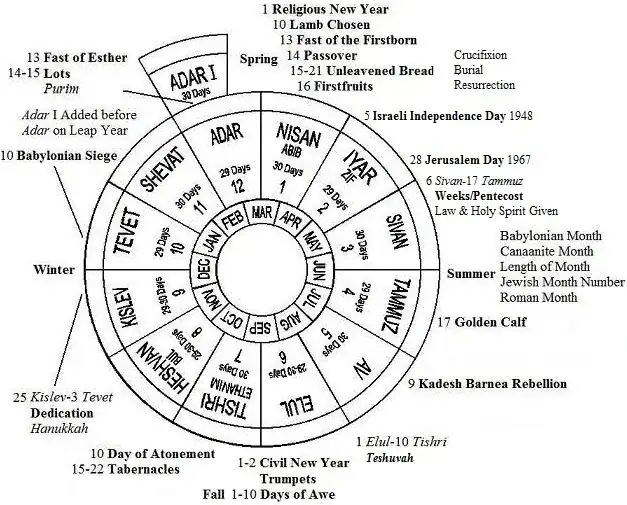
Image Source: 21st Century Revelation
The proper understanding of the Jewish calendar system employed during the first century BC proves essential for establishing an accurate chronology of Our Lord’s birth. The Jewish method of reckoning time differs significantly from our modern calendar, and these differences have led to considerable confusion among modern scholars who attempt to synchronize ancient dates with contemporary systems.
The Dual Beginning of the Jewish Year
What makes the Jewish calendar particularly complex is its dual-beginning system, which operated on two distinct cycles throughout the period in question. According to the research undertaken by Fr. Jan Pouč, the Jewish year commenced on two separate dates:
1 Nisan (March/April): This marked the religious new year and initiated the cycle of religious festivals. The Seleucid years, which feature prominently in historical records, began on this date.
1 Tishri (September/October): This designated the civil new year, marking when sabbatical year cycles began and concluded.
This dual system is clearly evident in the historical records. When Simon was murdered in Shebat (February) of Seleucid year 177, the corresponding Jewish year was 3627. Hyrcanus I subsequently pursued the murderers until 1 Tishri, which marked the commencement of a sabbatical year. As the documents specifically note: “it ends on 29 Elul before 1 Tishri and on 1 Tishri begin jewish year.”
The importance of recognizing this distinction cannot be overstated, as different historical sources reference either dating system, creating potential chronological confusion if the distinction is not properly understood.
Sabbatical Year Cycles as Historical Anchors
The sabbatical years occurred every seventh year according to the Divine commandment, mirroring the weekly observance of the Sabbath day. During these years, the land was to remain fallow, and many economic activities ceased entirely. This practice created unmistakable markers throughout the historical record.
The following sabbatical years serve as crucial chronological anchors:
- 63 BC (when Pompey besieged Jerusalem)
- 36/35 BC (during Herod’s siege of Jerusalem)
- 1 BC/1 AD (corresponding to the period of Jesus’ birth)
These sabbatical years prove invaluable for establishing accurate dates of significant events. As recorded in Antiquities XIV-xvi-2-475, during Herod’s siege of Jerusalem: “they persisted in this war to the very last; and this they did while a mighty army lay round about them, and while they were distressed by famine and the want of necessaries, for this happened to be a Sabbatical year.” This passage explicitly confirms 35 BCE as a sabbatical year, running from 1 Tishri 36 BC until 29 Elul 35 BC.
According to Fr. Jan Pouč’s analysis of the conflicting Olympiad dates mentioned by Josephus, Olympiad 185 (claimed for Jerusalem’s destruction) could not be correct because “the year 37 BC would have to have been a Sabbatical year, but the Sabbatical year is in 35 BC.”
The Jubilee Year and Its Significance
The Jewish calendar also incorporated the concept of Jubilee years—sacred years that occurred after seven complete sabbatical cycles (49 years). The 50th year was proclaimed as a time of liberty, when land returned to its original owners and Hebrew slaves received their freedom.
According to the chronological calculations, several key Jubilee years include:
- 539 BC (when Cyrus permitted the temple rebuilding)
- 49 BC/1 AD (coinciding with the birth of Jesus)
Throughout his meticulous research, Fr. Jan Pouč carefully tracked these sabbatical and jubilee cycles to validate his chronological framework. His findings demonstrate that the traditional dating of Jesus’ birth to 4 BC creates irreconcilable conflicts with the established sabbatical year patterns. A birth in late 1 BC (with Herod’s death in early 1 AD) aligns perfectly with these cyclical patterns.
The dating of Jesus’ birth in December 1 BC places this momentous event at the threshold of a Jubilee year (1 AD), a period designated for the proclamation of liberty. This timing carries profound theological significance when considered alongside Jesus’ later ministry and His proclamation of freedom to the captives.
The Greek and Roman Systems of Chronology
Ancient historians employed multiple dating systems simultaneously, creating what can only be described as a complex web of chronological references. To understand the true birth date of Our Lord Jesus Christ, we must first unravel these various systems and examine how they have been interpreted by modern scholars.
The Olympiad System and Its Inconsistencies
The Greeks measured time through four-year Olympiad cycles, beginning with the first Olympic Games in 776 BC. Each Olympiad contained four years, numbered from first to fourth. According to the historical records, Olympiad 179.2 (the second year of the 179th Olympiad) corresponds to 63 BC when Pompey conquered Jerusalem—a date that serves as a crucial anchor point.
However, when we examine Josephus’s writings, significant inconsistencies emerge in his Olympiad references. Josephus claims that Herod “received the kingdom, having obtained it on the hundred and eighty-fourth olympiad” (Ant XIV-xiv-5-389). This presents a chronological problem that cannot be easily resolved:
- Olympiad 184 ran from July 1, 41 BC to June 30, 40 BC
- This dating would place Herod’s appointment in December 41 BC
- Such timing creates irreconcilable conflicts with other established historical markers
Similarly, regarding Jerusalem’s destruction, Josephus states it occurred “on the hundred eighty and fifth olympiad” (Ant XIV-xvi-4-487). This creates additional contradictions that compound the chronological difficulties:
- Olympiad 185 spanned July 1, 37 BC to June 30, 36 BC
- This would place Jerusalem’s fall in 37 BC
- Yet 37 BCE was not a sabbatical year, whilst 35 BC was
- The calculation of 34 years from September 37 BC would place Herod’s death in March 2 BC
As Fr. Jan Pouč observed in his meticulous research: “Olympiads 184 and 185 correspond neither to the other data, which is otherwise in mutual accordance, nor to themselves.” This reveals the problematic nature of relying solely on these particular Olympiad references.
Roman Consular Dating and the AUC System
The Romans primarily tracked time through consular years, named after the two consuls who held office during each year. Josephus frequently references these in his historical accounts, providing another chronological anchor. As we read in his writings: “The city was taken… when Caius Antonius and Marcus Tullius Cicero were consuls” (Ant XIV-iv-3-66).
This refers to Pompey’s conquest of Jerusalem in 63 BC, a firmly established date that serves as the cornerstone for reconstructing the timeline leading to the birth of the Messiah. The Romans also employed the AUC (Ab Urbe Condita) system, counting years from Rome’s legendary founding, which corresponds to 753 BC according to our modern calendar.
The Battle of Actium on September 2, 31 BC represents another pivotal chronological marker. According to Josephus, this occurred “in the seventh year of the reign of Herod” (Ant XV-v-2-121). This establishes Herod’s appointment as December 38 BC rather than the problematic 41 BCE suggested by the Olympiad reference.
The Challenge of Synchronizing Different Calendar Systems
To understand the complexities involved, we must consider that these various dating systems began their years at different times:
- Olympiads began on July 1
- Jewish civil years began on 1 Tishri (September/October)
- Seleucid years began on 1 Nisan (March/April)
- Roman consular years typically began in January
This creates instances where a single event might fall in different years depending upon which calendar system is employed. As Fr. Jan Pouč wisely cautioned: “Be wary of this when converting between eras.”
The crucial synchronization points that emerge from careful analysis include:
- Pompey’s conquest on 10 Tishri (September 21) 63 BC during Olympiad year 179.2
- Herod’s appointment in December 38 BC (Olympiad 185.3)
- The Battle of Actium on September 2, 31 BC (Olympiad 187.2)
- The lunar eclipse of December 29, 1 BC, preceding Herod’s death
This careful cross-referencing of multiple chronological systems reveals that the evidence points toward December 1 BE as the birth date of Jesus Christ, with Herod’s death following shortly thereafter in March 1 CE. This stands contrary to the traditional dating of 4 BC, which appears to rely upon misinterpreted Olympiad references that create numerous chronological contradictions.
What Josephus Tells Us About the Chronology?
Flavius Josephus, the first-century Jewish historian, provides the foundation upon which our chronological understanding rests. His detailed accounts of political transitions and military campaigns offer precise dates that, when properly examined, reveal a coherent timeline leading to the birth of Jesus Christ in December 1 BC.
Pompey’s Conquest: The Primary Anchor Point
The Roman general Pompey’s conquest of Jerusalem serves as our most reliable chronological anchor. As recorded by Josephus in Antiquities XIV-iv-3-66:
“The city was taken on the third month, on the day of the fast, upon the hundred and seventy-ninth olympiad, when Caius Antonius and Marcus Tullius Cicero were consuls.”
This account provides multiple points of verification:
- The “third month” of the Olympiad (beginning from July 1) corresponds to September
- The “day of fast” refers to 10 Tishri (Day of Atonement)
- The consular year of Antonius and Cicero establishes this as 63 BC
- The “hundred and seventy-ninth olympiad” (second year) aligns perfectly with 63 BC
This conquest initiated Hyrcanus II’s rule, which Josephus states lasted “twenty-four years more” (Ant. XX-x-1-244) until the Parthian invasion. Calculating from September 21, 63 BC, Hyrcanus’ rule extended to September 21, 39 BC, continuing until Pentecost (May 14, 38 BC) when Antigonus was made king.
Herod’s Royal Appointment: Resolving the Olympiad Problem
Following Antigonus’ appointment, Herod fled to Rome where he secured his own royal appointment. According to Josephus:
“And thus did this man receive the kingdom, having obtained it on the hundred and eighty-fourth olympiad” (Ant. XIV-xiv-5-389).
Here we encounter a significant problem. Olympiad 184 spanned from July 1, 41 BC to June 30, 40 BC—clearly inconsistent with other established dates. Should Herod have been appointed in December 41 BC, several contradictions emerge:
- This would place his appointment merely 22 years after Pompey’s conquest, contradicting Hyrcanus II’s established 24-year reign
- The Battle of Actium (September 2, 31 BC) could not have occurred “in the seventh year” of Herod’s reign as Josephus claims (Ant. XV-v-2-121)
- All subsequent dates, including Herod’s death, would shift by approximately three years
The evidence demonstrates that Josephus erred in his Olympiad assignment. The correct date must be December 38 BC, which harmonizes with other chronological markers—placing the Battle of Actium at 6 years and 8 months into Herod’s reign, closely matching Josephus’ “seventh year” description.
The Siege of Jerusalem and Antigonus’ End
The final piece involves Herod’s siege of Jerusalem and Antigonus’ execution. According to Josephus:
“When the rigor of winter was over, Herod removed his army, and came near to Jerusalem… Now this was the third year since he had been made king at Rome” (Ant. XIV-xv-14-465).
From Herod’s December 38 BC appointment, his “third year” corresponds to 35 BC. Most significantly, Josephus notes this siege occurred during “a Sabbatical year” (Ant. XIV-xvi-2-475)—precisely matching the established sabbatical cycle for 35 BC.
Regarding Antigonus, Josephus states he “had reigned three years and three months” before being captured and executed. Counting from his appointment at Pentecost 38 BC, this places Jerusalem’s fall on September 11, 35 BC (10 Tishri)—remarkably, the identical Jewish calendar date as Pompey’s conquest 28 years earlier.
Though Josephus claims this occurred “after twenty-seven years’ time,” he was counting in Roman years (27 years, 11 months, 20 days) rather than complete Jewish years (28 years from 10 Tishri to 10 Tishri).
These synchronized events establish a reliable timeline pointing toward Herod’s death in March 1 AD —just after the birth of Jesus Christ in December 1 BC. This chronology stands in marked contrast to the traditional but problematic dating of 4 BC.
What role do the heavens play in confirming the birth date of Our Lord?
The celestial movements serve as immutable witnesses to historical events, providing objective confirmation of dates that might otherwise remain disputed. The astronomical records offer particularly compelling evidence for the December 1 BC birth of Jesus Christ.
The Lunar Eclipse of 29 December 1 BC
A most significant astronomical event supporting this timeline was brought to light through the work of astronomer John P. Pratt. In 1990, Pratt identified a lunar eclipse that had been previously overlooked by scholars—an eclipse that perfectly aligns with Josephus’s description of events preceding Herod’s death. This eclipse occurred on December 29, 1 BC, corresponding to the Jewish day of fasting on 10 Teveth.
Pratt’s conclusion is unambiguous: “If December 29, 1 B.C. is correct, then Herod died in early A.D. 1 rather than early 1 B.C.” This single celestial event fundamentally challenges the traditional 4 BC dating, as according to the Scriptures, Herod was yet alive when Jesus was born.
The timing of this eclipse is especially significant. It occurred shortly before the Passover during which Herod died, creating a narrow window between December 29 and the following Passover in March 1 AD. This timeframe perfectly accommodates the sequence of events Josephus describes in the final days of Herod’s life.
Fr. Jan Pouč, despite not having access to modern astronomical calculations, recognized this chronological necessity in his research. As he noted: “The data also contains proof that King Herod died shortly before Passover 1 AD.”
The Spring Equinox and Passover Alignment
The spring equinox in 1 AD provides another astronomical anchor for this chronology. According to Jewish law, 1 Nisan (the first month) must fall after the spring equinox, with Passover (15 Nisan) following thereafter.
Fr. Pouč meticulously documented what he termed the “distance of the equinox from 15 Nisan” throughout his chronological calculations. His research demonstrates that 1 AD featured a proper alignment between the equinox and subsequent Passover—creating an astronomically valid timeframe for Herod’s death in March of that year.
Moreover, his calculations revealed that Jesus’s birth in December 1 BC placed this momentous event just before the beginning of a new Jewish year (3761). This timing held special significance within the sabbatical cycle, as we have seen.
Astronomical Confirmation of 10 Tishri Events
A remarkable pattern emerges when we examine the astronomical dating of key events. Both Pompey’s conquest of Jerusalem and Herod’s later capture of the city occurred on identical Jewish calendar dates—10 Tishri (the Day of Atonement). Astronomical calculations confirm these dates as September 21, 63 BC and September 11, 35 BC respectively.
Josephus himself notes this calendar synchronicity: “as if a periodical revolution of calamities had returned since that which befell the Jews under Pompey; for the Jews were taken by him on the same day, and this was after twenty-seven years’ time.”
This apparent discrepancy in Josephus’s “twenty-seven years” statement (versus the actual 28 Jewish years) is resolved when we understand that he was calculating in Roman years (27 years, 11 months, 20 days), whilst the Jewish calendar counted a complete 28 years from 10 Tishri to 10 Tishri.
These astronomically verified dates create fixed points in our timeline, from which we can confidently establish Herod’s death shortly before Passover in 1 AD, thereby placing Jesus’s birth in December 1 BC.
The Crucifixion and Lunar Eclipse of 33 AD
The crucifixion date receives its own astronomical confirmation. On April 3, 33 AD, a partial lunar eclipse was visible in Jerusalem from 6:20 to 7:10 pm. This celestial event corresponded to Peter’s reference to the prophecy of Joel: “The sun shall be turned to darkness, and the moon to blood…” (Acts 2:20).
This astronomical event further validates the chronological framework that begins with Jesus’s birth in late 1 BC. The consistency of these celestial markers across the entire timeline of Our Lord’s life reveals a divine ordering that extends beyond mere human calculation.
As we can see from these various astronomical evidences, the heavens themselves bear witness to the true chronology of the Nativity, supporting the December 1 BC birth date rather than the traditional but problematic 4 BC theory.
The Reign and Death of King Herod: Critical Evidence for Our Lord’s Birth
King Herod’s reign serves as the cornerstone for establishing the birth date of Jesus Christ. As we read in the writings of Josephus, the length of Herod’s rule and the circumstances of his death provide crucial chronological anchors that have been misinterpreted by many modern scholars.
The Testimony of Josephus on Herod’s Reign Length
Josephus provides two distinct measurements of Herod’s reign that initially appear contradictory: “He had reigned, since he had procured Antigonus to be slain, thirty-four years; but since he had been declared king by the Romans, thirty-seven years” (Antiquities XVII-viii-1-191).
This apparent contradiction resolves perfectly when we establish Herod’s appointment as December 38 BC:
- His 37-year Roman-recognized reign: December 38 BC to December 1 BC
- His 34-year effective reign after defeating Antigonus: September 35 BC to September 1 BC
This chronology is consistent with Josephus’s account of the Battle of Actium occurring “in the seventh year” of Herod’s reign. The battle took place on September 2, 31 BC —precisely 6 years and 8 months after Herod’s December 38 BC appointment, which aligns remarkably well with the “seventh year” description.
The traditional dating placing Herod’s death in 4 BC creates irreconcilable conflicts with the established sabbatical year patterns, the consular records, and Josephus’s own detailed descriptions of subsequent events.
The Lunar Eclipse and Herod’s Final Days
The eclipse preceding Herod’s death serves as an immutable astronomical anchor. As Josephus records: “that very night there was an eclipse of the moon” (Ant. XVII-vi-4-167) shortly before Herod executed several rabbis and fell deathly ill.
Four lunar eclipses occurred during the period in question:
- March 23, 5 BC (total, visible in Jerusalem)
- September 15, 5 BC (total, visible in Jerusalem)
- March 13, 4 BC (partial, 40% magnitude)
- December 29, 1 BC (total, visible in Jerusalem)
Only the December 29, 1 BC eclipse provides sufficient time for the sequence of events that Josephus describes before the following Passover. This eclipse occurred on the Jewish day of fasting (10 Teveth), adding profound religious significance to the timing of these events.
The Sequence Leading to Herod’s Death in March 1 AD
The chronology that emerges from Josephus’s account requires the following sequence:
- Lunar eclipse on December 29, 1 BC
- Herod’s declining health and final illness (approximately 3 months)
- Public mourning and funeral preparations
- Funeral procession to Herodium (25 miles from Jerusalem)
- Seven-day mourning period
- Passover celebrations beginning March 20, 1 AD
This reveals that Herod’s death must have occurred in early March 1 AD. The timing places Jesus’s birth in December 1 BC, just weeks before the eclipse that preceded the death of this wicked king.
What this means for the Nativity account is significant. The visit of the Magi and Herod’s subsequent massacre of the innocents in Bethlehem would have occurred in January-February 1 AD, followed by Herod’s own death in March. This creates a chronologically coherent account that harmonizes perfectly with both the biblical narrative and the historical records.
The evidence from astronomical calculations, sabbatical year cycles, and Josephus’s detailed chronology all point to the same conclusion: our Lord Jesus Christ was born in December 1 BC, contrary to the traditional but erroneous dating of 4 BC.
What the Scholars Tell Us: Different Interpretations of the Same Evidence
Much is debated among scholars regarding the birth of Our Lord Jesus Christ, with historians developing various chronological models that yield different conclusions about this most sacred event. The interpretation of ancient historical records, particularly those of Josephus, has led to considerable scholarly disagreement.
The Work of Fr. Jan Pouč
Fr. Jan Pouč (1874-1962), a dedicated chronologist and biblical scholar, produced what may be the most thorough analysis of Josephus’s historical accounts. Working without the pressures of academic deadlines, this meticulous scholar devoted his final years to compiling his treatise Náš letopočet (Our Era), a work that remained unpublished for decades due to the political circumstances in Communist Czechoslovakia.
According to Pouč’s methodology, mathematical precision took precedence over popular theories. He systematically examined Josephus’s accounts whilst cross-referencing them with the established sabbatical cycles and astronomical phenomena. The results placed Herod’s death in March 1 AD and positioned the birth of Jesus Christ in December 1 BC.
What sets Pouč apart from his contemporaries is his recognition of the problematic Olympiad references in Josephus’s writings. Rather than forcing these inconsistent dates to fit his chronology, he identified them as errors that contradicted the otherwise coherent historical markers.
How Other Scholars Have Interpreted the Evidence?
When we examine the work of other prominent scholars, significant differences emerge in their interpretation of the same historical sources:
The Chronologies Compared:
| Historical Event | Fr. Jan Pouč | Emil Schürer | Jack Finegan |
|---|---|---|---|
| Herod’s appointment as king | December 38 BC | December 40 BC | December 39 BC |
| Siege of Jerusalem (sabbatical year) | 35 BC | 37 BC (not sabbatical) | 36 BC (not sabbatical) |
| Death of Herod | March 1 AD | December 3 BC | December 2 BC |
These discrepancies arise from different approaches to resolving contradictions in the ancient sources. Both Schürer and Finegan, for instance, disregarded Josephus’s clear reference to Pentecost marking the end of Hyrcanus II’s rule. More problematic still, both scholars assigned years to the sabbatical cycle incorrectly, creating conflicts with well-established historical anchors.
The Problem of Josephus’s Olympiad References
The most troublesome elements in establishing an accurate chronology are Josephus’s references to Olympiad years. Two citations in particular create what appear to be insurmountable contradictions:
Josephus claims Herod received his kingdom “on the hundred and eighty-fourth olympiad,” which would span from July 41 BC to June 40 BC. This creates multiple conflicts, most notably placing the Battle of Actium in Herod’s tenth year rather than the “seventh year” that Josephus explicitly states elsewhere.
Similarly, Jerusalem’s destruction is placed “on the hundred eighty and fifth olympiad” (July 37 to June 36 BC). This contradicts Josephus’s own account that the siege occurred during a sabbatical year—and 37 BC was not a sabbatical year.
As Fr. Pouč observed, these Olympiad references “correspond neither to the other data, which is otherwise in mutual accordance, nor to themselves.” This suggests transcription errors or miscalculations rather than accurate historical records.
The scholarly disagreements ultimately stem from how different historians choose to handle these contradictory elements in the ancient sources. Those who accept the problematic Olympiad dates create chronologies that conflict with sabbatical year cycles and other established historical markers. Those who recognize these as errors—as Pouč did—arrive at a more coherent timeline that places the birth of Jesus Christ in December 1 BC.
What is the True Date of Our Lord’s Birth?
The evidence from ancient records, sabbatical year cycles, and astronomical observations converges upon a single conclusion: Our Lord Jesus Christ was born in December 1 BC. This date harmonizes the historical accounts in a manner that resolves the contradictions that have long troubled scholars.
December 1 BC: The Historical Evidence United
The birth of the Messiah in December 1 BC creates perfect accord among the various chronological anchors. This places the Nativity just weeks before the lunar eclipse of 29 December 1 BC, which preceded King Herod’s death in March 1 AD. The eclipse itself occurred on 10 Teveth, a Jewish day of fasting, adding profound religious significance to the sequence of events.
This chronology aligns precisely with Herod’s established thirty-seven year reign from his appointment in December 38 BC. As Josephus records: “He had reigned, since he had procured Antigonus to be slain, thirty-four years; but since he had been declared king by the Romans, thirty-seven years.” The mathematics are exact – from December 38 BC to December 1 BC equals precisely thirty-seven years.
The Sabbatical Year and the Year of Jubilee
The timing of Our Lord’s birth holds extraordinary theological significance. Jesus was born at the conclusion of a sabbatical year (1 BC) and at the threshold of what would become a Jubilee year (1 AD). The Jubilee year, as prescribed in Leviticus, was a time of liberty when debts were forgiven and captives set free. How fitting that the One who would proclaim “liberty to the captives” should be born at such a moment in the sacred calendar!
This also explains the presence of Mary and Joseph in Bethlehem – the Roman census that brought them there coincided with this sacred transition in the Jewish calendar. The Magi arrived after Jesus’ birth in December 1 BC but before Herod’s death in March 1 AD, allowing for the Holy Family’s flight to Egypt as recorded in St Matthew’s Gospel.
Why the Traditional Dating Must Be Rejected?
The conventional 4 BC theory rests upon misinterpreted Olympiad references in Josephus’s writings – references that contradict his other precise chronological markers. This traditional date creates several irreconcilable problems:
- It conflicts with the established sabbatical year patterns
- It misaligns with Josephus’s clear statement of Herod’s thirty-seven year reign
- It provides insufficient time between the partial lunar eclipse of 13 March 4 BC and the subsequent Passover
The Catholic Church teaches that truth cannot contradict truth. When historical evidence points clearly in one direction, we must follow where it leads rather than cling to tradition that contradicts the facts.
This reveals something remarkable about Divine Providence – that Our Lord Jesus Christ was indeed born at the dawn of what we now call the Christian Era. January 1st of the year 1 AD truly marks the beginning of the new covenant, for the Messiah had been born just days before on December 25th, 1 BC.
Praise God for His perfect timing in all things, and for the scholars like Fr. Jan Pouč who have labored to uncover the truth of these sacred chronologies.
The Crucifixion Date and Its Astronomical Validation
The Crucifixion of Our Lord Jesus Christ provides the concluding confirmation of this chronological framework. Just as the circumstances of His birth align with historical and astronomical evidence, so too does the timing of His death upon the Cross demonstrate divine providence working through celestial events.
I) April 3, 33 AD: The Moon Turned to Blood
On April 3, 33 AD, as Our Lord hung upon the Cross, a partial lunar eclipse became visible in Jerusalem between 6:20 and 7:10 in the evening. This astronomical phenomenon occurred precisely as the moon was rising over the Holy City. As we read in the Scriptures, the Apostle Peter would later reference the prophecy of Joel: “The sun shall be turned to darkness, and the moon to blood…” (Acts 2:20).
This celestial sign provides unmistakable astronomical validation for the crucifixion date. No other proposed year for Our Lord’s death features such a specific alignment between Passover and this prophetic lunar eclipse. The eclipse confirms what the chronological evidence already established – that Jesus lived precisely 33 years from His birth in December 1 BC.
Fr. Jan Pouč, despite working without modern astronomical calculations, recognized the significance of this alignment in God’s providential timing.
II) The Governorship of Pontius Pilate
Roman historical records confirm that Pontius Pilate governed Judea from 26 to 36 AD, placing the 33 AD crucifixion squarely within his term of office. This governmental timeline accommodates both the commencement of Our Lord’s public ministry around 30 AD and His crucifixion three years later.
The chronology of Roman emperors also supports this dating. Augustus died on 19 August 14 AD, after which Tiberius ruled until 16 March 37 AD – providing the proper imperial context for the Gospel accounts.
III) Passover and the Jewish Calendar
The astronomical calculations show that the new moon occurred in Jerusalem on 19 March 33 AD at 12:45 in the afternoon. This places Friday, 3 April 33 AD as precisely 15 Nisan in the Jewish calendar – the day of Passover when Christ, our Paschal Lamb, was sacrificed.
As Fr. Jan Pouč observed with wonder at God’s providence: “God arranged things well when he made it that during the government of the procurator Pilate, 15 Nisan was only ever a Friday in the Seleucid year 344, Mosaic year 3995, Olympiad year 808, our year 33.”
This remarkable alignment between the Roman, Jewish, and astronomical calendars demonstrates that the timing of Our Lord’s sacrifice was not left to chance, but ordained by Divine Providence from the foundation of the world.
Conclusion
What emerges from this examination of ancient records is a chronology that places the birth of Our Lord Jesus Christ in December 1 BC, rather than the traditionally accepted 4 BC. This is not merely an academic exercise in chronological precision, but a matter that touches upon the very foundations of our understanding of salvation history.
The evidence converges from multiple sources: the Jewish sabbatical year cycles, the careful analysis of Josephus’s historical accounts, and the astronomical phenomena that serve as celestial witnesses to these sacred events. The lunar eclipse of December 29, 1 BC, occurring on the Jewish day of fasting, followed by King Herod’s death in March 1 AD, creates a timeline that harmonizes all the historical anchors we have examined.
I would highly recommend that serious students of biblical chronology give careful consideration to the work of Fr. Jan Pouč, whose meticulous calculations—undertaken without the benefit of modern computational tools—achieved remarkable precision in reconstructing this timeline. His dedication to mathematical accuracy in interpreting ancient sources deserves recognition among scholars of biblical history.
The theological implications of this corrected chronology are profound. Our Lord’s birth at the threshold of a sabbatical year and the beginning of a new Jewish year (3761) speaks to the divine timing of the Incarnation. Similarly, the astronomical validation of the crucifixion date on April 3, 33 AD—with its partial lunar eclipse fulfilling Joel’s prophecy—reveals the hand of Divine Providence orchestrating these events across the celestial sphere.
This chronological framework resolves the contradictions that have long puzzled biblical scholars whilst affirming that our calendar system may be more accurate than previously supposed. The first day of 1 AD truly marked the beginning of the Christian era, a remarkable confirmation of divine ordering in human history.
Much remains to be explored in applying this corrected timeline to other events in biblical history. Yet what we have established here provides a solid foundation for understanding the precise timing of the most momentous event in human history—the birth of the Word made flesh.
I highly recommend continued study of these ancient sources, particularly the writings of Josephus and the calculations of Fr. Jan Pouč’s Náš letopočet (Our Era), for those who would seek to understand more fully the historical context of Our Lord’s earthly ministry.
God be with you in your studies.
FAQs
Q1. What evidence supports Jesus being born in 1 BC instead of 4 BC? Multiple historical and astronomical factors point to 1 BC, including the lunar eclipse of December 29, 1 BC preceding Herod’s death, alignment with Jewish sabbatical year cycles, and Josephus’s accounts of Herod’s 37-year reign starting in 38 BC.
Q2. How does the 1 BC birth date align with Herod’s reign and death? This date places Jesus’s birth just weeks before the lunar eclipse of December 29, 1 BC, with Herod dying in March 1 AD. It perfectly matches Herod’s documented 37-year reign from his appointment in December 38 BC.
Q3. What astronomical evidence supports the crucifixion date of April 3, 33 AD? A partial lunar eclipse visible in Jerusalem occurred on this date between 6:20-7:10 pm, aligning with Peter’s reference to Joel’s prophecy about the moon turning to blood. This event coincided with Passover and Jesus’s crucifixion.
Q4. How does the 1 BCE birth date resolve conflicts in historical records? It harmonizes Josephus’s accounts, aligns with established sabbatical year cycles, and creates a coherent 33-year lifespan for Jesus ending with the astronomically confirmed crucifixion date in 33 AD.
Q5. What are the implications of this revised chronology for understanding early Christian history? This timeline places Jesus’s birth at a symbolically significant moment between a sabbatical year and new Jewish year, while also demonstrating remarkable divine orchestration in the timing of key events in Jesus’s life and death.