
Understanding Catholic Teaching on Sex: What The Church Actually Says?
Catholic teaching on human sexuality stands frequently misunderstood in our modern age. Many perceive the Church’s moral guidance as merely a series of prohibitions rather than what it truly represents—a profound theology rooted in love and human dignity. This misunderstanding arises, I believe, from an incomplete grasp of what the Catholic Church actually proclaims about the sacred nature of human sexuality.
The foundation rests upon a fundamental truth: “God is love” (1 John 4:8). Every person bears the image of the Almighty, as we read in the Scriptures: “God created man in his own image, in the image of God he created him; male and female he created them” (Genesis 1:27). This divine reality establishes the cornerstone for all Catholic teaching concerning human sexuality.
What emerges from centuries of consistent Church teaching is not restriction but revelation. The Catholic Church alone among major religious institutions maintains its opposition to artificial contraception, abortion, and practices deemed harmful to human dignity. Yet these teachings flow from an essentially positive vision. As the Church teaches, human beings are created for relationship and communion, reflecting God’s own love written into our very nature.
Catholic understanding of marital intimacy encompasses far more than physical acts. The Church recognizes emotional and spiritual dimensions that strengthen the sacramental bond between husband and wife. According to Catholic moral theology, what is permitted sexually within marriage must always remain open to life while expressing authentic love between spouses.
Consider this question: How does the Church’s teaching on sexuality lead to genuine freedom rather than constraint? The answer lies in understanding chastity not as repression but as the virtue essential for living out love authentically. This principle applies to both married and unmarried persons, though manifested differently according to one’s state in life.
Let us explore the rich theological foundations that inform Catholic sexual ethics, from the scriptural basis found in Genesis to the practical applications within marriage. Through examining these principles, we can appreciate how Catholic teaching on sexuality within marriage offers a path to true freedom and fulfillment—a vision that challenges our culture’s understanding while affirming the deepest longings of the human heart.
The Church’s wisdom in these matters, developed over two millennia of reflection on Scripture and Tradition, provides guidance that honors both the dignity of the human person and the sacred nature of human sexuality itself.
Human Sexuality: Created in the Image of God

What does this mean for our understanding of human sexuality?
Genesis reveals that our sexual nature forms part of God’s original blessing upon humanity. The Scriptures tell us that after creating humans as male and female, “God blessed them, saying, ‘Be fertile and multiply; fill the earth and subdue it'” (Genesis 1:28) [6]. This divine blessing preceded any physical expression of love between man and woman, demonstrating that sexuality itself is “a good, part of that created gift which God saw as being ‘very good'” [6].
The Catholic understanding recognizes that our sexual nature is not accidental to our identity but essential to how we image the Almighty. The Church teaches that we reflect God’s image not merely as individuals but through our complementary relationships as male and female. The distinct yet harmonious design of male and female bodies reflects something profound about God’s nature [7].
This sexual differentiation reveals our inherent capacity for relationship—with God and with each other. The United States Conference of Catholic Bishops explains: “In the Book of Genesis, we read that man and woman are the unique crown of God’s creation, made in God’s image. In his image, men and women have received the capacity to be in relationship with God and with each other” [10].
The Church’s wisdom recognizes that “sexual difference is a sign of our call to love, to communion, inscribed within who we are, including our very bodies” [10]. This understanding elevates sexuality beyond mere biological function to something bearing deep theological significance.
The Unity of Body and Soul in Catholic Teaching
Catholic doctrine maintains that human dignity encompasses the whole person—body and soul together in perfect unity. The Church has consistently opposed philosophical dualism throughout her history. “Throughout her history, the Catholic Church has opposed notions of dualism that posit the body and soul as separate, non-integrated entities” [1].
This unity means that “the dignity of the human person refers to his or her intrinsic and absolute value” [1]. Such dignity is neither earned through achievement nor lost through misfortune—it remains inherent and permanent. Church teaching affirms that “Human dignity can never be lost by sickness, poverty, or any other adverse circumstance. It remains with us forever” [1].
What are the implications for Catholic understanding of marital intimacy?
Our bodies are not mere instruments for pleasure but expressions of our personhood. “The body reveals the person, and our bodies testify that we are made for communion, a communion which images God’s Trinitarian love” [7]. The Church teaches that in marriage, the body possesses moral importance—it must be respected and never treated as an object [1].
This understanding elevates rather than diminishes the physical aspects of sexuality. Saint Pope John Paul II taught: “As an incarnate spirit, that is, a soul which expresses itself in a body and a body informed by an immortal spirit, man is called to love in his unified totality. Love includes the human body, and the body is made a sharer in spiritual love” [6].
The Church’s teaching flows from this fundamental truth—that the sexual act within marriage must always express the total gift of self between spouses, honoring the body-soul unity of each person while remaining open to participation in God’s creative love.
What is the Theological Significance of Sexual Difference?
Sexual difference stands at the very heart of Catholic understanding of human personhood. The distinction between male and female represents far more than biological accident—it holds profound theological significance that illuminates the very nature of God Himself.
The Four Pillars of Complementarity
Catholic teaching on the complementarity between man and woman rests upon four essential foundations. These principles, rooted in Scripture and developed through centuries of theological reflection, demonstrate the divine wisdom inscribed in human sexual difference:
- Equal Dignity – Both man and woman possess identical dignity as persons created in God’s image
- Essential Difference – Significant distinction exists between them, not as hierarchy but as distinct ways of embodying humanity
- Synergetic Union – Their relationship creates something greater when man and woman unite in love
- Intergenerational Fruitfulness – This union possesses the capacity to extend across generations through new life
As Saint Pope John Paul II emphasized, this complementarity transcends stereotypical gender roles. The Holy Father taught that men and women represent “two ways of being the human person.” Neither stands complete without the other according to God’s design for humanity.
Catholic understanding differs markedly from certain Protestant interpretations of complementarity. Where some Evangelical traditions emphasize women’s submission to men, Catholic teaching focuses on mutual self-giving. According to Church teaching, “every person is a gift from God, first, to herself or himself.” This gift orientation recognizes that both men and women share “equal dignity, unique giftedness, and shared responsibility.”
Saint Pope John Paul II explained this mystery beautifully: “woman is given to man so that he can understand himself, and reciprocally man is given to woman for the same end. They are to mutually affirm each other’s humanity, awed by its dual richness.” Catholic teaching thus presents complementarity as a relationship between equals who affirm and enrich each other through their differences.
The Spousal Meaning of the Body
What emerges as perhaps Saint Pope John Paul II’s most profound contribution to Catholic teaching on sexuality is his development of “the spousal meaning of the body.” This concept recognizes that our physical bodies themselves communicate our capacity for self-giving love.
The spousal meaning refers to the body’s “power to express the love by which the human person becomes a gift, thus fulfilling the deep meaning of his or her being and existence.” Written into our very physical nature lies the call to love and be loved—specifically, the capacity to give ourselves completely to another person.
This meaning exists objectively in our bodies regardless of whether we acknowledge it. As Saint Pope John Paul II noted, “The body of the person has a spousal meaning independently of any subjective act affirming it.” We can choose to accept or reject this meaning, yet it remains inscribed in our nature. After the Fall, humans experience difficulty living according to this truth due to concupiscence—disordered desire that reduces others to objects rather than recognizing them as persons.
The spousal meaning orders itself toward “the communion of one flesh” which involves “the reciprocal self-gift of persons.” This gift must be freely chosen, since authentic love cannot be coerced. Through the spousal meaning of the body, Saint Pope John Paul II observed, we discover “the fullness of the divine image in humanity.”
Sexual difference reveals something profound about God’s nature itself. The communion between man and woman in their differentiated yet unified love reflects, though imperfectly, the communion of love within the Trinity. As the Holy Father taught, “sexual difference is a sign of our call to love, to communion, inscribed within who we are, including our very bodies.”
Catholic teaching on marital sexuality flows naturally from this understanding of complementarity and the spousal meaning of the body. When spouses unite physically, they express far more than seeking pleasure—they manifest with their bodies the complete gift of self that defines their marital covenant. Their physical union becomes a living sign of their permanent, exclusive, and life-giving commitment to one another.
This theological foundation illuminates why the Church holds such reverence for human sexuality and why it must be expressed according to God’s design rather than human invention.
The Sacred Nature of Marital Union
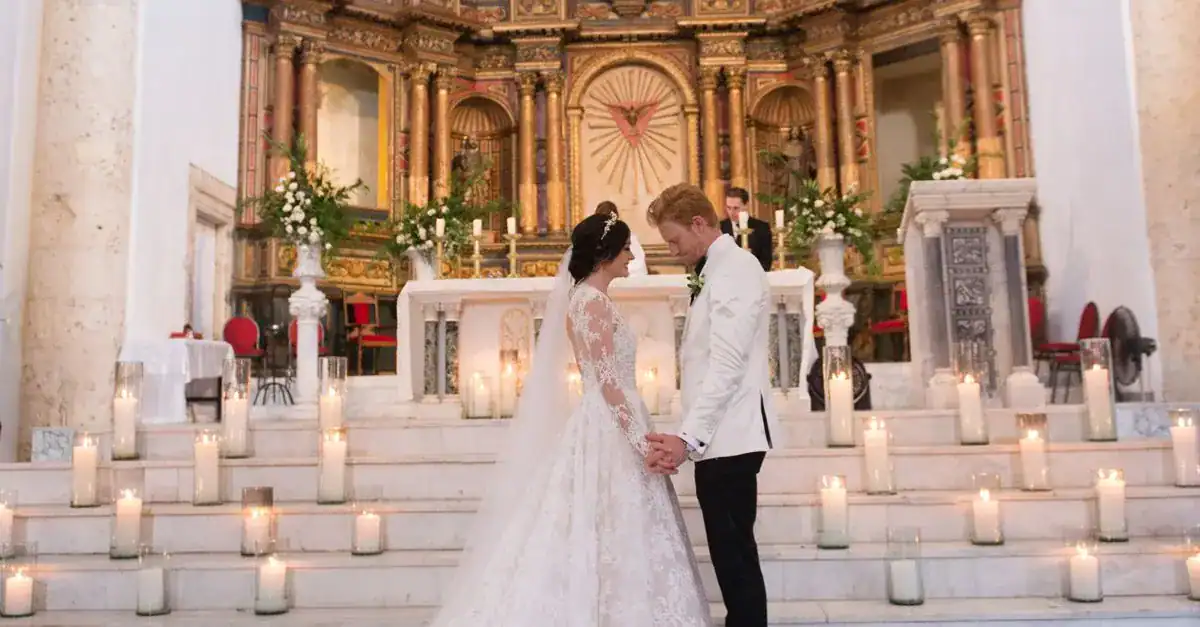
The Catholic Church’s understanding of marital sexuality flows directly from the theological foundations we have examined. Marriage represents a sacred covenant wherein husband and wife express their total self-gift through physical, emotional, and spiritual union. This vision presents marital sexuality not as restriction but as a profound expression of sacramental love.
The Two Essential Dimensions of Marital Love
Catholic moral theology teaches that marital sexuality serves two inseparable purposes that give meaning to conjugal intimacy. The unitive dimension expresses and deepens the love between husband and wife. The procreative dimension opens this love to participation in God’s creative power through new life.
As Pope Paul VI declared in Humanae Vitae: “Each and every marital act must of necessity retain its intrinsic relationship to the procreation of human life.” This teaching emerges from understanding human sexuality as sacred and marriage as “an expression of deep, faithful and exclusive love that is open to new life.”
The Church teaches that “the bond between the procreative and the relational aspects cannot be broken.” This dual purpose reflects marriage’s nature as both loving union and life-giving partnership. Recent Church teaching integrates these purposes, seeing marital sexual love as “essentially procreative”—authentic marital love bears fruit in various ways.
What does this mean practically? Each sexual act in marriage must remain open to conceiving a child. Contraception presents moral difficulties because it “separates the act of conception from sexual union,” artificially dividing what God has joined together.
What the Church Permits Within Marriage?
Catholic teaching affirms that “the only moral sexual act is natural marital relations open to life.” This refers primarily to natural intercourse between husband and wife. However, this does not forbid other expressions of marital intimacy.
Regarding specific practices, Catholic moral teaching provides these guidelines:
- Acts of affection and foreplay are moral when they lead to completion in natural intercourse
- All activities must respect the dignity of both spouses and never treat either as an object
- Sexual activity should ultimately be ordered toward fulfillment in sexual intercourse
- Acts that deliberately frustrate the procreative potential are considered morally problematic
The Foundation of Consent and Reverence
Catholic teaching emphasizes that sexual expression in marriage must always flow from free choice by both spouses. The unitive dimension cannot exist without authentic consent and mutual respect.
Consent remains fundamental for marital intimacy to be truly unitive. The Church clearly teaches that neither spouse “owes” the other sexual relations on demand. St. Paul’s teaching about the “marital debt” must be understood within mutual gift and respect, not obligation overriding consent.
Church teaching recognizes that sexual intimacy in marriage should strengthen the spousal bond through mutual self-giving. Saint Pope John Paul II described conjugal love as “an affective union, spiritual and sacrificial, which combines the warmth of friendship and erotic passion, and endures long after emotions and passion subside.”
Mutual respect in marital intimacy means spouses never treat each other as objects for gratification. This respect flows from understanding that both husband and wife possess inherent dignity as persons created in God’s image. All sexual expression must honor this dignity through free consent and loving communication.
As Catholic teaching affirms: “If a husband or wife are forcing the other into any kind of sexual contact, whether through subtle or overt coercion, this likely constitutes sexual assault.” Such actions violate the very nature of marital love and the dignity of the person.
The beauty of Catholic teaching on marital sexuality lies in its recognition that physical union expresses the complete gift of self that defines the marital covenant—permanent, exclusive, and life-giving.
The Virtue of Chastity: Pathway to Authentic Love
What is chastity? Much is misunderstood about this essential virtue in our modern age. The Catholic Church presents chastity not as a negative restriction but as the pathway to authentic freedom and genuine love. This virtue, frequently misunderstood as mere abstinence or repression of sexual desires, offers a much richer vision—one that applies to all people regardless of their state in life.
How Does the Church Define Chastity?
The Catechism of the Catholic Church provides a profound definition: “Chastity means the successful integration of sexuality within the person and thus the inner unity of man in his bodily and spiritual being” [6]. This integration enables the person to maintain “the integrity of the powers of life and love placed in him” [6].
Chastity ensures unity within oneself—harmonizing physical desires with spiritual values. It “tolerates neither a double life nor duplicity in speech” [7], creating an authentic coherence between one’s actions and beliefs about sexuality.
The Church has consistently understood chastity not merely as restraint but as positive virtue formation. The Catechism describes it as “an eminently personal task” that “also involves a cultural effort” [7], recognizing both individual responsibility and social influences on sexual behavior.
This is crucial to understand: chastity is not about suppression but about integration and authentic love.
Chastity According to One’s State in Life
A fundamental principle in Catholic teaching is that chastity applies universally: “All Christ’s faithful are called to lead a chaste life in keeping with their particular states of life” [7]. This counters the common misconception that chastity only concerns the unmarried.
For married couples, chastity requires “complete faithfulness of body and mind toward the spouse” [8]. Within marriage, it guides couples toward sexual intimacy that remains “open to procreation, respectful of bodily integrity” and avoids actions that might “humiliate or objectify” one’s spouse [8].
The following principles govern married chastity:
- Periodic abstinence during “travel, illness, using NFP, etc.,” times that likewise “require integrity and self-mastery” [9]
- Prohibition of behaviors like “flirtatious conversations, inappropriate touching with others, looking at pornography” [8]
- Complete fidelity that forbids adultery
- Respect for the dignity of one’s spouse in all sexual expression
For unmarried individuals, chastity manifests as abstinence from sexual activity, yet even here, the Catechism emphasizes “self-mastery and integrity” rather than mere restriction [9]. Those engaged to marry “should reserve for marriage the expressions of affection that belong to married love” [7], viewing this period as “a discovery of mutual respect” [7].
The Apprenticeship in Self-Mastery
The foundation of chastity lies in what the Church calls “an apprenticeship in self-mastery which is a training in human freedom” [6]. This self-mastery presents an either/or proposition: “Either man governs his passions and finds peace, or he lets himself be dominated by them and becomes unhappy” [6].
Mastering one’s sexual impulses represents “a long and exacting work” [6] that “one can never consider acquired once and for all” [6]. It demands “renewed effort at all stages of life” [6], particularly during formative periods like adolescence.
This journey toward sexual self-mastery employs specific means: “self-knowledge, practice of an ascesis (self-discipline) adapted to the situations that confront him, obedience to God’s commandments, exercise of the moral virtues, and fidelity to prayer” [7]. Through these practices, the person gradually grows in freedom.
Self-mastery in sexuality isn’t the goal itself but serves a greater purpose: “Self-mastery is ordered to the gift of self” [10]. As one Catholic document explains, chastity enables us to “love the way Jesus loves” [1], freeing us from “obsessions of impurity” [1] that prevent authentic self-giving.
The cultivation of chastity allows sexual desires to become integrated into the whole person, ensuring that human sexuality truly expresses what it’s designed for—genuine love and life-giving union within appropriate relationships. This virtue, far from diminishing our humanity, enables us to love more fully and authentically according to our created nature.
The Church’s Consistent Teaching on Contraception and Natural Family Planning
The Catholic Church stands alone among Christian denominations in maintaining its consistent opposition to artificial contraception. Throughout the twentieth century, as other religious bodies altered their teachings, the Catholic Church held firm to principles rooted in natural law and Scripture. This unwavering position reflects the Church’s understanding of marriage as both unitive and procreative—two aspects that cannot be separated without violating God’s design.
The Natural Law Foundation Against Artificial Contraception
According to the Church’s moral theology, contraception violates the natural law inscribed by God in human sexuality. Pope Paul VI articulated this principle clearly in Humanae Vitae: “any action which, either in anticipation of the conjugal act, or in its accomplishment, or in the development of its natural consequences, proposes, whether as an end or as a means, to render procreation impossible” is intrinsically evil [3].
What distinguishes Catholic teaching is the recognition that contraception and Natural Family Planning differ fundamentally in their moral object. Contraception actively disrupts the natural reproductive process, while NFP works within the natural rhythms established by the Creator. As the Church teaches, this distinction matters because it reflects different approaches to God’s gift of fertility.
Pope Paul VI proved remarkably prescient when he warned of contraception’s societal consequences. He predicted that widespread contraceptive use would lead to:
- Increased marital infidelity
- General lowering of moral standards
- Reduced respect for women
- Government coercion in reproductive matters
The subsequent decades confirmed these warnings. Abortion rates rose dramatically—from approximately 615,000 in 1973 to 1.4 million by 1990—demonstrating the connection between contraceptive mentality and the devaluation of human life [11].
Natural Family Planning: Respecting God’s Design
Natural Family Planning involves observing and charting a woman’s natural fertility signs to identify fertile and infertile periods. Modern NFP methods achieve effectiveness rates comparable to contraceptive pills, according to studies published in leading reproductive medical journals [11].
The United States Conference of Catholic Bishops explains: “The Catholic Church supports the methods of Natural Family Planning because they respect God’s design for married love” [12]. When couples have “well-grounded reasons for spacing births,” they may “take advantage of the natural cycles immanent in the reproductive system” [3].
Couples practicing NFP report remarkable benefits beyond family planning effectiveness:
- Enhanced communication between spouses
- Greater mutual respect and understanding
- Divorce rates of less than one percent according to some studies [11]
- Deeper appreciation for the gift of fertility
These outcomes reflect the Church’s wisdom that respecting natural law leads to human flourishing.
The Development of Church Teaching: Key Documents
Two papal documents establish the foundation of modern Catholic teaching on contraception. Following the Anglican Church’s 1930 Lambeth Conference resolution permitting contraception, Pope Pius XI responded with Casti Connubii (On Christian Marriage). This encyclical reaffirmed the Church’s opposition to artificial birth control while acknowledging the morality of using naturally infertile periods [11].
Humanae Vitae, issued by Pope Paul VI in 1968, became the definitive modern statement on this issue. Despite widespread expectations that the Church might change its position following the development of oral contraceptives, Paul VI reaffirmed traditional teaching. The document presents contraception as “intrinsically evil” because it deliberately separates the unitive and procreative aspects of the marital act [13].
This consistency across decades demonstrates that the Church’s teaching flows not from cultural preferences but from unchanging moral principles rooted in natural law and divine revelation.
The Church maintains that fertility represents a gift to be respected, not a problem to be solved. Through Natural Family Planning, couples can exercise responsible parenthood while honoring the Creator’s design for human sexuality and marriage.
What Does the Church Teach About Acts Contrary to Human Sexuality?
Catholic moral theology addresses sexual sins not as arbitrary prohibitions but as actions that contradict the divine purpose inscribed in human sexuality itself. According to Church teaching, these acts harm human dignity and obstruct God’s design for human flourishing through authentic love.
A) Sexual Relations Outside the Sacrament of Marriage
The Church maintains that sexual relations between unmarried persons—what theologians term fornication—separates the sexual act from its proper context within the sacrament of marriage. This is a constant teaching of the Church: “the sexual act must take place exclusively within marriage. Outside of marriage it always constitutes a grave sin and excludes one from sacramental communion.” [5]
Adultery presents a particularly grave violation of the marriage covenant. The Catechism defines adultery as occurring “when two partners, of whom at least one is married to another party, have sexual relations—even transient ones.” [5] This sin carries special gravity because adultery “does injury to the sign of the covenant which the marriage bond is, transgresses the rights of the other spouse, and undermines the institution of marriage.” [5]
Throughout the Scriptures, we find consistent condemnation of adultery, from the Decalogue’s prohibition to Our Lord’s teaching that even lustful thoughts constitute adultery of the heart (Matthew 5:28).
B) Disordered Uses of the Sexual Faculty
Masturbation, defined as “the deliberate stimulation of the genital organs in order to derive sexual pleasure,” [14] represents what the Church teaches as “an intrinsically and gravely disordered action.” [15] This teaching flows from the understanding that such acts separate the unitive and procreative dimensions of sexuality.
The Church explains that masturbation turns one “selfishly inward” [15] rather than toward the self-giving love that defines authentic sexuality. Such acts use “the body as a means of personal gratification, instead of integrating one’s gift of sexuality…into a sincere self-gift to another.” [15]
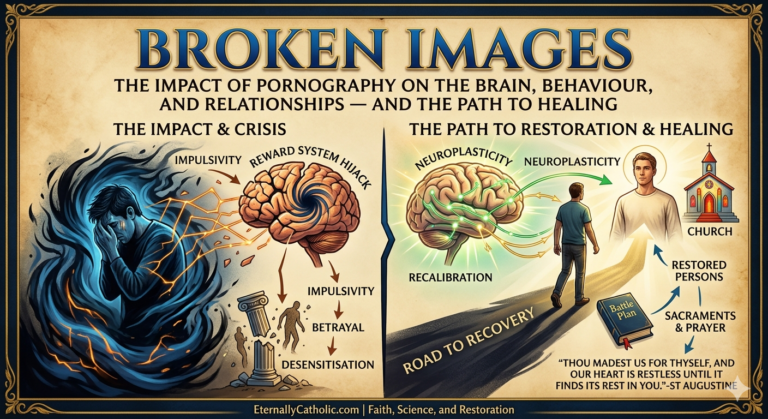
Pornography likewise distorts the sacred nature of human sexuality by reducing persons created in God’s image to objects used for pleasure. When viewed with full knowledge and deliberate consent, pornography constitutes mortal sin. [16]
C) The Church’s Teaching on Homosexual Acts
The Catholic Church distinguishes carefully between homosexual inclinations and homosexual acts. As the Catechism states, “Homosexual desires are not in themselves sinful,” [17] and persons with such inclinations “must be accepted with respect, compassion, and sensitivity.” [18]
Regarding homosexual acts themselves, the Church teaches they are “intrinsically disordered” [18] as they close the sexual act to the gift of life and do not proceed from the authentic complementarity between man and woman established by God. This teaching derives from natural law reasoning—that the natural partner for a man is a woman and vice versa. [17]
The Church calls all people, regardless of sexual orientation, to live chastely according to their state in life through prayer, sacramental grace, and the formation of virtue. [18] This universal call to chastity reflects not condemnation but the path to authentic freedom and love that God desires for every human person.
What is the Catholic Understanding of Marital Intimacy and Spiritual Union?
The Catholic vision of marital sexuality extends far beyond physical acts alone. The Church affirms that sexual intimacy between spouses encompasses profound emotional and spiritual dimensions that strengthen the sacramental bond of marriage itself.
The Emotional and Spiritual Dimensions of Conjugal Love
Catholic theology presents marital sexual intimacy as “an expression of total love between a man and woman who have permanently committed to each other in the sacrament of marriage” [19]. This total love encompasses emotional vulnerability and spiritual communion that connects the couple’s physical union to their journey of grace.
The emotional dimension of sexual intimacy builds upon the foundation of mutual trust and vulnerability. The Church recognizes that “the emotional intimacy of being able to share your most private and cherished thoughts is a prerequisite for a fulfilling marriage” [4]. This emotional openness creates the trust necessary for authentic physical intimacy.
Marital intimacy authentically expressed becomes “a path of growth in the life of grace for the couple” [2]. The Church maintains that sexual union achieves its fullest meaning when it expresses an “already-existing personal union” [2]—the sacramental bond formed at the exchange of vows. Through this understanding, sexual intimacy becomes one expression of the “entire network of relations” [2] that constitute married life.
How Intimacy Strengthens the Sacramental Bond?
Sexual intimacy reinforces the sacramental nature of marriage by embodying the covenant between spouses. As the Catechism states, “The love of the spouses requires, of its very nature, the unity and indissolubility of the spouses’ community of persons, which embraces their entire life” [20]. Through this intimacy, couples “grow continually in their communion through day-to-day fidelity” [20].
The Church affirms that all aspects of married life can channel sacramental grace. Pope Francis notes that “the common life of husband and wife, the entire network of relations that they build with their children and the world around them, will be steeped in and strengthened by the grace of the sacrament” [2].
This sacramental understanding reveals something profound about Catholic teaching on sexuality. Even shared sufferings become channels of grace—”bearing with one another’s little quirks and mistakes patiently” [2] and “lovingly caring for a chronically ill spouse” [2] reflect Christ’s love for the Church.
Catholic intimacy integrates sexuality into this broader vision of marital communion that mirrors divine love. The physical expression of love between spouses becomes a living sign of God’s faithful love for His people, demonstrating how human sexuality participates in the sacred when ordered according to God’s design.
What is the Role of Conscience and Pastoral Guidance in Sexual Ethics?
The Catholic Church recognizes both objective moral truths and the sacred role of personal conscience in sexual ethics. This creates a beautiful yet complex relationship between faithfully adhering to Church teaching and authentic personal discernment under pastoral guidance.
How is conscience properly formed in matters of sexuality?
The Church describes conscience as “the most secret core and sanctuary of a person. There one is alone with God, whose voice echoes in the depths.” Yet a properly formed conscience requires education—it cannot simply affirm personal preferences or cultural trends.
I would highly recommend that formation of conscience in sexual matters include these essential elements:
- Studying Church teaching through Scripture, Sacred Tradition, and the Magisterium
- Regular prayer and frequent reception of the sacraments
- Seeking guidance from trusted spiritual advisors and confessors
- Honest self-examination before God regarding one’s motivations and actions
(see the following article Is your Moral Conscience Truly Formed?
The Catechism clearly states that “the education of conscience is a lifelong task.” This education becomes particularly crucial regarding sexuality, given that cultural messages often directly contradict Catholic teaching.
Much depends on understanding what authentic conscience formation actually means. A common misconception holds that following one’s conscience means deciding independently what is right regardless of Church teaching. This approach reduces conscience to mere personal opinion. Authentic conscience formation involves seeking truth as taught by the Church while applying these principles to one’s particular circumstances.
The Church affirms that “conscience must be informed and moral judgment enlightened.” Without proper formation, conscience risks becoming merely subjective preference rather than “a judgment of reason whereby the human person recognizes the moral quality of a concrete act.”
What role does pastoral accompaniment play in complex cases?
Pastoral guidance proves essential when individuals face complex sexual ethical questions. The Church encourages spiritual accompaniment that respects personal conscience while helping form it according to objective truth.
Discernment requires time, prayer, and careful examination. This process involves reflection, prayer, dialogue, and Scripture study. Much is unknown about the specific circumstances each person faces, which is why pastoral guidance becomes so valuable.
Even with thorough discernment, each person “must discern his or her own moral decisions.” The Church acknowledges that subjective culpability varies based on one’s formation and intentions. The Christian tradition has recognized mitigated subjective culpability “provided she or he did so with no intentional malice or desire to do wrong.”
The Church’s approach balances upholding moral truths with merciful understanding of human weakness. For persons experiencing same-sex attraction, pastoral guidance should provide catechesis and conscience formation while offering pastoral support and counseling services with genuine compassion.
Through careful discernment, pastors help individuals distinguish between the promptings of the Holy Spirit and impulses arising from other sources. This discernment seeks harmony with revelation and tradition while rekindling faith, strengthening hope, and fostering authentic love.
The goal remains always the same: to help each person live according to God’s design for human sexuality while acknowledging the journey toward holiness requires patience, mercy, and ongoing spiritual guidance.
The Beauty and Wisdom of Catholic Sexual Ethics
Throughout this exploration of Catholic teaching on human sexuality, we have journeyed from the profound scriptural foundations to the practical wisdom for married life. What emerges is not a series of restrictions but a coherent vision rooted in the dignity of every human person and our creation in God’s own image.
The Church’s teaching on sexual difference reveals something essential about our nature—we are beings made for communion and self-gift. This complementarity finds its fullest expression within the sacrament of marriage, where physical union strengthens emotional bonds while remaining open to the gift of new life.
Chastity appears not as repression but as the virtue that brings harmony to the whole person. This virtue applies to all states of life—married and unmarried alike—manifesting differently according to God’s calling for each individual. Through chastity, we discover that true freedom comes through integration of our sexuality within the complete gift of self.
The Church’s distinction between contraception and Natural Family Planning rests upon respect for God’s design. NFP works within the natural rhythms that the Almighty has written into creation, while contraception actively disrupts the procreative potential inherent in the marital act.
Marriage elevates physical intimacy to become a sacramental expression of total self-gift. Sexual union thus embodies the covenant between spouses—their permanent, exclusive commitment made manifest in physical form. This understanding shows marital sexuality as a path of spiritual growth and mutual sanctification.
The role of conscience in sexual ethics requires proper formation through prayer, study of Church teaching, and spiritual guidance. The Church acknowledges both objective moral norms and the individual journey of applying these principles with sincerity and integrity.
Catholic teaching on sexuality offers something truly countercultural—a vision where sexual expression serves genuine love rather than momentary gratification. This wisdom challenges us to view our bodies and sexuality as sacred gifts meant for authentic communion with God and one another.
Much more could be written about the depth and beauty of Catholic sexual ethics, yet I would not do justice to this rich tradition in these brief reflections. For those seeking deeper understanding of Catholic teaching on marriage and sexuality, I highly recommend the Catechism of the Catholic Church, particularly sections 2331-2400 on the vocation to chastity. Saint Pope John Paul II’s “Theology of the Body” provides profound insights into the spousal meaning of the human person.
The Church’s wisdom in these matters, developed through twenty centuries of reflection on Scripture and Tradition, offers guidance that honors both human dignity and the sacred nature of sexuality itself. This teaching leads not to restriction but to the freedom found in living according to our created nature.
God be with you in your journey toward understanding and living these beautiful truths.
FAQs
Q1. What is the Catholic Church’s teaching on sex within marriage? The Catholic Church teaches that sex within marriage should be both unitive (bringing spouses closer together) and procreative (open to the possibility of conceiving children). While procreation doesn’t have to be the explicit goal of every sexual act, couples should not actively prevent conception through artificial means.
Q2. Are Catholics allowed to use birth control? The Catholic Church prohibits the use of artificial contraception. However, for serious reasons, couples may use Natural Family Planning (NFP) to space births by tracking the woman’s natural fertility cycles and abstaining during fertile periods if pregnancy is to be avoided.
Q3. Does the Church teach that sex is only for procreation? No, the Church recognizes that sex has two equally important purposes – the unitive (bonding of spouses) and the procreative (openness to new life). While couples should always remain open to the possibility of conception, sexual intimacy that strengthens the marital bond is also valued.
Q4. What is the Church’s view on sex during infertile periods? The Church permits sexual relations during naturally infertile periods, such as during pregnancy or after menopause. The key is that couples do not actively interfere with the possibility of conception through artificial means.
Q5. How does the Church view chastity within marriage? The Church teaches that chastity applies to married couples as well as single people. For married couples, chastity involves fidelity to one’s spouse, respect for the procreative potential of sex, and the integration of sexuality within the whole person and relationship.
References
[1] – https://www.catholicnewsagency.com/resource/55407/pre-marital-sex-lessons-from-reason-scripture
[2] – https://www.vatican.va/roman_curia/pontifical_councils/family/documents/rc_pc_family_doc_08121995_human-sexuality_en.html
[3] – https://focusequip.org/theology-of-the-body-chapter-2-in-the-beginning/
[4] – https://www.usccb.org/topics/natural-family-planning/love-and-sexuality
[5] – https://sfarchdiocese.org/the-body-soul-unity-of-the-human-person/
[6] – https://www.hli.org/resources/human-dignity-conjugal-meaning-of-the-body/
[7] – https://press.vatican.va/content/salastampa/en/bollettino/pubblico/2024/04/08/240408c.html
[8] – https://www.vatican.va/content/catechism/en/part_three/section_two/chapter_two/article_6/ii_the_vocation_to_chastity.html
[9] – https://www.catholicculture.org/culture/library/catechism/index.cfm?recnum=6156
[10] – https://www.oursundayvisitor.com/what-does-it-mean-to-be-chaste-in-marriage/
[11] – https://agapecatholicministries.info/family-life/chastity-is-for-everyone-even-married-people/
[12] – https://thosecatholicmen.com/articles/chastity-for-all/
[13] – https://www.catholicculture.org/commentary/chastity-cornerstone-holiness-and-happiness/
[14] – https://www.vatican.va/content/paul-vi/en/encyclicals/documents/hf_p-vi_enc_25071968_humanae-vitae.html
[15] – https://www.catholic.com/magazine/online-edition/contraceptions-dark-fruits
[16] – https://www.usccb.org/topics/natural-family-planning
[17] – https://en.wikipedia.org/wiki/Christian_views_on_birth_control
[18] – https://www.vatican.va/content/catechism/en/part_three/section_two/chapter_two/article_6/iv_offenses_against_the_dignity_of_marriage.html
[19] – https://catholiceducation.org/en/culture/sexual-sins.html
[20] – https://www.catholic.com/qa/why-masturbation-is-wrong
[21] – https://www.covenanteyes.com/blog/is-using-pornography-a-mortal-sin-according-to-the-catholic-church/
[22] – https://www.catholic.com/tract/homosexuality
[23] – https://www.catholichawaii.org/media/224236/homosexuality_-_from_catechism_of_the_catholic_church.pdf
[24] – https://diopitt.org/documents/2017/8/SexMarriageCatholicFaith2.pdf
[25] – https://www.foryourmarriage.org/intimacy-cohabitation/
[26] – https://wherepeteris.com/the-not-so-sexy-theology-of-the-body/
[27] – https://www3.nd.edu/~afreddos/courses/264/ccc-matri.htm