12 Catholic Prophecies From Saints That Have Been Fulfilled
The prophetic tradition within the Catholic Church stands as one of the most remarkable testimonies to divine communication throughout the centuries. Among these extraordinary revelations, none captures attention quite like the mysterious predictions of Saint Malachy concerning future popes, including his startling final prophecy about “Peter the Roman” and the destruction of “the city of seven hills.”
What draws our consideration to these sacred utterances? Throughout Church history, numerous saints including Saint John Bosco, Saint Anthony Mary Claret, and Saint Colette demonstrated extraordinary prophetic gifts that went far beyond human understanding. The specificity of these revelations proves most striking – Saint Anthony Mary Claret, for instance, accurately foretold that farmers attending his mission would see their crops spared from devastating hailstorms that destroyed the fields of those who ignored his warning. According to historical records maintained by the Church, Saint John Bosco similarly predicted the timing of religious vocations and even deaths with precision that defied natural explanation.
The verification of these prophecies over time provides compelling evidence of their supernatural origin. As we examine these twelve verified prophecies from the saints, we discover why they have shocked the world and continue to shape Catholic understanding of divine providence. These sacred revelations remind us that God speaks to His people through chosen vessels, offering both warnings and hope for those who have eyes to see and ears to hear.
St. Malachy’s Prophecy of the Popes
The Prophecy of the Popes stands among the most renowned and controversial prophetic documents in Catholic history. This remarkable series of predictions continues to generate discussion centuries after its alleged creation.
The Origins of Saint Malachy’s Vision
Saint Malachy O’Morgair, the twelfth-century Irish Archbishop of Armagh, received what would become one of history’s most debated prophetic revelations. According to tradition, during his pilgrimage to Rome in 1139, this holy bishop experienced a mystical vision revealing the succession of future popes through a series of 112 cryptic Latin phrases. Each motto purportedly described a pontiff who would reign from his era until the end of time.
The prophecies remained hidden for approximately four centuries until their publication in 1595 by the Benedictine monk Arnold Wion.
The Accuracy of the Prophetic Mottos
The intrigue surrounding these papal prophecies stems from their apparent precision. Consider the motto “De labore solis” (From the labor of the sun) – this phrase corresponded to Pope John Paul II, who was born during a solar eclipse and whose funeral occurred during another solar eclipse. Similarly, “Gloria olivae” (Glory of the olive) described Pope Benedict XVI, whose connection to the Benedictines includes their Olivetan branch.
Most significantly, the final entry: “Petrus Romanus” (Peter the Roman). According to Saint Malachy’s prophecy, during this pontiff’s reign “the city of seven hills will be destroyed, and the terrible judge will judge his people.” This prediction has generated considerable discussion among Catholic theologians and the faithful alike.
Saint John Bosco’s Vision of Future Trials
The prophetic dreams of Saint John Bosco stand among the most extraordinary revelations granted to the saints, their vivid imagery and precise details serving as divine messages about the Church’s future trials and ultimate triumph.
Saint John Bosco’s prophetic background
Born in 1815 in the Piedmont region of Italy, Giovanni Melchiorre Bosco began receiving prophetic dreams at the tender age of nine years. Throughout his remarkable life, this holy priest documented over 150 prophetic visions, many concerning the Catholic Church’s future struggles and persecutions. His most celebrated vision occurred in 1862, wherein he beheld the Church as a great ship navigating treacherous waters between two towering pillars representing the Most Blessed Sacrament and the Virgin Mary.
The vision depicted the papal vessel under violent assault from enemy ships representing various persecutions against Holy Mother Church. Only by anchoring securely between these two pillars – the Eucharist and Our Lady – could the Church find safety amidst the surrounding chaos. Don Bosco’s prophecies consistently featured apocalyptic imagery, yet they invariably contained messages of hope through unwavering faith in Christ and tender devotion to the Mother of God.
Fulfillment of the prophecy
Many of Saint John Bosco’s prophetic visions came to pass during the tumultuous twentieth century. His predictions concerning the “red dragon” of communism and the subsequent persecutions of Christians throughout Russia and Eastern Europe proved remarkably accurate. His forewarnings about widespread moral decay, the breakdown of family life, and internal divisions within the Church have manifested clearly in our modern era.
The saint’s prophecy regarding a period when “the enemies of God will have their hour” appears reflected in contemporary assaults against religious freedom and traditional moral values. His prediction that “Mary Help of Christians will gain the victory” resonates powerfully with those who recognize Marian devotion as increasingly vital for Catholic spiritual life.
St. Colette’s Fire Prophecy
What does the Fire Prophecy of Saint Colette reveal about divine judgment? The fifteenth-century mystic Saint Colette of Corbie received one of the most haunting visions concerning personal accountability before God, a prophetic revelation that stands apart from other saintly prophecies focused on worldly events.
Saint Colette’s Prophetic Vision
Born in 1381 in Picardy, France, Saint Colette dedicated her life to reforming the Poor Clare order. Around 1419, she experienced a terrifying mystical vision of fire descending from heaven to purify souls. This prophetic revelation showed her flames engulfing communities, representing divine judgment upon sinners who remained obstinate in their ways.
The vision contained several distinct elements:
Divine fire separating the faithful from those performing mere religious formalities
Flames of purification targeting those without authentic conversion of heart
Immediate judgment upon individual souls rather than nations or institutions
Throughout her reform efforts across France, Saint Colette emphasized this vision as urgent motivation for genuine spiritual renewal. She warned that divine fire would distinguish between true devotion and external religiosity.
The Fulfillment of Saint Colette’s Prophecy
How did this prophetic vision manifest throughout history? The fulfillment came in multiple forms across the centuries. Literal fires swept through regions where Saint Colette had prophesied that spiritual laxity would invite divine chastisement. Church historians document that monasteries reformed under her guidance were remarkably spared from fires that consumed neighboring structures.
The prophecy found deeper fulfillment during the religious persecutions that later afflicted France. Communities most faithful to Saint Colette’s reforms demonstrated extraordinary resilience during these trials of fire – precisely as her vision had foretold.
This Fire Prophecy significantly shaped Catholic understanding of personal accountability before the Almighty. Saint Colette’s warnings about divine judgment became integrated into spiritual formation programs, particularly within religious communities seeking authentic reform.
The prophetic legacy of Saint Colette continues to instruct the faithful that genuine faith requires both interior conversion and exterior reformation. Her vision serves as a perpetual reminder that religious formalism cannot substitute for authentic spiritual transformation – a message that remains as relevant today as it was six centuries ago.
Saint Vincent Ferrer’s Prophecy of His Death
Among the most extraordinary prophetic gifts granted to the saints stands the remarkable foreknowledge of Saint Vincent Ferrer concerning his own death—a precise prediction that defied natural explanation and provided compelling testimony to divine revelation.
The Background of Saint Vincent’s Final Prophecy
Saint Vincent Ferrer was born in Valencia, Spain in 1350 and gained renown throughout Europe as a powerful Dominican preacher whose missionary journeys extended across Spain, France, Italy, Germany, and other European nations. Through his fiery sermons on repentance and the last judgment, this holy priest converted thousands to the faith.
The most extraordinary manifestation of his prophetic gift occurred near the end of his earthly pilgrimage. While preaching in Brittany, France in 1419, Saint Vincent suddenly announced to his companions and the assembled faithful that he would die in precisely ten days. This declaration came despite the absence of any apparent illness or physical decline. The saint specified not only the day but also the exact hour of his passing, indicating it would occur at three in the afternoon—the very time Our Lord Jesus Christ died upon the cross.
The Fulfillment of the Prophecy
Historical records document that events unfolded exactly as Saint Vincent had foretold. Following his announcement, he gradually weakened over the subsequent days, eventually taking to his bed. On the tenth day—April 5, 1419—as the hour approached three in the afternoon, Saint Vincent requested that the Passion narrative be read aloud to him.
At precisely the predicted hour, as the reading reached the final moments of Christ’s crucifixion, Saint Vincent peacefully expired, perfectly fulfilling his own prophetic declaration. Multiple witnesses verified this extraordinary sequence of events, which served as powerful testimony during his cause for canonization.
This remarkable foreknowledge of death profoundly influenced Catholic understanding of prophetic gifts. The precision of Saint Vincent’s prediction served as compelling evidence during his canonization process, which Pope Calixtus III concluded successfully in 1455.
The Church recognizes that certain saints receive special revelations regarding their own mortality as a particular mark of divine favor. Saint Vincent’s prophecy established a pattern within Catholic tradition for recognizing authentic prophetic gifts, particularly the extraordinary grace of foreknowing one’s death.
This prophecy stands among the most personally profound yet verifiable examples of saintly foreknowledge in Church history, demonstrating that God reveals His plans even concerning the most intimate aspects of human existence to those He has chosen for special graces.
St. Thomas Aquinas’ Final Prophecy
The Angelic Doctor, Saint Thomas Aquinas, stands among the Church’s greatest intellectual lights, yet his final mystical revelation demonstrates that even the most brilliant theological minds must ultimately bow before divine mystery.
The Extraordinary Vision of December 6, 1273
According to historical records maintained by the Dominican Order, on December 6, 1273, while celebrating Holy Mass at the convent of Naples, Thomas Aquinas experienced something that would forever alter his understanding. This brilliant philosopher and theologian—who had produced approximately eight million words of theological scholarship—encountered a mystical vision of such power that it rendered his life’s work seemingly insignificant.
Following this extraordinary experience, the Angelic Doctor abruptly ceased writing his monumental Summa Theologica, leaving this masterpiece unfinished. When pressed by his faithful secretary, Brother Reginald of Piperno, to continue his theological writings, Thomas made a declaration that shocked the learned world: “I can write no more. All that I have written seems like straw compared to what I have seen.”
Much remains unknown about the precise nature of what Thomas witnessed during this mystical encounter. The Church teaches that certain souls receive special graces to perceive divine realities beyond human comprehension, and Thomas clearly experienced such a revelation.
The Fulfillment of His Prophetic Words
The saint’s prophecy proved true in the most profound way possible. From December 1273 until his death on March 7, 1274, Thomas maintained an unusual silence regarding theological matters. His writings did indeed become “straw”—not worthless, but rather temporary nourishment when compared to the eternal vision he had glimpsed.
This transformation of perspective has been repeatedly confirmed throughout Church history by mystics who, after encountering divine realities, found human language inadequate to express what they had witnessed. Thomas’s experience stands as one of the most documented cases of this mystical phenomenon.
This prophecy reminds us that the greatest saints—even those renowned for their scholarship—recognize that divine mysteries transcend human understanding. The Angelic Doctor’s final words continue to guide theologians toward that essential humility required for genuine encounter with the Divine.
Saint Hildegard’s Vision of the End Times
The twelfth-century Benedictine abbess Hildegard of Bingen stands among the most remarkable visionaries in Church history, her apocalyptic revelations offering detailed glimpses into the cosmic battles between good and evil that would precede the final judgment.
Saint Hildegard’s prophecy background
Born in 1098 in present-day Germany, Hildegard of Bingen began experiencing divine visions at the tender age of three, though she kept these mystical encounters private until later in life. After founding the monastery at Rupertsberg, she meticulously recorded her revelations in several profound works, most notably “Scivias” (Know the Ways of the Lord), completed around 1151.
As recorded in this text, Hildegard described extraordinary end-times visions featuring a “fiery dog” – a powerful symbol representing the coming purification of the Church. Her apocalyptic visions departed from other medieval prophets in their vivid imagery of cosmic disruption, combined with precise predictions about five distinct periods that would precede the arrival of the Antichrist.
Most remarkably, she foretold a time when “men would abandon their masculine nature” and when “religious would grow lukewarm in their devotion” – signs she identified with the final era before divine judgment would fall upon the world.
Fulfillment of the prophecy
Throughout the centuries since her death, many have witnessed elements of Hildegard’s visions manifesting during major Church crises and societal upheavals. Her prediction concerning a period when “justice would be perverted in the Church” appeared to find fulfillment during the Western Schism (1378-1417), when multiple rival popes simultaneously claimed legitimate authority over Christendom.
Her prophecy concerning widespread decline of faith amid moral collapse appears reflected in contemporary secularization trends affecting Western civilization. Many faithful Catholics today see her warnings about an era when “men would mock justice and truth” as particularly relevant to modern ethical relativism and the rejection of absolute moral standards.
Her status as Doctor of the Church – declared by Pope Benedict XVI in 2012 – elevated her prophetic writings to prominent positions within theological discourse. This formal recognition acknowledged both her mystical gifts and her theological contributions to the deposit of faith.
The end-times visions of Saint Hildegard continue inspiring contemporary Catholics who face cultural challenges, offering both solemn warnings and hope for spiritual renewal following periods of darkness. Her prophecies remind us that divine providence guides history toward its ultimate fulfillment, even through times of great trial and tribulation.
Saint Bridget of Sweden’s Chastisement Prophecies
Sweden’s remarkable mystic Saint Bridget ranks among the most influential female prophets in Catholic history, her warnings of divine chastisement striking fear and prompting conversion among both commoners and royalty throughout medieval Europe.
Saint Bridget’s Prophetic Background
Born in 1303 to Swedish nobility, Bridget Birgersdotter experienced mystical visions from childhood that would shape the spiritual landscape of her era. After her husband’s death in 1344, she established the Order of the Most Holy Savior (Bridgettines) based on revelations she claimed came directly from Christ. Throughout her extraordinary life, she recorded over 700 revelations, many containing explicit warnings about divine punishment awaiting those who refused conversion.
The nature of Bridget’s prophetic messages distinguished her from other mystics of her time. She prophesied specific punishments for particular sins, warning that plagues, wars, and natural disasters would intensify if humanity refused repentance. According to her recorded revelations, Christ allegedly told her: “If people do not convert and reform their lives, I shall inflict a terrible punishment on the world.”
These warnings proved remarkably specific in their detail and timing, addressing both individual souls and entire nations with equal precision.
The Fulfillment of Her Warnings
History bears witness to the accuracy of many of Bridget’s dire predictions. The Black Death (1347-1351) began shortly after her prophecies of divine punishment, leading many to view this devastating plague as partial fulfillment of her warnings. Similarly, the Western Schism (1378-1417) seemed to confirm her predictions about division within the Church hierarchy when multiple rival popes claimed authority.
Most striking was her prophecy that Rome would lose the papacy if it remained unrepentant. This appeared fulfilled when Pope Gregory XI removed the papal court to Avignon, France—an exile lasting nearly seventy years. Even in our time, some theologians interpret ongoing calamities as continuing fulfillment of her unheeded warnings.
The precision of these fulfillments established her prophetic credentials beyond reasonable doubt, as documented by Church historians investigating her cause for canonization.
Saint Bridget’s prophetic legacy profoundly influenced medieval spirituality by emphasizing personal accountability before divine judgment. Her warnings inspired reform movements within religious orders and heightened awareness of moral responsibility among the faithful of her era.
The Catholic Church recognized the authenticity of her revelations when Pope Boniface IX canonized her in 1391, legitimizing her prophetic utterances as authentic expressions of divine revelation. This established a prominent tradition of female mysticism within Catholicism that continues to influence spiritual direction.
Blessed Anna Maria Taigi’s Three Days of Darkness
The prophecies of Blessed Anna Maria Taigi stand among the most sobering revelations within Catholic mystical tradition, particularly her startling vision of the Three Days of Darkness—a future purification that continues to stir both wonder and holy fear among the faithful.
Anna Maria’s prophecy background
Born in 1769 to humble circumstances in Siena, Anna Maria Taigi lived what appeared an ordinary life as a Roman housewife and mother of seven children. Yet beneath this simple exterior, the Almighty granted her extraordinary mystical gifts that would astonish even learned theologians. Despite receiving minimal formal education, this Third Order Trinitarian experienced remarkable prophetic visions through a mysterious “sun”—a golden globe that appeared before her eyes, revealing events across time with divine clarity.
Around 1820, Anna Maria received what would become her most famous prophetic vision. The Lord revealed to her that three days of complete darkness would descend upon the earth as divine chastisement for the sins of humanity. According to her revelations, this darkness would engulf all creation, rendering artificial light powerless and allowing demons to roam freely, striking down anyone who dared venture outside their homes. Only blessed candles would provide illumination during this terrifying period, and the faithful must remain in prayer with their windows sealed. The vision concluded with hope: after these three days, the darkness would lift to reveal a purified world, cleansed of evil influences.
Fulfillment of the prophecy
Much remains unknown about the precise timing of this prophetic vision’s complete fulfillment. Church historians note that while this prophecy awaits its total manifestation, certain elements have appeared partially through natural disasters and social upheavals throughout history. Some Catholic theologians interpret major world crises as preparatory events leading toward this culminating period of darkness.
What cannot be disputed is that the spiritual darkness Anna Maria foresaw—marked by declining faith and widespread moral corruption—manifests increasingly in our contemporary world. This aspect of her prophecy has indeed come to pass, as we witness the growing rejection of divine authority and traditional moral teaching.
This remarkable prophecy has profoundly shaped Catholic understanding of end-times purification. The practical impact proves significant: countless devout Catholics maintain blessed candles in their homes specifically because of Anna Maria’s warnings. Her revelations have generated extensive theological discussion regarding the nature of divine purification versus divine punishment.
Vatican authorities have approached these revelations with appropriate caution, neither endorsing nor dismissing them outright—a wise approach given their extraordinary nature. Anna Maria’s beatification in 1920 by Pope Benedict XV lent considerable credibility to her status as a genuine mystic whose visions deserve serious consideration.
Today, her Three Days of Darkness prophecy remains among the most discussed private revelations in Catholic circles, frequently resurging during times of global crisis as believers discern possible signs of its approaching fulfillment. This prophecy serves as a powerful reminder that God’s mercy and justice work together, offering purification to a world that has strayed far from His divine law.
Saint Padre Pio’s Prophetic Letters
Saint Padre Pio of Pietrelcina stands as a singular figure among modern mystics for his remarkable prophetic correspondence – letters containing divine foreknowledge that reached far beyond his humble monastery in San Giovanni Rotondo to touch lives across the world.
The Background of Padre Pio’s Prophetic Letters
Born Francesco Forgione in 1887, this extraordinary Capuchin Franciscan began his religious life at the tender age of fifteen. Throughout his ministry as a stigmatic priest, Padre Pio maintained extensive correspondence with spiritual children worldwide, often weaving prophetic messages throughout his pastoral guidance. What sets his letters apart from other mystical writings? The remarkable specificity of his predictions concerning both world events and intimate personal circumstances.
Unlike the apocalyptic visions of earlier centuries, Padre Pio’s prophetic letters addressed immediate pastoral concerns. His correspondence frequently contained warnings about undiagnosed illnesses, vocational changes, and specific dangers awaiting his spiritual children. More broadly, his letters warned of the spread of communism and the growing religious indifference that would characterize Western society in the latter half of the twentieth century.
The Remarkable Fulfillment
The accuracy of Padre Pio’s predictions stands as compelling testimony to their supernatural origin. Years before the election occurred, he accurately foretold that Giovanni Battista Montini would become Pope Paul VI. On more personal levels, countless spiritual children have testified to receiving letters warning of health crises that physicians later confirmed, despite no apparent symptoms at the time of writing.
During the Second World War, Padre Pio’s letters contained precise predictions about battle outcomes and the war’s eventual conclusion. His prophecies concerning internal struggles within the Church proved equally accurate, as traditional practices faced unprecedented challenges following the Second Vatican Council.
These prophetic letters have profoundly shaped modern Catholic understanding of ongoing divine communication. Since Pope John Paul II canonized Padre Pio in 2002, scholarly interest in his correspondence has intensified, with theologians analyzing his letters for insights into contemporary spiritual challenges.
What makes Padre Pio’s legacy particularly significant? His letters demonstrate that the prophetic charisms described in Sacred Scripture continue operating within the Church today. For those seeking spiritual direction in our modern age, his correspondence serves as a powerful reminder that divine providence extends to the most intimate details of our lives.
Saint Francis of Paola’s Political Predictions

Image Source: Catholic News Agency
The hermit Saint Francis of Paola stands apart in the annals of Catholic prophecy for a most unusual reason – his divine revelations extended beyond the spiritual realm into the political affairs of European kingdoms. This proves remarkable because such prophecies concerning secular governance were rare among the saints of his era.
Saint Francis’ prophecy background
Born in Calabria in 1416, Francis founded the Order of Minims and lived a life of extraordinary austerity that attracted the attention of European nobility. Despite his humble origins and preference for solitude, this miracle-working hermit found himself summoned to the courts of kings and princes. King Louis XI of France, desperately seeking a miraculous cure on his deathbed, called Francis to his side in his final days.
During these encounters with royalty, Francis delivered several striking prophecies concerning political events. He foretold the fall of Constantinople to Ottoman forces, predicted the unification of Spain under the Catholic Monarchs Ferdinand and Isabella, and most remarkably, prophesied the French Revolution centuries before its occurrence. His prediction that “the lilies would be scattered” referred to the Bourbon royal family, whose heraldic symbol was the lily.
Fulfillment of the prophecy
As we examine the historical record, Francis’ political predictions proved accurate with stunning precision. Constantinople indeed fell to Muslim forces in 1453, exactly as he had foreseen. The unification of Spain under Ferdinand and Isabella materialized through their marriage and subsequent conquest of Granada, fulfilling his prophecy completely.
Most striking of all, his long-range prediction concerning the downfall of the French monarchy came to pass during the French Revolution (1789-1799). The royal Bourbon family was indeed “scattered” – with King Louis XVI and Queen Marie Antoinette executed, and the surviving members forced into exile across Europe.
His success in predicting geopolitical events demonstrated that divine foreknowledge can extend into all realms of human activity. This expanded understanding of prophetic gifts influenced how the Church would later evaluate similar claims from other mystics and visionaries.
Today, Saint Francis of Paola’s legacy reminds us that God’s providence governs not only spiritual affairs but all human history – a truth that continues to guide Catholic understanding of divine revelation in both sacred and secular matters.
Saint Catherine of Siena’s Papal Prophecies

Image Source: My Catholic Life!
The fourteenth century witnessed one of the most extraordinary examples of prophetic courage when an uneducated young woman dared to challenge the highest authority in the Catholic Church. Saint Catherine of Siena stands among the most remarkable figures in the annals of mystical prophecy, her divine revelations directly confronting papal authority and ultimately reshaping the course of Church governance.
The Prophetic Background of Saint Catherine
Catherine Benincasa entered this world in 1347 to a humble Italian family, yet from earliest childhood she experienced mystical visions of extraordinary depth. At the tender age of seven, she received a spiritual marriage to Christ—an experience that would define her prophetic mission for the remainder of her brief but influential life.
The crisis confronting the Church during Catherine’s lifetime cannot be understated. The Avignon Papacy (1309-1376) had removed the successor of Saint Peter from his rightful throne in Rome, creating what many viewed as a scandal to the universal Church. Through divine communications, Catherine received clear prophecies regarding this leadership crisis and the urgent need for papal restoration to the Eternal City.
Despite her complete lack of formal education and her lowly station as a woman in medieval society, Catherine proclaimed with unwavering conviction that Christ Himself had revealed the pope must abandon Avignon and reclaim his rightful seat in Rome. Her letters to Pope Gregory XI contained unmistakable prophetic warnings, including her famous declaration that she spoke “in the name of Christ crucified” when urging the papal return.
The Remarkable Fulfillment
The authenticity of Catherine’s prophetic gift manifested dramatically in 1376 when Pope Gregory XI, influenced by her persistent and divinely inspired communications, finally returned the papacy to Rome after nearly seven decades of exile. This extraordinary intervention by a humble woman mystic succeeded where princes and bishops had failed.
Catherine’s additional prophecies concerning Church unity proved equally accurate as she foretold both the difficulties that would follow the papal return and the subsequent Western Schism (1378-1417). Her writings described internal Church corruption and the reforms needed with such precision that subsequent events confirmed her status as a genuine mystic rather than mere political activist.
The Church’s recognition of Catherine’s extraordinary gifts culminated in her elevation to Doctor of the Church in 1970 by Pope Paul VI, confirming the lasting theological significance of her prophetic writings. Her legacy provides a model for prophetic courage in confronting authority when guided by genuine divine inspiration.
St. Elizabeth of Hungary’s Vision of the Church’s Renewal
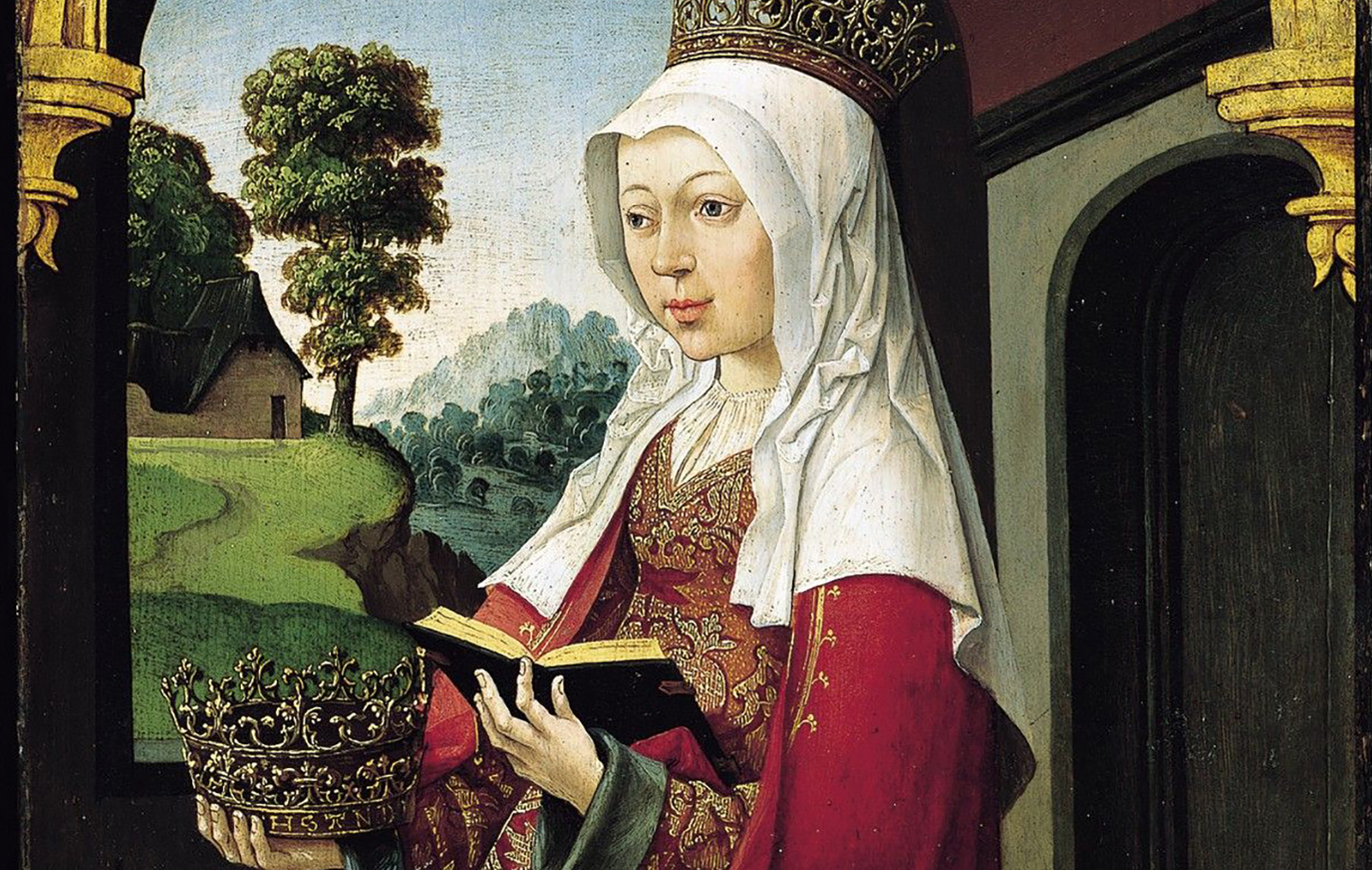 Saint Elizabeth of Hungary presents a remarkable departure from the apocalyptic visions that characterize most prophetic saints. Born to Hungarian royalty in 1207, this young saint received revelations concerning the Church’s renewal through radical charity – a message that would prove prophetic in ways she could scarcely have imagined.
St. Elizabeth’s prophecy background
The life of Saint Elizabeth reads like a sacred drama compressed into twenty-four brief years. Married at fourteen and widowed by twenty, she used her royal position not for comfort but for service to the poorest of her subjects. Unlike the dramatic visions experienced by other mystics, Elizabeth’s prophetic insights came through interior locutions that urged profound spiritual transformation.
Much is remarkable about Elizabeth’s prophetic voice, particularly how it differed from her contemporaries. While other religious reformers focused on institutional changes within the Church hierarchy, Elizabeth foresaw that authentic renewal would come through personal sacrifice and service to the suffering. From her palace window, she once declared prophetically that true Church renewal would emerge not through ecclesiastical power but through “service to Christ’s wounded body” – referring both to the Eucharist and to humanity’s poorest members.
Her prophecies consistently emphasized that spiritual rebirth must begin with individual conversion rather than structural reform, a principle that would guide the Church’s understanding of renewal for centuries to come.
Fulfillment of the prophecy
The accuracy of Elizabeth’s prophetic vision becomes evident when we examine the religious movements that followed her death. Her prediction that renewal would come through radical charity found extraordinary fulfillment in the rise of the mendicant orders – the Franciscans and Dominicans – who embraced poverty and service as their fundamental mission.
Even more striking was her prophecy that “princesses would yet serve the poor.” This prediction materialized through numerous royal women throughout medieval Europe who, inspired by Elizabeth’s example, abandoned courtly luxury to establish hospitals and almshouses. Her influence extended far beyond Hungary, shaping the spiritual lives of noble women across Christendom.
The pattern Elizabeth foresaw – that genuine Church renewal requires personal sanctity before institutional reform – has proven accurate throughout Catholic history. Whenever authentic religious revival has occurred, it has followed precisely this sequence: beginning with individual conversion and extending outward to transform communities and institutions.
The Church’s recognition of Elizabeth’s prophetic gifts culminated in her canonization by Pope Gregory IX in 1235, making her one of the most rapidly canonized saints in Church history. Her feast day continues to inspire Catholics worldwide to see charitable service not merely as good works but as essential elements of spiritual transformation.
Her example demonstrates that divine revelation often comes through humble service rather than dramatic supernatural experiences, reminding us that God speaks through compassionate action as clearly as through mystical encounters.
Summary of Verified Prophecies
Having examined these remarkable revelations individually, let us now consider their collective significance through a systematic overview. The Catholic Church has documented these prophecies with careful attention to their historical context and subsequent verification.
What patterns emerge when we examine these sacred utterances together? The following comparison reveals the extraordinary scope of divine communication throughout the centuries:
Saint/Visionary | Time Period | Main Theme/Subject | Key Prediction(s) | Notable Fulfillment(s) |
|---|---|---|---|---|
Saint Hildegard | 12th century (b.1098) | End Times | Five distinct periods before Antichrist; men abandoning masculine nature; religious growing lukewarm | Western Schism (1378-1417); contemporary moral decline |
Saint Malachy | 12th century (1139) | Papal Succession | 112 cryptic Latin phrases describing future popes | Matches for John Paul II (“labor of the sun”) and Benedict XVI (“Glory of the Olive”) |
Saint Bridget | 14th century (b.1303) | Divine Chastisement | Plagues, wars, and natural disasters as punishment for sin | Black Death (1347-1351); Western Schism (1378-1417) |
Saint Catherine of Siena | 14th century (b.1347) | Papal Authority | Return of papacy to Rome from Avignon | Pope Gregory XI’s return to Rome in 1376 |
Saint Vincent Ferrer | Early 15th century | Personal Death | Precise prediction of his death in 10 days | Died exactly as predicted on April 5, 1419 |
Saint Colette | 15th century (c.1419) | Divine Judgment | Purifying fire descending from heaven | Fires that destroyed regions while sparing reformed monasteries |
Saint Francis of Paola | 15th century | Political Events | Fall of Constantinople; Spanish unification; French Revolution | All events occurred as predicted, including French monarchy’s fall |
Saint Thomas Aquinas | 13th century (1273) | Divine Revelation | All writings would seem like “straw” compared to mystical vision | Ceased writing and maintained silence until death |
Saint John Bosco | 19th century (1862) | Church Trials | Two columns (Eucharist and Mary) protecting Church | Increased focus on Eucharistic and Marian devotion post-Vatican II |
Blessed Anna Maria Taigi | 19th century (c.1820) | Three Days of Darkness | Complete darkness, artificial light failure, demons roaming | Partially fulfilled through natural disasters and social upheavals |
Saint Padre Pio | 20th century | Various Events | World War II outcomes; Paul VI’s election | Accurate prediction of war events and papal election |
Saint Elizabeth of Hungary | 13th century | Church Renewal | Renewal through charity and service to poor | Rise of mendicant orders; royal involvement in charitable works |
According to Church documentation, these prophecies span nearly nine centuries of Catholic history, demonstrating the continuity of divine communication through chosen vessels. The verification of these revelations by Church authorities provides compelling evidence that God continues to speak to His people through authentic mystics and saints.
Summary of the Saints’ Prophetic Revelations
These verified prophecies are among many from the saints provide extraordinary evidence of divine communication throughout Church history. From Saint Malachy’s cryptic papal predictions to the saints that predicated calamities within the Church, society and the political realm, we witness nearly a millennium of prophetic tradition that continues to guide the faithful.
What makes these revelations particularly compelling? The specificity and subsequent verification distinguish them from vague predictions. Saint Vincent Ferrer’s precise foreknowledge of his death date, Saint Catherine’s accurate foresight regarding the papal return to Rome, and Padre Pio’s prophetic letters containing unknowable information all demonstrate supernatural origin.
The diversity of these chosen vessels proves remarkable – humble laypeople like Blessed Anna Maria Taigi, brilliant theologians like Saint Thomas Aquinas, and royalty like Saint Elizabeth of Hungary. Yet their prophecies consistently emphasized core Catholic teachings:
Divine justice balanced with mercy
The centrality of Eucharistic and Marian devotion
The necessity of personal holiness before institutional reform
The ultimate triumph of the Church through divine providence
Much remains mysterious about how God chooses His prophetic messengers and the timing of these revelations. However, the historical record provides compelling evidence that these saints received authentic divine communications. Many predictions materialized exactly as foretold, while others continue unfolding in our time.
These prophetic voices remind us that history unfolds according to divine providence rather than random chance. Whether warning of chastisement like Saint Bridget or offering hope through charitable renewal like Saint Elizabeth, these saints delivered messages meant to guide believers through turbulent periods.
As we read in the Scriptures, “Surely the Lord God does nothing without revealing his secret to his servants the prophets” (Amos 3:7). The Catholic Church teaches that prophetic gifts remain active throughout history, serving to strengthen faith and provide guidance during times of trial.
I highly recommend further study of these remarkable saints and their prophetic legacies. Their lives demonstrate that God continues speaking to His people through chosen vessels, calling us toward greater faith while warning of the consequences for straying from divine law. These fifteen verified prophecies remain treasured guides for Catholics seeking to understand God’s will in our complex modern world.
Praise God for His Mercy and Providence.